Most people buy an armchair the way they'd buy a throw pillow, based entirely on what it looks like from six feet away in a showroom with good lighting. Then it gets home, and either nobody sits in it, or everybody sits in it and it's flat in a year.
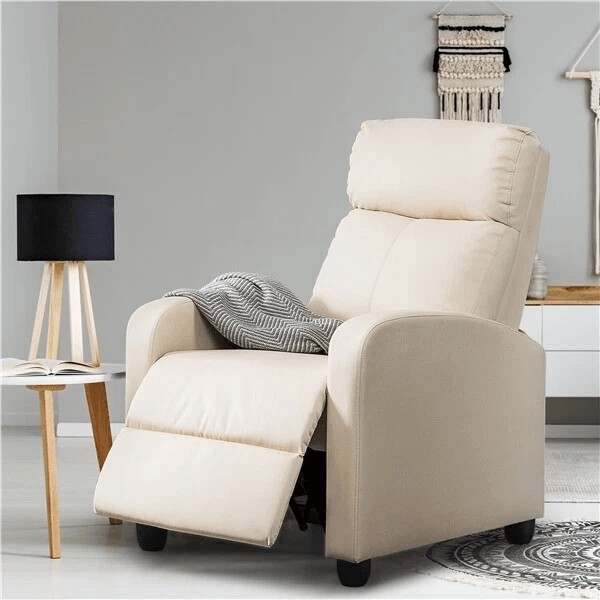
In a normal room, the armchair works best as the odd one out, not matching the sofa fabric or the wood tone, just related to it. A chair pulled slightly away from the main seating, angled toward it rather than lined up square, with a small table or a lamp close enough to reach without leaning. That's the whole job most of the time: a second seat that doesn't look like it got left over from a set. Where people go wrong is treating it as a smaller sofa and shoving it flush against the wall across the room, which just makes it look like furniture nobody chose on purpose.
What separates a good one from a sad one is almost entirely hidden. Flip the cushion out and look at the frame where the arm meets the seat. You want a joint, not just screws through a corner bracket and a prayer. Press down on the arm with your hand, hard. If it flexes or creaks, that's the frame telling you it's thin stock, probably softwood or particleboard dressed up with a nice fabric, and in two years the arm will be loose and the whole chair will rock when you get up. A proper one has a hardwood or plywood frame, corner blocks glued and screwed, not just stapled fabric over foam. Run your hand along the seat edge. If you can feel the wood frame through the padding within an inch, the foam is too thin and it'll compress fast. Good foam has some give and some resistance both, not a cloud, not a brick.
If you own zero armchairs right now, start with something upholstered in a plain, hard wearing weave, not velvet, not a pale linen that shows every coffee ring, on a wood frame you can see at the legs so you know what you're dealing with. That one chair does more work in a room than a second sofa ever will, and it's easier to move if the room changes its mind later.
Where it goes wrong is tiny apartments where it eats the one clear path through the room, or it's dropped into a spot with no table or lamp nearby, so it just sits there unused, looking decorative and resentful.
Rotate the cushion every few weeks so it wears evenly instead of caving in on one side.