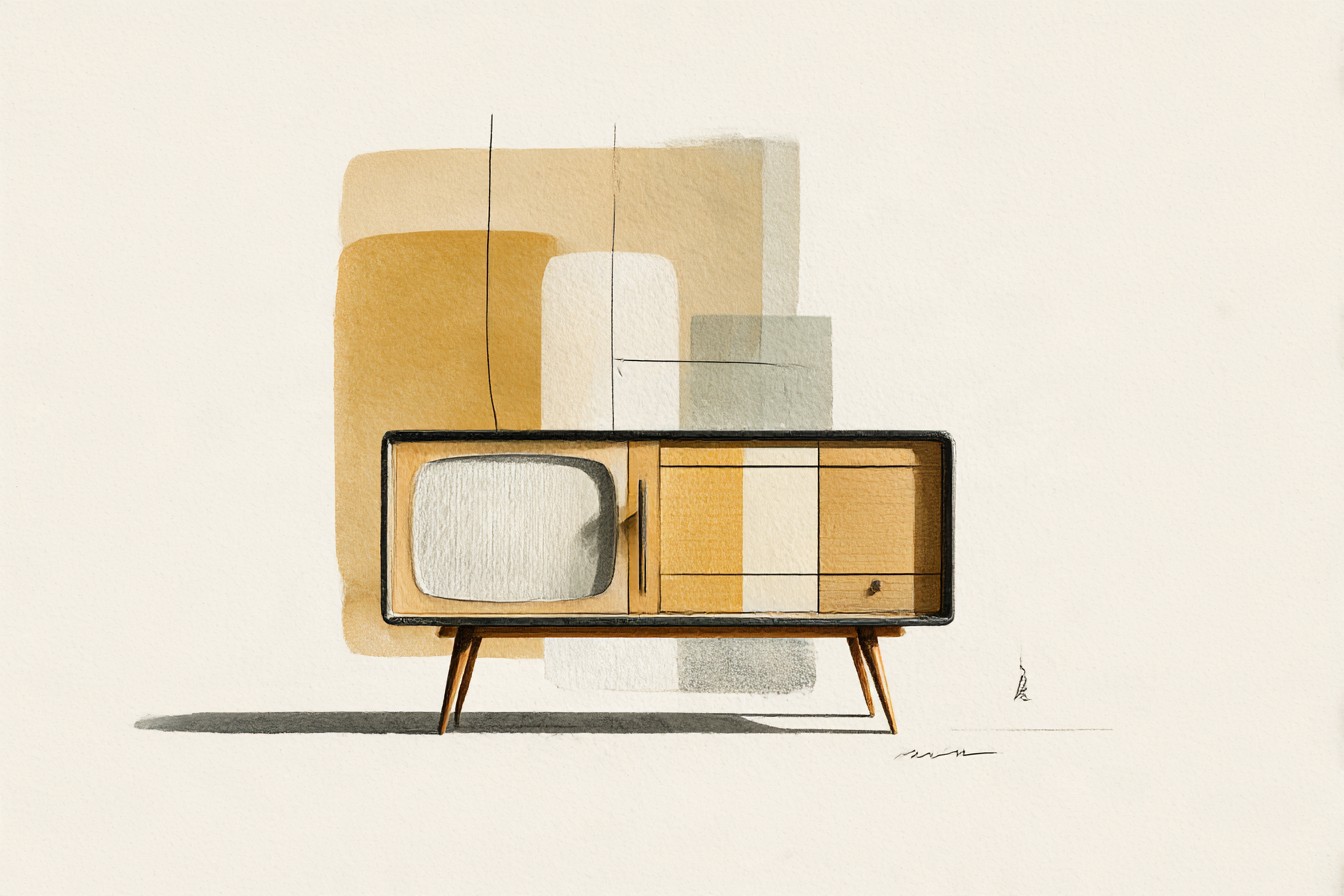
My sister walked into the living room in October, took one look at the television sitting on top of my new (to me) sideboard, and said, “That looks like the TV is guest starring in someone else’s furniture.” Then she sat down, didn’t say anything else about it, and watched forty minutes of a home renovation show on it without further comment, which I’ve come to understand is her version of approval with reservations.
She wasn’t wrong, exactly. The sideboard in question is a low walnut piece I bought off a moving sale two towns over, solid, heavier than it looks, built for holding table linens and the good plates nobody uses, not for holding a forty three inch television and a soundbar and whatever cable box still insists on being plugged in. And yet here we are, eight months later, and it’s still there, and I still like it more than the actual TV stand it replaced, which was fine, in the way particleboard furniture from a big box store is fine, forgettable the second you stop looking directly at it.
The question I get asked most, usually by a friend standing in their own living room mid rearrangement, phone out, is some version of can you actually put a TV on a sideboard, or is that one of those things that looks fine in a photo and turns into a problem the first time someone leans on it wrong. And the honest answer, the one I’ve arrived at after living with this exact setup through a Providence winter that took the storm windows out twice, is that it depends entirely on three unglamorous things nobody puts in the photo, what the piece is actually rated to hold, how deep it is front to back, and where the screen ends up sitting relative to your eyeballs on the couch. Everything else, the finish, the hardware, whether it matches your rug, is decoration on top of those three facts. Get those wrong and you’ll know it within a month.

Get them right and nobody, not even a sister with opinions, will ask why the TV lives on furniture that wasn’t built for it.
[A TV on a Sideboard]
Weight and Load Rating
Here’s the thing nobody checks and everybody should. A sideboard’s stated weight capacity, when it’s stated at all, usually refers to the top surface holding static weight, evenly distributed, the way a stack of plates or a lamp sits still and doesn’t move. A television is not that. It’s concentrated weight on four small feet or a mount base, and if you’re using a tabletop stand rather than wall mounting off the back, all of that load goes through a much smaller footprint than the manufacturer had in mind when they tested it. My walnut piece came with no weight rating at all, because it was made in 1968 by someone who assumed you’d put a punch bowl on it, not electronics. I tested it the unglamorous way, with actual sandbags from the hardware store stacked to roughly the weight of my TV, left overnight, checked in the morning for any dip in the top panel. No dip. Fine. But I’ve seen the version of this that goes wrong, a colleague’s flat pack sideboard from a chain I won’t name, top panel visibly bowing within a season under a fifty five inch screen, drawer runners underneath straining every time she opened them because the whole cabinet had shifted slightly out of square. The furniture didn’t collapse. It just stopped being furniture that closed properly, which in a house with drawers you actually use every day is its own kind of failure.
[Weight and Load Rating]
Depth and Overhang
Purpose built TV stands run deep for a reason, usually eighteen to twenty inches or more, because that depth is doing real work, keeping the base of the TV and its stand fully supported with room to spare for cable boxes behind it. Sideboards, especially older or narrower ones, often come in shallower, sixteen inches, sometimes less on anything genuinely vintage. My sister’s dining room has a lovely narrow sideboard that looked perfect for a TV until her partner set one up on it and the base of the stand overhung the back edge by a good two inches, television essentially cantilevered off the back of an antique. It didn’t fall. It looked like it was thinking about it, every single day, which is its own kind of stress to live with in a room you’re supposed to relax in. Mine clears by about an inch and a half, which I only know because I measured it three times before buying the TV, a level of caution that would have seemed excessive to me five years ago and now feels like basic due diligence, the same way I now check the actual R value on curtains instead of trusting the word thermal printed on the packaging.
[Depth and Overhang]
You Might Also Like

Eye Level From the Couch
This is the one people don’t think about until they’re forty minutes into a movie with a stiff neck. My sideboard sits low, about twenty four inches off the floor, lower than the stand it replaced, and my couch has deep, low cushions that I sink into properly once I’m settled. The math worked out fine for me, screen center lands close enough to eye level that I’m not craning up or down, but that was closer to luck than planning the first time around. I’ve sat in other people’s living rooms where a taller, more traditional sideboard put the screen a good six inches above where a TV stand would have, and from a low sofa that’s a genuinely different viewing angle, more like watching a television mounted in a hospital waiting room than one in someone’s home. There’s no universal answer here because sideboards vary in height far more than dedicated TV furniture does, which is built to a fairly narrow, deliberate range. The only honest advice is to sit exactly where you’ll actually watch from, have someone hold the TV or a box roughly its size at the sideboard’s height, and look at it for longer than feels reasonable before you commit.
[Eye Level From the Couch]
Cable Management and Ventilation
Nobody designs a sideboard with a cutout for cables, because nobody designing a sideboard in 1968, or honestly in 2019, was thinking about a soundbar and a streaming box and a router that all need to breathe. I drilled a hole in the back panel of mine myself, badly, first attempt too small, second attempt slightly off center in a way you can only see if you’re looking for it, which my sister absolutely was. The bigger issue turned out to be heat. I ran the soundbar behind a closed cabinet door for about two weeks during a stretch of genuinely brutal August heat, no air conditioning downstairs in this house because the wiring won’t support it without an electrician I keep meaning to call, and the whole cabinet interior ran warm enough that I finally opened it and found the components hot to the touch. Closed door sideboards were built to keep dust off table linens, not to vent electronics, and I learned that one specifically the hard way, at ten at night, wondering why the soundbar had started cutting out.
[Cable Management and Ventilation]
When a Sideboard Wins
For all of that, I’d still do it again, and have, in fact, recommended it to two separate friends this year. A sideboard earns its keep in rooms that don’t want to look like a dedicated media setup, a small living room where a proper TV stand would eat the last bit of floor space, or a room doing double duty as both dining and lounging space where you’d rather the furniture look like it belongs there when the television’s off.
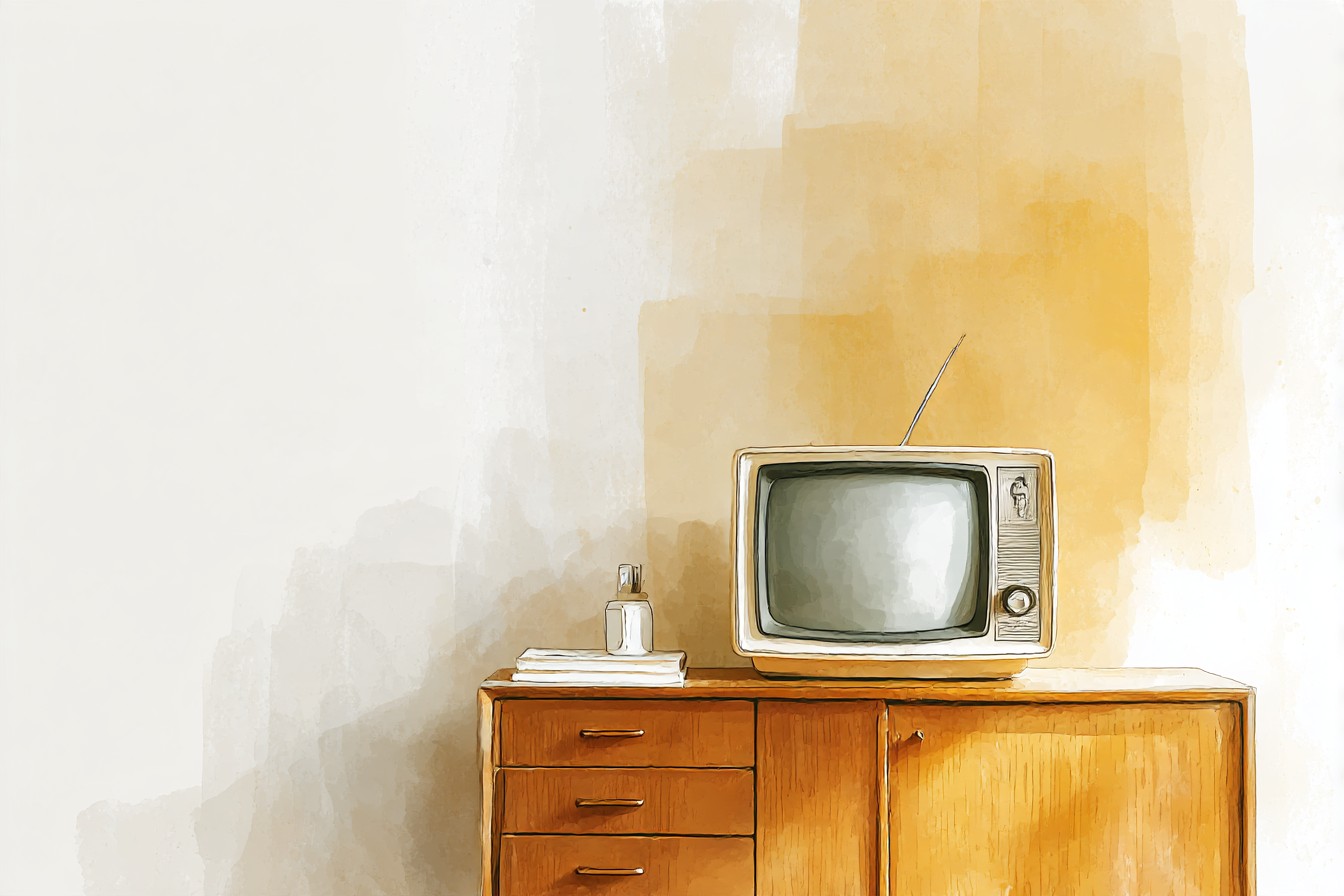
Mine holds table linens on one side and board games on the other, drawers that get used constantly for things that have nothing to do with the TV sitting on top, which is more than my old stand ever did. The visual effect matters too, in a way I underplayed for a while because I care more about draft exclusion than aesthetics generally, but even I’ll admit a good sideboard photographs and lives better in a room than a black particleboard box built for exactly one purpose and nothing else.
[When a Sideboard Wins]
Final Thoughts
So can you put a TV on a sideboard. Yes, properly, with conditions, the same way you can hang thermal curtains in a hundred and thirty year old house and have them do almost nothing useful if you didn’t check what you were actually buying. Check the weight the piece can genuinely hold, not what you assume from how solid it looks. Measure the depth against your actual TV stand or mount, not an estimate. Sit on your actual couch and look at the actual height before you decide it’ll be fine. Everything else, the ventilation workaround, the cable hole you’ll inevitably drill slightly wrong the first time, the drawers you keep for things that have nothing to do with the television, sorts itself out once those three things are settled. Mine’s stayed exactly where it is since October, cable hole and all, and my sister hasn’t mentioned the TV guest starring in someone else’s furniture again, which around here counts as a full and final endorsement.