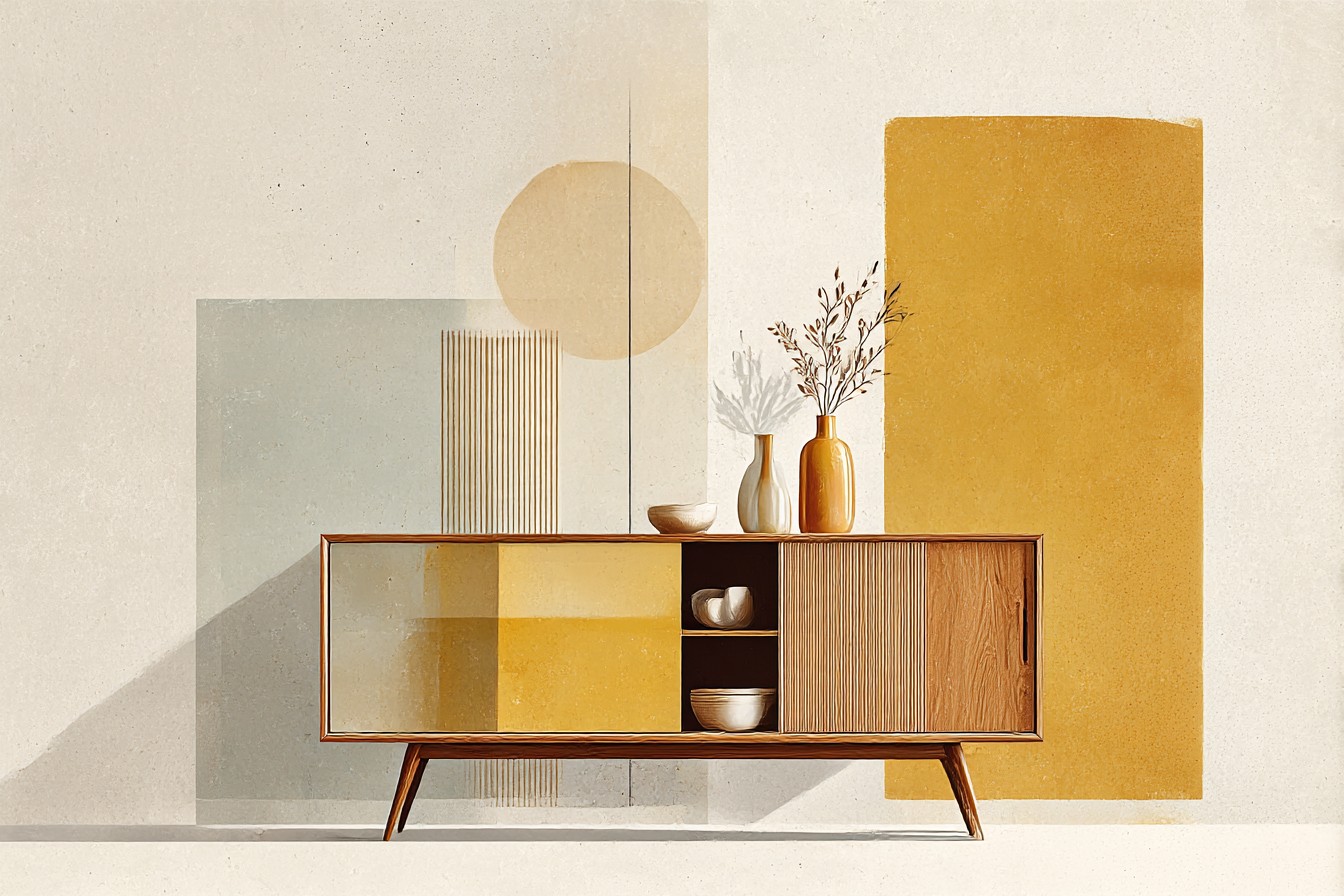
I counted it once, out of pure boredom during a work call I wasn’t paying attention to. Nine times. That’s how many times I opened the sideboard in my living room in a single afternoon, not including the two times my youngest opened it looking for the remote he’d hidden in there himself the day before. Nine times for a piece of furniture that, according to basically every home decor account I’ve ever scrolled past at 11pm, is supposed to live in a dining room, holding napkin rings and a gravy boat nobody’s used since 2019.
So when people search “can you put a sideboard in a living room” I get it, because I asked myself the exact same thing about four years ago, standing in a furniture store parking lot with my wife, arguing about whether we were about to buy the wrong piece of furniture for the wrong room. We didn’t have a dining room sideboard doing anything useful. We had a dining room sideboard doing what dining room sideboards apparently do, which is sit there looking nice and holding candles we’re too scared to light because we have a dog who considers his tail a weapon.
Meanwhile our actual living room, the room we live in, had nothing.

Just a TV stand groaning under the weight of a Wii U nobody plays, a basket of blankets that had become a basket of everything, and a coffee table that functioned as a landing strip for whatever my kids were mid obsession with that week. Rocks, at one point. An entire, deeply committed rock phase.
So we moved it. The sideboard came out of the dining room and into the living room, against the wall opposite the sofa, and it has been, no exaggeration, one of the better furniture decisions we’ve made in this house. Not because it looks fancy. Because it does actual work in the room where actual life happens. The dining room, for us, is a room we walk through to get to the kitchen. The living room is where we live. Felt obvious once I said it out loud, less obvious when I was standing in that parking lot convinced I was breaking some unwritten decor rule.
I want to walk through how that’s played out, because it’s not just “buy sideboard, place in living room, done.” There’s a whole shape to it once it’s actually in there earning its keep.
[Sideboard in the Living Room]
Storage That Isn’t Just a Junk Drawer
Here’s the thing nobody tells you about moving a sideboard into the living room. It stops being “the good furniture” and starts being the place where the chaos of family life goes to get contained. Ours holds board games, the good crayons and the bad crayons in separate boxes because my eldest will only use the good ones, a stack of coloring books, phone chargers, and a drawer that is, at time of writing, entirely dedicated to my youngest’s collection of small plastic dinosaurs which he insists on counting every single week to make sure none have gone missing. One did go missing. We’re still not talking about it.
The point is, in the dining room this thing held table linens we used maybe twice a year. In the living room it’s holding the stuff that used to live in a basket on the floor, or worse, under the sofa, where I once found a half eaten granola bar that had clearly been there long enough to achieve some kind of geological status. A sideboard with real cupboard doors, ones that actually shut, does more for a living room’s general sanity than almost anything else I own.
My youngest tried to use the bottom cupboard as a hideout during a game of hide and seek, got himself properly stuck behind the board games, and I had to半 empty the whole thing to get him out. He thought this was hilarious. I did not, at the time, though I do now. The doors held up fine, for the record, which is more than I can say for whatever happened to his dignity that afternoon.
That’s the real case for storage here, closed storage specifically. Open shelving looks great in photos and lasts about four days in a house with kids before it becomes a display of exactly how chaotic your week has been. Doors hide that. Doors are doing you a genuine favor.
[Storage Space]
A Spot for the Stuff You Actually Want to Look At
Right, I’ve spent a whole section talking about hiding things, so let me correct course, because the top of a sideboard is honestly where mine earns its second job. This is where the display side comes in, and I’ll admit I underrated this for a while, I was so focused on whether the cupboards could survive my kids that I barely thought about what was sitting on top of it.
Ours has a lamp, a framed photo from our wedding that’s slightly crooked because nobody’s fixed it in about eight months, and a plant that has survived purely by being placed just out of toddler reach, which took some trial and error involving one very dead pothos. That’s it. Not cluttered, not styled within an inch of its life, just a few things that make the room feel like people actually live there instead of just storing things there.
This is the bit a dining room sideboard doesn’t really get to do, not in the same way. In a dining room, the top surface is competing with a table that’s already the main event. In a living room, the sideboard’s top surface is often the second most visible flat space in the whole room after the coffee table, and unlike the coffee table, nobody’s putting a bowl of cereal on it at 7am. It’s got a bit of dignity, comparatively.
A friend of mine came over and asked why I had “a whole console table’s worth of nice stuff” on top of what she assumed was just extra storage. That was sort of the moment I realized the two jobs weren’t separate, they were the actual point of putting it there in the first place. Storage below, a little bit of a look above. I’d been so busy proving the cupboards could survive a toddler that I nearly forgot the surface was doing something too.
[Display Space]
Where It Actually Goes in the Room
Nobody tells you the hardest part isn’t whether you can put a sideboard in the living room, it’s where. We tried three spots before landing on the right one, and I will admit two of those attempts were, in hindsight, kind of dumb.
First try, behind the sofa, facing the room, as a sort of divider between our open plan living and dining space. Looked good in my head. In reality it created a walkway about eighteen inches wide that both kids treated as a racetrack, and I lost count of how many times someone’s hip clipped the corner of it walking through with a full drink. We do not talk about the carpet stain from attempt one.
You Might Also Like

Second try, in the corner, at an angle, because I’d seen it done somewhere and thought it looked clever. It looked clever for about a week and then became the place where everything that didn’t have a home went to die, because a corner placement invisible from the doorway is basically an invitation for clutter nobody has to look at directly.
Where it actually works, for us, is flat against the main wall opposite the sofa, which is honestly the least exciting answer I could give you but it’s the true one. It gives the cupboard doors room to open fully without hitting anything, the top surface is visible the second you walk in, and it’s far enough from the main walking path that a kid running full speed toward the hallway isn’t clipping a corner with his shoulder anymore. IT JUST WORKS, which after two failed attempts felt like a genuine miracle.
If your living room has an awkward long wall that never seems to know what furniture wants to live there, that’s probably your answer too.
[Sideboard Placement]
An Honest Alternative to the TV Stand
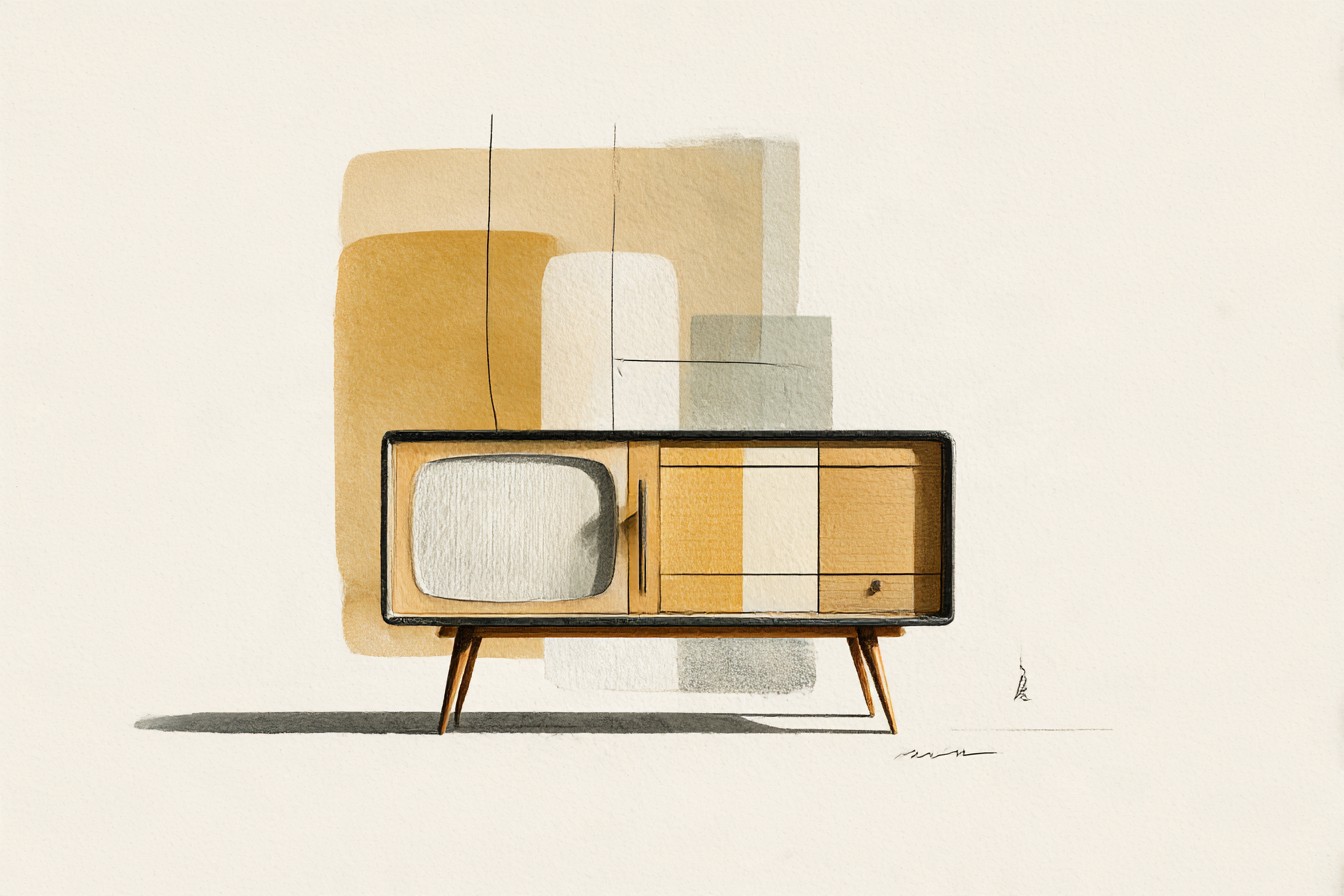
I didn’t expect this one, but our sideboard basically replaced our TV stand, and I think it’s a better answer for a lot of living rooms than people give it credit for. Our old TV stand was one of those units with a couple of thin doors and a shelf that wobbled if you so much as looked at it wrong, and it held exactly the console and nothing else, because there wasn’t room for anything else.
The sideboard is wider, lower, sturdier, and has actual depth, so the console, the router, the tangle of cables that multiplies overnight for reasons I refuse to investigate, all of it fits inside with the doors shut, which means the whole front of the room looks calmer even when the back of that cupboard looks like a crime scene. My wife made me promise never to open that particular cupboard when anyone’s over. Fair deal.
The other thing, and this actually matters more than I expected, is that a proper sideboard holds weight properly. Our TV isn’t massive but it’s not light either, and the old stand used to creak every time my youngest leaned on it trying to see the screen better. This one hasn’t budged. He’s tested it, repeatedly, by climbing partway up to reach the TV remote we deliberately put up there specifically so he couldn’t reach it. He got about six inches up before I caught him. It held. He was furious. Genuinely one of the more satisfying moments of furniture ownership I’ve had.
If you’re on the fence about swapping out a flimsy media unit, this is the argument for it. More storage, sturdier build, and it doesn’t scream “electronics furniture” the second someone walks in.
[TV Console Alternative]
Surviving the Actual Chaos
I have to talk about what this thing looks like eight months in, because delivery day photos are a lie every furniture site tells you and I refuse to add to it. Ours is a mid tone wood veneer, not solid oak, because solid oak was outside the budget and also, frankly, I didn’t trust myself not to scratch it within a month anyway.
The finish has taken a full cup of apple juice, spilled during a birthday party by a child who was not mine and therefore not disciplined by me, sat there for about ten minutes before anyone noticed, and wiped clean without a mark. It’s had crayon on it twice, permanent marker once, THAT one made my stomach drop, and both came off with a magic eraser and a lot of swearing under my breath. The top has a couple of very faint water rings near the lamp from cups set down without coasters, because we are, apparently, incapable of using coasters as a family, but you’d have to be looking for them to notice.
The legs have survived a dog that uses them as a scratching post when he’s overexcited, and one memorable incident where my eldest tied a jump rope to one leg to make what she called an obstacle course.
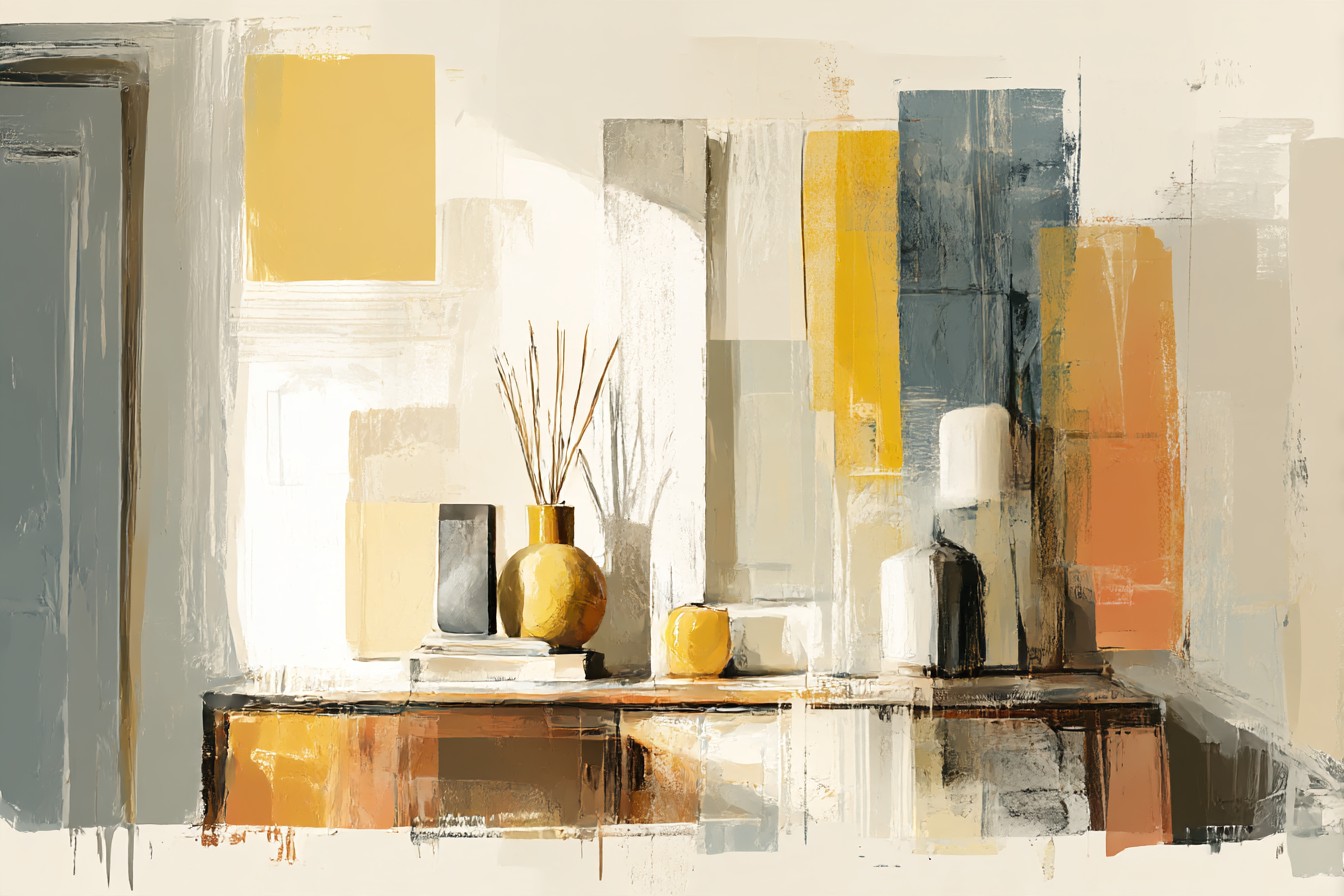
The sideboard did not move. The jump rope did not survive contact with my patience.
So eight months in, it doesn’t look showroom fresh, there are marks if you go looking, but it looks like furniture that a family actually uses, which is a different and better thing than looking untouched. If yours is going in a living room, expect it to earn its scars. That’s sort of the whole point of putting it there.
[Living Room Sideboard]
Final Thoughts
So, can you put a sideboard in the living room? Obviously, clearly, yes, and honestly I think it might be a better use of one than the dining room ever was, at least in our house, where the dining room mostly exists as a place we walk through holding plates. The living room is where the actual mess of daily life happens, the crayons, the chargers, the small plastic dinosaurs that get counted weekly, and a sideboard with real storage and a decent top surface handles that mess better than most furniture built specifically for living rooms.
It took us three placement attempts, one ruined carpet moment, and a fair bit of trial and error to land here, and I still catch myself talking more about what survived a toddler than about how the thing actually looks, which is probably my own blind spot showing. But looks and function ended up working together here more than I expected going in.
If you’re stuck staring at an awkward wall wondering what’s supposed to go there, or you’re tired of a flimsy TV stand creaking every time a kid leans on it, I’d say give the sideboard a shot outside the dining room. Mine’s been opened nine times today already, and it’s not even dinnertime yet.

[…] months and then suddenly essential in December. It’s where someone’s laptop charger has lived for two years despite the sideboard being nowhere near an outlet. It’s the surface that photographs beautifully empty and never […]