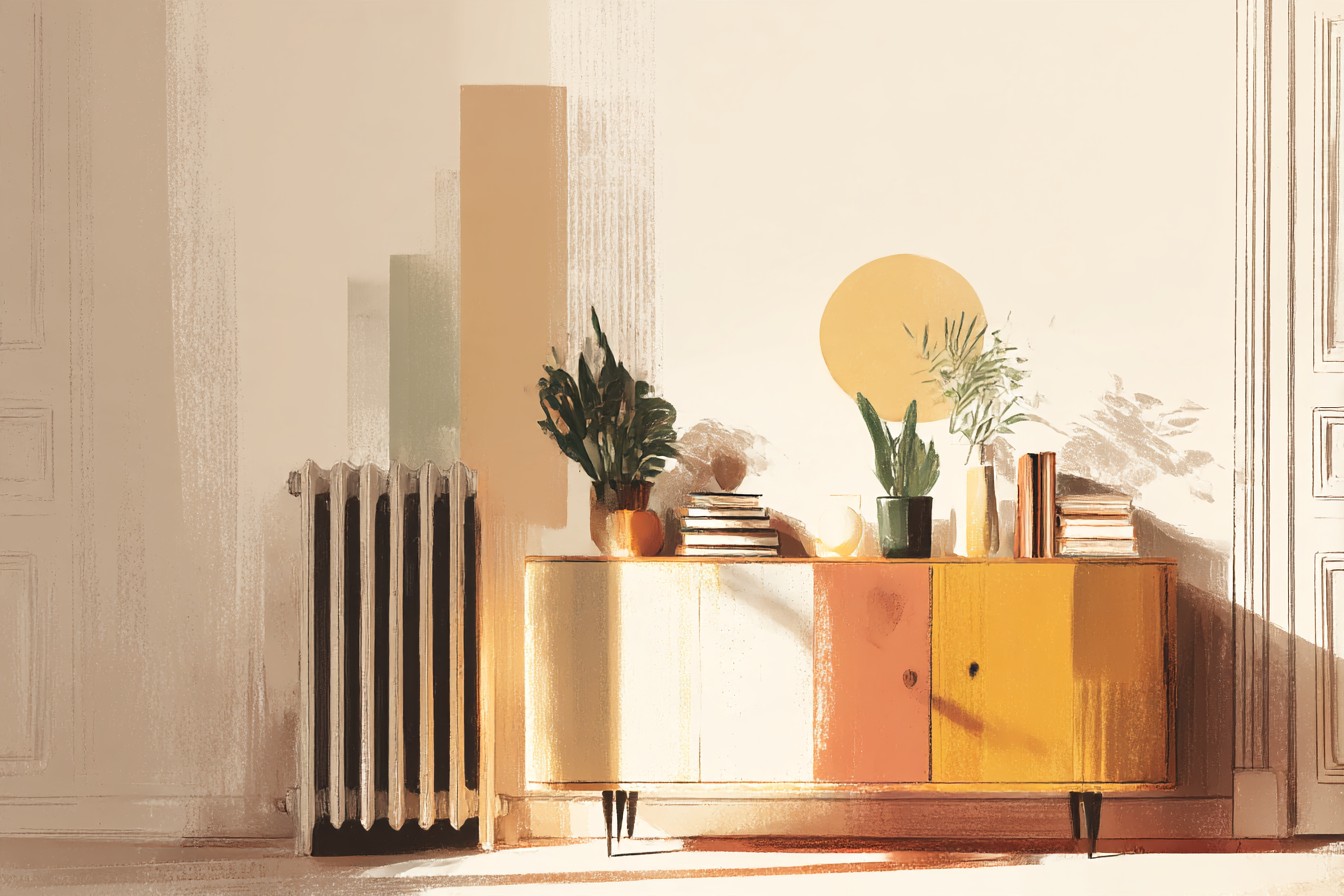
I was on my knees in the dining room with a tape measure, which is not a dignified position for a woman my age, but there I was, trying to figure out if my mother’s old mahogany sideboard was ever going to fit against that back wall. It had been sitting in my garage since we cleared her house in 2019, too good to sell, too big for the front hall, and I’d finally decided the dining room was where it belonged. Only that wall, the one long enough to actually take it, has a radiator running most of its length. An old cast iron one, the kind that clanks in October like it’s warming up its voice before a performance.
So there I was, tape measure in one hand, staring at the gap between the radiator and where the sideboard’s back panel would sit, doing the math on whether six inches of clearance was going to be enough or whether I was about to spend the next twenty years slowly cooking a piece of furniture that outlived my mother.
Here’s the thing nobody tells you when you’re arranging a room, and I say this as someone who has furnished this same house three separate times since 1991 and made a version of every mistake available. A radiator doesn’t care what’s in front of it. It’s going to do its job, which is pushing heat into the room, and if you put a solid object directly in its path, that heat has to go somewhere.
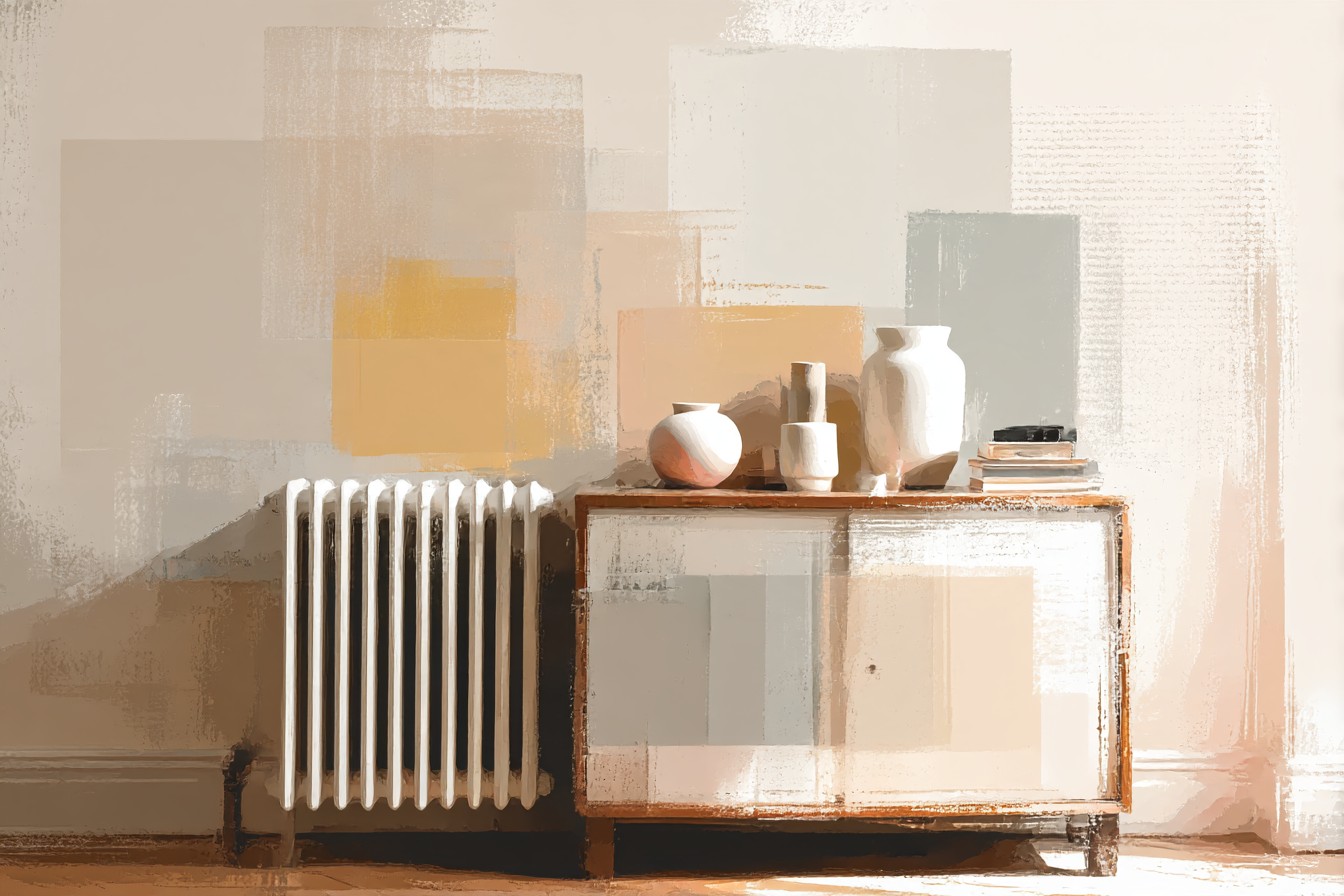
Some of it goes up. Some of it goes forward, out into the room, which is what you want. And some of it gets trapped right there, in that narrow pocket of air between the radiator and the back of whatever you’ve pushed up against it, and it sits there, hour after hour, all winter, working on the wood like a very slow, very patient argument it intends to win eventually.
I didn’t understand any of this properly until I lost a chest of drawers to it in the late nineties, a decent piece too, and I’d like to have a word with the woman who thought “it fits perfectly against that wall” was the only consideration worth making. It fit. That was the problem. It fit right up against a radiator with about two inches to spare, and within three winters the back panel had cupped so badly the drawers wouldn’t sit flush anymore.
So the mahogany sideboard and I had a longer conversation than the tape measure alone could settle.
[Sideboard Placement Near Radiators]
Solid Wood Sideboards
Solid wood is the one people assume is the safe choice, sturdier, more expensive, surely built to take a bit of heat. And it can take heat, that’s true, but what it can’t take gracefully is heat from one direction only, applied consistently, for months at a time. Wood moves. It always has. It expands and contracts with humidity and temperature, and a good piece is built with that movement accounted for, joints that allow a little give, panels that float rather than sit rigid. What that construction doesn’t account for is one face of the piece baking gently while the front stays at room temperature, because that’s not natural movement, that’s one side drying out faster than the other, and wood responds to that by cupping. The back panel pulls, ever so slightly, toward the heat source. You won’t see it happen. You’ll notice it eighteen months later when the doors don’t close the way they used to and you assume you’re misremembering.
My mother’s mahogany piece is solid all the way through, proper joinery, the kind of build you don’t see much of anymore, and even that gave me pause standing there with my tape measure. I’ve got an oak sideboard from 2003 in the hallway that’s never sat within three feet of a heat source in its life, and it still closes like the day I bought it. That’s not luck. That’s just wood that’s never had to argue with a radiator.
[Solid Wood Sideboards]
Veneered and MDF Sideboards
Now this is where I get genuinely fussy, because I bought exactly this kind of piece in about 2005, a flat pack sideboard with a walnut veneer over what I can only assume was compressed sawdust and good intentions, and it went against a wall with a radiator behind it because I was younger and cheaper and didn’t think about airflow as a concept that applied to furniture.
Veneer is a thin skin of real wood glued over a manufactured core, and that glue does not appreciate sustained heat any more than the core does. What happened to mine, over about two winters, was the veneer starting to lift at the edges, tiny bubbles you could feel with a fingertip before you could really see them, and by year three there were patches along the back edge where it had properly separated. The MDF underneath had swollen slightly with the moisture it was losing and regaining unevenly, and once that core moves, the veneer glued to it has nowhere to go but up and away.
I DID NOT SEE THAT COMING, which tells you something about how little I was thinking about it at the time. If you’ve got a piece like this and a radiator is the only real estate available, at minimum give it room to breathe, don’t push it flush, and check the back panel every few months rather than assuming it’s fine because the front still looks nice.
[Veneered and MDF Sideboards]
You Might Also Like

Open Back and Raised Leg Designs
This is the compromise I actually landed on, more or less by accident, because the sideboard I ended up loving most in this house is one with proper legs rather than a solid plinth, raising the whole unit a good seven or eight inches off the floor, and a back panel that isn’t one continuous sealed sheet but has gaps built into the frame.
That gap matters more than people think. Heat that would otherwise pool in a sealed pocket behind a flush backed piece has somewhere to escape instead of just sitting there working on the wood hour after hour. The raised legs do something similar from below, they let warm air move underneath and around rather than trapping it in a low, still layer against the underside of the cabinet, which is its own quiet problem, warped bottoms and drawers that stick are usually a floor level heat issue as much as anything happening at the back.
I didn’t choose this piece for the radiator, if I’m honest, I chose it because I liked the brass legs, but it’s held up better against that wall than anything with a solid closed back ever has, and I’ll take a lucky accident over a mistake any day of the week.
[Open Back Raised Leg Sideboards]
Clearance and Where You Actually Put the Thing
The honest answer to whether you can put a sideboard in front of a radiator is yes, mostly, but not flush against it, and not with the radiator fully blocked, because then you’re not just risking the furniture, you’re also making the radiator work harder to heat a room it can no longer actually reach properly, which is its own kind of expensive mistake.
I settled on eight inches of clearance for my mother’s sideboard, which felt excessive standing there with the tape measure and looks, now that it’s in place, entirely reasonable. My grandkids walk past that wall constantly on the way to the kitchen, and there’s enough of a gap that nobody’s catching a hip on it, and enough air moving behind it that I’m not worried about slow, invisible damage happening where I can’t see it. I also made sure not to block the valve or the thermostatic head, because a sideboard sitting in front of your only means of controlling the radiator is a special kind of inconvenience you’ll only discover in January.
My sister came over not long after it went in, looked at the gap, looked at the sideboard, and said it looked intentional, which from her counts as genuine praise.
[Sideboard Clearance from Radiators]
Painted Finish Sideboards
If your piece has a painted finish rather than a natural wood or veneer face, the damage shows up differently, and honestly it shows up faster in a way that’s easier to spot but no easier to fix. Consistent heat against one section of a painted surface tends to cause uneven color shift over time, a kind of yellowing or dulling that creeps in exactly where the heat’s been concentrated, so you end up with a piece that looks subtly wrong in a way you can’t quite place until you notice the back edge is a different shade than the front.
I had a white painted console years ago that did exactly this, a faint warm patch along the section nearest a radiator, invisible in most light and obvious the second the sun hit it right.
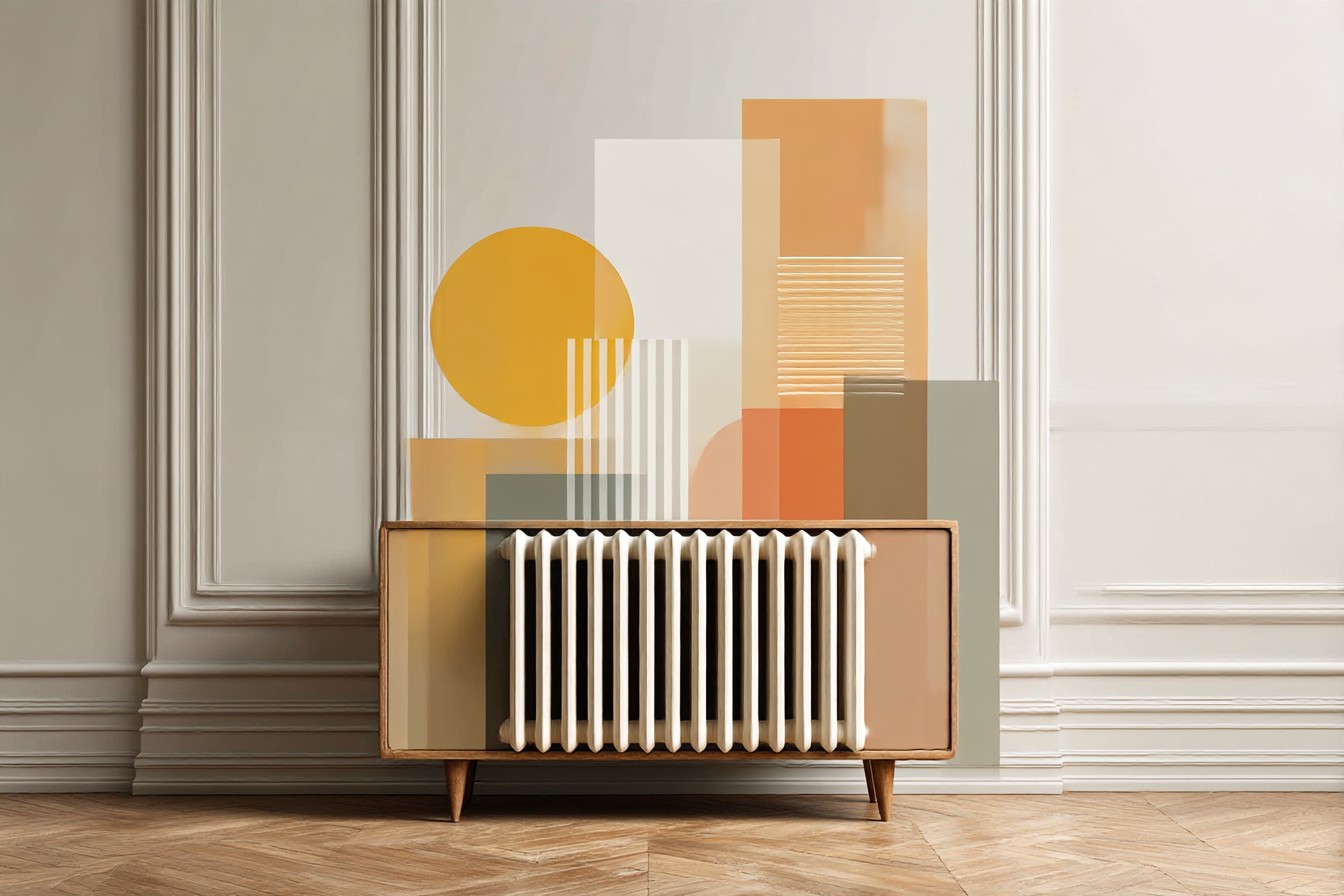
Paint can also become brittle with repeated heating and cooling cycles, which shows up eventually as fine cracking along any join or edge where the wood underneath is doing its own small expansions and contractions independently of the paint sitting on top of it. Neither of these ruins the piece outright, but they age it faster and less evenly than you’d want, and once that color shift sets in, there’s no touching it up without the repair looking more obvious than the original problem.
[Painted Finish Sideboards]
Final Thoughts
If I’m being completely honest, the fix here was never complicated, it was just a matter of actually thinking about airflow instead of only thinking about whether a piece looked right against a wall, which is the mistake I made at twenty five and apparently needed three decades to properly unlearn. Leave a gap. Pick a build that lets air move behind and beneath it if that wall is truly your only option. Check on it now and then instead of assuming a nice looking front means everything’s fine at the back.
My mother’s mahogany sideboard has been sitting against that wall for two winters now, eight inches clear of the radiator, and it still closes exactly the way it did the day we brought it out of her garage. That’s not nothing. Furniture that survives a house is one thing. Furniture that survives a heat source directly behind it for years without complaint is a different, quieter kind of achievement, and I’ll take it.