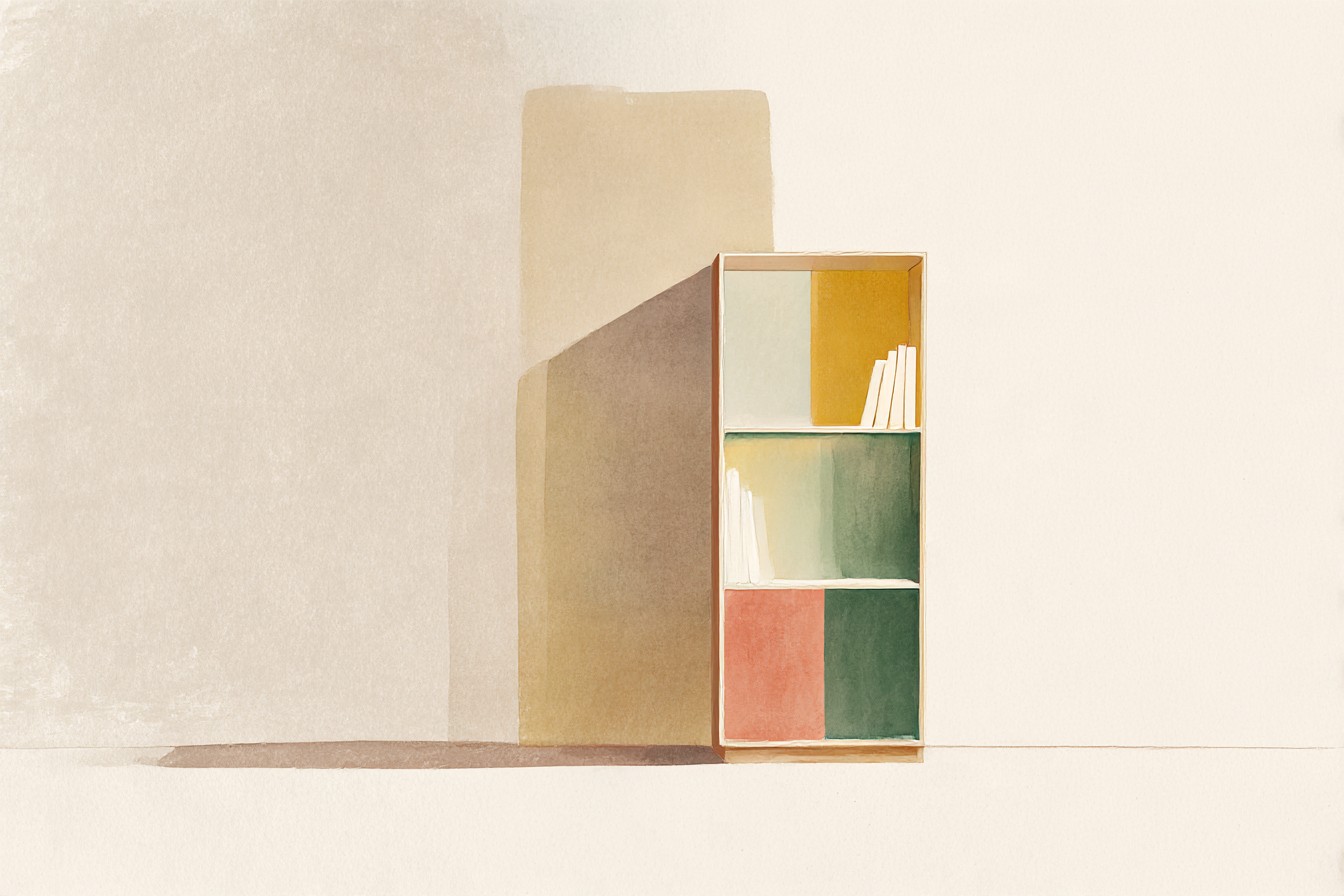
I used to hear “you can’t take the back off a Billy bookcase, it’ll fall apart” and just nod along like everyone else, because it sounds like it should be true. It’s a big flat piece of furniture with almost no back support if you pull that panel, so obviously it’s going to wobble itself into a puddle of veneer the second you look at it wrong. That was my whole understanding of it for about six years, right up until I actually removed one on purpose and waited for the disaster that never came.
Here’s what changed my mind. My wife wanted to turn two Billy bookcases into a half divider between our dining area and what’s generously called the playroom, mostly so she didn’t have to look directly at a plastic kitchen set while eating dinner. The backs had to go so we could see through the gaps at the top and it wouldn’t look like a fridge blocking the room. I fully expected to be gluing braces onto the back within a month.
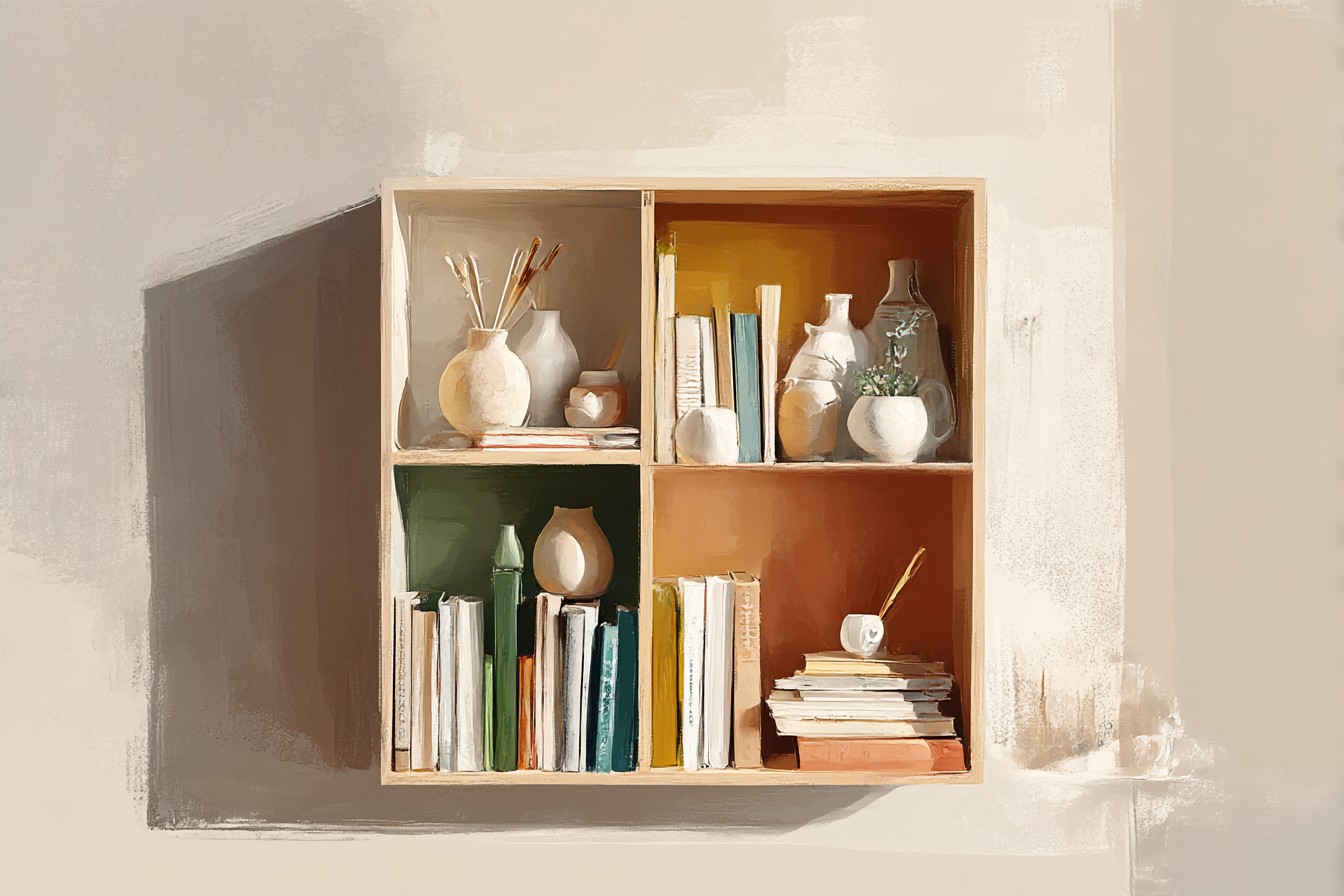
That was three years ago. Both bookcases are still standing, screwed to the wall the way IKEA actually tells you to anchor them regardless of the back panel, loaded with books, a fish tank on one side, and a toddler who has tried climbing it exactly once.
What I learned doing that, and what I keep relearning every time someone in my orbit repeats the “you’ll ruin it” line, is that the back panel on a Billy is doing a lot less than its reputation suggests. It’s about three millimeters of hardboard tacked on with little nails that bend if you look at them funny. It’s not a structural beam. It’s barely a structural suggestion. The actual thing keeping a Billy from turning into kindling is the screws holding the sides to the shelves and, more than anything, whether you’ve bolted it to a wall like you’re supposed to whether the back panel exists or not.
So this isn’t a piece telling you it’s fine to yank the back off and forget about it, because there’s a version of doing this wrong that ends with a bookcase on a kid, and I take that seriously as someone with two kids who treat furniture like playground equipment. But there’s a lot of room between “totally fine, no thought required” and “never dare touch it,” and that middle ground is where I’ve actually been living with these things for years now.
[Billy Bookcase Without Its Back Panel]
What That Flimsy Panel Is Actually Doing
Pull the back off a Billy and look at it properly, not just glance at it while you’re mid tantrum with a screwdriver, and you’ll see it’s stapled or nailed into a little groove that runs around the inside edge of the frame. It’s thin enough that my youngest once punched a hole through a spare one with a plastic golf club, which tells you everything about how much structural faith you should put in it. What it’s actually doing is keeping the frame square, stopping the whole rectangle from leaning sideways into a parallelogram, which is a real thing that happens to shelving with no back at all if nothing else is stopping it.
That’s called racking, and it’s the actual risk, not the shelves collapsing under weight. Without the panel, a Billy can lean a little if you push on it sideways, especially if it’s not loaded with anything heavy yet. Once I filled ours with books it barely moved, because a shelf packed edge to edge with hardcovers is basically doing the same squaring job the panel was doing, just heavier and less likely to get punched through by a golf club. Empty and unanchored is the worst version of this. Loaded and screwed to a wall is a completely different piece of furniture, and that’s the part the “never remove the back” crowd tends to skip over.
[The Flimsy Back Panel]
Using It as an Open Backed Room Divider
This is honestly the reason most people take the back off in the first place, and it’s the version I’d recommend first if you’re on the fence. Two Billys side by side with the backs out, positioned so you can see light and a bit of the room through the gaps, does something a solid wall of a bookcase just can’t. Ours sits between the dining table and the playroom, and instead of staring at a beige wall of hardboard while eating dinner, we get a partial view through stacked cookbooks and a fish tank on one shelf, which the kids find far more interesting than they should.
The trade off is obvious once you live with it. You see the back of whatever’s on the shelf from the other side, so a stack of paperbacks looks fine, a box of loose crayons does not. I learned this the hard way when my oldest used one cube as loose Lego storage and the dining room got a permanent view of a plastic tub for a solid year until I swapped it for a woven basket that actually looks like a decision rather than an accident. If you’re doing this as a divider, the styling matters more without the back there to hide the mess behind it, because there’s genuinely nowhere for the mess to hide anymore.
[Open Backed Room Dividers]
You Might Also Like

Screwing It to the Wall Is the Fix That Actually Matters
If there’s one thing I’d want someone to take from this whole piece, it’s this part, because it’s the bit that actually determines whether removing the back is a reasonable decision or a genuinely bad one. IKEA ships every Billy with a wall anchoring kit, a little bracket and screw that most people toss in a drawer and never use, and that bracket is doing more real structural work than the entire back panel ever did. It stops the thing tipping forward, which is the actual danger with tall, top heavy furniture and small kids, not whether the back is intact.
I found this out properly the day my youngest decided the second shelf from the bottom looked like a foothold. He got about halfway up before I caught him, heart absolutely in my throat, and the bookcase didn’t move an inch because it was anchored into a stud behind the drywall. Panel or no panel wouldn’t have made a shred of difference in that moment, the wall screw did all the work. He was furious I stopped him, genuinely offended, best possible outcome for a moment that could have gone very differently. If you’re taking the back off, that anchor kit stops being optional and starts being the whole point.
[Wall Anchoring the Bookcase]
What Actually Happens When You Load the Shelves
I ran an accidental test on this without really meaning to. One of our open backed Billys ended up holding almost every hardcover cookbook my wife owns, plus a stack of my old textbooks I refuse to admit I’ll never open again, and it’s heavier loaded than either of our other two bookcases that still have their backs. No sagging, no leaning, no racking, nothing. Turns out a shelf packed solid edge to edge does most of the squaring job the back panel was there for, just through sheer weight and friction rather than a thin sheet of hardboard.
Where it does get a bit more honest is when a shelf is half empty, a few paperbacks leaned at an angle instead of standing flat and packed. That’s when you’ll notice a tiny bit of give if you push on the side of the unit, nothing dramatic, more a slight sway than an actual wobble.
My fix has just been to keep the load reasonably full and even across the shelves rather than clustering everything on one side, which sounds obvious written down but took me embarrassingly long to figure out after one shelf started tilting because every single one of my kid’s picture books was stacked on the left end like a filing system only he understood.
[Loading the Shelves]
Giving It a Backbone That Isn’t the Original Panel
If the idea of a completely open back bothers you but you also can’t stand that thin hardboard, there’s a middle option I only discovered by accident when a friend of ours who does woodworking on weekends took one look at our spare panel and said, quite bluntly, “why would you put that back, it’s basically cardboard.” He cut a piece of quarter inch plywood to the same size instead, which weighs more, resists a knock a lot better, and still nails into that same little groove around the frame edge.
Some people go further and wallpaper a thin plywood backing before installing it, which gives you a proper feature wall effect inside an otherwise plain bookcase, something I’ve seen done with a bold pattern that makes the whole thing look far more expensive than a flat pack ever should. I haven’t done the wallpaper version myself, mostly because I know within a week it would have a handprint in yogurt somewhere on it, but it’s sitting on my list for the one shelf in the house that’s actually out of arm’s reach of small sticky hands. Either way, you get a sturdier back than IKEA gave you in the first place, which honestly should tell you something about how low that original bar was.
[Replacing the Back Panel]
Final Thoughts
So can you use a Billy without its back panel. Yes, properly yes, and I’d say with more confidence now than I would have five years ago before I actually lived with three of them doing exactly that. The panel was never the thing holding your books up or keeping the frame from tipping onto a kid, it was mostly there to stop the frame racking sideways when it’s empty and unloaded, and a full shelf plus a wall anchor solves that same problem better anyway.
What I wouldn’t do is take the back off and leave it unanchored, floating in the middle of a room with nothing stopping it tipping forward, because that’s genuinely where the risk lives, not in the missing hardboard. Screw it to the wall, load the shelves reasonably evenly, and decide on purpose whether you want the open look, the divider look, or a proper plywood backing instead of the flimsy original. All three have worked in this house at different points, survived toddlers, a fish tank, and one attempted climb that ended in nothing worse than an outraged four year old. That’s a better track record than most of our actual furniture has managed.



[…] first one, older, has a genuinely well built removable cover with a proper waterproof backing sewn into the base panel, the part that actually touches the lounger frame where water collects and sits longest. The […]