
“Dark gray goes with everything” is the kind of sentence that sounds true right up until you’ve actually put one in a room with north facing windows and a radiator that’s been painted the same beige since the Ford administration. It’s not wrong exactly. It’s just doing something sneaky, which is treating “goes with everything” and “looks good everywhere” as the same claim when they are not remotely the same claim. A dark gray sofa can technically coordinate with almost any wall color and still manage to look like a hole punched in the middle of your living room if you’ve put it in the wrong spot under the wrong light. I own one. I’ve moved it twice.

It has been the smartest purchase in this house and, for about four months in my old apartment, the reason the whole room read like a waiting area at a tire shop.
The thing nobody tells you when they hand out that “goes with everything” line is that gray isn’t one color, it’s a mood that changes completely depending on what’s feeding it light, and a sofa that reads as sophisticated charcoal at 2pm can look like a bruise by 7. So the real question isn’t whether dark gray fits your living room, it’s whether your living room has the two things that make dark gray behave itself, which is enough natural light hitting it during the day and enough warmth built into everything around it so it doesn’t just sit there absorbing all the visual energy in the space like a very stylish black hole.
Where it actually sits, and what the light is doing to it
I put my sofa against the interior wall of my living room, which faces the windows rather than sitting under them, and this turned out to matter more than the color, the fabric, or the cushions combined. A dark sofa positioned so it catches the window light face on will show you every texture it has, every weave, every slightly different shade as the day moves, and that’s when charcoal starts to look considered instead of just heavy. Put that same sofa in a dim corner or against a wall the sun never really reaches, and it flattens into a dark shape that swallows the light other furniture is trying to bounce around the room, which is the actual mechanism behind that “gray makes small rooms feel smaller” warning people repeat without explaining.
My house is a hundred and thirty years old, the windows are original, and I can tell you exactly which rooms get real daylight and which ones get what I’d generously call ambient gloom, because I’ve lived through enough Novembers here to have the whole place mapped by feel. The dark gray sofa lives in the front room, which gets afternoon sun through two decent sized windows, and on a gray Providence day in February it’s still the most alive looking piece of furniture in the house because the light has something to work with. If I’d put it in the back room instead, the one that faces the neighbor’s wall and gets maybe forty minutes of usable daylight a day, I think it would just look like a shadow that happens to have arms and cushions, no matter how nice the fabric is.
You Might Also Like

Lamps matter more here than people expect, and not in the vague “add some lamps” way decorating articles always say without committing to why. A dark sofa under only an overhead fixture looks flat and a little institutional, but the same sofa with a floor lamp positioned so light rakes across it at an angle picks up every bit of texture in the fabric and stops it reading as one flat block.

I learned this by accident when my only working lamp for about three weeks was one clip on desk lamp balanced on a side table at completely the wrong height, and it threw light across the sofa arm in a way that actually looked better than the ceiling fixture ever had, which was annoying to admit but true.
What surrounds it, and where the pillows actually earn their keep
This is where the pillow question comes in, because “what color pillows go with a dark gray sofa” is really a question about contrast and warmth, not about matching. Cream, warm white, and mustard work because they sit at the opposite end of the temperature scale from the sofa and give your eye somewhere brighter to land, rust and terracotta do something similar while adding a bit more energy, and a deep forest green works if the rest of your room already leans toward those tones. What doesn’t work, in my actual lived experience, is pairing dark gray with more cool grays and icy blues in the cushions, because you end up with a corner of the room that’s technically coordinated and completely lifeless, like a hotel lobby that’s trying too hard not to offend anyone.
The rug underneath and the wall directly behind matter just as much as the pillows, maybe more, because they’re doing the work of either grounding the sofa or making it look like it’s floating in a void. A pale or warm toned rug under a dark gray sofa gives the whole arrangement a base to sit on, whereas a dark rug under a dark sofa in a room without much light just merges into one indistinct mass, and I’ve seen this happen in a friend’s apartment where the sofa, rug, and coffee table were all similar enough in tone that guests kept nearly sitting on the arm of the couch thinking it was an ottoman. The wall behind ideally has some warmth to it too, even a soft greige rather than a true cool gray, because that’s the backdrop the sofa gets photographed against by your own eyes every single day, and cool on cool on cool starts to feel less like a design choice and more like you ran out of ideas halfway through.
None of this means dark gray is fussy or that it needs constant managing, because once it’s in the right spot with the right light and a few warm toned things around it, it’s honestly one of the lowest maintenance colors I’ve owned, coffee spills wipe off, the cat’s fur barely shows, and it’s survived a toddler’s felt tip pen from a nephew’s visit that would have ended a lighter sofa’s career on the spot. The point isn’t that dark gray is difficult, it’s that the “goes with everything” line skips the actual variables that decide whether it looks intentional or just looks dark. Get the light and the warmth around it right, and it earns the compliment. Skip that part, and you’ve just bought a very expensive shadow.


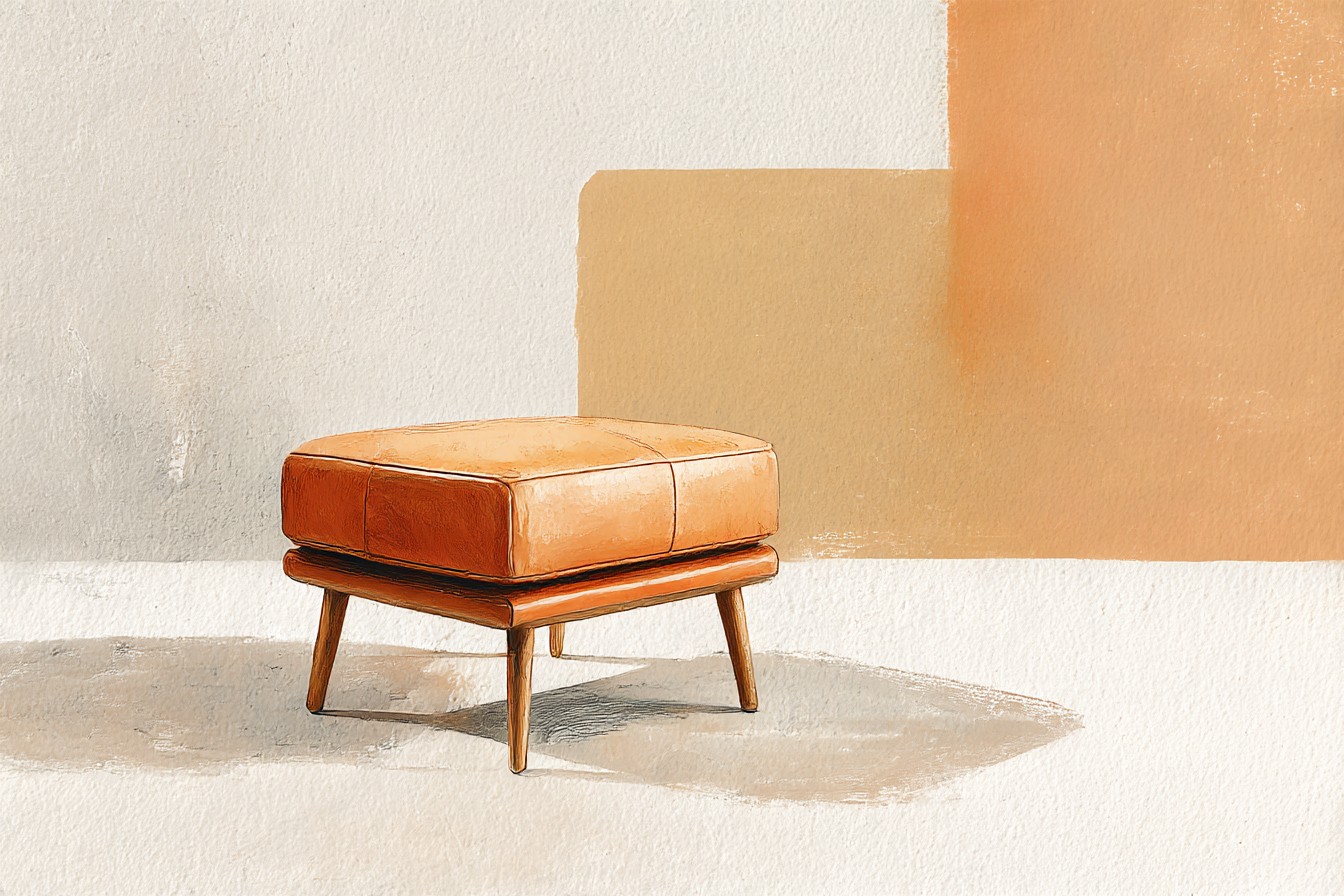
[…] What keeps brown feeling current now rather than dated is mostly texture and undertone. A cool, grayish taupe-brown boucle or a chocolate velvet reads modern in a way that a shiny, orangey leather simply doesn’t, because the shine and the warmth of the tone together push it straight back to that same waiting room. Chenille and boucle in a muted, almost mushroom brown are doing enormous work right now precisely because they look soft and current rather than heavy and old fashioned, and if you’re choosing between a warm cognac leather and a cooler, deeper brown fabric, I’d say go cooler if your room already leans warm, and warmer if everything else is cold and needs the lift. My sister took one look at a caramel colored leather sample I was considering last year and said, “that’s a handbag, not a sofa,” which from her is basically a formal objection lodged with the committee, and she wasn’t entirely wrong, it did look more suited to a Florentine market stall than a living room. […]
[…] going for it, the second half of this is entirely about contrast, and this is where most beige living rooms actually go wrong. People treat beige as a color that needs to be matched, so they pick a beige […]
[…] in, gets a cooler, flatter light most of the day, and it’ll pull the blue or green out of a gray sofa and make it look almost […]
[…] meant to meet. The other side says that’s the whole point, that the clash is what stops the room looking like a catalogue page nobody actually lives in. Someone described their own living room as “one rattan table away from looking like a […]
[…] camps have also, at various points, stood in a dark room slapping the base of the lamp like it owes them money because they forgot which one this particular […]