
I pull four throw pillows off my couch every single night, set them on the armchair like I’m clearing a job site before the crew shows up, and about twice a year I actually run one of them through the wash instead of just fluffing it and shoving it back where it belongs. That’s roughly the real ratio for most people, I’d bet. You use these things constantly, they take a coffee splash or a dog paw or whatever your kid’s been eating that week, and then they sit there looking fine on the surface while something underneath slowly goes wrong. Nobody thinks about a throw pillow as two separate builds until they’ve ruined one, and that’s really the whole answer to “can you put throw pillows in the washing machine.” Depends which part of it you’re asking about.
Because a throw pillow isn’t one object. It’s two. There’s the cover, which is fabric and thread and usually a zipper, and there’s the insert, which is the actual cushion doing the work inside it, foam or fiberfill or feathers depending on what you bought and how much you paid for it.
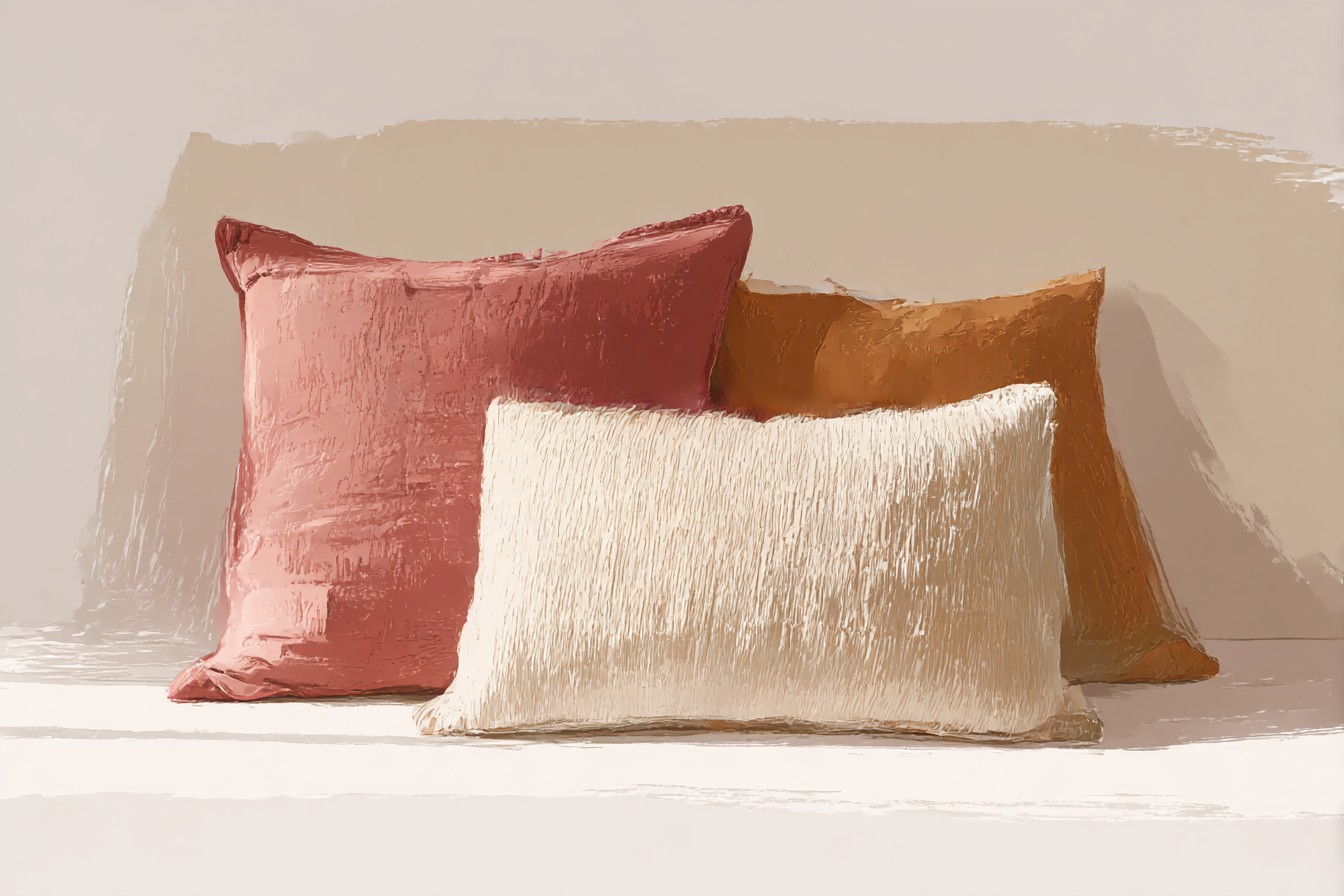
I look at furniture the way I’d look at a job before quoting it, take it apart in my head before I decide what I’m dealing with, and pillows are no different. Wash the cover without thinking twice about the insert and you’re fine most of the time. Toss the whole thing in as one unit, insert included, and you’re rolling dice with something that’s got zero drainage and a filling that behaves completely differently once it’s wet than it does dry.
I learned this the annoying way, not dramatically, just a slow, dumb realization. Had a pair of poly filled cushions from a set I bought years back, ran them through on a normal cycle because I was in a hurry and didn’t think about it, and pulled them out looking like two lopsided dumplings. All the fill had shifted and clumped into corners and refused to go back. They never really recovered. Sat on the couch after that looking vaguely deflated in one spot no matter how much I punched them back into shape, which is a strange thing to be annoyed about but I was.
So that’s the real question underneath the question. Not “can you,” you obviously can put fabric in a washing machine, that’s what a washing machine is for. It’s what’s inside that fabric, and whether that filling is built to survive water, agitation, and heat without turning into something you can’t undo.
[Throw Pillows]
Covers vs Inserts
Start here, always. Before you touch a single button on the machine, figure out if your pillow even separates. A lot of decent ones have a zipper running along one edge of the cover, sometimes hidden under a flap of fabric so you don’t notice it unless you go looking, and that zipper is the whole game. Pull the insert out, wash the cover on its own, and you’ve eliminated basically every real risk in one move. No lumpy fill, no soaked foam, no smell that won’t quit. Just fabric getting properly cleaned the way fabric’s meant to be cleaned.
Cheaper pillows skip the zipper entirely and get sewn shut around the insert at the factory, which saves them maybe forty cents in hardware and costs you the ability to ever separate the two pieces without cutting a seam yourself. If yours is sewn shut, that’s your answer right there about whether the whole thing should go in as one unit or not. It shouldn’t, not really, but you’re stuck deciding between washing the entire pillow together and risking the fill, or not washing it at all and living with whatever’s on there.
I’ll say this plainly. If you’re buying pillows going forward and you actually care about keeping them clean over time, buy the ones with a real zipper. It’s not a luxury detail, it’s a construction decision that determines whether this thing has a maintainable life or a disposable one. I check for it now before I check the fabric, same as I’d check how a drawer’s joined before I care what finish is on it.
[Covers vs Inserts]
Poly Fill Inserts
Polyester fiberfill is what’s in most affordable throw pillows, little synthetic clusters packed in loose, and it’s genuinely fine in a washing machine up to a point, better than people assume. The failure mode isn’t the washing, it’s the drying. Wet poly fill wants to clump, and if you don’t break it up while it’s drying it’ll set into those clumps and stay that way, same as the two dumplings I mentioned.
The trick, and I only figured this out after ruining a set, is to run the dryer on low heat and physically stop it every fifteen or twenty minutes to knead the pillow with your hands, break up whatever’s started sticking together before it locks in. Throwing a couple of clean tennis balls or actual dryer balls in with it helps too, keeps things moving instead of settling into a single wet mass at the bottom of the drum. It’s more attention than most people want to give a throw pillow, I get that, but it’s the difference between it coming out looking like it did before and coming out looking like it took a hit.
Also, and this one’s easy to miss, don’t overload the washer with more than one or two pillows at a time. Poly fill needs room to move and rinse clean, and a machine packed tight just mats everything into itself instead of actually washing it. Same principle as not overloading a dryer, things need space to tumble properly or they just steam each other.
[Poly Fill Inserts]
Down and Feather Inserts
These are a different animal and I’d treat them with more suspicion than poly fill, not less. Down and feather inserts can technically go in a washing machine, most care tags will even say so, but they take real patience to dry properly, and if you rush that step you’re looking at a mildew smell that never fully leaves. Wet feathers held inside a damp cover for even a day is enough to start that, and once it’s in there it’s basically permanent, no amount of extra detergent fixes a smell that’s already set into the fill.
You Might Also Like

There’s also the quill problem. Feathers have a hard little spine, and washing machine agitation is rough enough to work some of those spines right through the inner ticking, especially on cheaper inserts that used thinner fabric to keep costs down. You end up with tiny feather points poking through the surface, which feels awful under a hand and looks worse. Higher end down inserts use a tighter woven ticking specifically to prevent this, and that’s a real construction difference worth knowing about, not just a marketing line on the tag.
If you do wash one, plan for multiple dryer cycles on low heat, not one long one on high. Down needs slow, repeated tumbling to fully dry through the clusters, and rushing it with high heat risks scorching the ticking before the inside’s even properly dry. Honestly, for most people, spot cleaning the cover and airing the insert out in the sun for a few hours does more good with a lot less risk attached.
[Down and Feather Inserts]
Foam Inserts
Foam is the one I’d tell you flat out, don’t put it in the washing machine. I don’t care what the tag says. Foam absorbs water like a sponge because that’s essentially what it is, an open cell structure built to hold air, and once that structure’s holding water instead it takes days to fully dry through the middle, not hours. In the meantime you’ve got a damp block sitting somewhere, breeding mildew from the inside out where you can’t even see it happening until the smell shows up.
I took a foam lumbar insert apart once out of curiosity more than anything, wanted to see what was actually inside the ticking, and found a solid slab of medium density foam with zero drainage built in anywhere. No channels, no venting, nothing. Soak that and you’re basically trying to dry a brick. Machine agitation on top of that can start breaking down the cell structure itself, so even once it does dry, it might come back thinner and less springy than it went in, permanently compressed in spots where the water sat longest.
Spot clean the cover if it’s removable, wipe the foam itself down with a barely damp cloth if it needs it, and let it air dry fully in open air before it goes back in the cover. That’s it. That’s the whole process. Foam inserts are the one category here where I don’t have a clever workaround, because there isn’t one. Some things just aren’t built for a washing machine, and pretending otherwise gets you a ruined cushion and a bad smell you can’t source for a week.
[Foam Inserts]
Zippers and Construction
Once you’ve sorted the insert question, the cover itself has its own weak points worth checking before it goes in. Zippers are the first thing I look at. A proper metal or heavy duty plastic zipper stitched into a reinforced seam will survive dozens of wash cycles without complaint. A flimsy nylon zipper glued or lightly stitched into a single layer of fabric will start separating from the seam within a handful of washes, and once that starts it doesn’t stop, it just gets worse every time.
Piping is the other one. That decorative cord running along the edge of a lot of pillow covers is usually cotton cord wrapped in the same fabric as the cover, and if it wasn’t preshrunk before assembly, it’ll shrink unevenly in the wash relative to the main panel, puckering the whole seam line into a slightly warped edge that never lies flat again. You’ll see it most on cheaper covers where corners were cut somewhere in the process, and once you know to look for it, you’ll spot it on pillows in other people’s houses too, which is a mildly annoying habit to pick up.
Buttons tufted through the middle of a cover are their own risk category entirely, agitation puts real strain on whatever thread’s holding that button through two layers of fabric and fill, and I’ve seen more than one pop clean off mid cycle.

If your cover’s got tufted buttons, hand wash it or skip the machine altogether, it’s genuinely not worth the gamble on a detail that’s purely decorative anyway.
[Zippers and Construction]
Final Thoughts
If you take one thing from all this, take the separation. Cover and insert are two different jobs with two different rules, and treating them as one object is where almost every ruined throw pillow starts. Poly fill forgives you if you’re patient with the drying. Down asks for more patience than most people are willing to give it. Foam just says no, plainly, and I’d respect that rather than fight it.
None of this is complicated once you’ve actually looked at how the thing’s put together, same as any job. Check for a zipper before you check anything else. Know what’s inside before you decide how it goes in the machine. And if a pillow’s sewn shut with a foam block inside it, that’s not a washing machine problem at all, that’s a spot clean and a bit of sunshine problem, and there’s no shortcut around that one no matter how tempting the whole cycle looks.



[…] four cushion colors against each other with a seriousness that belongs nowhere near a forty dollar throw pillow, and knowing that and doing it anyway are two different things. But the room that works is never […]