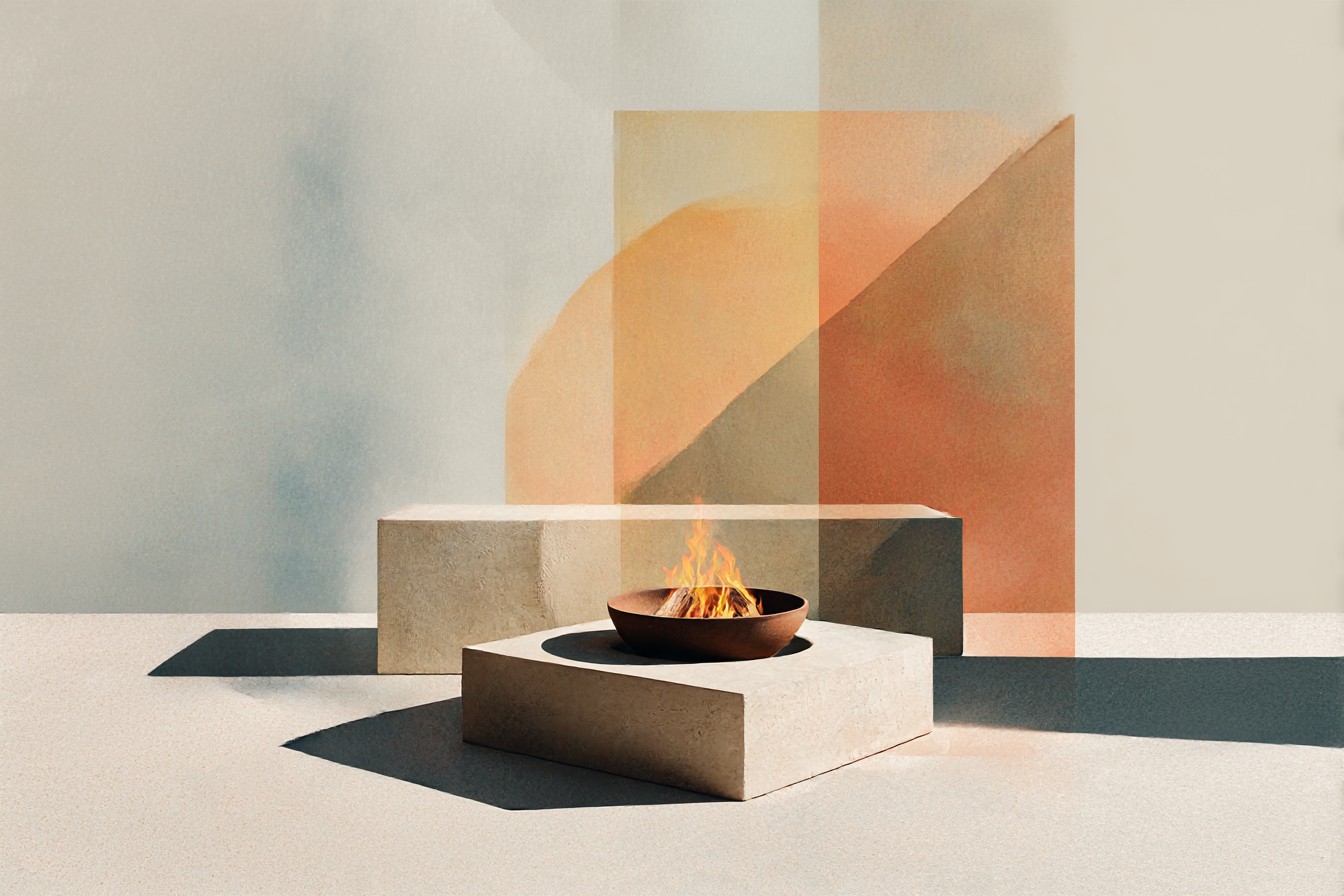
I own four fire pits. Four. I said that number out loud to my sister last month and she just looked at me the way she looks at anything she considers evidence, which is to say, without saying a word, and let the silence do the talking. Four fire pits, on a property in St. Louis that has exactly one patio and one small side yard that gets used maybe six times a year for anything at all, let alone something requiring open flame.
Here’s how it happened, because nobody sets out to own four of anything on purpose. The first was a cheap steel bowl thing I bought in 2009 because it was on sale outside a hardware store and I thought, well, that’ll do.

It did do, for about three years, and then it did something else entirely, which I’ll get to. The second was a cast iron model my husband bought me as an anniversary gift in a year I won’t specify because the anniversary itself is nobody’s business, and that one’s still around, mostly out of loyalty. The third is a propane model that lives under the covered part of the patio and gets used constantly, genuinely the workhorse of the operation. And the fourth, the fourth is a copper one I bought at an estate sale because it was beautiful and I have never once regretted an impractical purchase made purely on the grounds of beauty, that’s a rule I’ve held since 1987 and I’m not changing it now.
What I’ve learned across four fire pits and roughly fifteen years of leaving at least one of them outside through every kind of Missouri weather there is, humid summers that feel like standing inside a mouth, ice storms that take the power out for a week, is that almost nobody who asks whether you can leave a fire pit outside all year is actually asking about the fire. They’re asking about what happens to the metal when nobody’s looking. They’re asking, without quite phrasing it this way, whether they’re about to ruin something they just spent three hundred dollars on by simply letting it sit where they put it.
I’m not going to give you a verdict up front, because the honest answer depends entirely on which fire pit, which cover, and whose yard, and I’d rather walk you through what actually happens to the metal, the moisture, and the base of the thing across a full year than pretend there’s one clean rule that applies to a two hundred dollar steel bowl and a genuine cast iron piece that’ll outlive both of us if you treat it right.
[Fire Pits]
The Metal Itself
That first steel fire pit from 2009, the cheap one, developed a rust hole clean through the bottom of the bowl by year three. Not surface rust, not the cosmetic orange dusting that looks bad but does nothing, an actual hole, the kind where ash started falling through onto the patio stone underneath and I had to retire the thing entirely. That’s what thin steel does when it’s left outside permanently without a real plan, and I want to be honest that it was entirely my fault, I knew what I was buying, I just didn’t think the weather would bother to notice something that cheap.
Cast iron behaves completely differently, and it took me embarrassingly long to understand why. It rusts too, don’t let anyone tell you otherwise, but it rusts slowly and in a way that’s almost cosmetic for years before it becomes structural, and a light seasoning of oil on the metal, the same idea as seasoning a cast iron skillet, buys you an enormous amount of time. My anniversary fire pit has a fine, even, dark patina now that looks intentional, and mostly is, because I keep after it.
Copper does something else entirely, it doesn’t rust so much as it ages, that green patina everyone associates with old copper roofing, and honestly I’d rather have watched that happen slowly outdoors than have somebody’s overzealous cleaning regimen strip it off, which is a mistake I’ve seen made and would like to have a word with whoever decided vinegar and steel wool was the answer.
The metal tells you everything if you’re willing to look at it honestly instead of hoping it’ll sort itself out.
[The Metal Itself]
Covers, and the Ones That Actually Work
I want to talk about covers honestly, because I bought at least six of them across four fire pits before I understood what I was actually looking for, and most of what’s sold as a fire pit cover is, frankly, a glorified trash bag with a drawstring, and I say that as someone who has genuinely lost patience reading the word WATERPROOF in capital letters on packaging for something that let water pool directly in the seam within one storm.
What actually works is a cover with a vent, something that lets a little air move through so condensation doesn’t just sit trapped against the metal, because trapped moisture under a cover is in some ways worse than no cover at all, you’re essentially building a small greenhouse for rust and calling it protection. The cast iron piece has a heavy vinyl cover with a proper vent at the top and a drawstring cinch at the base, and it’s the only cover of the six I’ve owned that hasn’t needed replacing.
The copper one I don’t cover at all, deliberately, because I want that patina to happen and covering it just delays the inevitable while trapping moisture against it unevenly, which gives you a blotchy result instead of an even one. My sister thinks this is me being precious about it. She’s not wrong, exactly, but I’d rather be precious on purpose than careless by accident.
What I wouldn’t do, not ever again, is buy a cover on the strength of the word on the box. Feel the material. If it’s thin enough that light comes through it, it’s not doing the job.
[Covers]
You Might Also Like

Where You Put It
Nobody talks about the base enough, and I include my younger self in that, the woman who set a steel fire pit directly on grass in 1998 and then acted surprised, actual genuine surprise, when the bottom rusted out from underneath before the top did. Grass holds moisture against metal in a way that’s almost designed to cause the exact problem you’re trying to avoid, and if your fire pit sits directly on soil or turf, you are giving the rust a running start it doesn’t need.
What I do now, on every single fire pit I own, is put something between the base and the ground. Pavers, a simple concrete paver stand, even a metal fire pit mat, anything that lifts the airflow underneath and gives water somewhere to go besides straight up into the base. It sounds like a small thing and it is a small thing, and it’s also the single change that’s added the most years to the life of any fire pit I’ve owned.
Drainage around the pit matters just as much as what’s under it. If your patio slopes toward the fire pit instead of away from it, water’s going to find its way there regardless of the cover, and I learned this the hard way on the side yard, which slopes very slightly toward the house in a way nobody mentioned when we bought the property, and which turned that particular spot into a shallow puddle after every real rain until I finally had a few pavers reset properly.
[Placement and Drainage]
Propane Fire Pits Specifically
The propane fire pit is the one I use constantly, and it’s also the one I worry about differently than the others, because the actual fire bowl isn’t really the concern, it’s what’s underneath it. The burner assembly, the connections, the little control knob, all of that is far more sensitive to moisture than a plain steel or cast iron bowl ever is, and a fire pit that looks fine on top can have a burner slowly corroding underneath where you can’t see it happening.
I keep mine under the covered part of the patio specifically because of this, not out of any concern for the tank itself, which lives detached in a shed anyway, but because that burner assembly genuinely does not want to sit under open sky through a Missouri winter. If yours doesn’t have covered shelter, the case for a proper, well fitted cover gets considerably stronger, and I’d go so far as to say it’s closer to necessary than optional.
There’s a particular smugness in fire pit marketing about propane models being the low maintenance option, and I’ll admit I fell for it once, back when I first bought this one and assumed low maintenance meant no maintenance. It doesn’t. I check the connections every spring before I use it for the first time, and I’ve found corrosion on the fitting exactly once, caught early enough that it was a five minute fix instead of a replacement part. That’s the whole difference, catching it in spring rather than finding out the hard way in July.
[Propane Fire Pits]
The Yearly Rhythm
Here’s what I actually do, not what any manual tells you to do, across an actual St. Louis year with its actual weather, which swings from soupy humidity in July to ice storms in January with almost no gentle in between. In late fall, I give every fire pit a real once over, a look at the metal, a check for any rust starting at the seams, and I make sure every cover is cinched properly before the first hard freeze, because ice sitting in a loose fold of vinyl does its own quiet damage over a winter.
Through winter I don’t move anything indoors, none of them, that’s simply not a battle I’m interested in fighting given how much these things weigh and how little space I have in the garage, but I do check on them after any major ice event, mostly to knock accumulated ice or snow off the cover before its weight stretches the seams. Spring is when the real inspection happens, uncovering everything, checking the propane fittings, giving the cast iron a light reoiling if it needs it, which it usually does after a wet winter.
Summer’s easy, frankly, everything’s in use, nothing’s sitting idle long enough to cause trouble, and the biggest risk is just a sudden downpour catching a fire pit uncovered after an evening of use, which has happened to me more than once and has never once been fatal to the metal, just an annoyance.
[The Yearly Rhythm]
Final Thoughts
So can you leave a fire pit outside all year.

Yes, obviously, people do it constantly, I’ve done it with four of them for longer than some of you reading this have been alive. But the honest answer was never really about permission, it was about which fire pit, which base, which cover, and whether you’re willing to look at the metal honestly a couple of times a year instead of hoping the weather forgets it’s there.
The cheap steel one taught me what happens when you don’t. The cast iron one is teaching me, slowly and satisfyingly, what happens when you do. The copper one is teaching me that sometimes the right answer is to let the weather do exactly what it wants and call the result character instead of damage. And the propane one is teaching me, every spring, to check the parts you can’t see before you assume they’re fine.
None of that requires bringing anything indoors, or fussing over it daily, or buying a fifth fire pit, which I want to state clearly I have no plans to do, though I said that after the third one too. It just requires paying the same kind of attention you’d give anything else made of metal that you expect to still be standing in ten years. Most things left outside don’t fail because of the weather itself. They fail because nobody looked closely enough, often enough, to catch the small problem before it became the whole fire pit.