
I got rid of the television in the den in 2019 and left the stand exactly where it was for four months, empty, because I genuinely did not know what a piece of furniture built entirely around the absence of one specific object was supposed to hold instead. I want to be honest about how dumb this looked. It was a low, long console, walnut veneer, three doors, built for a screen that used to sit dead center on top of it like a shrine, and once the television went to my nephew’s apartment, what remained was a shelf with a ghost on it. For a while I propped a single houseplant in the middle, dead center, exactly where the TV had been, like I was still arranging furniture around a television that no longer existed. My sister came over, looked at it, and said “that’s a strange little altar you’ve built,” which from her is about as pointed as commentary gets.
It took me embarrassingly long to work out that the mistake wasn’t the stand, it was treating the stand like it still had a job description. A piece of furniture that was designed to hold a box that displays moving pictures does not actually care what sits on it.
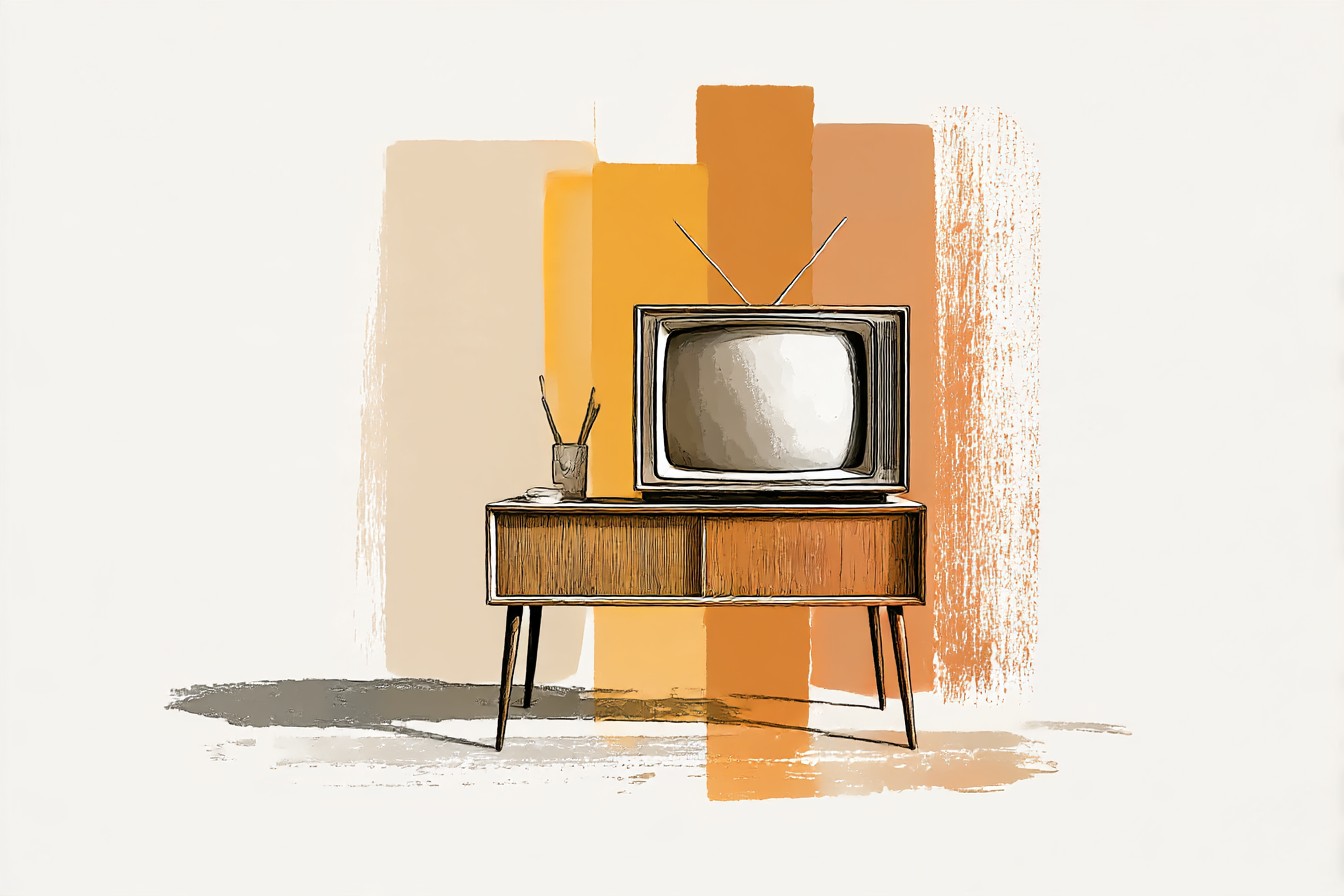
It’s just a low, sturdy, horizontal surface with storage underneath, and once I stopped trying to replace the television with one dramatic object and started thinking about what a sideboard, a console, or a low cabinet is actually good at, the whole thing sorted itself out inside a weekend.
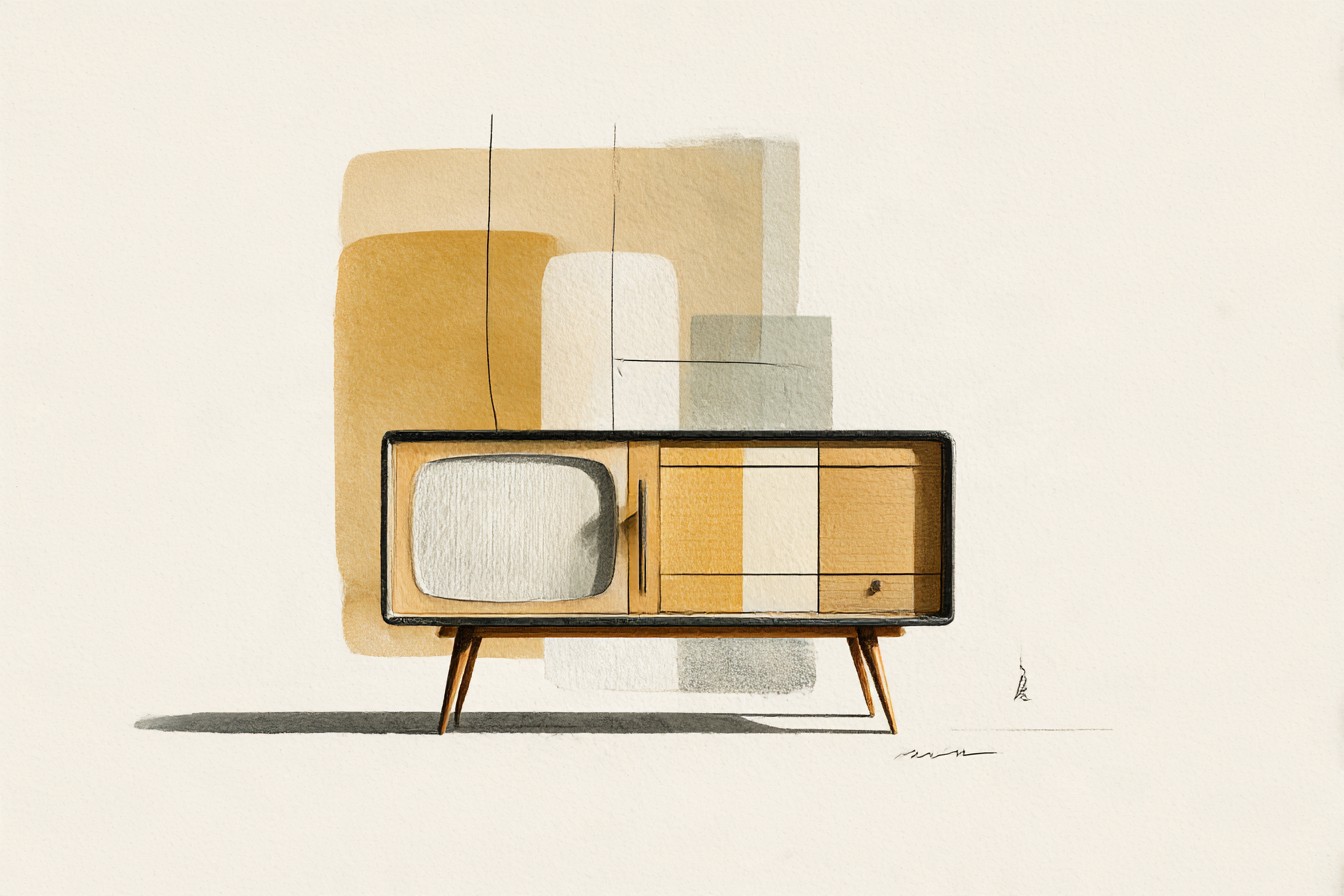
I think this is a more common problem than anyone admits, because television stands are a strange category of furniture in that they’re bought almost entirely for their function and almost never for their own sake, and then people go and get rid of the television and are left holding what is functionally an orphaned piece of casework. So here’s what I’ve actually done with mine, and with two others I’ve inherited from relatives over the years, once I stopped mourning the television and started treating the stand like the low console it always secretly was.
[TV Stand Without a TV]
The Display Shelf
The top surface of a TV stand is, once you look at it properly, exactly the same proportions as a mantel, and I have no idea why it took me until I was well into my fifties to notice that. Mine holds a row of depression glass I picked up piece by piece at estate sales over about fifteen years, none of it matching, all of it faintly green and catching the afternoon light in a way a flat screen television never once managed. I’d tell the woman who bought that stand in 2004 that she was going to spend the next two decades collecting glassware she didn’t know she wanted yet, and she’d have looked at me like I’d lost my mind, because in 2004 the only thing that mattered about that surface was whether the cable box fit.
The trick, and I did have to learn it by getting it wrong first with that lone sad houseplant, is that a display surface wants asymmetry and a bit of height variation, not one big centered thing standing in for the television it replaced. Group in odd numbers. Let something tall lean against the wall behind shorter pieces. My stand has a stack of art books doing the height work on one end and a small ceramic bowl doing almost nothing on the other, and somehow that nothing is exactly what makes the glassware in the middle look intentional rather than lonely.
The doors underneath still matter here too, because the display only works if the clutter that would ruin it, the remote control basket nobody’s thrown out, the spare HDMI cables from a device you no longer own, has somewhere to actually go. Mine’s hidden two spare picture frames and a box of coasters behind those doors for about six years now. Nobody’s ever asked what’s in there. That’s rather the point of a door.
[Display Shelf]
The Bar
I resisted turning mine into a bar for longer than I should have, mostly because I associated home bars with the sort of overconfident 1970s rec room my parents’ neighbors had, complete with a mirrored wall and a level of hospitality nobody had actually requested. But a low, long stand with storage underneath is, and I say this now with total confidence, a far better bar setup than most furniture actually marketed as bar carts, which tend to be narrow, top heavy, and one determined toddler away from a disaster involving a bottle of Campari.
Mine holds glassware on top, a wooden tray I bought secondhand for four dollars that I have never once regretted, and bottles standing in loose height order behind the doors where they’re out of direct sun, which matters more than people think if you actually care whether your gin tastes the way it did the day you bought it. The middle door houses the bottles I use constantly. The two end doors hold the stuff that comes out twice a year, the good bourbon, the vermouth nobody remembers buying.
What I’d tell the version of me eyeing this idea nervously in about 2015 is that a bar doesn’t need to announce itself. It just needs a flat surface at a sensible height for pouring, which a television stand happens to be built at almost exactly, and somewhere closed off to keep the bottles from becoming visual clutter the second you’re not using them. My sister took one look at the setup, poured herself a small glass of the sherry, and said nothing else, which given how she felt about the plant altar, I’m choosing to take as a genuine endorsement.
[Bar Unit]
The Storage Unit Nobody Notices
This is the least glamorous option and also, if I’m honest, the one that’s saved my sanity in the guest room, where an old low stand from my daughter’s first apartment now lives holding board games, a stack of spare linens, and a truly unreasonable number of extension cords I keep meaning to sort through. There’s no display element here at all. The top holds a lamp and a stack of paperbacks people can actually read while they’re staying, and that’s it, and I think that restraint is doing more work than a styled vignette would.
You Might Also Like

I made the opposite mistake with this exact stand back when it first came into the house, trying to make it into a little display moment with a framed photo and a candle, and it looked confused, because a guest room doesn’t need another thing to look at, it needs somewhere for the extra blanket to live that isn’t the floor. Once I gave up on making it pretty and let it just be useful, it finally earned its keep.
The doors are doing the heaviest lifting in this version. If you’re using a stand purely for storage, measure what’s actually going inside before you commit, because I once shoved a stack of oversized coffee table books into a cabinet built for cable boxes and had to force the door shut every single time for about a year before I admitted defeat and moved them elsewhere. Not everything low and rectangular is interchangeable, whatever the shape suggests.
[Storage Unit]
The Plant Shelf
I’ve become, in my own low key way, the kind of person who has opinions about grow lights, and the stand in my sunroom is entirely responsible for that. It’s a shallower, mid-century piece with tapered legs that used to hold a television roughly the size of a small refrigerator, and now it holds a row of pothos, a maidenhair fern that has survived three moves against all reasonable odds, and one very dramatic snake plant doing absolutely nothing except looking pleased with itself.
The legs matter enormously here in a way they never did for the television. Airflow underneath keeps the wood from taking on the kind of damp, musty smell you get when pots sit directly against a closed surface, which I learned the hard way with the very first plant stand attempt, a solid cabinet piece with no ventilation at all, where I opened the doors one day to a smell I am not going to describe in detail except to say it involved mildew and my own poor judgment.
What I’d tell my younger self here is fairly simple: a piece with legs and open air beneath it is doing you a favor before you’ve even set a single leaf on it, and the low, wide surface of a stand gives you room to stagger pot heights the way you never could on a narrow windowsill. It’s the closest thing to a real greenhouse shelf I’ve managed without actually building one, and it took a dead television and one unfortunate cabinet to get me there.
[Plant Shelf]
The Record Station
The most recent conversion, and the one I was most smug about, is the record player setup in the corner of the den, where the same walnut stand from the very beginning of this whole saga finally found its actual calling.

The turntable sits slightly off center on top, which took real effort to get comfortable with after years of everything being built around a centered screen, and the vinyl itself lives upright in the cabinet below, sorted in a system that makes sense to exactly one person, me.
I will admit I called this whole idea a nineties throwback the first time a friend mentioned doing it with her own stand, some old association with a college boyfriend’s apartment and a milk crate full of records, and it took actually living with mine for about a month to realize the low height and open top are simply correct for a turntable regardless of what decade you first saw one in. The stand doesn’t care what decade it’s serving. It just wants a stable, vibration free surface, and that’s precisely what it was built to provide.
The one warning I’ll give, because I learned it the loud way, is to check the top surface for actual rigidity before you put a turntable on it. Mine has a slight flex in the veneer near the left edge that I didn’t notice until the needle skipped through half of a Nina Simone record, and I now keep the turntable centered over the sturdier section, which the original television, being centered itself, never gave me a reason to discover.
[Record Station]
Final Thoughts
If there’s a single thing I’d want someone to take from all this, it’s that a television stand was never really about the television, it was always just a low, sturdy, well proportioned surface with storage that happened to spend a few decades pretending its whole identity was tied to one particular box. Take the box away and what’s left is genuinely more useful, not less, whether that means glassware catching the light, a fern with room to breathe, or a stack of extension cords nobody has to look at. I got there eventually, after an embarrassing few months of a single sad plant standing where a television used to be. You don’t need to take that long. Just stop asking what the stand is missing, and start asking what it’s actually good at holding.

[…] a month and it went straight back to looking like absence, just a paler absence. Two ivory, and let something else carry the rest of the […]
[…] to do with flowers at all, and I’d grabbed a cylinder vase to hold it down while I filmed something else, and I’d shoved some glass marbles in the bottom because I needed weight in it fast and […]
[…] don’t insulate a hot dish worth a damn, so if you’re after protection buy something else and use these for show. But for the actual daily business of eating dinner off a table that looks […]