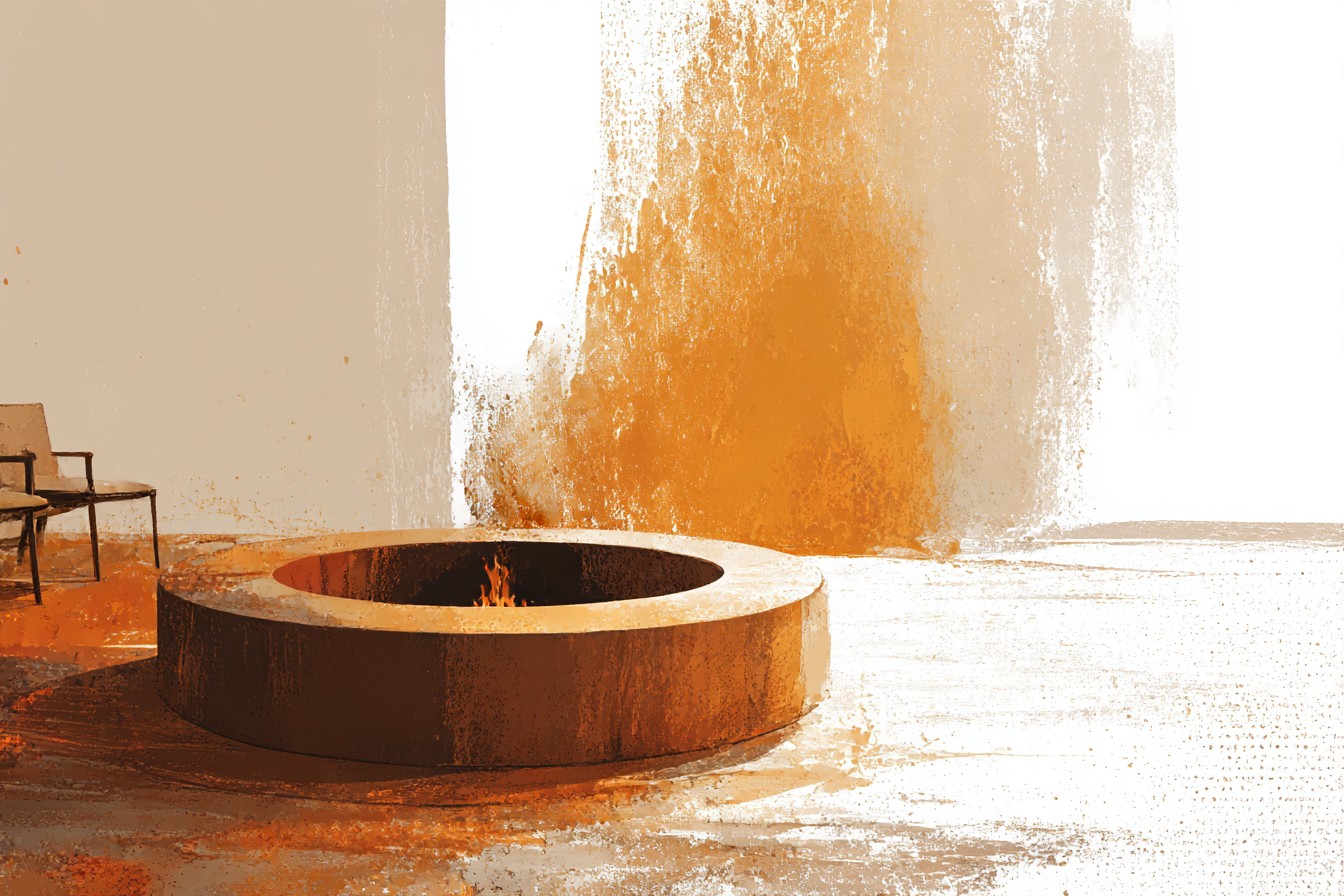
I own three fire pits. Three. For one Boston backyard that is, and I am not exaggerating for effect here, twenty two feet by fourteen feet. That is not a typo. I have done the math more than once, usually while standing in the yard holding a fourth potential fire pit up on my phone screen, and the ratio of fire pits to usable lawn in my life is now genuinely embarrassing.
Here is how it happened, because it always happens gradually, never all at once. The first one was a cheap steel bowl on three legs, bought the summer everyone suddenly discovered outdoor entertaining again, and I put it directly on the grass because the box didn’t tell me not to and I didn’t think to ask.
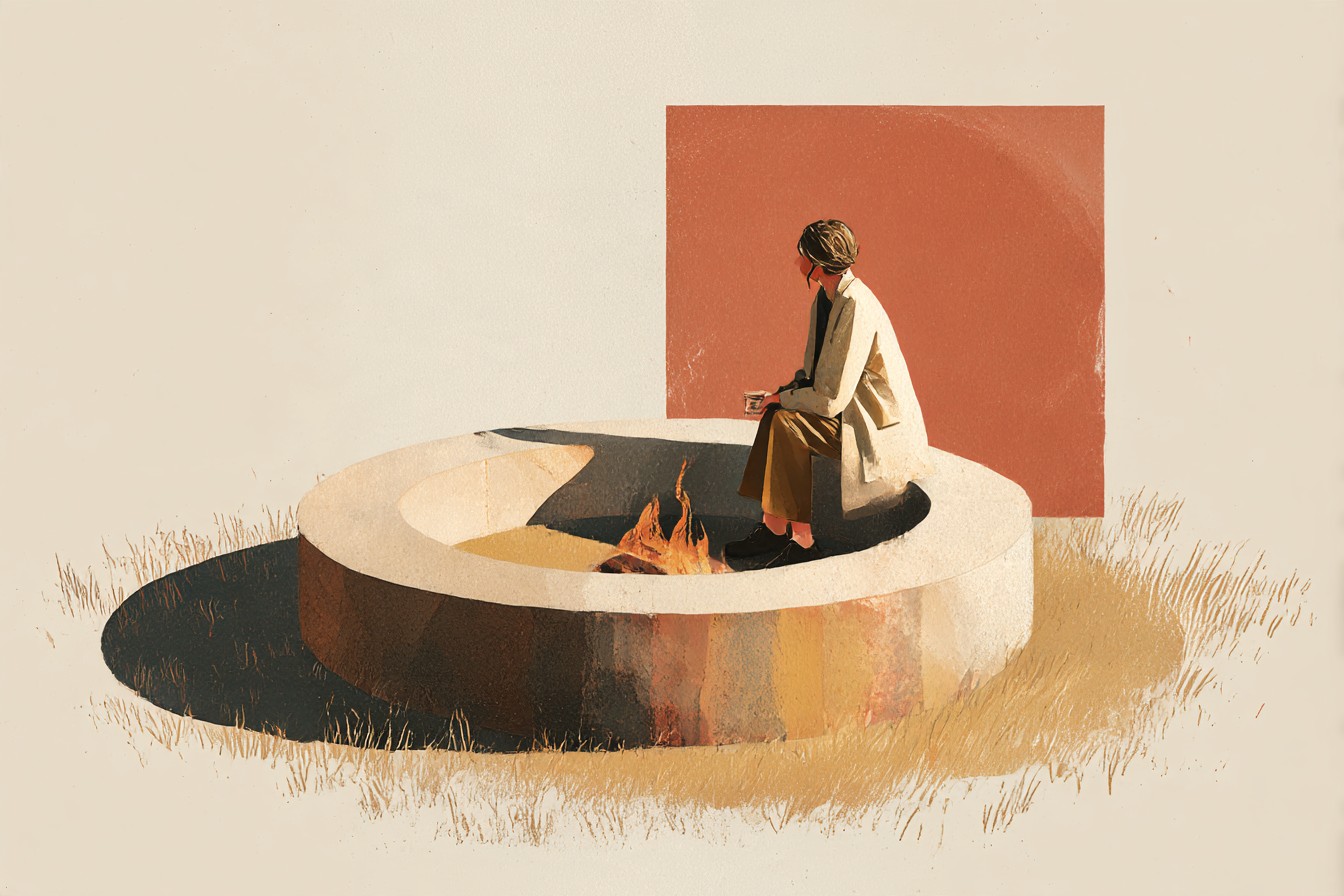
Within six weeks there was a perfect brown circle in my lawn, roughly the diameter of a manhole cover, dead and crunchy and humiliating every time I looked out the kitchen window. The second one was meant to be the fix, a slightly nicer model I convinced myself was different somehow, structurally, magically, and it produced the exact same result about four inches to the left of the first one, so now I had two dead circles, slightly overlapping, like a Venn diagram of my own bad decisions. The third fire pit is the one that finally comes with its own stand, and it is the only one I use now, and the other two are stacked in the garage like monuments to a lesson I should have learned the first time.
That brown circle is the whole story, honestly. Nobody warns you about it. Every bit of marketing copy for these things shows them glowing beautifully on a lush green lawn at golden hour, and not one of those photos is telling you what that lawn looks like six weeks later. Grass does not deal well with sustained radiant heat any more than your skin would, and a fire pit sitting flush on turf is basically running a low grade oven eighteen inches off the ground for hours at a stretch. The grass underneath cooks, the roots underneath that cook too, and what you’re left with isn’t a tan patch that bounces back with some rain, it’s dead, and dead grass takes a full season to grow back if it grows back evenly at all. So yes, you can use a fire pit on grass. Nobody’s stopping you. But if you do it the way I did it the first two times, you’re not choosing a fire pit, you’re choosing a scar.
[Fire Pit on the Lawn]
The Stand That Actually Does Its One Job
The single most useful object in my entire fire pit saga cost less than one of those overpriced bags of “premium” fire glass everyone tries to upsell you on, and it’s just a stand. Metal legs, sometimes with a small heat shield built into the design, sometimes just raised feet, whose entire purpose is putting air between the bottom of the fire bowl and the top of your lawn. That gap is everything. A few inches of moving air underneath the pit means the heat isn’t sitting still and cooking one static patch of ground, it’s dissipating sideways and upward the way it’s supposed to.
My third fire pit, the one that survived, came with this built in from the factory, four sturdy legs lifting the bowl about five inches clear of the ground, and I have used it on the same patch of grass for two full summers now with zero brown circle. None. I go out there specifically to check, which tells you something about how traumatized I still am by the first two.
If your fire pit didn’t come with a stand, you can buy one separately, and you should, because a company selling you a flat bottomed steel bowl and letting you find out the hard way about scorched grass does not get to act surprised when you’re annoyed about it. You do not get to ship me a fire pit with zero ventilation underneath it and call the lawn damage an unfortunate but unavoidable side effect of enjoying your product. It’s not unavoidable. It’s a design choice, and it’s usually a cheap one.
[Fire Pit Stands]
The Pad or Mat Underneath, Because Belt and Suspenders
Tabletop and Portable Pits, and the Trick of Just Moving the Damn ThingNot every fire pit needs the full stand and pad treatment, and this is where the smaller tabletop and portable models actually earn their keep. Mine is a little tabletop version I keep on the deck most of the time, gel fuel or small wood pellets depending on my mood, and because it’s light enough to pick up with one hand, I move it. Constantly. It never sits in the same six inch spot for more than one evening in a row.
That’s the actual trick with anything portable, and it works even without a fancy stand. Grass under sustained heat dies. Grass under occasional heat, spread across a rotating set of spots over a season, barely notices. I’ve got a mental map of four or five little zones in the yard I cycle through with the tabletop pit, none of them ever getting hit twice in the same week, and none of them have so much as yellowed.
The catch, obviously, is that this only works if you actually remember to move it, and I did not remember for the first month I owned it, because I am apparently a slow learner specifically about fire and grass. There’s a faint ghost of a ring on the deck boards from that stretch, which is a separate problem I’m choosing not to think about right now. But on actual lawn, the rotation habit alone has done more for grass survival than either of my first two, planted-and-forgotten, full size pits ever managed.
You Might Also Like

[Portable Fire Pits]
Just Building the Damn Pad, Properly, With Pavers
At some point last spring I got tired of managing stands and mats and rotation schedules like I was running a small logistics operation for one backyard fire, and I built an actual permanent base instead. A ring of interlocking pavers, about four feet across, laid over a bed of crushed gravel, sitting slightly proud of the surrounding lawn so runoff drains away from it rather than pooling underneath.
This is the option for anyone who’s decided the fire pit lives in one spot, permanently, and isn’t interested in the whole song and dance of protecting grass that was never going to survive that location anyway. Pavers don’t scorch. Gravel underneath doesn’t hold moisture the way soil does, so you’re not getting the steam and root damage that comes from heat hitting damp ground. And there’s a genuinely nice practical bonus nobody mentions in the fire pit marketing photos, you get a flat, stable surface to actually set the pit on, which matters a lot more than it sounds like it should when you’ve got a full bowl of hot coals sitting on uneven turf that shifts slightly every time someone walks near it.
It took me a Saturday afternoon and roughly ninety dollars in materials, most of that on the pavers themselves, and it has completely outperformed every mat and stand combination I tried before it. If you know the fire pit is staying put, this is the actual fix, not a workaround. The stand and the pad are for people still figuring out where the thing lives. The pavers are for people who’ve made peace with the decision.
[Fire Pit Pavers]
Fire Pits That Bother to Design the Bottom Properly
The last thing I’ll say, and it’s the thing that actually made me the angriest researching all of this, is that plenty of fire pits could solve most of this problem at the design stage and just don’t bother, because a flat bottomed steel bowl is cheaper to manufacture than one with a proper elevated base or ventilation built in. My first two fire pits were both like this. Flat, flush, cheap to make, marketed at a price point that implied I was getting a bargain.
I wasn’t. I was getting a lawn repair bill disguised as a bargain, and that distinction matters. A pit designed properly has some kind of raised base or heat shield engineered in from the start, not as an accessory you’re expected to discover you need after the damage is done. When I finally bought my third pit, the one with the built in stand, it cost about forty dollars more than my first one. Forty dollars, to not destroy my own lawn. That should not have been the premium option. That should have been the standard, and every brand still selling flat bottomed bowls at a discount knows exactly what happens to the grass underneath them and is choosing not to mention it on the box.
I’ve said some version of this rant out loud to my downstairs neighbor at least once, unprompted, while she was just trying to get her mail. She didn’t ask.

I told her anyway, because apparently this is where I am now.
[Fire Pit Design]
Final Thoughts
You can use a fire pit on grass. That was never actually in question, and it never needed a how-to sheet to answer, it needed someone to just say plainly what happens if you don’t think about the bottom of the thing before you light it. Grass and sustained radiant heat do not coexist peacefully, full stop, and the brown circle isn’t bad luck, it’s physics doing exactly what physics does.
The fix isn’t complicated either. A stand to lift it, a pad to catch what the stand doesn’t, a rotation habit if the pit is small enough to move, or pavers if it’s staying put for good. Pick whichever matches how you actually use the thing rather than how the marketing photo staged it. I own three fire pits and only needed to learn this lesson twice before it stuck, which by my own admission is at least one time too many. My lawn has two quiet dead patches that remind me of that every single day I look out the kitchen window, right next to the one healthy circle where I finally did it properly. That contrast is the whole argument, laid out in grass, and I didn’t need a single bullet point to make it.