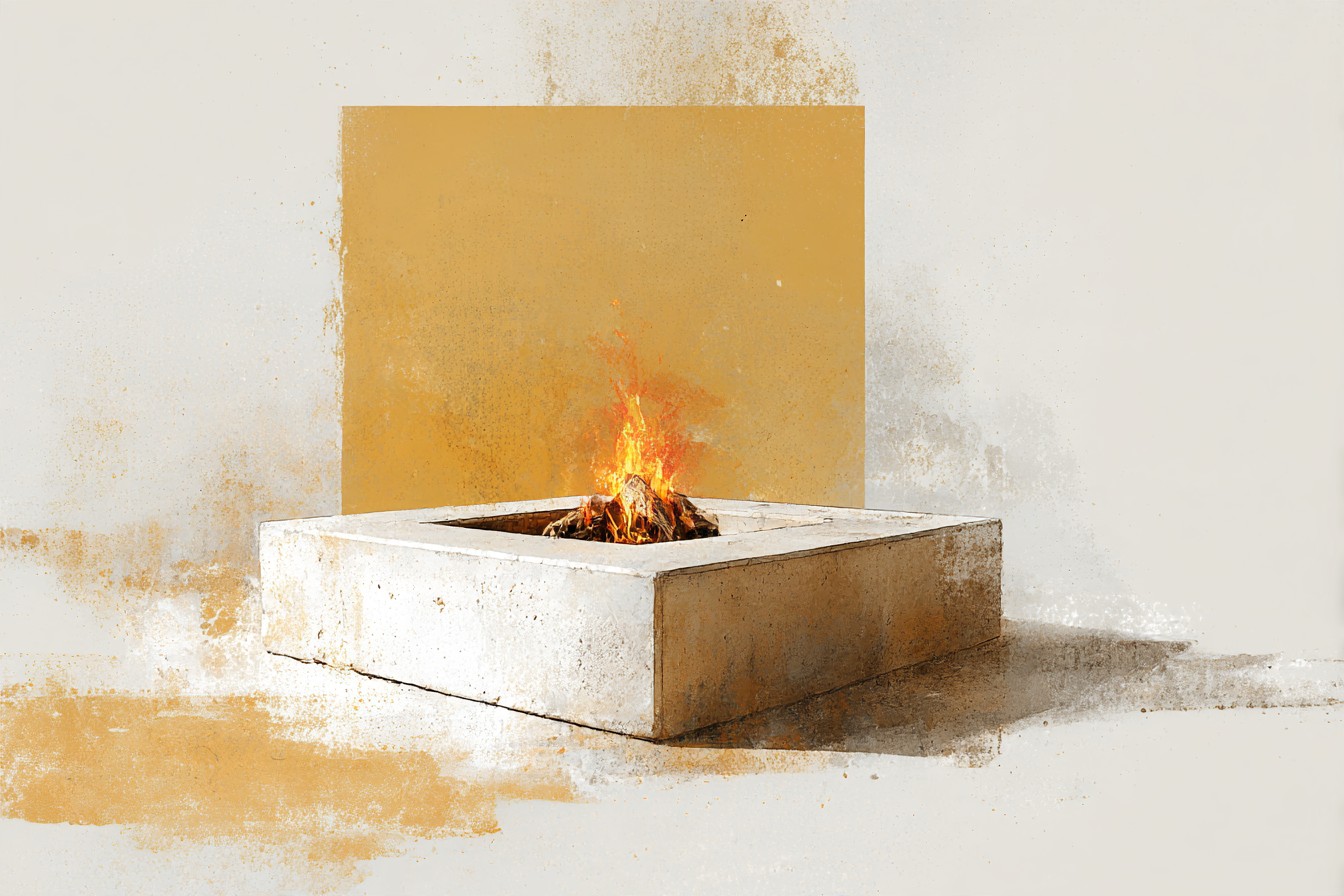
I have scorched concrete under my patio table right now. Actual permanent black moon shaped shadow, about eighteen inches across, exactly where the base of my fire pit sat for one summer, three years ago, in a rental I don’t even live in anymore. I know it’s still there because I drove past it last month out of pure morbid curiosity. That’s how often this thing comes up in my head. Not daily, but often enough that I’ve built up a small, slightly obsessive body of knowledge on the subject, entirely because I got it wrong the first time and have been quietly correcting for it ever since.
Here’s the thing nobody tells you when you buy a fire pit, gas or wood burning, cheap tabletop one or a proper cast iron bowl that weighs as much as a washing machine: yes, you can put it on concrete. Nobody’s going to stop you.
It won’t crack the slab in half or start some structural catastrophe. But concrete is porous, it holds moisture, and moisture plus sudden intense heat is basically a recipe for spalling, which is the technical word for that horrible thing where the surface pops and flakes off in little chips like the concrete is shedding its skin. I didn’t know the word spalling until I had to google “why is my patio exploding in tiny pieces,” which is a genuinely humbling search history to have.
So this isn’t a piece about whether you’re allowed to do it. You’re allowed. This is about what it actually does to the slab you’ve already got, the discoloration, the scorching, the weird ring that never fully lifts no matter how much you scrub, and what I’ve found actually works to stop your patio from looking like a crime scene. My dad, who poured his own driveway back in the nineties and has never once let anyone forget it, still brings up my scorch mark every Thanksgiving like it’s a personal betrayal of concrete as a material. So this one’s partly for him, honestly, partly just to prove I’ve learned something since.
[Fire Pits on Concrete]
Fire Pit Pads and Heat Resistant Mats
The first thing I bought after the scorch mark incident was a heat resistant mat, and I want to be upfront that I bought the wrong one first. I got a thin rubber backed mat marketed as fire pit safe that was, and I checked the label after the fact, rated for radiant heat up to maybe 200 degrees. A wood fire throws way more than that directly underneath the pit, not even counting embers. It bubbled. Actually bubbled, like a pot left too long on a stove, within one evening.
What actually works is a proper mineral fiber pad, the kind sold specifically for under fire pits and grills, usually rated for something like 1900 degrees, thick, a bit ugly if I’m honest, gray and industrial looking in a way that fights against however nice your patio furniture is. I’ve made my peace with that. There’s also a middle category, hearth pads originally made for indoor wood stoves, which work fine outside too and sometimes come in a slightly less depressing finish, slate look, that kind of thing.
Whatever you get, it needs to extend well past the base of the pit, not just match its footprint. Embers don’t fall in a neat circle, they scatter, and I’ve watched a single popping log send a spark a genuinely alarming distance onto bare concrete right at the mat’s edge. Buy bigger than you think you need. I say this as someone who bought exactly to size the second time too and is now on pad number three.
[Fire Pit Pads]
Elevated Stands and Fire Pit Legs
The single most effective thing I’ve done, more effective than any mat, is just get the fire pit off the ground entirely. A lot of newer fire pit designs come with legs built in, usually somewhere between four and eight inches of clearance, which sounds small until you realize that’s the difference between direct contact and actual airflow underneath, which changes the whole heat situation dramatically.
If your fire pit doesn’t come with legs, you can buy standalone stands, usually steel, sometimes with wheels which I did not expect to care about but now genuinely love because it means I can roll the whole setup a few feet in either direction through a season instead of committing one patch of concrete to a lifetime of abuse. Rotate the position even slightly and you spread the heat exposure out instead of hammering the same six square feet every single weekend from May through October.
I will say, cheap stands buckle. I had one, I won’t name the brand because I genuinely can’t remember it and that tells you something about how forgettable it was, that visibly sagged under a cast iron bowl after about six weeks. If a stand is rated for a weight that’s suspiciously close to what you’re putting on it, go up a size. You want real margin here, not a stand that’s technically fine.
[Elevated Fire Pit Stands]
Fire Rings and Heat Deflectors
This one’s less about the ground and more about redirecting the heat before it ever gets there, which honestly should have occurred to me sooner than it did. A fire ring, the metal insert that sits inside an open pit, does a decent job of containing the burn itself, but the real workhorse for concrete protection is a heat deflector plate, a flat piece of steel or a specific heat shield accessory that sits underneath the burner or the fire bowl and bounces radiant heat outward and up instead of straight down.
You Might Also Like

Gas fire pits especially benefit from this, because the flame itself might look contained and civilized compared to a wood fire, but the metal bowl housing it gets ferociously hot on its underside and radiates that heat down in a very concentrated way. I didn’t think about this until a friend of a friend at a barbecue mentioned her gas fire table left a stain that looked less like scorching and more like a chemical burn, a strange yellowish blotch, which is apparently a common complaint with certain propane units that run hot and uneven.
A decent deflector runs maybe forty to sixty dollars depending on size, and honestly for something doing structural damage prevention, that’s not the outrageous end of home spending I usually get worked up about. Compare that to what it costs to have a concrete contractor grind down and resurface a stained patch, which is a conversation I’ve had, and suddenly forty dollars feels like the best money I’ve spent all year.
[Fire Rings and Heat Deflectors]
Sealing and Protecting the Slab Itself
Okay. This is the section where I get slightly worked up, so bear with me. There is an entire industry of concrete sealer marketed as “heat resistant” that, when you actually read the fine print, is rated for foot traffic and mild sun exposure, not for direct open flame contact. That’s not a small distinction. That’s the difference between a product doing its actual job and a product borrowing a phrase that sounds protective without meaning anything specific.
If you’re sealing concrete before putting a fire pit on it, and you should, sealing genuinely does help, it fills the pores that let moisture in and reduces staining from ash and grease, you want something explicitly rated for high heat zones, not just general patio sealer with a vague “durable” label slapped on. Silicate based penetrating sealers tend to hold up better under direct heat than the film forming acrylic ones, which can actually discolor or go cloudy when they get hot, which is the opposite of what you bought them for.
I resealed my current patio properly two summers ago, did the whole thing myself on a Saturday, knees aching, absolutely covered in sealer by the end of it, and it has made a real difference. Water beads off it. Ash brushes away instead of staining straight in. It’s not glamorous work and nobody’s going to compliment you on it, but it’s the one step that actually protects the concrete itself rather than just protecting it from the thing sitting on top of it.
[Sealing Concrete for Fire Pits]
Building a Gravel or Paver Apron Instead
If you want the actual permanent fix, and I mean the one that stops you thinking about any of this ever again, it’s not a mat or a sealer, it’s just not putting the fire pit directly on the existing concrete at all. A gravel apron or a paver base, built specifically as a fire pit zone separate from your main patio slab, sidesteps the whole problem because you’re not asking finished, sealed, decorative concrete to survive direct flame exposure in the first place.
This is more of a project than a purchase, I’ll be honest, it involves digging out a shallow area, laying landscape fabric, filling with a few inches of gravel or a ring of fire brick pavers, and it’s a weekend commitment rather than an afternoon one. But it’s also the one option on this list that genuinely eliminates staining rather than just managing it. Gravel doesn’t scorch. It doesn’t hold a discoloration ring you’ll be looking at for the next decade. If ash falls on it, you rake it, you’re done.
I haven’t done this at my current place yet, mostly because I’m renting again and the idea of digging up someone else’s patio feels like a bridge too far, but it’s genuinely the plan the next time I own anywhere with concrete of my own. Consider this the recommendation from someone who has done every temporary fix on this list and still thinks the permanent one is the smart move.
[Gravel and Paver Fire Pit Aprons]
Final Thoughts
So yes, you can absolutely have a fire pit on concrete. Nobody’s stopping you, no inspector’s coming to your backyard. But “allowed” and “consequence free” are different things, and after three years of staring at a scorch mark I don’t even own anymore, I’ve landed somewhere pretty practical.
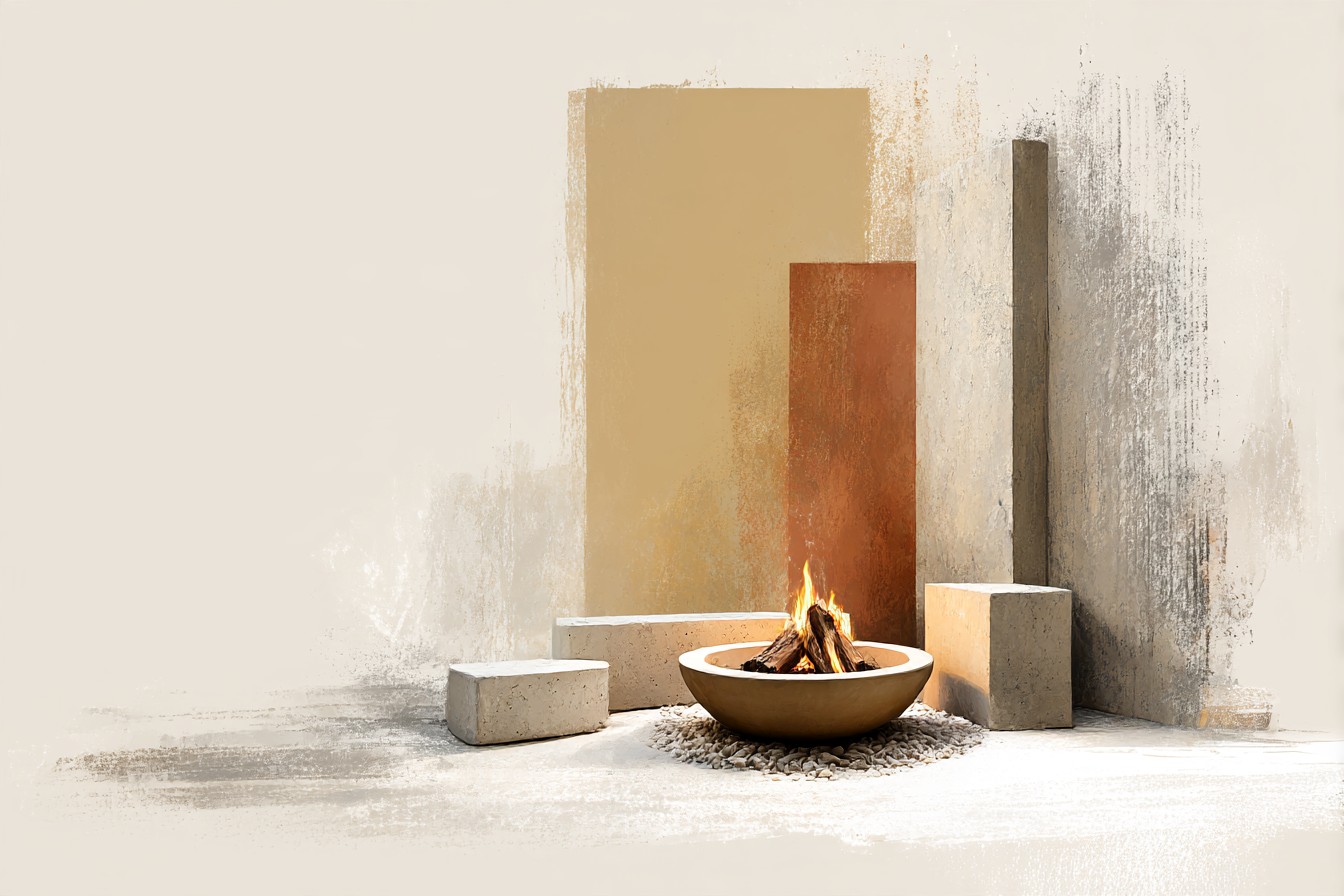
Get a proper rated pad, not the flimsy one I bought first. Get some clearance under the pit if the design allows it. Deflect the heat before it hits the slab at all if you’re running gas. Seal the concrete properly, with something actually rated for the job, not just labeled durable. And if you’re building from scratch, skip the whole argument and give the fire pit its own gravel patch instead.
None of this is expensive compared to what it costs to fix a stained or spalled slab later, and none of it takes more than a weekend to sort out properly. I just wish someone had told me all of this before I spent a summer treating a rented patio like it was invincible. It wasn’t. Concrete rarely is, no matter how permanent it looks sitting there under your feet.