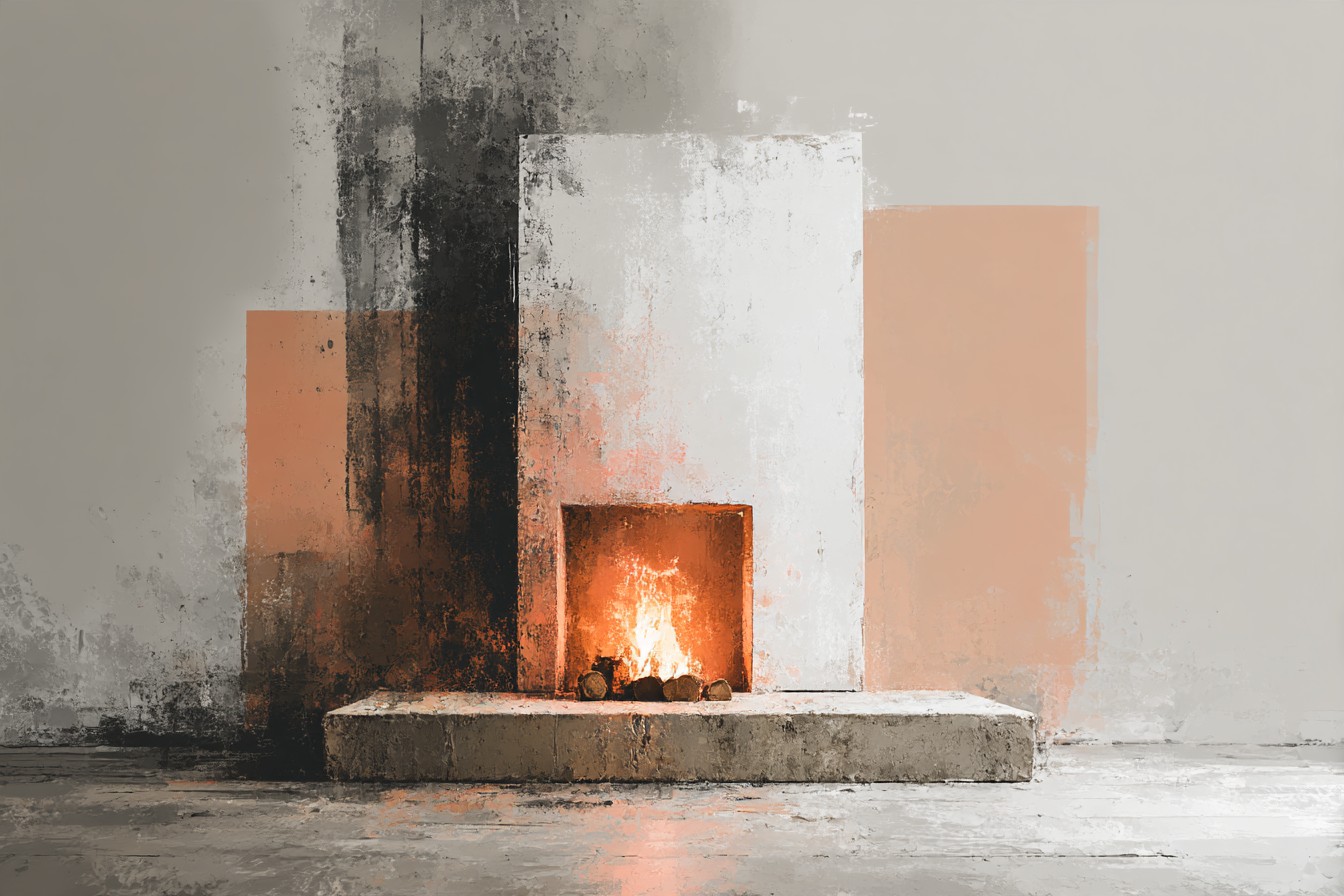
I bought my first fire pit off a clearance rack in early October, the kind of purchase that made complete sense at 9pm on a Tuesday and almost none the next morning. It was a cheap steel bowl, about two feet across, the sort of thing that shows up in a big box store’s seasonal aisle marked down forty percent because summer’s over and nobody wants a fire pit in the rain. I did not read a single word of the instructions. I did not look up anything about clearance requirements or what it should sit on. I carried it out to the back patio of my condo, which is a plain gray concrete slab, set it down in the middle like I was staging a photo, and lit a fire in it that same night because I was cold and a little pleased with myself.
About forty minutes in, there was a sound like a gunshot. Not an exaggeration, not me being dramatic for the sake of a good opening line, an actual sharp crack that made me spill the wine I was holding down my own sleeve.
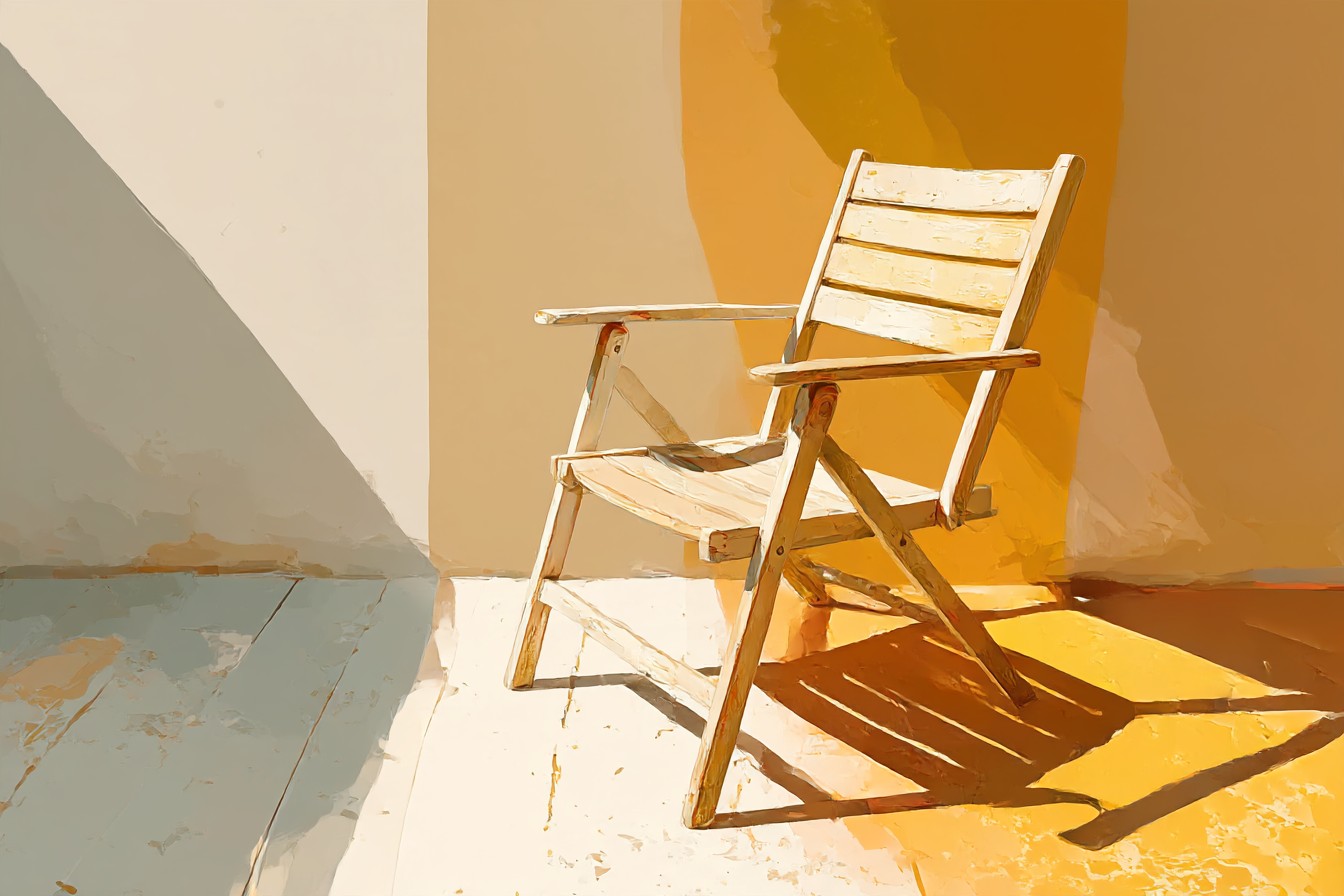
I stood up so fast I knocked the folding chair over. When I looked down there was a chip of concrete, maybe the size of a half dollar, sitting a few feet away from the pit, and a rough little crater where it used to be part of my patio.
I didn’t know what had happened. I genuinely thought something had exploded inside the fire pit itself, some manufacturing defect, and I was already drafting an angry review in my head. It took me an embarrassingly long Google session that night, phone brightness turned down so I wouldn’t wake myself up further with the guilt, to learn the actual word for what I’d just watched happen to my own patio: spalling. Concrete holds moisture in tiny pores, and when you put sudden, concentrated heat right on top of it, that trapped water turns to steam faster than it can escape, and it takes a piece of the surface with it on the way out. It’s not a defect. It’s physics being petty.
I ran the whole thing through the kind of cost benefit language I’d use at work the next morning, cost of the fire pit, cost of patching a concrete slab, expected years of use, and on paper the smart move was clearly to return the thing and forget the whole idea. In reality I wanted a fire pit on my patio more than I wanted to be right about concrete, so I kept it and just got smarter about it instead.
[Fire Pit on a Concrete Slab]
Fire Pit Mats and Heat Shields
The first fix I actually paid for was a heat resistant mat, one of those woven fiberglass or mineral fiber pads that sits under the pit like a coaster for something that’s on fire. I want to say I researched this properly before buying, but honestly I typed “thing that stops fire pit from ruining patio” into a search bar at eleven at night and bought the first one that had more than four hundred reviews. Cost benefit wise it was an easy call, thirty five dollars against the cost of patching or replacing a section of my own patio, that’s not a close decision, that’s the kind of return on investment I’d put in a slide if this were an actual job.
What I didn’t expect was how much it would change my own habits around the fire pit, not just the concrete’s condition. Because now there was a designated fire zone, I actually paid attention to where I set it up, I stopped dragging it a few feet left or right depending on wind direction, which in hindsight is probably how I’d been spreading the risk around my patio in the first place without knowing it. I check underneath the mat every few uses now, mostly out of habit, sometimes out of a slightly neurotic need to confirm I haven’t set my own home on a slow path to ruin. So far, no chips, no discoloration, nothing dramatic. The mat itself has gone a bit gray and stiff at the edges, which feels like a fair trade for a patio that still looks the way it did when I moved in.
[Fire Pit Mats And Heat Shields]
Elevated Fire Pits With Legs
The second thing I learned, slower and more reluctantly, is that height matters more than I wanted it to. A fire pit sitting flush on concrete is transferring heat directly into the slab with basically no relief, whereas one raised even three or four inches on legs gets airflow underneath it, which apparently makes a real difference to how much heat actually reaches the concrete and how fast. I resisted this upgrade for a while because it felt like paying more for the same bowl with sticks attached to it, which is exactly the kind of “investment piece” markup I usually get suspicious of and try to argue myself out of.
I lost that argument to myself, again, and bought an elevated model a few months later. The difference wasn’t dramatic to look at, but it was noticeable in a way that matters more, less residual warmth on the mat underneath after the fire’s died down, less of that slightly worrying heat you can feel radiating off the ground with your hand an hour later. I’ve had this one for almost a year now and the patio underneath it looks completely unbothered, which, given my track record, I consider a genuine achievement. It’s not a guarantee against spalling, nothing is, but it’s one more layer between the fire and the slab, and at this point I collect layers like other people collect throw pillows.
[Elevated Fire Pits With Legs]
You Might Also Like

Propane Fire Pits Versus Wood Burning
Somewhere in year two I bought a propane fire pit, partly because the smoke from wood burning ones was setting off a very sensitive smoke detector inside my own condo through an open window, and partly because I’d convinced myself propane would just be safer for the concrete underneath by default. That’s not entirely true, and I found that out the slightly annoying way. Propane fire pits do tend to run cooler at the surface because the heat’s more contained and directed through the burner and glass rocks or lava rock, rather than an open wood fire radiating heat outward and downward in every direction. But cooler is not the same as cool, and I still got a faint scorched ring on the mat under mine after a long weekend of using it more than I should have.
The upside, if I’m being fair to it, is consistency. A wood fire is basically unpredictable, one log shifts and suddenly you’ve got a hot spot you didn’t have ten minutes ago. Propane burns evenly, which makes the whole spalling conversation slightly less of a gamble, slightly, not zero. I still use the mat under it. I still don’t set it directly on bare concrete without one, no matter how controlled the flame looks. The one thing I’ll say plainly is that if you’re choosing between the two purely from a “what’s gentler on my patio” standpoint, propane wins, but it wins by a margin, not a landslide, and I learned that the hard way with a stained mat I now keep meaning to replace.
[Propane Fire Pits Versus Wood Burning]
Fire Resistant Paver Pads
The most “finance brain” purchase I made in this whole process was laying an actual paver pad, a small dedicated section of fire rated pavers set into sand, right on top of my existing slab. I priced it out like a real project, cost of the pavers, cost of the sand and the edging, a full afternoon of labor that was entirely mine because I did not want to explain this hobby to a contractor. Against the backdrop of two years of buying mats and elevated stands and propane setups, one at a time, reactively, the paver pad honestly should have been step one. Hindsight’s a great analyst, terrible at giving you the memo in advance.
The pavers give me a permanent, purpose built surface that doesn’t care about heat the way plain poured concrete does, and it’s raised my whole outdoor space by exactly the amount that finally made me stop thinking about the fire pit as a risk I was managing and start thinking about it as a fixture I’d actually planned for. It cost more upfront than anything else on this list, by a wide margin, and it’s the only thing here I’d unreservedly call worth it without a joke immediately undercutting the sentence. That’s rare enough for me that I want it on the record.
[Fire Resistant Paver Pads]
Portable Steel Fire Pits and the After Party Check
The last category is less a product type and more a behavior, but it started because of a specific portable steel pit with a removable ash pan that I bought mainly because it folds down small enough to fit in my car trunk.
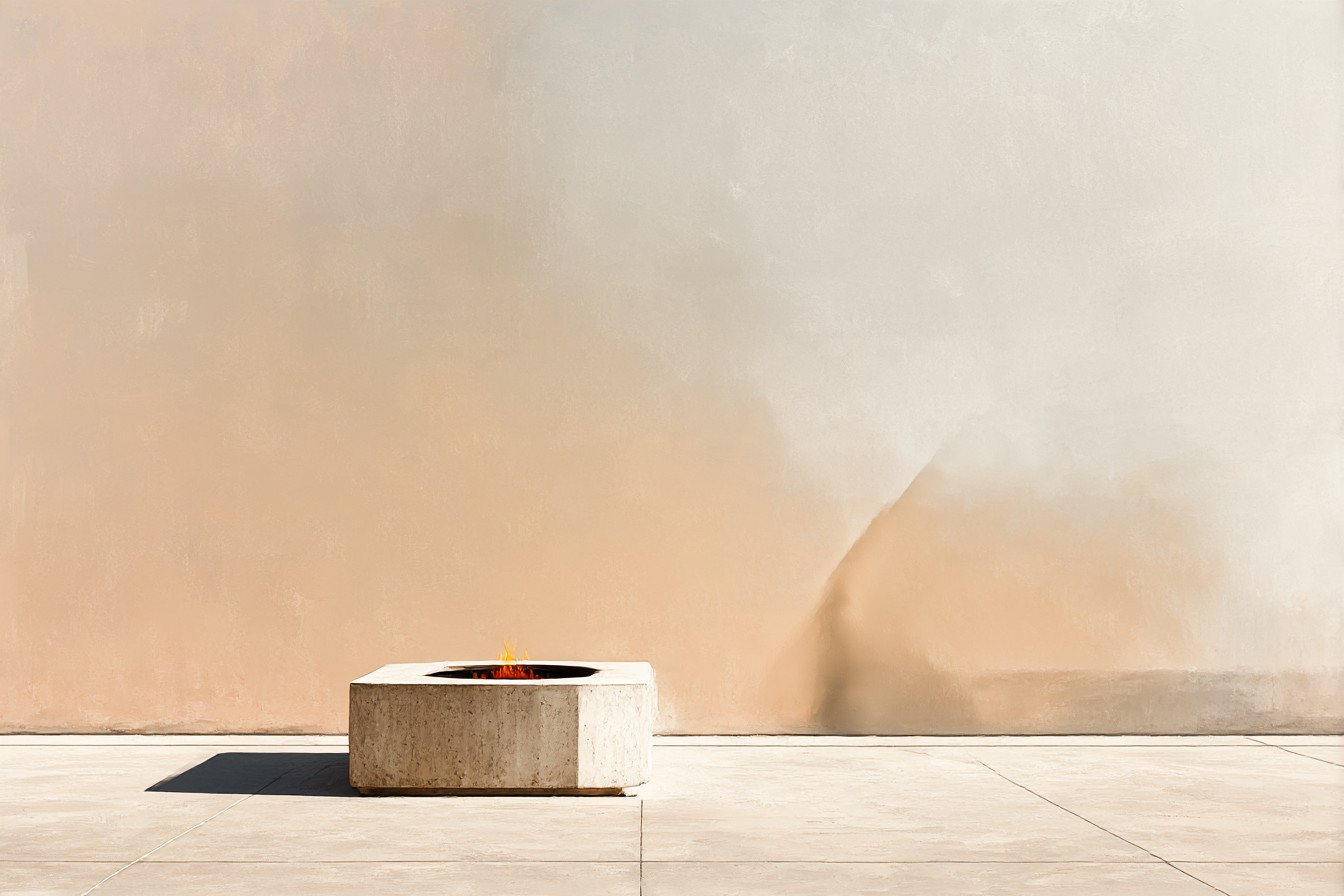
Owning something portable changed how I treat the whole ritual, because now the fire pit isn’t a fixed feature of my patio, it’s a thing I set up and take down, which means I actually look at the ground underneath it every single time, both before I light anything and again the next morning with coffee in hand, checking for chips, discoloration, that dull grayish white staining that shows up when moisture’s been driven out of the slab too fast.
I keep a hose within reach now, always, not coiled up somewhere across the yard where it does nothing useful in an actual emergency. I keep an old bucket of water by the back door too, which the woman two desks over at work would probably find hilarious given how much time I spend building spreadsheets for a living and yet apparently can’t be bothered to build a proper fire safety checklist beyond “bucket, hose, look at the ground.” It works though. Cooling embers fully before I even think about packing the pit away, letting the pad or pavers underneath sit and cool on their own timeline instead of mine, checking the surface with my palm before I decide it’s fine, these are small, slightly obsessive habits, and every single one of them exists because of that gunshot crack two years ago.
[Portable Steel Fire Pits]
Final Thoughts
If you’d asked me two years ago whether you can put a fire pit on concrete, I’d have said sure, obviously, it’s concrete, what’s it going to do. I now know exactly what it’s going to do, and it happens fast, and it sounds like something breaking because that’s precisely what it is. None of the fixes I’ve listed here make a fire pit completely risk free on a slab; nothing does, and I’d be lying to you in a way that isn’t even useful if I pretended otherwise. What they do is stack the odds properly in your favor, a mat to break contact, height to let heat disperse, a fuel source you understand the behavior of, a permanent surface built for the job if you’re willing to spend the money once instead of patching mistakes twice, and habits around water and checking the ground that cost nothing but a little bit of paranoia.
I still don’t fully trust concrete, if I’m honest, in the specific way you stop trusting anything after it makes a noise like a gunshot at you over a glass of wine. But I trust my setup now, all of it, working together, in a way I very much did not on that first October night. That’s really the whole return on investment here, not a perfect patio, just one that hasn’t surprised me since.