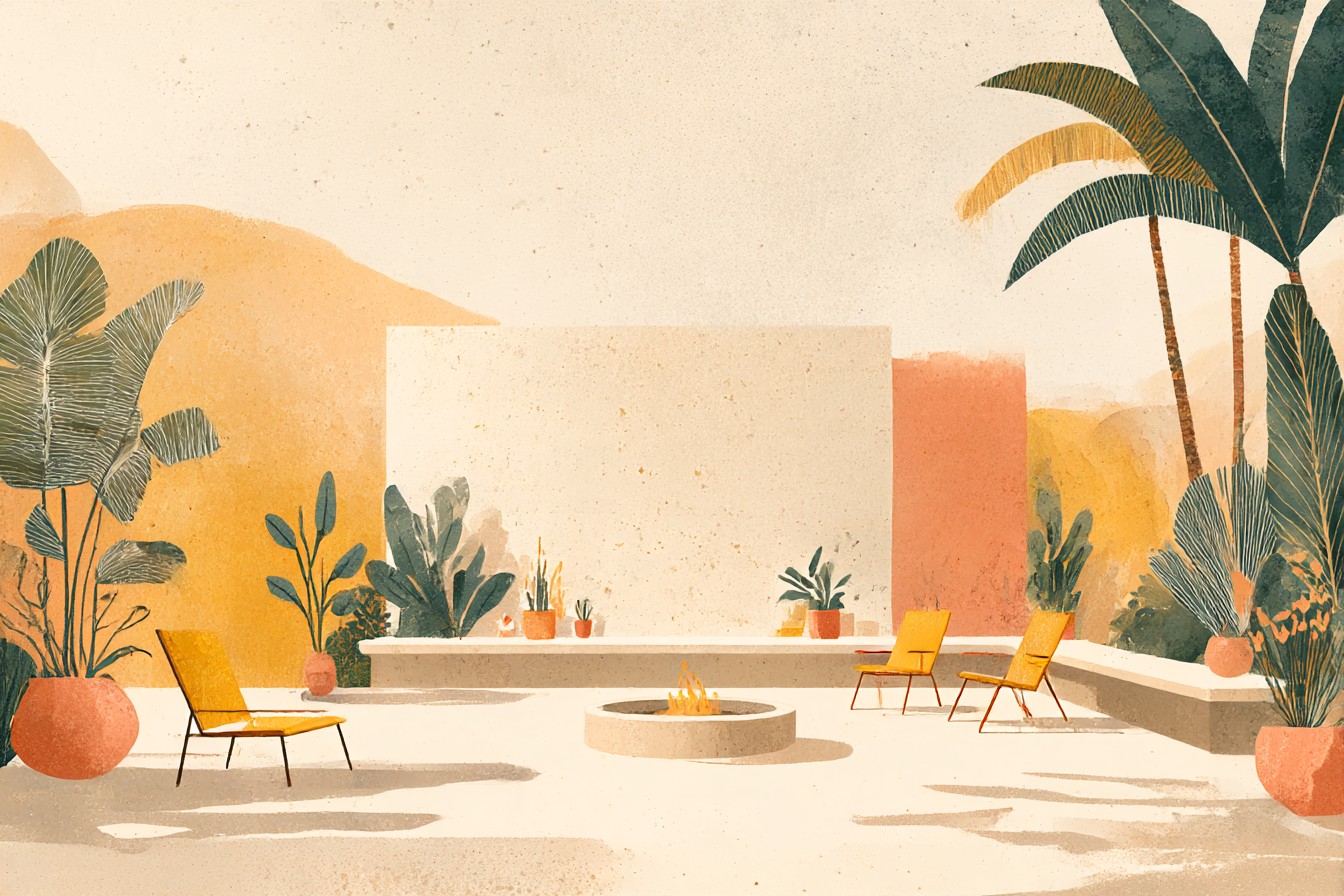
Four. Four fire pits, three houses, one very confused insurance agent when I called to ask if a “pit” counted as a permanent structure. I’m not proud of the trajectory that got me here, but I’ve learned more from moving a fire pit around a yard trying to find where it actually works than I ever learned from the box it came in. And the thing nobody tells you when you buy one is that the pit itself is the easy part. It’s a metal bowl. It holds fire.
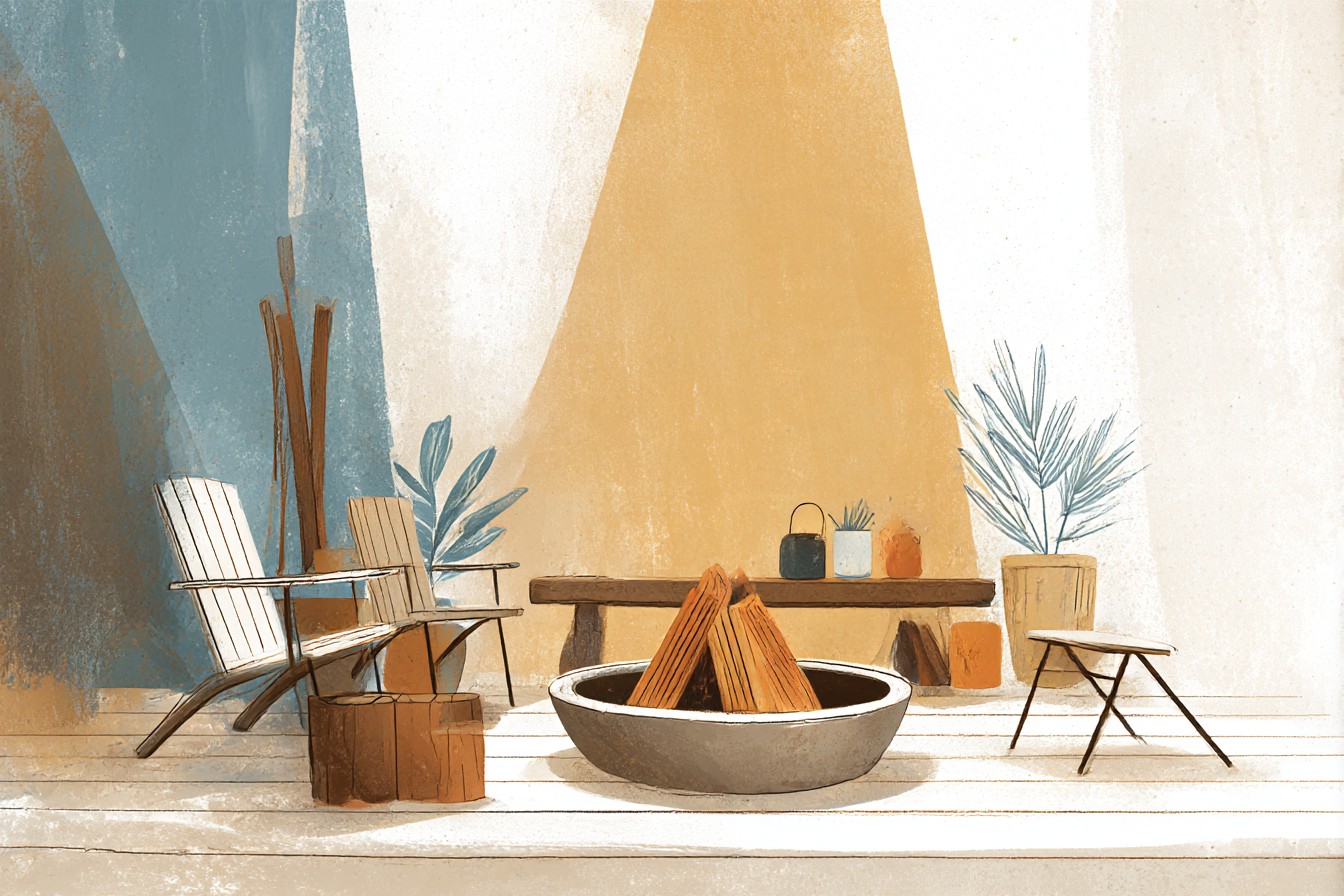
The part that determines whether anyone ever sits at it again is everything you put around it and under it, and that’s where every single one of my four attempts went sideways at least once.
What’s underneath it matters more than what you bought
I put my first fire pit directly on the lawn because I was thirty years old and it did not occur to me that fire produces heat, which is the kind of sentence I can’t believe I’m typing but there it is. Within one summer I had a perfect dead circle of grass exactly the diameter of the pit, like crop circle evidence, and it took two full growing seasons to fill back in. My sister came over, looked at it, and said nothing, which from her is a review in itself. So for the second house I did it properly, gravel base, and that is genuinely the answer, not because gravel is fashionable but because it drains, it doesn’t scorch, and it doesn’t heave and crack the way a solid poured pad can once a Missouri winter gets its teeth into it. Pea gravel is fine for a casual look, but I’ve come around to crushed stone with fines in it, the kind that compacts down hard, because loose pea gravel migrates everywhere and you end up finding it in the lawnmower for the next decade.
The other option, and the one I’d actually push you toward if you want this to look like it was planned rather than apologized for, is pavers. A simple paver patio under and around the pit gives you a flat, stable surface that chairs don’t sink into, which matters more than you’d think once you’ve watched an Adirondack chair slowly tip backward into soft ground with a full glass of wine still in the cup holder. I did this at the current house, a modest paver circle maybe twelve feet across, and it’s outlasted two pits already because the base doesn’t care what sits on top of it. Whatever you choose, and I will say this once and mean it, do not skip a heat resistant layer directly under a wood burning pit even on top of pavers, because I have a scorch mark on a paver from 2019 that looks like a crime scene photo and it is not coming out, ever, I’ve tried everything short of replacing the paver itself.
The size of that base area is the other thing I got wrong for years, because I kept building it exactly pit sized, like the fire itself was the only thing that needed real estate. It isn’t. You need enough hard, flat surface that chairs can sit close enough to be sociable without anyone’s knees roasting, and enough that nobody’s back two legs are on gravel and front two are on grass, which is how ankles get twisted at 10pm after the second glass of wine.
You Might Also Like


I’d say don’t go smaller than about twelve feet across for the hard surface if you want four to six chairs around it comfortably, and honestly closer to fourteen if you can spare the yard. Anything tighter and it stops being a fire pit area and starts being a fire pit obstacle course.
What goes around it decides whether anyone stays past 9pm
Here’s my actual, sometimes unpopular opinion: the seating you put around a fire pit matters more than the pit itself, and most people spend all their money on the pit and then drag out whatever plastic patio chairs were already sitting in the garage, which is exactly what I did in 2011 and it’s why nobody stayed past 9pm at that house, because plastic chairs get cold on the side facing away from the fire and stay that way all night. What you actually want is something with enough weight and a low, relaxed seat height, Adirondack style chairs are a cliché at this point but they’re a cliché for a reason, they hold heat from the fire side without freezing your backside on the other, and they don’t blow across the yard the second a front comes through, which the plastic ones absolutely will do, I’ve chased mine down the block.
I’d also make the case, and this is the part where I sound like I’m campaigning for something, that you need at least one flat surface within arm’s reach of every seat that isn’t the ground. A little side table, a wide chair arm, even a sturdy stump if that’s your aesthetic, because otherwise everyone’s balancing a drink on a knee for two hours and someone’s spilling it into the fire by 9:30, which extinguishes absolutely nothing but does produce a smell that lingers for days. This is a small, unglamorous detail and it’s the single biggest difference between a fire pit area that photographs well and one people actually want to sit in for three hours.
Distance and spacing are the last piece, and I called an outdoor rug for this exact zone a “nineties throwback that’ll look dated in five years” within about four seconds of seeing one at a friend’s place, which might say more about how much furniture I’ve looked at than about the rug itself, because it’s actually held up fine and does a genuinely useful job of defining the seating circle on grass without the commitment of pavers. Whatever you use to mark the boundary, keep seats roughly seven to nine feet from the pit’s edge, close enough for warmth, far enough that nobody’s fanning sparks off their sleeve. I’ve got an armchair from 2003 that’s outlasted three fire pits at this point, and the lesson isn’t really about the chair, it’s that the seating and the ground beneath it are the part worth investing in for the long haul. The pit itself, frankly, I’ll probably replace again.


[…] first set was for a housewarming, strung along my condo balcony rail because I’d seen it done somewhere and thought it looked like the kind of place an adult with her life together would host pe…. The second set arrived in October when the first one died after a single bad storm and I assumed, […]