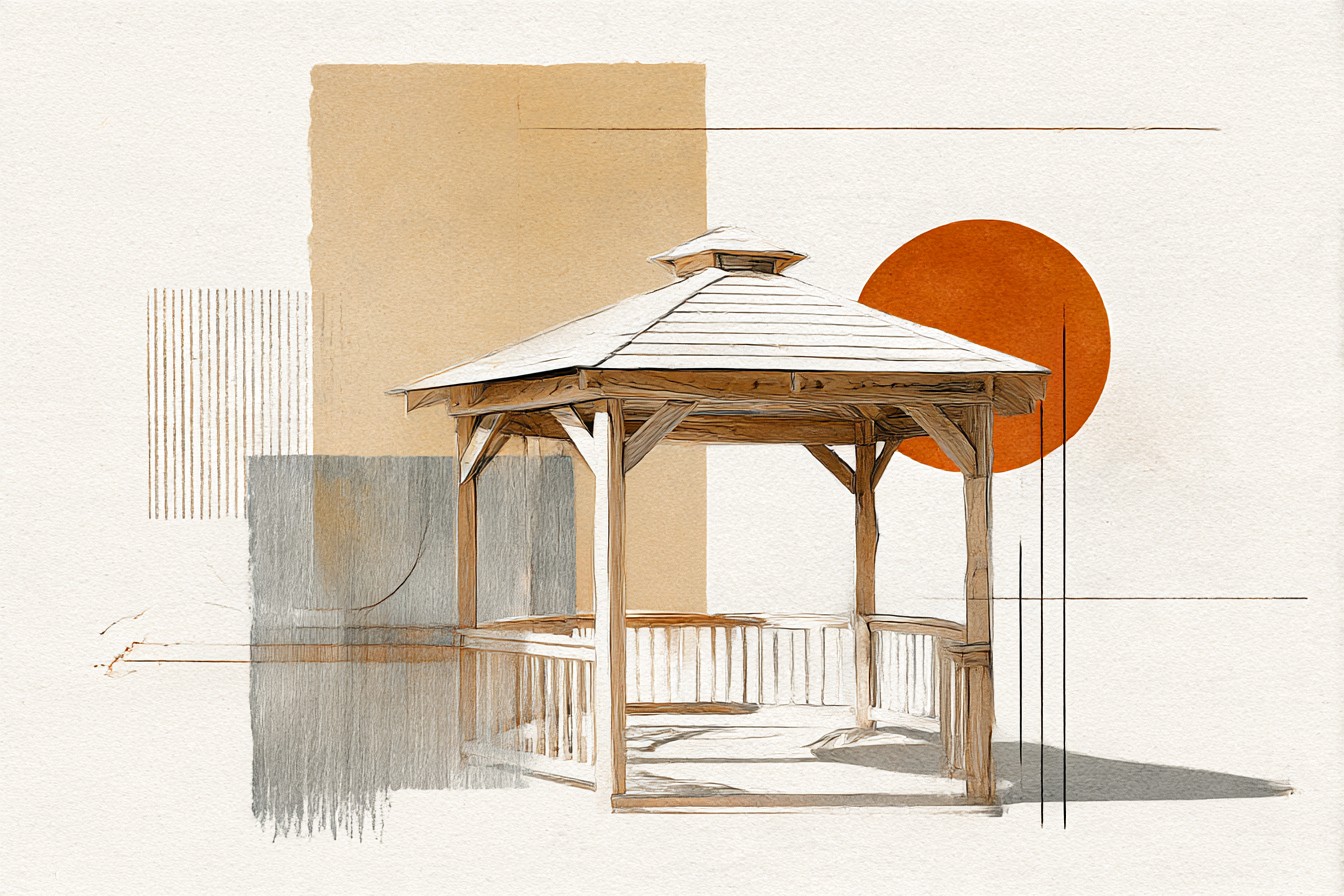
My friend Dana sent me a photo at eleven at night of her brand new ten by twelve gazebo with a fire pit table already glowing away underneath it, captioned “did I just build myself a gas chamber.” No hello. No context. Just the photo and that sentence, which is a genuinely alarming thing to receive from someone you like.
Here’s the thing though, she wasn’t wrong to ask. She was just asking it about three hours too late, after the fire pit was already lit and the roof was already up and the receipt for both had already been emailed to her. That’s usually how this question gets asked, in my experience. Not before the purchase, when it’s actually useful, but after, standing under the thing at night wondering if the roof over your head is doing something to the air you’re breathing.
So can you put a fire pit in a gazebo.

Yes, mostly, with a lot of conditions attached that people skip past because “yes” is the answer they wanted and the conditions are the boring part. But the roof changes three things at once, and none of them are things you can eyeball your way through, not even if you’ve styled forty backyards for other people the way I have.
It changes where the smoke goes, because instead of drifting up and dispersing the way it would over an open patio, it hits a solid or semi solid surface above the flame and rolls back down toward you before it finds a way out the sides. It changes how the heat behaves, because a roof at eight feet is trapping a completely different volume of hot air than one at eleven feet, and most people buying a gazebo have no idea which one they’ve actually got until they measure it, which almost nobody does. And it changes ventilation, full stop, which is the part I’m not going to soften for the sake of a nicer paragraph. Open flame or gas appliance, covered or enclosed structure, poor airflow, that combination is a real carbon monoxide risk and a real fire risk, not a theoretical one, and I’d rather say that plainly now than have anyone read the rest of this as permission to skip it.
None of that means don’t do it. It means the roof isn’t decoration, it’s a variable, and the type of gazebo you’ve got changes the math completely.
[Gazebo Fire Pits]
Open Sided Gazebos
This is the one that makes the whole debate easiest, and I’ll say that plainly before I pick anything apart. A proper open sided gazebo, four or six posts, a roof, no walls at all, is functionally closer to a very committed umbrella than it is to a room. The sides are open the whole way around, which means the air that gets pushed sideways by the fire actually has somewhere to go instead of pooling.
The measurement that matters here isn’t the footprint, it’s the peak height and the roof pitch, and this is where I’ve seen people get caught out. I had a client last year who’d bought a ten by ten open sided gazebo online, listed as “ideal for fire pit dining,” and when I measured the actual clearance from the fire pit table’s rim to the underside of the roof it was six feet two inches. Her husband is six foot one. That’s not a fire safety failure exactly, but it’s a scorched roof fabric waiting to happen the first windy evening, and “ideal for fire pit dining” is doing an enormous amount of unearned work in that listing copy.
Look for eight feet of clearance minimum from flame to roof underside if you can get it, more if the roof is fabric rather than hard material. And actually check whether the manufacturer’s own fire pit compatible listings match the height they quote for the gazebo itself, because I’ve found brands that sell both under the same name where the numbers don’t line up when you put them side by side, which tells you nobody on their end checked either.
[Open Sided Gazebos]
Hardtop Gazebos
Hardtop gazebos are the ones I get the most nervous messages about, honestly, because they look the most permanent and solid, which people read as the most safe. Solid roof, usually polycarbonate or galvanized steel, four fixed posts, and that permanence is exactly the problem if the sides aren’t also open. A hard roof doesn’t flex or lift the way fabric does, so any smoke that rolls up and back has nowhere to vent except straight back down at whoever’s sitting near the fire.
I measured a client’s steel hardtop gazebo a few months back, labeled ten by twelve, actual footprint was nine foot eight by eleven foot nine once you accounted for the post thickness eating into the interior space, which is a small enough gap that nobody would notice unless they were annoyed enough to bring a tape measure, which I was. Not a safety issue in itself. But it told me the listing measurements were exterior, not usable interior, and that’s exactly the kind of gap that also shows up in roof height claims, so I stopped trusting the “eight foot clearance” line in the same listing without checking it myself too.
If you’ve got a hardtop and you want a fire pit under it, the sides need to stay genuinely open, not propped shut with curtains on three sides because it’s windy, which is the actual scenario I’ve watched happen at an outdoor dinner two winters ago while everyone coughed politely and pretended the smoke wasn’t a problem. A hardtop with open sides can work. A hardtop with the sides closed in for warmth and a fire pit still going is the exact setup that turns a nice evening into a genuinely dangerous one.
[Hardtop Gazebos]
Screened Gazebos
Screened gazebos get lumped in with hardtops and open sided ones like they’re a minor variation, and they’re not, they’re their own category with their own specific problem, which is that mesh looks open but behaves almost closed once you actually test airflow through it.
You Might Also Like

I’ll be straight about my blind spot here, because I’ve spent a lot of this piece annoyed at brands overselling clearance and underselling risk, and screened gazebos are the one I nearly gave a pass to without checking properly, purely because they look breathable. They’re not, not in the way that matters. Fine mesh screening, the kind sold specifically to keep mosquitos out, restricts airflow more than people assume, and a restricted airflow space with an open flame in it is precisely the combination that lets smoke and combustion gases build up rather than clear.
If you’ve got a screened gazebo and you want a fire pit inside it, at minimum you need panels you can actually unzip or roll up on at least two opposing sides while the fire’s going, not just the one flap by the entrance that everyone uses to walk in and out. I checked one popular screened model, marketed with “excellent ventilation” right there in the description, and out of six sides only one had a section that opened beyond a small zip flap. Excellent ventilation for keeping bugs out, maybe. Not the same claim as excellent ventilation for a fire pit, and the listing shouldn’t get to borrow the phrase for both.
[Screened Gazebos]
Wood Burning and Propane Fire Pits
The type of fire pit matters here almost as much as the gazebo does, and this is the part Dana’s original photo actually got right without her realizing it, because she’d gone with a propane fire pit table, not a wood burning one, and that decision did more for her safety than the gazebo itself.
Wood burning fire pits throw sparks, produce more particulate smoke, and burn hotter and less predictably than gas, all of which is fine in an open backyard and considerably less fine under any kind of roof. If you’re set on wood under a gazebo, you need serious clearance, a spark screen that actually fits the pit rather than one bought separately and hoping, and open sides with no exceptions, ever, regardless of wind.
Propane and natural gas fire pits burn cleaner and more consistently, which makes them the more manageable option under a roof, but “cleaner” isn’t “safe regardless,” and this is where the carbon monoxide risk actually lives, quietly, because gas appliances burning in a space with restricted airflow can still produce dangerous buildup even without visible smoke to warn you something’s wrong. That’s the trap. Wood announces itself. Gas doesn’t always.
Either way, check the manufacturer’s own clearance requirements for the specific fire pit, not a general rule you read somewhere once, and check them against your actual gazebo’s actual roof height, measured, not estimated standing underneath it looking upward and guessing.
[Wood Burning and Propane Fire Pits]
Carbon Monoxide Detectors and Ventilation Gear
I’m not going to pretend this is the fun section, it isn’t, but it’s the one I’d actually put money behind out of everything in this piece. A battery powered carbon monoxide detector rated for outdoor or semi enclosed use is a twenty to forty dollar item that does the one job none of the rest of this setup can do, which is tell you the air’s gone wrong before you feel it going wrong yourself, because CO doesn’t announce itself with a smell or a cough the way smoke does.
I keep one clipped to the post of my own patio cover, not a gazebo exactly, close enough in principle, and it’s gone off exactly once, during a still, windless evening with the fire pit going and every side panel zipped shut because it was cold.

Lesson learned properly that night, not from a warning label, from the actual alarm going off ten inches from my ear.
Pair that with a proper spark screen if you’re running wood, and honestly just get in the habit of opening at least two sides of whatever structure you’re under before you light anything, every single time, not just on the nights it feels stuffy. It’s a small ritual and it takes about fifteen seconds and it’s the difference between a gazebo that’s genuinely fine to have a fire pit in and one that’s fine right up until the one night the wind doesn’t cooperate.
[Carbon Monoxide Detectors and Ventilation Gear]
Final Thoughts
So, roof or no roof, can you have a fire pit in a gazebo. Yes, and the answer doesn’t actually change much from structure to structure once you strip the marketing language off it, it just changes how careful you have to be and how much you can trust the sides staying open on the one night you’d really rather they didn’t.
What changes everything, genuinely, is whether you’ve measured your own setup instead of trusting the listing’s version of it. Peak height, clearance from flame to roof, whether the sides open properly or just look like they should, whether you’ve got wood or gas going, whether there’s a detector doing the one job your nose can’t do for you. None of that is complicated. Most of it takes a tape measure and about ten minutes, which is less time than it took me to write this.
I’d rather you read this before you light anything than after, standing under a roof you just bought, sending someone a slightly panicked photo at eleven at night. Not that I’m speaking from specific experience there. Measure it, open it up, keep the detector nearby, and let the fire actually be the nice part of the evening instead of the thing you’re quietly worried about the whole time.



[…] is the section that answers the question my dad actually asked, because everything above sits inside the fire pit, and none of it does much for the concrete underneath unless there’s a separating layer […]