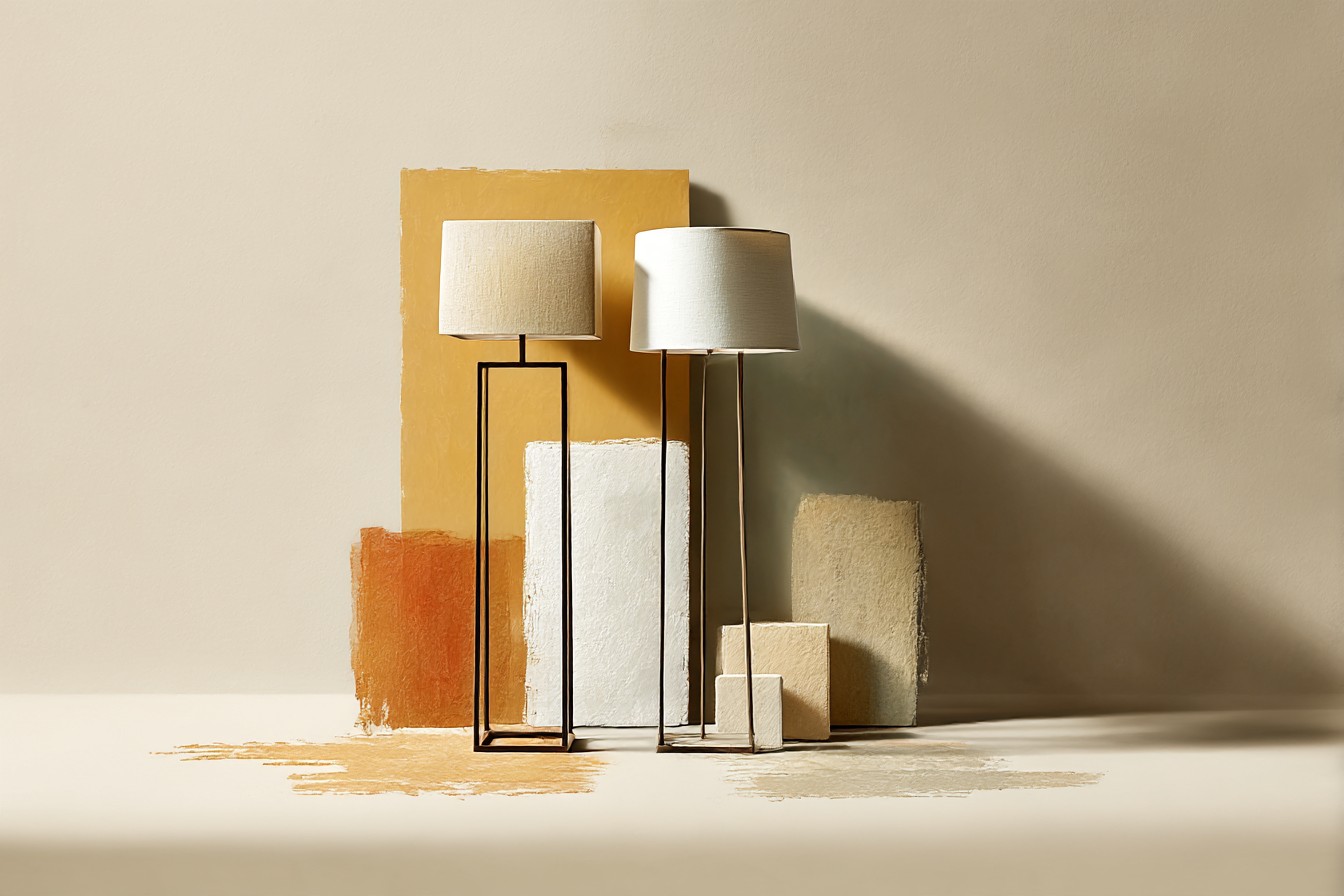
I was vacuuming around the arc lamp in my living room on a Sunday afternoon, the kind of Sunday where you tell yourself you’re just tidying and then four hours later you’ve dragged every piece of furniture six inches to the left to see if the room breathes any better, when I hauled my spare floor lamp in from the bedroom to see if it might work better next to the armchair instead of sulking in the corner where it currently lives. I set it down near the sofa. Stood back. And for about ninety seconds I had two floor lamps switched on in one living room, both throwing their own little pools of light onto the rug, and instead of finishing the vacuuming I just stood there typing “can you have two floor lamps in one room” into my phone, like the internet was going to grant or deny me permission for something I was already doing.
The search results were the usual mush. Yes, if the room is big enough. Yes, if you’re careful about scale.

A lot of very confident paragraphs written by people who have clearly never stood in an actual living room at nine at night trying to read a book while their partner watches something loud with subtitles on. None of it answered the question I actually had, which wasn’t “is this allowed” but “will this look considered or will it look like I couldn’t commit to a decision and bought two of the same indecision instead.”
Because that’s the real fear, isn’t it. Not the two lamps themselves, but what they say about you. A matching pair can read as calm, deliberate, a little bit hotel lobby in the good way. It can also read stiff, like you ordered a “living room set” off a website and didn’t touch a single thing after it arrived. A mismatched pair can read as collected, like you found each piece over time and they earned their place. It can also just read as two lamps that don’t get along, standing in the same room refusing to make eye contact.
I ended up keeping both lamps in that room, for the record, though it took me three more weekends and one mildly heated conversation with my mother, who took one look at the arrangement and said “well, that’s very symmetrical of you” in a tone that made it very clear she did not mean it as a compliment. So let’s actually get into it, because the answer isn’t yes or no, it’s which kind of two lamps, and where.
[Floor Lamps]
The Matching Pair
Let’s start with the one everyone’s actually scared of, because it’s the one that feels the riskiest and the one people default to anyway, out of some instinct that if you’re buying two of a thing they should obviously match, like socks. Two identical floor lamps, one on each side of a sofa or flanking a media unit, both the same height, same shade, same finish. Done properly this looks completely intentional, like you sat down and decided the room needed balance and then went and got it. Done without thinking it looks like you were handed a catalog page and told to point.
I tried this in my old apartment with two brass arc lamps either side of a console table, and for about two months I hated it, and I couldn’t work out why, because on paper it should have worked. Then I figured it out. The room was small enough that both lamps were doing the exact same job in the exact same way, so instead of feeling calm it felt repetitive, like the room was stuttering. Matching pairs earn their keep in rooms with enough width and enough distance between them that your eye has to travel to notice they’re the same. Put them close together in a tight space and the symmetry stops looking deliberate and starts looking like you ran out of ideas halfway through.
In the evening this is the pair that gives you the most even light, two identical warm pools on either side of a seating area, nothing competing, nothing pulling focus. It’s genuinely lovely for reading with someone else in the room, both of you lit the same way, neither of you squinting into the other person’s shadow. It just needs space to actually read as calm rather than as a decision you made once and then never revisited.
[The Matching Pair]
The Coordinated Mismatch
This is the one I actually think most rooms want, and almost nobody sets out to buy this way, it tends to happen by accident and then you get to decide whether to lean into it or fight it. Two lamps that are clearly related but not identical. Same finish, different silhouette. Same silhouette, different height. A pair that agrees on one thing and disagrees politely on everything else.
My current living room has this by total accident. One lamp is a slim black pole with a small drum shade that I bought for my old bedroom. The other is a wider black tripod lamp with a bigger linen shade that I bought two years later for an office I never actually set up as an office. They share almost nothing except the color black and the fact that I own them both, and when I finally put them in the same room I braced for it to look like a mistake. It didn’t. It looked like two lamps that had simply been acquired at different points in an actual life, which, unbelievably, is what they were.
The trick, if there is one, is finding the one thing they share and letting that be the whole argument for keeping them together. Same metal tone. Same shade color even if the shape is different. Same rough height even if the base looks nothing alike. One shared thread is enough to stop it looking careless. Zero shared threads and you’ve just got two lamps that happen to live in the same postcode.
In the evening this pairing gives you slightly uneven light, which sounds like a flaw and isn’t. One side of the room gets a tighter, smaller glow, the other gets something broader and softer, and the room stops feeling like it was lit by a single decision. It feels lived in, because it was.
[The Coordinated Mismatch]
Anchor Lamp and Task Lamp
Sometimes the two lamps in a room aren’t a pair at all, not even a loose one, they’re doing two completely different jobs and were never supposed to look related. One big, sculptural, arguably a bit much, standing near the sofa purely to look good and throw ambient light around the room in the evening. The other smaller, plainer, positioned directly next to the armchair where someone actually reads, doing a job rather than making a statement.
You Might Also Like

This is the combination that finally made sense to me after years of buying “statement” floor lamps that looked incredible in the showroom and were completely useless for actually reading a book by, because the light hit the ceiling and the wall and somehow managed to miss the page entirely. I own one lamp right now, a big arced brass thing with a fabric shade the width of a dinner plate, that I adore looking at and have never once used to read by. It’s an anchor. It sets the mood of the room the second you walk in. My actual reading light is a five year old adjustable task lamp that cost less than a third of the brass one and does the one job I actually need a lamp to do, which is put light where my eyes are, not where it looks flattering from across the room.
You do not need these two lamps to match, coordinate, or even acknowledge each other’s existence. Their whole appeal is the division of labor. One is for the room. One is for the person sitting in it. Trying to force them into a matching pair usually ruins both jobs, because a lamp built to look sculptural from across the room is rarely the one that swivels down properly onto a page, and a lamp built for actual task lighting rarely looks like much when it’s just standing there unused. Let them be different. That’s the whole point of them.
[Anchor Lamp and Task Lamp]
Arc Lamps, Doubled
Arc lamps deserve their own mention because they behave completely differently in pairs than every other kind of floor lamp does, and almost nobody warns you about this before you buy the second one. A single arc lamp reaches out and over, its whole shape built around covering ground a straight pole lamp can’t, usually stretching in over a sofa or a dining table from somewhere behind it. Put two of them in one room and you’re not just doubling the light, you’re doubling the reach, and reach is the thing that eats space fast.
I tried this once, two matching arc lamps on either end of a longer sofa, both curving inward toward the middle like they were trying to shake hands over the cushions, and it was too much before either of them was even switched on. Just visually, in daylight, with no bulbs involved. Two long curved necks pointed at each other in one room reads as a lot, and switching them both on in the evening didn’t help, because the light overlapped right in the middle of the sofa where nobody actually needed extra brightness, and left the ends of the room comparatively dim.
If you want two arc lamps in one space, the fix is distance and direction. Put them at genuinely opposite corners of the room, curving away from each other rather than toward the same middle point, and suddenly it stops looking like a standoff and starts looking like two separate pools of evening light with an actual dark, restful gap between them, which is honestly what a living room wants after 8pm anyway. Nobody needs every square inch lit. You need the two spots where people actually sit lit, and a bit of shadow in between doing absolutely nothing, which is fine, shadow is allowed to just exist.
[Arc Lamps]
Corners, Not Center
Here’s the bit nobody’s search result actually addressed, which is what two lamps look like once the sun’s gone down and you’re not thinking about the room as a photograph anymore, you’re just sitting in it. Two lamps placed dead center, one either side of a symmetrical focal point like a fireplace or a big window, gives you an evening that looks almost staged, two identical glows framing whatever’s between them. It’s calm. It photographs beautifully. It can also feel a little like sitting in a waiting room if there’s nothing warm happening in the middle of that symmetry to justify it.
Two lamps placed in opposite corners instead, diagonal from each other rather than mirrored, gives you a completely different evening. The light pools unevenly, one corner brighter and tighter, the other broader, and your eye actually has somewhere to travel across the room instead of landing dead center and staying there. This is the layout that made my own living room stop feeling like a display and start feeling like a place I actually wanted to sit in past ten at night, lamp in one corner throwing light up the wall, second lamp diagonally across throwing light down onto the coffee table, the actual overhead light off entirely because who needs it once you’ve got two decent pools going.
The center placement is the one interiors photography loves and actual living slightly resents.
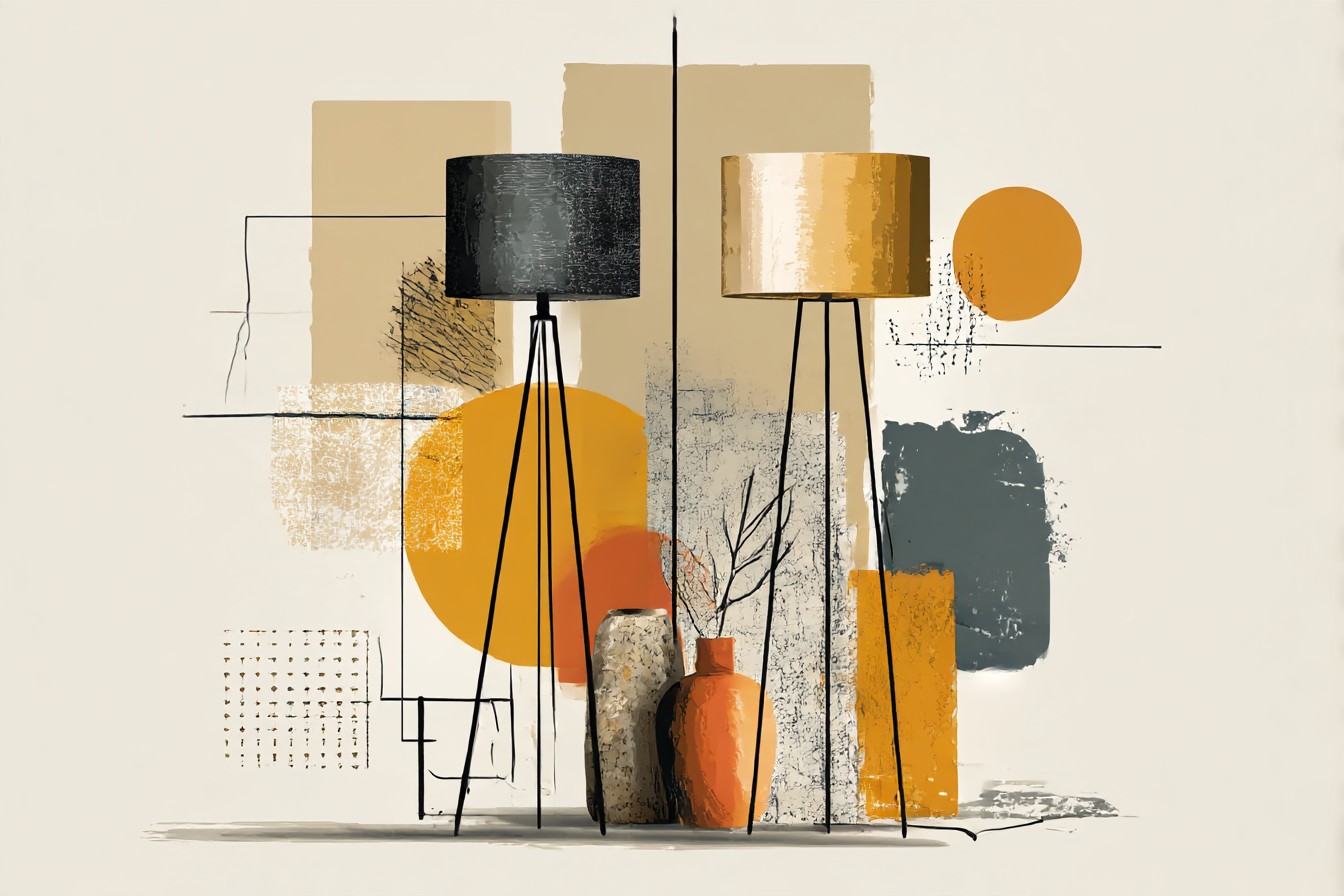
The diagonal is the one nobody photographs well because it doesn’t sit flat in a single frame, and it’s also the one I’d genuinely rather live with, because a room lit from two opposite corners in the evening looks like somewhere a person exists, not somewhere a person was arranged.
[Room Placement]
Final Thoughts
So can you have two floor lamps in one room. Obviously, yes, that was never really the question, I just needed the internet to say it back to me before I’d trust my own living room. The actual question was always going to be which two, and where, and whether you’ve got the nerve to let them disagree a little.
A matching pair isn’t wrong, it’s just a specific kind of calm that only works with enough space to let the symmetry breathe instead of stutter. A mismatched pair isn’t messy, it’s evidence of an actual life being lived in one room over actual years. An anchor and a task lamp were never supposed to match in the first place, so stop apologizing for the fact that they don’t. And however you land, put more thought into the corners than the center, because that’s where the room actually gets lived in after dark, long after anyone’s taken a photo of it.
Mine still isn’t symmetrical. My mother still hasn’t let it go. I’ve stopped explaining it and started just switching both lamps on in the evening and letting the room make the argument for me.



[…] go further than most people writing about this and say symmetry is your enemy, not your friend. A pair of matching lamps looks like a hotel lobby. One tall thing, one medium thing, one thing lying down, that’s the […]
[…] no drama, just gloom. Mine works because there’s a big window on the opposite wall and a floor lamp that runs most evenings from October onward, given how early it gets dark here. Without that light […]
[…] warm wood around them or they go flat. Cold, almost. I made that mistake in my first apartment, paired a black lacquer table with a gray oak floor and gray toned shelving, and the whole corner looked like a waiting room. Nobody wants their living […]