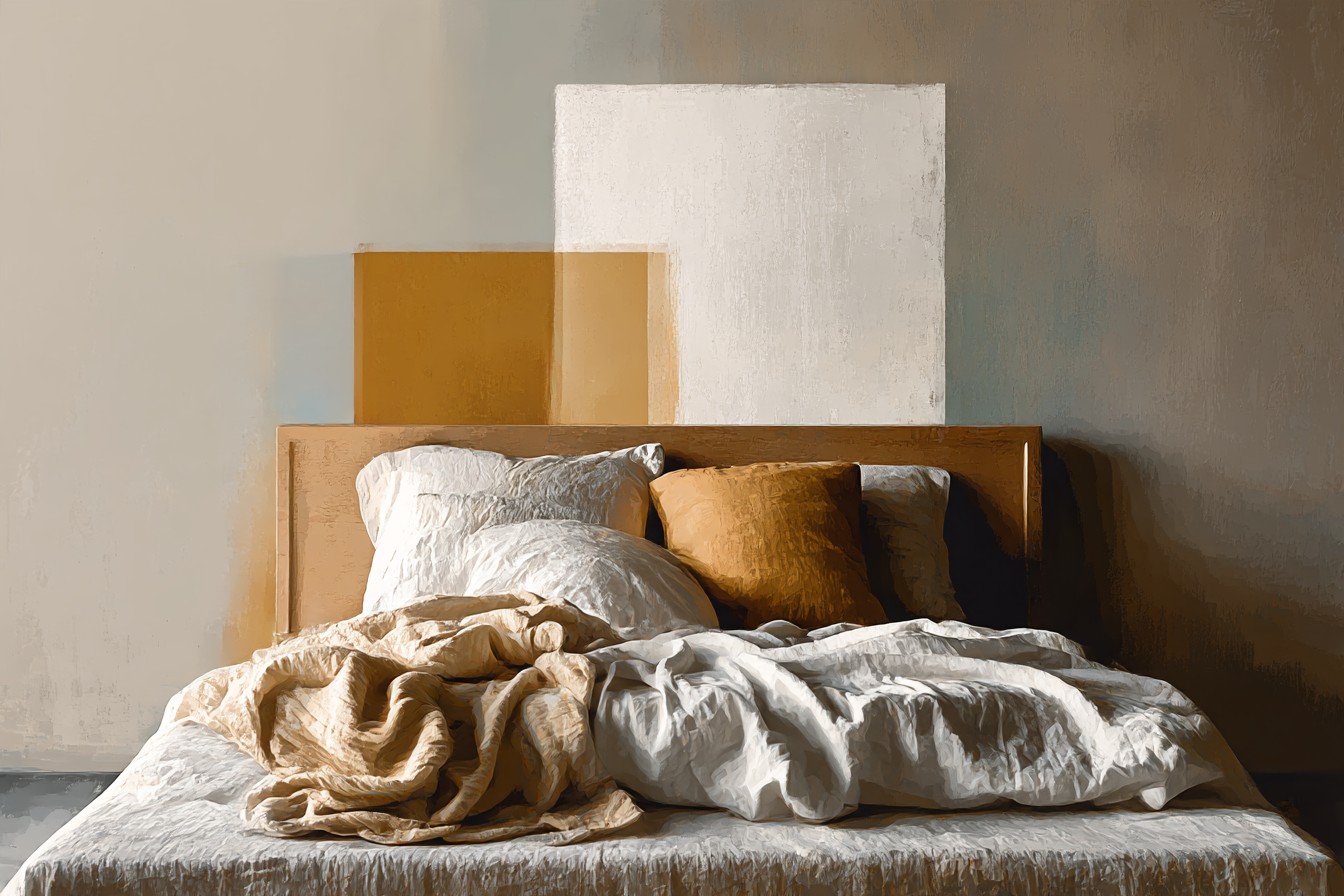
I’ve got nine nightstands right now. Nine. Not in my house, thank God, four of those are living in my sister’s garage under a paint-splattered drop cloth, waiting for a project that may or may not ever happen, and two are in the shed getting rained on more than I’d like to admit. But nine is the number, and I did the math the other day while I was supposed to be doing something useful and just sat there a minute with my coffee going cold, thinking about how a person ends up with nine nightstands and still doesn’t have the right one next to her own bed.
Here’s how it happens, if you’re wondering. You go to one yard sale for a dresser. You leave with the dresser and a nightstand you didn’t know you needed, because it had good bones and a maker’s mark you couldn’t quite place and it was eleven dollars, and eleven dollars for solid wood with dovetail joints is not a decision, it’s an obligation.
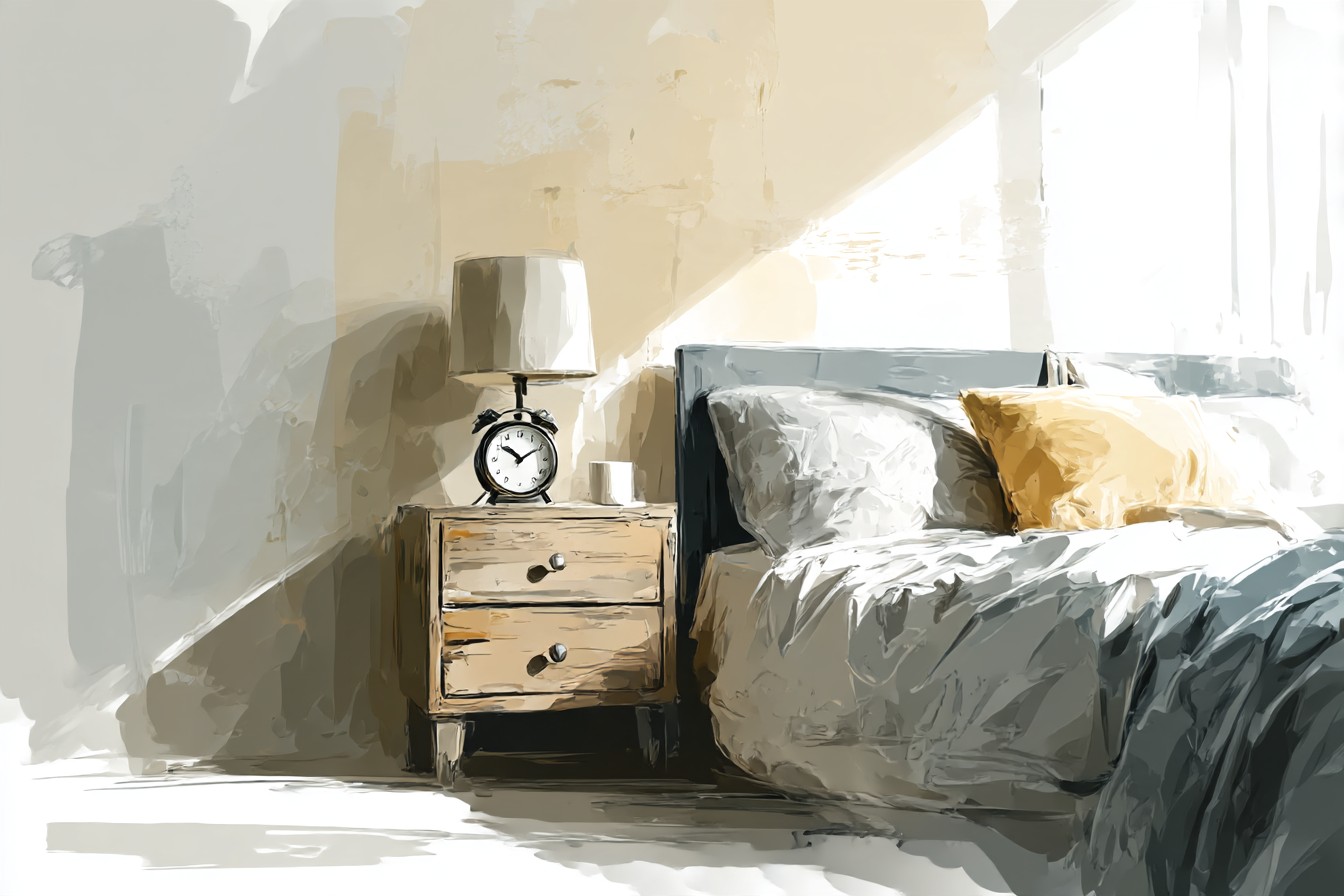
Then you do that again. And again. For a decade. And somewhere in there you stop buying nightstands because you need one and start buying them because the hunt is the whole point, the not knowing what’s behind the stack of junk is half of why you get up early on a Saturday at all.
I bring all this up because I keep getting asked the same question, some version of it anyway, usually from someone who’s finally committed to a dark gray bed frame or headboard and is standing in their bedroom looking a little lost. What color nightstand goes with a dark gray bed. And the honest answer is more than one color does, which isn’t the answer anybody wants when they’re standing there overwhelmed, but it’s true, and dark gray is actually one of the more forgiving colors to build around once you understand what you’re choosing between, contrast or agreement, and why you’d pick one over the other.
Dark gray reads moody. It reads a little serious, a little grown up, and depending on what you put beside it, it can go warm and lived in or cool and almost architectural. I’ve tried nearly every direction over the years across different rooms and different beds, mine and other people’s, and I’ve got real opinions about which ones actually earn their place next to that particular color, not just ones that photograph well for five minutes before you notice the fingerprints.
[Dark Gray Bed]
Warm Wood Nightstands
I almost skipped the yard where I found the walnut one. It was tucked at the end of a gravel lot outside Rincon, mostly folding tables of glassware and one guy selling exclusively Coca Cola memorabilia, and I’d nearly turned the car around before I even parked. Then behind a stack of particleboard shelving units, three of them, identical, clearly from the same failed office renovation, there it was. Solid walnut, dovetailed drawer, a maker’s stamp on the underside I had to Google later, and it had that deep reddish brown that only comes from real age and real wood, not a stain job trying to fake it.
That one lives beside my own gray bed now, and it’s the pairing I’d recommend first if someone asked me cold. Warm wood against dark gray does something a lot of paint chips and metal can’t, it softens the whole room without making it feel decorated. Walnut, cherry, even a honey toned oak, they all pull the same trick, they warm up a color that can otherwise sit a little cold and unfinished on its own.
The thing I check now, every single time, before I fall for the grain, is the joints. Dovetails or pegged joints mean it was built to last, glue and nails mean it was built to sell. I learned that one the hard way with a “vintage” nightstand from an estate sale that turned out to be from about 1994, bless it, held together with what I’m fairly sure was hope.
[Warm Wood Nightstands]
White and Cream Nightstands
There’s a farmhouse style piece sitting in my sister’s garage right now that I bought purely because of the paint. Original milk paint, cream gone slightly yellow with age, chipping at the corners in a way that looked deliberate but wasn’t, and I stood in that dealer’s booth turning it over looking for a manufacturer’s label like a woman possessed. Never found one. Doesn’t matter. The chip pattern told me enough, that kind of wear doesn’t fake convincingly, not the way people think it does.
White and cream against a dark gray bed is the contrast option, and it’s the one people reach for instinctively because it photographs so cleanly, all that crisp light against the deep charcoal. It works. I won’t pretend it doesn’t. But I made the mistake once of pairing a bright white lacquered pair with a genuinely dark gray upholstered headboard and the room ended up looking like a hotel that couldn’t decide if it wanted to be cozy or clinical. Too much brightness right up against that much dark color and you lose the warmth the gray was giving you in the first place.
Cream solves that better than pure white does, in my experience. It keeps the lightness without the stark hospital energy, and if the piece has any age to it at all, any real patina under the paint, it adds texture that flat white furniture just doesn’t have. I’d take a properly aged cream piece over a brand new white one every single time, and that’s not nostalgia talking, that’s just what looks better in a photo taken at eight in the morning with real light instead of a ring light.
[White and Cream Nightstands]
Black Nightstands
The Sunday dealer, the one I’ve been buying from for going on eight years now, kept a black lacquered pair back for me without me even asking. Didn’t say a word about it until I was halfway through the lot, just nodded toward a corner and there they were, matched, both drawers still gliding smooth, a little Asian influenced detailing on the pulls that told me they were probably from the sixties or seventies, that whole era when everybody wanted a bit of that look in the bedroom.
You Might Also Like

Black against dark gray is the pairing nobody asks about first but everybody’s secretly curious about, and I get why, it sounds like it should be too much, too heavy, two dark things sitting right next to each other with nothing to break them up. It’s not, though. Not if the gray has any depth to it and isn’t flat and chalky. Black nightstands against a dark gray bed create this monochrome moment that reads expensive in a way I genuinely didn’t expect the first time I tried it, moody without tipping into something you’d only want in a room with no windows.
The trick, and I mean this, is texture. A flat matte black piece next to a flat matte gray bed just disappears into itself, no definition at all. That lacquered pair works because the shine catches the light and separates itself from the bed frame even though the colors are nearly identical. Look for lacquer, look for a bit of brass hardware to break it up, anything that gives the eye something to land on. Otherwise you’ve just built a very dark corner and called it a bedroom.
[Black Nightstands]
Brass and Mixed Metal Nightstands
I found a chrome and glass one at an estate sale outside Pooler that I genuinely didn’t want, if I’m honest, it wasn’t my taste at all, all that seventies glam I’ve never quite gotten on board with. But it was priced at four dollars because nobody else wanted it either, and I bought it purely out of guilt, the way you buy the last sad puppy at the shelter. It sat in my shed for two years. Then I put it beside a dark gray bed in a guest room almost as an afterthought and it was, no exaggeration, the best thing in there.
Metal nightstands, whether it’s brass, chrome, or that mixed metal look that’s everywhere lately, do something wood and painted pieces can’t, they add a little sparkle without adding any actual color, which means they never fight with the gray, they just sit next to it looking sharp. Brass especially pulls warm undertones out of a dark gray in a way that surprised me the first time I noticed it happening, almost the same effect as the walnut but shinier, more evening wear than everyday.
The catch with anything vintage metal is tarnish, and I’ll tell you now, don’t polish it back to showroom condition unless you actually want it to look brand new, because half the appeal is that soft aged glow that only comes from decades of somebody’s hand on the drawer pull. I made that mistake once with a brass piece, went at it with polish for an entire evening, and ended up with something that looked like it came from a big box store instead of a house in Ardsley Park. Learned my lesson. A little tarnish is doing you a favor.
[Brass and Mixed Metal Nightstands]
Mismatched Pairs
This is the one I have to talk people into, every time, and I get it, matching furniture feels safer, feels like less of a decision to defend to your mother when she visits. But some of the best bedrooms I’ve helped put together didn’t have matching nightstands at all, they had two pieces that had never met each other before that room, picked up months apart, from different yards, sometimes different decades entirely.
I did this in my own bedroom without fully meaning to. The walnut piece on one side, and on the other, a little painted side table I’d bought for an entirely different room that never worked out the way I planned, cream with a faint blue undertone showing through where the top coat had worn thin. They shouldn’t work together. They’re different woods, different eras, different everything. But flanking that dark gray bed, they read as collected rather than clashing, like the room actually has a history instead of being assembled from a single delivery truck.
The rule I use, if you can call it a rule, is to keep one thing consistent between the two pieces even when everything else is different. Same wood tone, or same hardware finish, or roughly the same height so your lamp cords aren’t at two wildly different levels. Beyond that, let them be strangers. A dark gray bed has enough presence to hold two different personalities on either side of it without the room falling apart, and honestly, it’s more forgiving of mismatched pairs than almost any other bed color I’ve worked with, because gray doesn’t compete with anything, it just lets the nightstands do their thing.
[Mismatched Pairs]
Final Thoughts
Nine nightstands in, and if you’d asked me a decade ago which color goes with a dark gray bed, I’d have given you one answer and been wrong about most of it. There isn’t one answer.

That’s the actual takeaway here, more than any single pairing I’ve walked through. Warm wood softens the room, white and cream brighten it, black brings a moodiness that reads more expensive than it costs, metal adds a bit of shine without adding color at all, and mismatched pairs give the whole thing a lived in quality that matching furniture just can’t fake.
What I’d tell you to actually do, standing in your bedroom looking at that dark gray frame, is think about what the room’s missing rather than what matches on paper. If it feels flat, go warm. If it feels heavy, go light. If it already feels finished and a little too safe, that’s your invitation to mismatch, to let two unrelated pieces sit on either side of the bed and see what happens.
I’ll be at a yard this Saturday, probably looking for something else entirely, and I’ll probably come home with nightstand number ten. My sister’s already threatened to charge me rent on the garage. Worth it, most likely. It always has been so far.