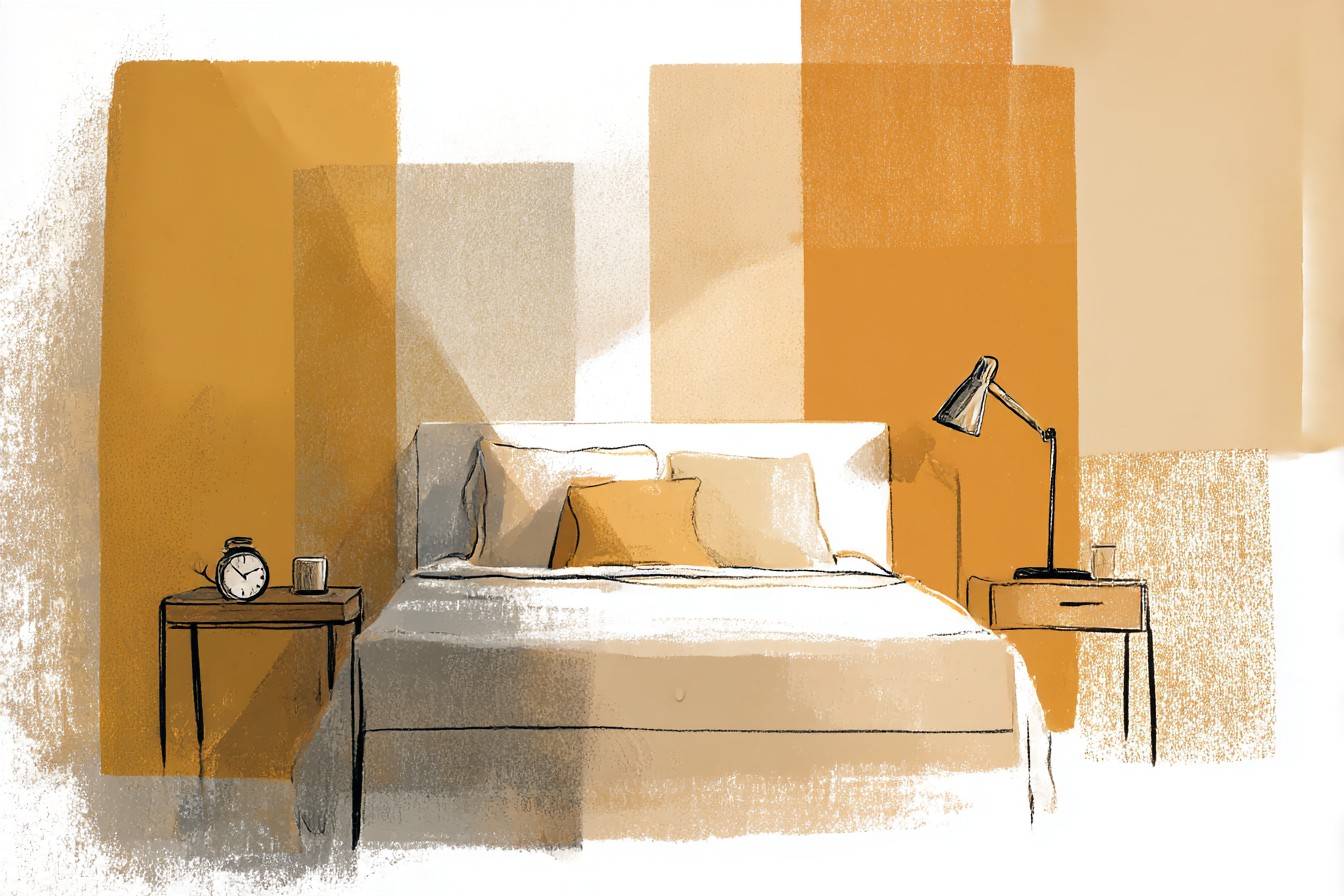
I was sanding down a nightstand in my kitchen on a Saturday in February because the porch was eleven degrees and my “workshop” is really just wherever the radiator happens to be working that week. The nightstand was a five dollar find from a church rummage sale, solid maple under about four layers of shellac gone the color of weak tea, and I’d hauled it inside specifically because I’d finally, after three years, gotten around to painting my bedroom and putting a white bed frame in it. White frame, white duvet, white walls because I ran out of energy to pick a color and white was already in the shopping cart. And then I stood there with sawdust in my hair looking at this honey colored maple thing and thought, well, that’s not going to work, is it. Except I had no idea what would.
This is the part nobody warns you about with a white bed. Everyone talks about it like it’s the easy choice, the safe choice, the one that goes with everything.

What they don’t tell you is that “goes with everything” is a different problem than “goes with something specific,” and a white bed sitting in a room by itself is basically a blank test paper waiting for you to fail it in a new and interesting way. I have lived in this house nine years, I have had four different nightstand configurations next to that bed, and I have gotten it wrong at least twice in ways that were entirely my own fault, not the building’s, which almost never happens here.
Because normally when something goes wrong in this house it’s the house. It’s a hundred and thirty years old, everyone who built it is dead, and I’ve made peace with the fact that half my domestic failures are structural rather than decorative. But the nightstand thing, that one’s on me. I painted a pair of thrift store tables the exact same white as my bed frame once, stood back, and the whole corner of the room went so flat and matchy it looked like a hospital waiting area that had given up trying. Learned something from that. So did the maple table, eventually, though not that day.
What I want to actually get into here is the real decision, the one people are Googling at eleven at night with a paint swatch in one hand: what color nightstand actually goes next to a white bed, and whether the safe matching answer is even the right one. Spoiler, sometimes it is. Often it isn’t. Depends entirely on what kind of tired you are.
[Nightstands for a White Bed]
The White on White Approach
Let’s deal with the obvious one first because it’s obvious for a reason. A white nightstand next to a white bed frame does something genuinely useful, which is disappear. Not literally, I’m not selling you camouflage furniture, but it stops competing for attention in a room that, especially in a small bedroom, doesn’t have much attention to spare. I did this in my guest room, matching white bed and matching white nightstand, and the room reads bigger than it is, which matters a lot in a house built before anyone had heard of an open floor plan and every bedroom is roughly the size of a large closet with ambition.
Where it goes wrong, and it did go wrong in my own bedroom for about eight months, is when everything is the exact same shade of white and the exact same finish. Then it stops being calm and starts being sterile, like you’re waiting to be called in for something unpleasant. The maple table I mentioned, I eventually painted it white too, but a warmer white than the bed frame, with a satin finish instead of matte, and left the drawer pull as unlacquered brass. That tiny bit of variation is doing all the work. Flat white on flat white with nothing to catch the light is the one I’d genuinely warn you off, not because it looks bad in a photo, it photographs beautifully actually, but because you will live with it in person under a sixty watt bulb in January and it will feel like nothing at all.
If you’re going this route, at minimum vary the finish or the exact tone, and give it one detail that isn’t white, a handle, a marble top, anything. My seventh graders would call this “extra.” I’d call it the difference between a room that’s calm and a room that’s just blank.
[White on White Nightstands]
Going Dark and Letting It Contrast
The opposite approach, and the one I resisted for years out of some misplaced idea that contrast was for people with more confidence than me, is a genuinely dark nightstand against that white bed. Espresso, black walnut, ebonized oak, doesn’t matter which, the principle’s the same. It stops being a background choice and starts being a decision the room actually has to answer to.
I bought a pair of dark walnut nightstands secondhand off a colleague who was downsizing, cost me sixty dollars for two, and put them either side of that same white bed once I’d finally stopped painting everything the same color. The effect was immediate in a way white on white never is. The bed reads brighter, almost startlingly so, because it’s got something to be brighter than. It’s the same trick as a white shirt looking crisper against a navy blazer instead of another white shirt.
The honest warning here, the one I’d give a friend rather than a reader, is that dark furniture shows dust and cat hair in a way white never does, and I have a cat who treats every horizontal surface as a personal challenge. Wipe those nightstands weekly or accept you’re living with a faint gray film that no amount of “it’s just character” is going to talk you out of. Also, in a room with low ceilings, which mine has, too much dark furniture at once starts pulling the whole space downward. Two nightstands is contrast. A dark nightstand, a dark headboard, and dark floors is just a cave with better lighting.
[Dark Contrast Nightstands]
Warm Wood as the Middle Ground
Somewhere between disappearing into the bed and staging a confrontation with it sits plain warm wood, the honey oak, the light ash, the rattan and cane pieces that have been having a moment for about six years now and show no sign of stopping. This is genuinely where most of my house has landed, not out of any grand design philosophy, mostly because secondhand wood furniture is what shows up cheapest at estate sales in Rhode Island and I am, above almost everything else, cheap.
You Might Also Like

A natural wood nightstand next to a white bed does something the white and the black options don’t, it brings actual warmth into a room that can otherwise read a little clinical, a little like a very tasteful waiting room. That maple table from the start of all this, once I stopped trying to force it into whiteness and just waxed it back to its natural color, sitting next to the white frame, is honestly the best it’s ever looked in this house. There’s a reason so many photos of white bedrooms lean on wood tones, it’s not a trend so much as basic color theory, warm against cool, and it works.
The place I’d push back on the trend slightly is rattan specifically, which is everywhere right now and looks wonderful in a photograph and considerably less wonderful after a New England winter of dry heat has had a go at the woven cane, which can crack if the room’s too dry. I keep a small humidifier running near mine from November through March, which sounds excessive until you’ve watched a hundred dollar nightstand start to fray at the joints because nobody mentioned that cane and forced air heat don’t get along.
[Warm Wood Nightstands]
The Mismatched Pair, On Purpose
Here’s the one that took me longest to trust, and I still catch myself second guessing it: two different nightstands, deliberately, either side of the same white bed. Not a matched set gone wrong from a move where one got broken, an actual choice, one wood tone here, one painted color there, or one modern piece and one older piece that clearly has no business being in the same catalog as the other.
I did this properly for the first time in my own room two years ago. My side has that reclaimed maple table, warm and a little battered. My partner’s side has a small black metal side table, the kind with thin hairpin legs, that we’d had knocking around unused since a previous apartment. Side by side they shouldn’t work. They do, and I think it’s specifically because the white bed between them acts as the thing that makes the mismatch feel intentional rather than accidental. Without that white anchor in the middle, I don’t think it would read as a choice, it would just read as two people who never got around to buying furniture that matched.
The failure mode here is obvious if you think about it for more than a minute, which I did not, the first time, and ended up with two nightstands so different in height that lamps sat at completely different levels and it looked like the room had a limp. If you’re going mismatched, keep the heights within an inch or two of each other and let everything else be different. That’s the whole trick. One consistent measurement, chaos everywhere else.
[Mismatched Nightstand Pairs]
A Single Color, Used Sparingly
Last one, and the one I’d recommend to exactly the kind of person who’s already bored of everything above, is picking one actual color, not a neutral, and letting it live on the nightstand only. A dusty green. A rust orange. A deep, slightly ugly mustard that I own and love and nobody else in my house understands.
I painted one nightstand a color called something like “bruised plum” from a sample pot I’d bought for an entirely different, abandoned project, and put it on the side of the white bed that gets less daylight. It reads almost black in low light and genuinely purple in the morning sun, and it’s become the one thing in that room people actually comment on, which after nine years of being asked exclusively about the drafts and the smell coming from the radiators, felt like a genuine win.
The risk, obviously, is that a bold color dates faster than wood or white ever will, and you’re committing harder than you think you are.

I’d treat this as the choice for a nightstand you’re prepared to repaint again in five years, not a forever piece. Test the color in the room across a few different times of day before you commit, because a color that looks moody and rich at 9pm under a warm bulb can look frankly a bit bruised, pun very much intended, in flat morning light.
[Colorful Nightstands]
Final Thoughts
If you’d asked me nine years ago what color nightstand goes with a white bed, I’d have said white, confidently, and I’d have been giving you the answer that’s easiest to photograph and hardest to actually live in for more than a season. The honest answer is that a white bed isn’t a rule, it’s a blank line waiting for you to decide what kind of bedroom you actually want to wake up in. Calm and disappearing, or warm and a little worn in, or genuinely bold enough that a guest asks about it before they ask why your house smells faintly of old radiator paint, which someone always does eventually.
I’ve landed, after all that sanding and repainting and one badly measured mismatched pair, on warm wood with one deliberately odd colored piece thrown in, because that’s what suited the actual room I have, drafts and all, not the room in a catalog. Your answer might be entirely different, and it should be. The white bed isn’t the hard part. It never was. It’s just the part everyone assumes they’ve already solved.

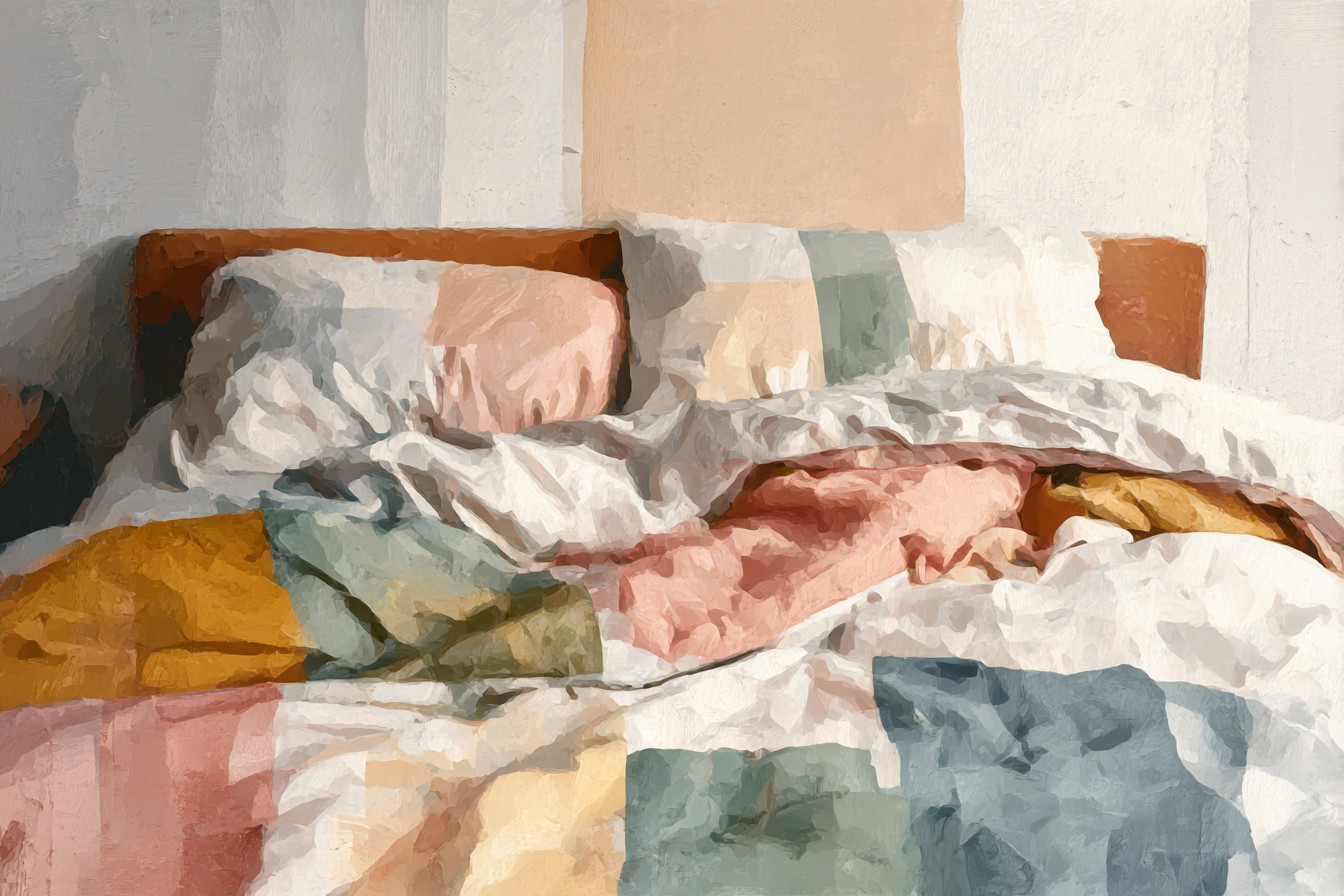


[…] I think about bedding entirely. Texture does more work than color does, full stop. You can have a bed that’s five different shades of the exact same cream and off white, and if the textures are all flat cotton percale, it’ll look thin and a bit sad. Swap even […]