A friend of mine, Marla, walked into my kitchen last October, looked at the vase on the counter, and said, “Helen. That water looks like pond water. Actual pond water. Are those stems rotting in there?” And they were, a little. I’d bought a nice, tall, completely clear glass vase because I liked the shape of it, filled it with grocery store tulips, and then not thought about it again for eleven days. In an opaque ceramic vase, nobody would have known.

In clear glass, the whole ugly process was on display like a diorama.
That’s the thing nobody tells you about clear vases. Every other kind of vase is forgiving. Ceramic hides stem rot, ugly cut angles, cloudy water, the works. Clear glass hides nothing. It’s basically an aquarium for whatever you’ve decided to put in it, and it will show you exactly how that decision is going. I’ve had this house, a hundred and thirty year old triple decker with floors that slope enough that a marble will roll from one end of the living room to the other on its own, for going on nine years now, and I’ve learned more about what does and doesn’t survive in a clear vase than I ever expected to, mostly through putting the wrong things in one and having to watch them fail in real time.
Because that’s really the question with a clear vase, isn’t it. Not “does this look nice going in” but “does this still look nice on day four, day nine, day whatever.” A lot of things pass the first test and fail the second, spectacularly, in full view. So this isn’t a piece about arranging flowers nicely. It’s about what actually holds up, visually and otherwise, when there’s no ceramic wall between you and the truth of what’s happening inside that vase. Some of it is about water clarity. Some of it, frankly, is about my drafty windowsills and what cold glass does to things sitting near it in January. All of it comes from having gotten this wrong first, often in front of Marla.
[Clear Vases]
Branches and Dried Stems
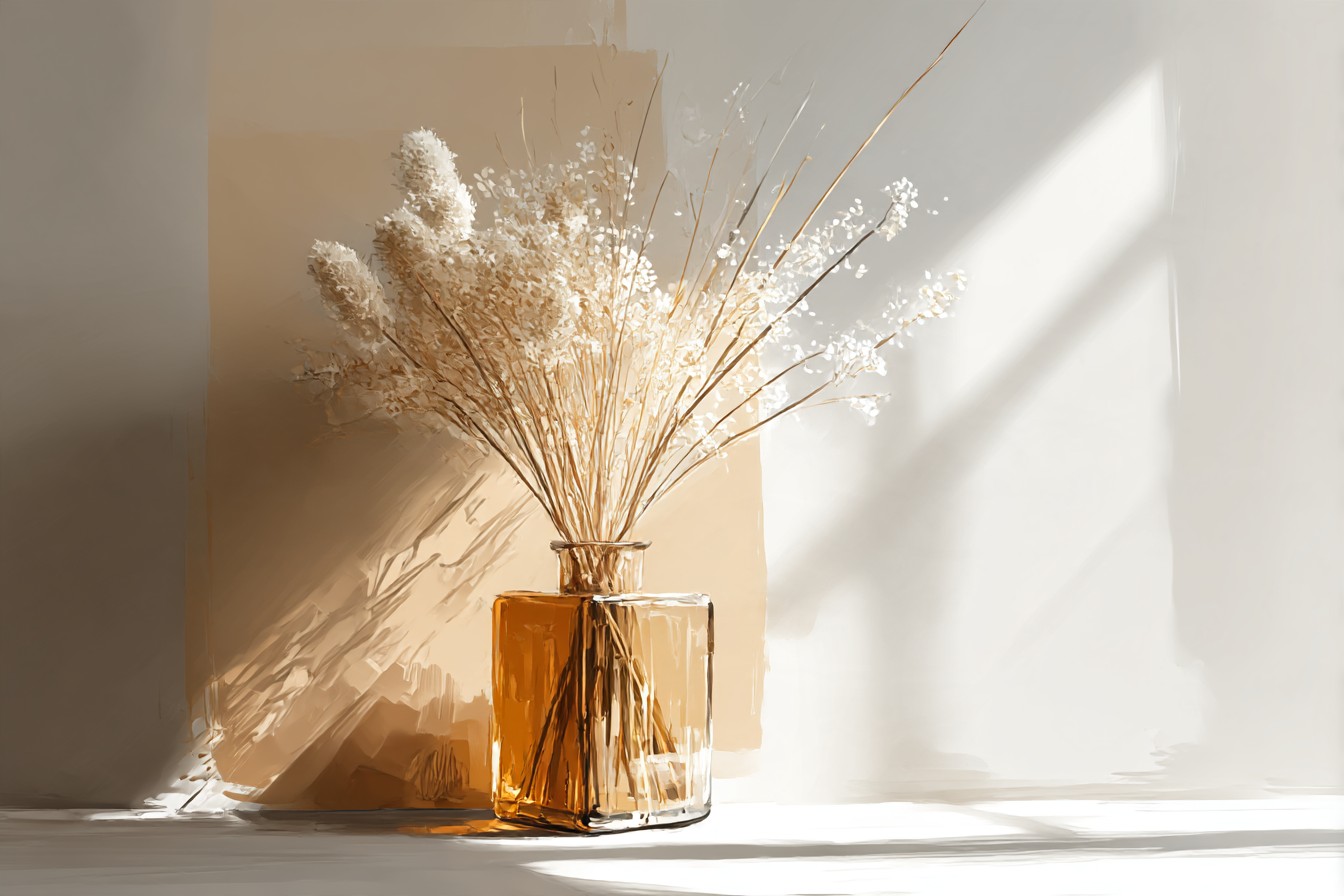
The easiest way to win with a clear vase is to remove water from the equation entirely, and dried or bare branches do exactly that. Curly willow, eucalyptus stems once they’ve dried out, pampas grass, even just a fistful of birch branches from the yard if you’ve got a saw and no shame. No water means no cloudiness, no rot, no smell, none of the things clear glass is so eager to expose. It also means the vase itself becomes visible as a shape rather than a container of murky liquid, which honestly is a better use of a nice piece of glass anyway.
This matters more in my house than it probably should, because my front room window is single glazed and drops a solid ten degrees below the rest of the room once November hits, and anything with water sitting near it has a habit of doing something unpleasant overnight. Dried branches don’t care. I’ve had the same three stems of dried eucalyptus in a tall clear vase on that windowsill for over a year now, through a full winter of condensation running down the inside of the glass beside them, and they’ve been completely unbothered by any of it. The vase itself gets a faint fog on the inside near the base some mornings, just from the temperature difference, but that wipes off in two seconds and nobody’s ever noticed but me.
The one real failure mode here is dust, and clear glass shows dust on dried stems the same unforgiving way it shows cloudy water, so budget for an occasional shake outside or a pass with a hairdryer on cool. Otherwise this is about as low maintenance as a clear vase gets, and it’s the one I’d point a beginner toward first, because it’s very hard to mess up and it looks considered without you having done much considering at all.
[Branches and Dried Stems]
Citrus and Fruit
Whole lemons or limes submerged in water inside a clear vase is one of those tricks that photographs beautifully and works for about four days before it turns into a small science experiment. I know this because I did it for a dinner party two Septembers ago, six limes in a wide clear cylinder vase as a centerpiece, genuinely lovely on the night, and then left it on the sideboard afterward because it looked nice and I was tired. By day six the water had gone faintly yellow. By day nine there was a film on the inside of the glass I did not want to identify. I FOUND OUT THE HARD WAY THAT CLEAR GLASS DOES NOT LET YOU FORGET ABOUT FRUIT IN WATER, and I threw the whole thing out, vase included in the trip to the sink, because I did not trust myself to clean it properly the first time.
The fix isn’t complicated, just less lazy than I was. Change the water every two to three days, keep it out of direct sun which speeds everything up, and treat it as a short term display rather than a set it and forget it one. My kitchen window is drafty enough that the sill stays noticeably cooler than the rest of the room even in summer, which I’ve since decided is actually useful here, the citrus water clouds slower on that side of the room than it does anywhere warmer in the house. Small mercy from an old building that otherwise mostly just costs me money in heating oil.
Done properly, refreshed on schedule, lemons or limes in a clear vase are one of the cheapest, most cheerful things you can do with a Tuesday trip to the grocery store. Just don’t do what I did and treat it like a permanent fixture.
[Citrus and Fruit]
Cut Flowers Where the Stems Do the Work
Some flowers are worth buying specifically for what their stems look like through glass, not just what the blooms look like above the rim. Tulips do this brilliantly, they keep curving and reaching for light even after they’re cut, and a clear vase lets you watch that happen day to day, which a ceramic one just doesn’t offer. Ranunculus stems have a nice visible texture. Anything with a straight, clean cut and no leaves left below the waterline earns its place in clear glass, because leaves left underwater are the single fastest route to the cloudy, faintly swampy look Marla called me out on.
You Might Also Like

I learned the temperature lesson on these the hard way too, though it was the house’s fault more than mine this time. I’d left a vase of ranunculus on the bedroom windowsill overnight in February, forgetting that particular window has never sealed properly no matter what I’ve tried, and woke up to stems that had gone almost glassy looking, the cold having done something to them overnight that no amount of fresh water fixed. They didn’t recover. Cut flowers in clear vases want a spot that’s cool but not cold, and in a hundred year old house that’s a narrower window than the marketing on any “draft proof” product would have you believe, because I’ve tried several of those and none of them changed the reading on my windowsill thermometer by more than a degree.
A single drop of bleach in the water, changed every other day, keeps the glass clear far longer than people expect. It’s not glamorous advice but it’s the one thing that’s actually worked every time I’ve bothered to do it.
[Cut Flowers]
Layered Filler: Sand, Stones, and Shells
If you want a clear vase to do something other than hold liquid, layered filler is the way in, and it solves two problems at once. It gives top heavy stems something to lean on so they don’t slide sideways, and it turns the vase itself into a display object even with nothing growing out of the top at all. River stones, plain aquarium sand, or a few handfuls of shells from an actual beach trip if you’re sentimental about that sort of thing, layered at the bottom of a clear vase, look properly deliberate for very little effort.
The one thing nobody warns you about is weight and floor level, which sounds like a strange thing to bring up in a piece about vases, but I live in a house where the living room floor drops nearly two inches from one wall to the other, and a heavy vase of stones sitting anywhere near that slope will very quietly migrate across a side table over the course of a few weeks if you don’t notice. Mine did this to a fairly alarming degree before I caught it, ending up half off the edge of a bookshelf I hadn’t realized wasn’t level either. Nothing broke, but it was close, and now anything filled with stone or sand gets checked with an actual level before I trust a surface with it.
Beyond that, this is one of the more forgiving fillers going. It doesn’t rot, doesn’t cloud, doesn’t need changing, and it gives a clear vase a sense of purpose even between flower arrangements, which matters more than people admit when you’re the kind of household that only buys fresh flowers occasionally rather than on any kind of schedule.
[Layered Filler]
String Lights and Seasonal Fillers
Come December, my clear vases mostly stop holding flowers at all and start holding whatever the season demands, pinecones, small ornaments, a battery operated string of warm white lights coiled loosely inside so the glass catches the glow rather than the bulbs themselves. It’s a good trick, and it’s the one time of year my front room windowsill actually looks intentional rather than like a place things end up.
The battery point matters more than it should in a house this old. I plugged a mains powered set into an outlet near that same drafty front window one December and the light flickered oddly for two days before I unplugged it out of nerve rather than diagnosis, and an electrician later told me that whole circuit is original enough to the building that he wasn’t thrilled about anything staying plugged in there unattended. Battery operated everything, ever since, for anything sitting in glass near a window in this house.
Dried orange slices, cinnamon sticks, small bundles of rosemary tied together, all of it reads well through clear glass and none of it needs water, which by this point in the piece you’ll have noticed is something of a running theme with me. The dry heat off an old radiator will make some of these brittle faster than you’d expect, so I keep seasonal vase displays away from direct heat sources, a lesson learned from a vase of cinnamon sticks that basically turned to dust on one side after a winter spent too close to a cast iron radiator that runs hotter than any thermostat admits to.
[String Lights and Seasonal Fillers]
Final Thoughts
If there’s a single thread running through all of this, it’s that clear glass is an honest material and most of us are used to furnishing with the dishonest kind.
Ceramic and opaque glass let you get away with things. Clear vases don’t, and once you accept that, the choices get a lot easier. Dry things when you can. Change water more often than feels necessary. Keep an eye on where the vase actually sits in the room, because in a house like mine that’s never quite as flat, warm, or draft free as it should be, the windowsill that looks perfect for a display is often the one working against it.
None of this needs to be complicated, and I’d argue the simplest fillers, bare branches, a few stones, fruit you’re actually planning to change out on schedule, outperform anything fussier nine times out of ten. The vase’s whole job is to show you what’s inside it clearly. Give it something that holds up to that kind of scrutiny and it’ll do more work in a room than almost anything else on a shelf, no marketing claims required, no thermal promises to be disappointed by later. Just a good clean shape, filled with something that’s actually going to look the same on a Thursday as it did the Sunday you put it together.