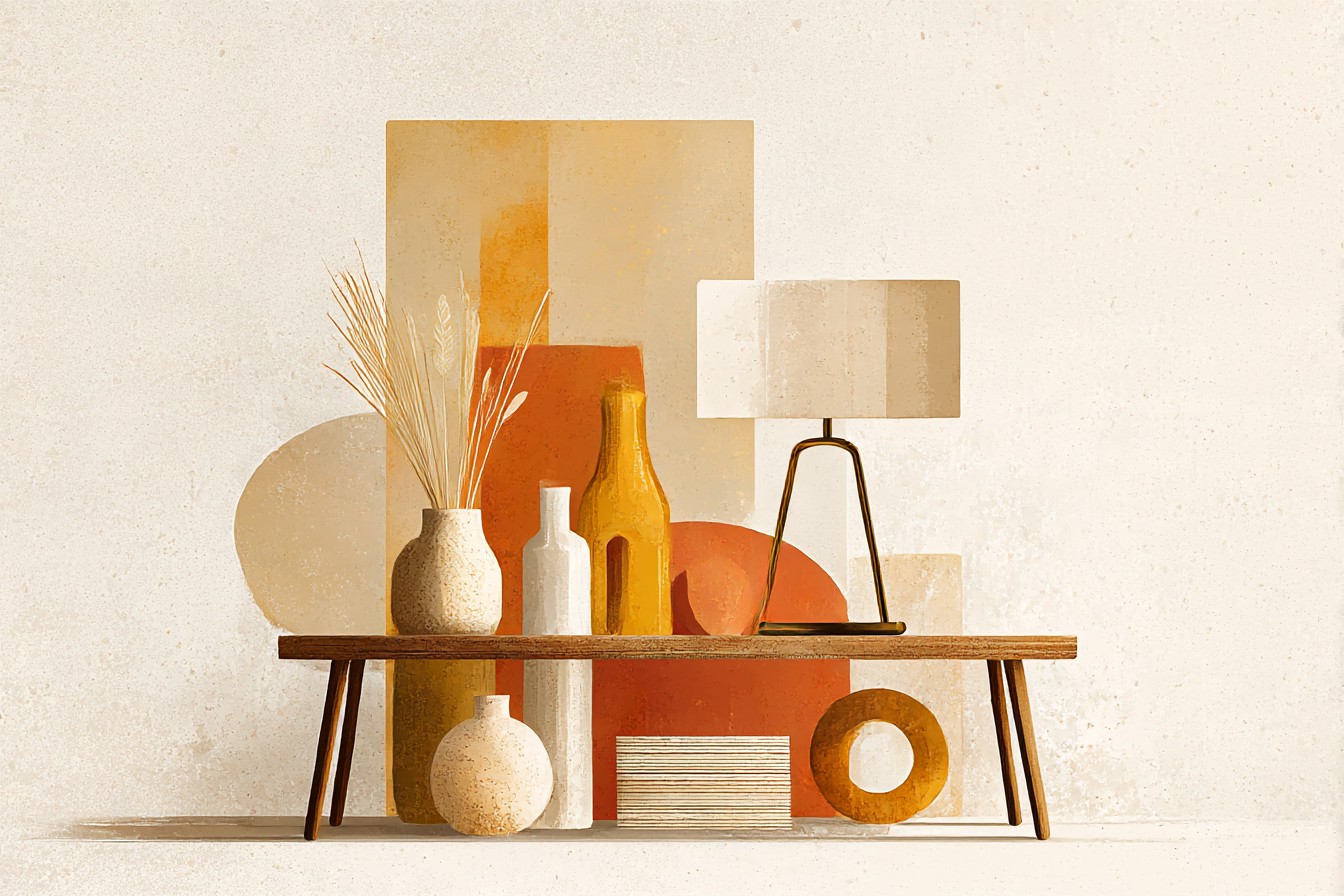
I counted the actual number one Tuesday in February, out of boredom, because the heat was doing that thing where it clunks on but doesn’t actually arrive anywhere near the front room for another forty minutes. I walked past the end table beside my reading chair eleven times before lunch. Set a mug down. Picked the mug back up. Put reading glasses on it, took them off, put a student’s essay on it, moved the essay because I remembered I hadn’t graded it yet and didn’t want to look at it. Not once, in any of those eleven trips, did I reach for a lamp.
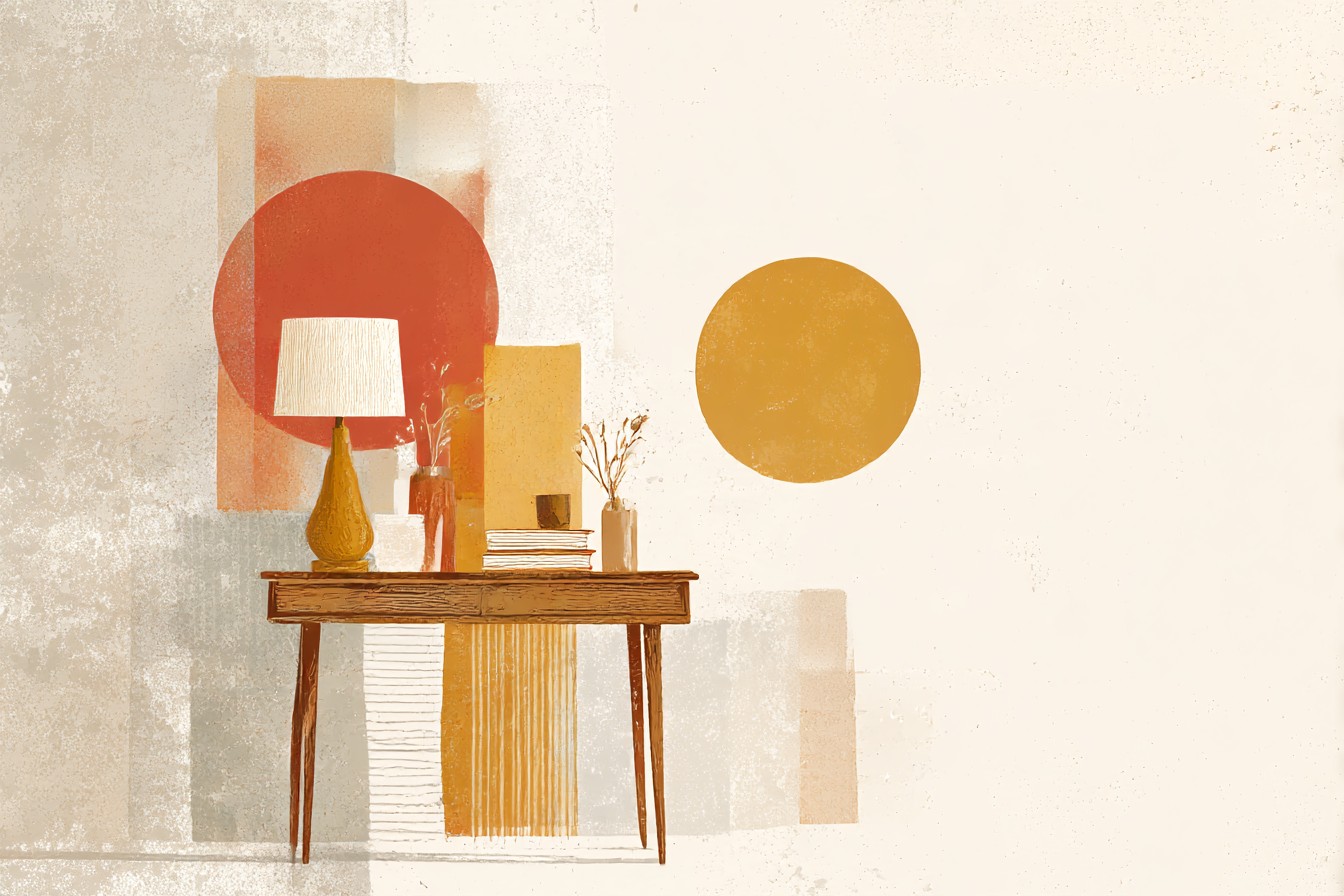
There isn’t one. There hasn’t been one on that table in about a year and a half, since the lamp that lived there died a genuinely undignified death involving a cat, a lampshade, and a sound at 6am that I still haven’t fully forgiven the cat for.
What I noticed, once I’d stopped being annoyed about the essay, is that the table had quietly become the busiest surface in the room without any electrical help at all. It holds things. It just doesn’t light anything, and after a year and a half of pretending that was a temporary state of affairs, I’ve come around to thinking it’s actually the more honest way to use an end table in a house like mine, a hundred and thirty years old, wiring that predates the concept of a phone charger, outlets in places no interior designer would ever choose on purpose. Not every table needs a lamp. Some of them are doing a different, quieter job, and once you stop trying to force light onto a surface that was never going to hold it well anyway, you free up the table to be good at something else entirely.
This isn’t a piece about giving up on lighting your living room properly, I have opinions about that elsewhere and they involve floor lamps in the corners doing the work a table lamp never could. This is about the specific, slightly awkward gap left behind when there’s no lamp on that one table, whether because the outlet’s inconvenient, the lamp broke, or you just never got around to replacing it, and what actually earns its place there instead. Some of it is practical. Some of it is just nice to look at. All of it has been tested on that exact table, in that exact drafty room, over more than one winter.
[End Table With No Lamp]
A Tray That Actually Catches Things
The first thing that went on that table after the lamp funeral was a tray, and I want to be clear this wasn’t a styling decision, it was closer to triage. Without a lamp base anchoring the middle of the table, everything I put down was migrating toward the edges, and I lost a set of keys down the gap behind the radiator for four days because of it. A tray solves this in a way that feels almost embarrassingly simple. Mine’s a shallow wooden one, about fourteen inches, picked up at an estate sale for six dollars because nobody else wanted it, and it now holds a candle, a coaster, and whatever mail I haven’t dealt with, in a boundary that stops the whole table sliding into chaos by Thursday.
What I like about a tray specifically, versus just letting things sit loose, is that it gives the surface a job without requiring anything from the outlet. No lamp means no cord to route, no bulb to remember, nothing to fail at 11pm when you actually want to read. A tray just sits there being useful, and it photographs fine too, though I’ll admit that’s a secondary concern in a house where the primary concern most days is whether the radiator’s actually on.
If your table’s small, a tray this size will look proportionate rather than crowding it, which is more than I can say for the lamp it replaced, which was always slightly too tall for the room and made the ceiling feel lower than it is. I didn’t clock that until it was gone. Sometimes you don’t notice a piece was fighting the room until it’s out of it.
[End Table Trays]
A Stack of Books, Chosen for Height Not Just Content
I have a friend, Marguerite, who came over one evening, looked at the three books stacked on that same end table, and said, without any prompting, “are those for reading or for the table.” Both, I told her, though if I’m honest the bottom one’s been sitting there so long as a plinth that I’ve genuinely forgotten what’s inside it.
This is the thing about using books where a lamp used to be: they do something a lamp base never did, which is offer actual variable height for whatever you set on top. My stack is three deep, a hardback atlas on the bottom because it’s wide and stable, then two paperbacks, then a small dish on top for hairpins and the occasional stray earring. It’s not styled so much as accumulated, which I think is the honest version of this idea. The version where someone buys a matched set of decorative hardbacks in a single color to look intentional is a different piece of furniture writing than the one I’m doing here.
Books also solve a problem specific to a lampless table, which is that the surface can look unfinished, slightly apologetic, like it’s waiting for something to arrive and complete it. A stack does the opposite. It reads as settled, lived in, the way a lamp never quite managed on that table anyway because the cord always had to snake awkwardly toward the baseboard outlet, which is eighteen inches further from the table than any sensible electrician would have put it.
[End Table Books]
Something Living, If Your Room Can Actually Keep It Alive
I want to be careful here because I’ve killed enough plants in this house to feel slightly guilty recommending this at all. The front room gets decent light in summer and almost none from November through February, and I lost a fiddle leaf fig to that exact window of neglect two winters ago, watched it drop leaves one at a time like it was making a point.
What’s actually survived on that end table, through multiple bad winters, is a snake plant, and I say this with the weary respect of someone who has tried to kill it by accident more than once. It’s been forgotten for three weeks at a stretch. It’s had cold drafts blowing directly on it from a window that doesn’t seal properly, the kind of draft I can feel on the back of my hand from six feet away in January. It’s still here. A plant does something a lamp can’t, it changes very slightly day to day, and on a table that used to just glow uselessly in the corner, having something that’s quietly alive feels like a better use of the space than a bulb I had to remember to switch off.
You Might Also Like

If your end table sits in a genuinely dark corner, I won’t pretend a plant is the answer, you’ll just be restaging the fiddle leaf fig tragedy with a different lead actor. But if there’s even indirect light reaching it, this is worth trying before you assume the table needs anything electrical at all.
[End Table Plants]
A Small Box or Basket for the Stuff You’d Otherwise Lose
Every old house has a category of object that has no other home, and mine live in a lidded box on that end table now, a plain woven one about eight inches across that used to hold nothing in particular and now holds a spare phone charger, a tin of lip balm, and a hot water bottle stopper, because the hot water bottle itself lives on the chair and the stopper has a habit of going missing without one.
This is maybe the least glamorous entry in this whole piece and I’m not going to dress it up as anything else. A box on an end table where a lamp used to be is doing storage, not decoration, and I think that’s a completely legitimate thing for a table to do. The alternative, in my house at least, was small objects colonizing every flat surface in the room by the second week of any given month, and I’d rather look at a closed box than a scatter of things I’ll trip over reaching for the thermostat at 6am.
The specific advantage over a lamp is one I didn’t expect until it happened. A lamp on this table meant less usable surface, the base took up a third of it easily. A box the same footprint gives you the lid as a surface too, so you haven’t actually lost anything, you’ve gained a place to put the loose ends of a day, literally, before bed.
[End Table Storage Boxes]
Candlelight, Which Doesn’t Ask Anything of the Wiring
I’ll say this once and then move on because I don’t want to overstate it: a candle is not lighting, not in any way that replaces what a table lamp does for reading or working. What it does instead, on the evenings I actually remember to light one, is give the table a reason to exist after dark without asking anything of an outlet that’s already overloaded with a space heater and a phone charger in a hundred and thirty year old house that was never wired for any of this.
The one on my table now is a plain glass jar candle, unscented, because I made the mistake once of buying a heavily scented one for this exact spot and within a week the whole front room smelled like a candle shop had had an argument with a bakery.
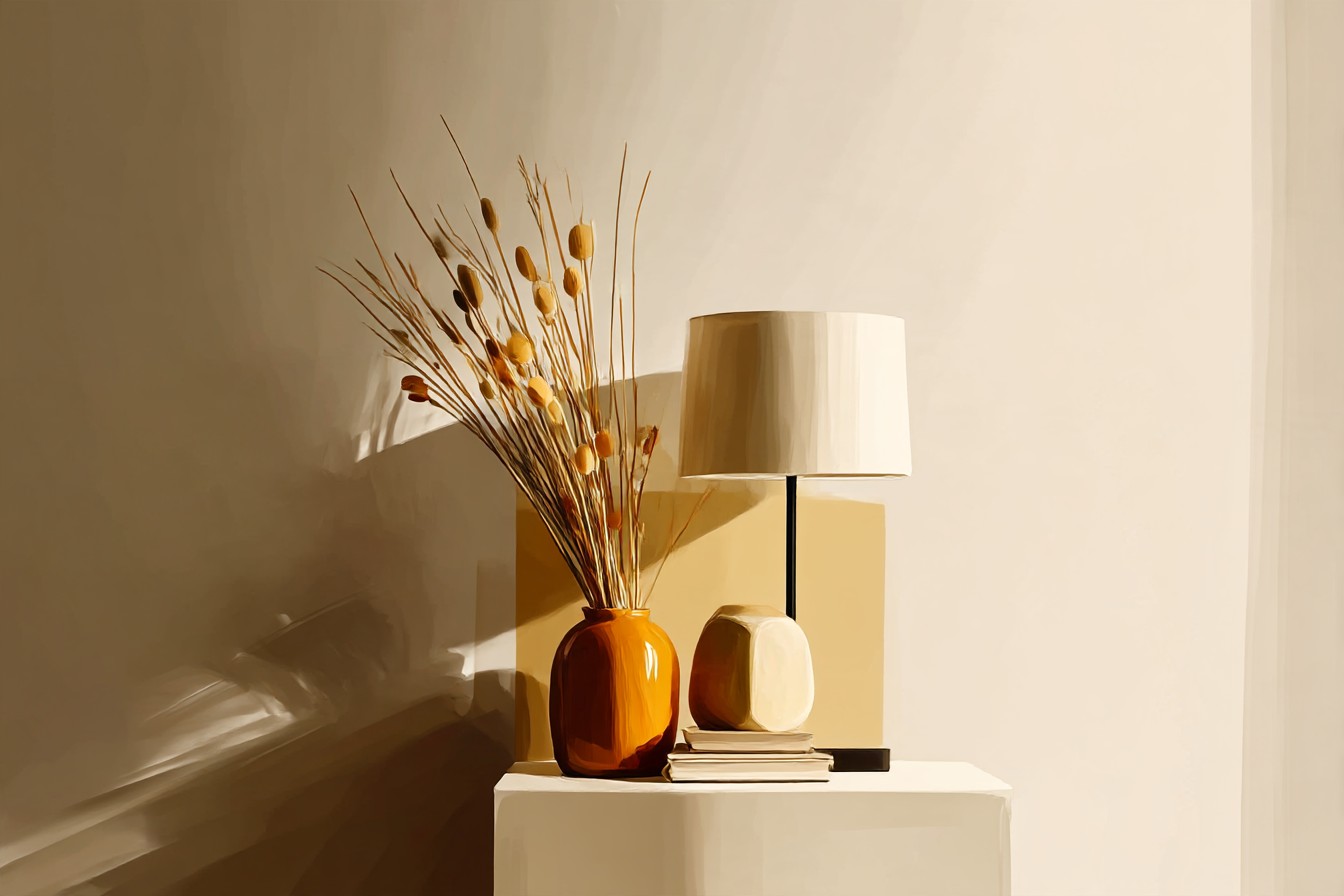
Unscented, it just sits there, and on the nights the radiator’s doing its usual slow clunking start, lighting it is close to a ritual, something to do with my hands while I wait for the room to actually warm up.
It’s not a lamp substitute for function. It IS a genuinely good answer to the question of what makes a lampless table feel finished rather than abandoned once it’s dark outside, which in a New England house from October onward is most of the day. Worth having a few unlit spares in a drawer too, because you will forget to buy more exactly when you need one.
[End Table Candles]
Final Thoughts
None of this replaces proper lighting in a room, and I want to be clear I still have a floor lamp doing the actual work in that corner, plugged into the one outlet that doesn’t trip the circuit if the space heater’s also running. What this piece is really about is the smaller, more specific question of what a table’s for once you’ve accepted the lamp isn’t coming back, whether that’s a broken bulb you never replaced, a cat incident of your own, or just a table that was always slightly too far from an outlet to be worth the extension cord.
What I’ve landed on, over a year and a half of living with that gap, is that the table’s better for it in some ways. It holds a tray, a stack of books, a plant that’s outlasted its more delicate predecessor, a box for the stuff that used to migrate around the room, a candle for the evenings it’s actually dark by four thirty. None of it draws power. None of it will fail the way that lamp eventually failed, cord frayed, bulb blown, cat unrepentant.
If your end table’s sitting there lampless and looking slightly apologetic about it, I’d say give it a job instead of a bulb. Mine’s busier now than it ever was when it was just glowing in the corner, and I notice it a lot less, which I’ve decided is the actual sign of a table that’s finally working.

[…] has strong, unbending opinions about mattresses that don’t accommodate that, and when I once put her up in a guest room with a mattress on the firmer end, she said nothing about it the next morning, which from her is a review in itself, and not a […]