I own six separate things whose entire job is to stop my fire pit from murdering my lawn. Six. A heat resistant mat that lives folded in the shed for nine months of the year, a stack of eleven concrete pavers I bought “just in case” and never fully used, a pair of welded steel leg risers, a roll of gravel edging I installed myself badly one Saturday, a second heat mat because the first one was the wrong size, and a spare set of paver base sand I keep meaning to return. Six things, for one fire pit, that gets lit maybe eleven times a year if the weather in San Francisco decides to cooperate, which it mostly doesn’t past September.
Here’s how I got there. My first summer with an outdoor fire pit, a cheap steel bowl thing off a big box site, I put it straight on the lawn because the box said “suitable for outdoor use” and I assumed that meant grass was included in “outdoor.” Six weeks later I had a perfect brown ring, roughly nineteen inches across, dead to the root, that took until the following spring to fully grow back in. My neighbor Denise leaned over the fence at one point and said “is that from the fire thing,” which is the exact moment I understood the ring was visible from her yard too, not just mine, which somehow made it worse.
So I did what I do for a living, which is measure things properly instead of trusting the packaging, and I started testing what actually protects grass without turning my backyard into a hardscaping showroom I didn’t ask for.
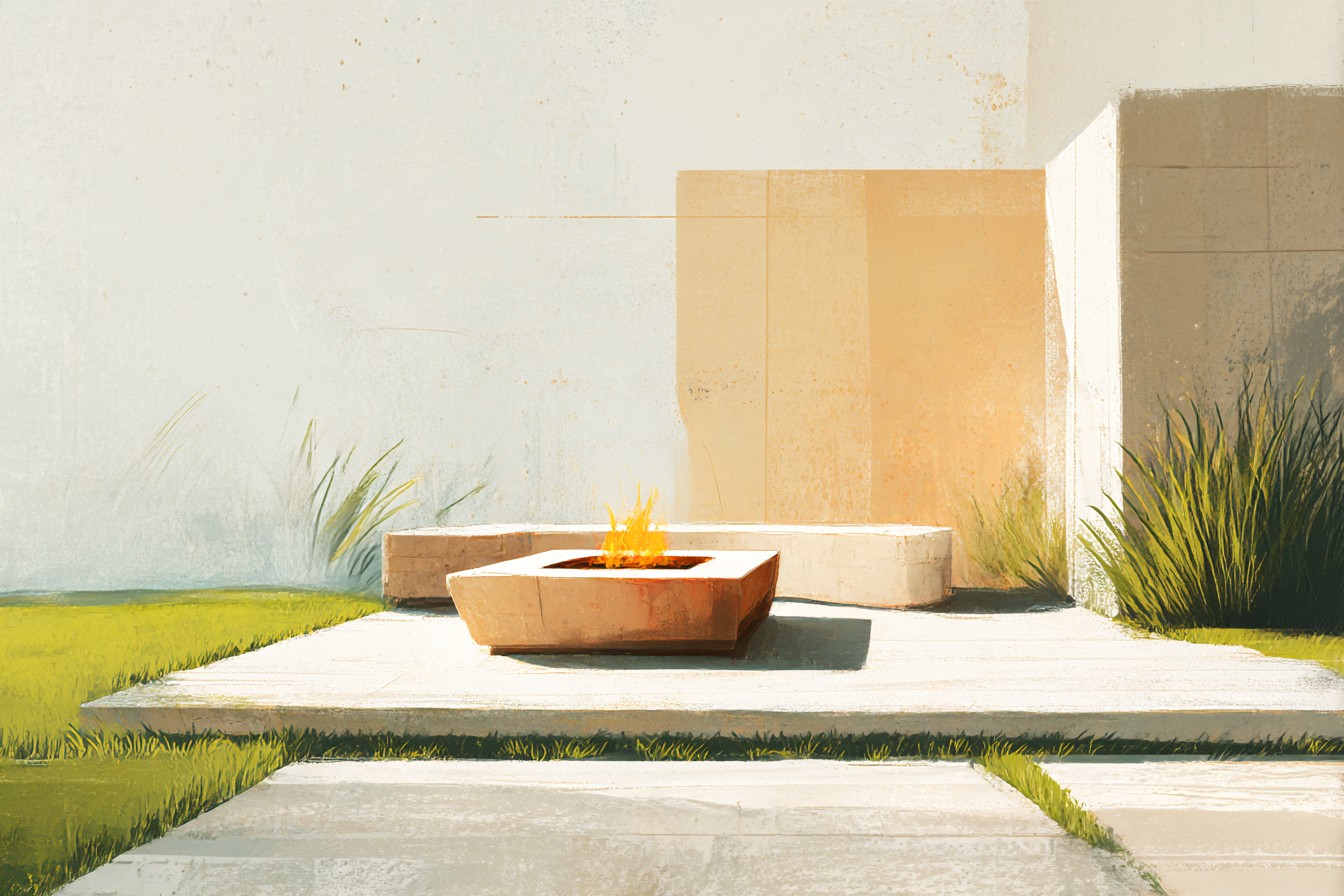
A client of mine, a woman with a narrow Sunset District yard and a fire pit she’d been told would be “totally fine” directly on turf, called me in a panic in July with the exact same brown ring I’d had, same width almost to the inch, which tells you the box copy on these things is lying to basically everyone at once. This piece is what I’ve actually learned works, what’s overkill, and what looks fine in a catalog photo and terrible in a real yard three months in.
[Fire Pit on Grass: Protecting the Lawn]
Heat Resistant Fire Pit Mats
The mat is the obvious answer and it’s the one most people reach for first, so let’s start there and get specific about sizing, because this is where nearly everyone gets it wrong, including me, the first time. My original mat was thirty inches across. My fire pit, base included, measures thirty two inches at its widest point when the handles are accounted for, which nobody accounts for, and the result was two crescent moons of scorched grass poking out either side, which is somehow more annoying to look at than one clean full ring would have been. The mat I actually use now is forty two inches, a full ten inches of clearance beyond the pit itself in every direction, because embers don’t fall straight down, they drift, and a mat that’s exactly pit sized is protecting against a fire that doesn’t exist.
Material matters more than the marketing suggests too. Mine is a fiberglass and silicone blend rated to withstand direct flame contact, not just “heat resistant” in the vague sense that word gets used, and there’s a real difference between something rated for radiant heat and something rated for an actual ember landing on it and sitting there for ten minutes while you’re not looking. I had a mat before this one, the wrong sized one, that developed a small melted dot the size of a dime after one particularly windy evening, and that dot told me everything about what it was actually rated for versus what the listing implied.
The other thing nobody mentions: these mats are ugly. Genuinely, they look like a moving blanket got stuck under your fire pit, and I’ve had exactly one dinner guest ask, unprompted, why there’s “a picnic blanket” underneath. If the look bothers you as much as it bothers me, this is a mat you want to disguise with the next section, not replace.
[Fire Pit Mats]
Pavers and Paving Stone Bases
This is the fix for the ugly mat problem, and it’s also, measured properly, a better long term answer than the mat alone. I use eleven concrete pavers, each sixteen inches square, laid in a rough circle beneath and slightly beyond the fire pit’s footprint, sitting directly on top of the heat mat rather than replacing it, because pavers alone don’t stop heat transferring through the gaps between them into the soil underneath, something I learned the hard way when an early attempt with pavers and no mat still left faint yellowing in the grass visible through the seams.
Eleven pavers at sixteen inches each isn’t a number I picked at random, it’s the number it actually took to get four inches of clearance past the mat’s edge on every side, which matters because pavers do double duty as a stable, level surface for the fire pit’s feet, and an uneven paver arrangement is how you end up with a fire pit that rocks slightly every time you feed it another log, which is a genuinely unnerving feeling at eleven at night with a glass of wine in your hand.
The upside nobody talks about enough is how this looks once it’s in. It reads as a deliberate little patio circle rather than “spot where the grass died,” which was Denise’s other comment, months later, considerably kinder than the first one. The downside is the pavers shift slightly over a season of freeze and thaw, or in my case, a season of my dog deciding the paver circle is an excellent place to dig at the edges, so I’m re-leveling two or three of them every spring, which takes about twenty minutes and is honestly not a big ask for a fix that’s held up three years running.
[Paving Stone Bases]
Gravel Pads and Dedicated Fire Pit Zones
If the mat is the temporary answer and pavers are the semi-permanent one, a proper gravel pad is the commitment, and it’s the one I’d actually recommend to anyone who uses their fire pit more than the eleven times a year I manage. My client with the Sunset District ring, once she got over the initial panic, ended up going this route rather than a mat, and it’s held up better than mine has, which I’ll admit plainly because it’s true.
Hers is a circle, roughly six feet across, edged with steel landscape edging sunk two inches into the ground, filled with three inches of decomposed granite over a layer of landscape fabric to stop weeds coming up through it. That’s a real installation, not a weekend fix, and it cost her more than any mat would have, but there’s no scorch risk at all because there’s no grass there to scorch, and there’s no annual re-leveling because gravel doesn’t shift the way loose pavers do.
You Might Also Like

My own attempt at this was smaller and, frankly, worse. I did a four foot circle with cheap plastic edging that’s already popped up in two places from frost heave, and pea gravel instead of decomposed granite, which looks fine until you walk on it barefoot and discover pea gravel is basically tiny marbles for your feet. If I did it again I’d copy her spec exactly, steel edging, decomposed granite, six feet not four, because four feet is tight enough that sparks still land on grass just past the gravel’s edge on a windy night, and I’ve watched that happen twice now.
[Gravel Fire Pit Pads]
Elevating the Fire Pit Itself
This is the fix I resisted longest because it felt like solving the problem sideways instead of addressing it directly, and I was wrong to resist it, because raising the fire pit off the ground reduces radiant heat transfer to whatever’s underneath more than almost anything else on this list, mat included.
My leg risers add six inches of clearance between the base of the pit and whatever surface it’s sitting on. Six inches sounds like nothing until you feel the difference with your hand held at ground level during a burn, at pit height it’s genuinely too hot to hold your palm there for more than a second, at six inches below it’s warm, not scorching. That gap is doing real work. A lot of fire pits marketed as having “built in legs” have risers barely two inches tall, which I measured on a pit I was considering for a client’s project and it was, no exaggeration, one and three quarter inches, not enough clearance to meaningfully change anything, which is exactly the kind of gap between claim and reality I’ve learned to check on every single product rather than trust the spec sheet.
The catch with risers is stability. Mine are welded steel and rated for the specific pit I own, but a wobbly universal riser under a heavy cast iron bowl is how you end up with an actual tipping hazard, not a hypothetical one, so this is the one item on this list I’d genuinely tell you not to buy generic and cheap, spend the extra and get one matched to your pit’s actual weight and base diameter.
[Fire Pit Leg Risers]
Moving the Fire Pit Around the Yard
The last thing I do costs nothing and is the one most people overlook entirely because it feels too simple to be a real fix, but it’s genuinely the reason my current ring, three years in, has never fully died: I move the fire pit. Not far, maybe eighteen inches to two feet in a rough rotation across four positions on my paver circle’s edge, every few uses.
Grass under intermittent heat stress recovers if it gets a break, and a fire pit that sits in the exact same spot every single time never gives it one.
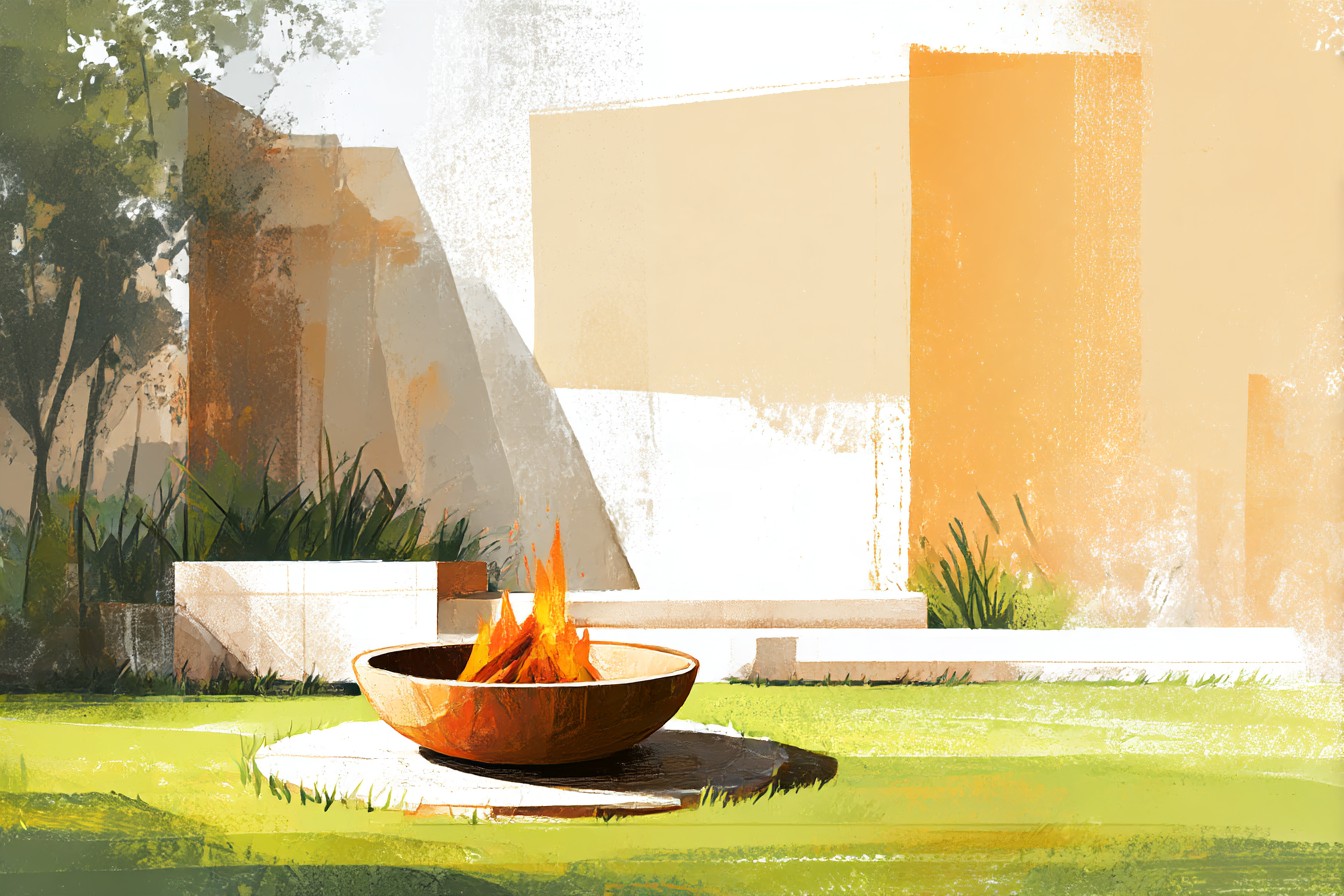
This is the cheapest fix on this entire list and it’s the one I recommend first to any client who tells me they’re not ready to commit to gravel or pavers yet, because it buys time and genuinely reduces damage while they decide what they actually want to do.
The limitation is obvious: it only works if you’ve got a mat or pavers underneath already, moving a bare fire pit around your lawn just spreads the scorching into four ring shaped patches instead of one, which I did, briefly, before I understood the mat and the rotation needed to work together, not instead of each other.
[Rotating Fire Pit Placement]
Final Thoughts
If you’d asked me three years ago, standing over that first dead ring while Denise made her comment through the fence, I’d have told you protecting grass under a fire pit was a simple one item problem. It isn’t. It’s layered, and the six things cluttering my shed are proof that most of us arrive at the right answer by getting the wrong one first.
If I had to strip it back to the two things actually worth buying before you light anything, it’s a properly oversized heat mat, ten inches of clearance past the pit’s widest point, not the pit’s stated diameter, and something underneath or around it that gives the grass somewhere to recover, whether that’s a rotation habit or an actual gravel pad. Everything else on this list, the pavers, the risers, is refinement, genuinely worthwhile refinement, but refinement all the same.
My yard isn’t a showroom. There’s still a faint shadow of that first ring if you know exactly where to look, which I do, obviously, because I put it there. But it’s grass now, not dirt, and that’s the actual bar. Not a perfect lawn. A lawn that survives you using it.