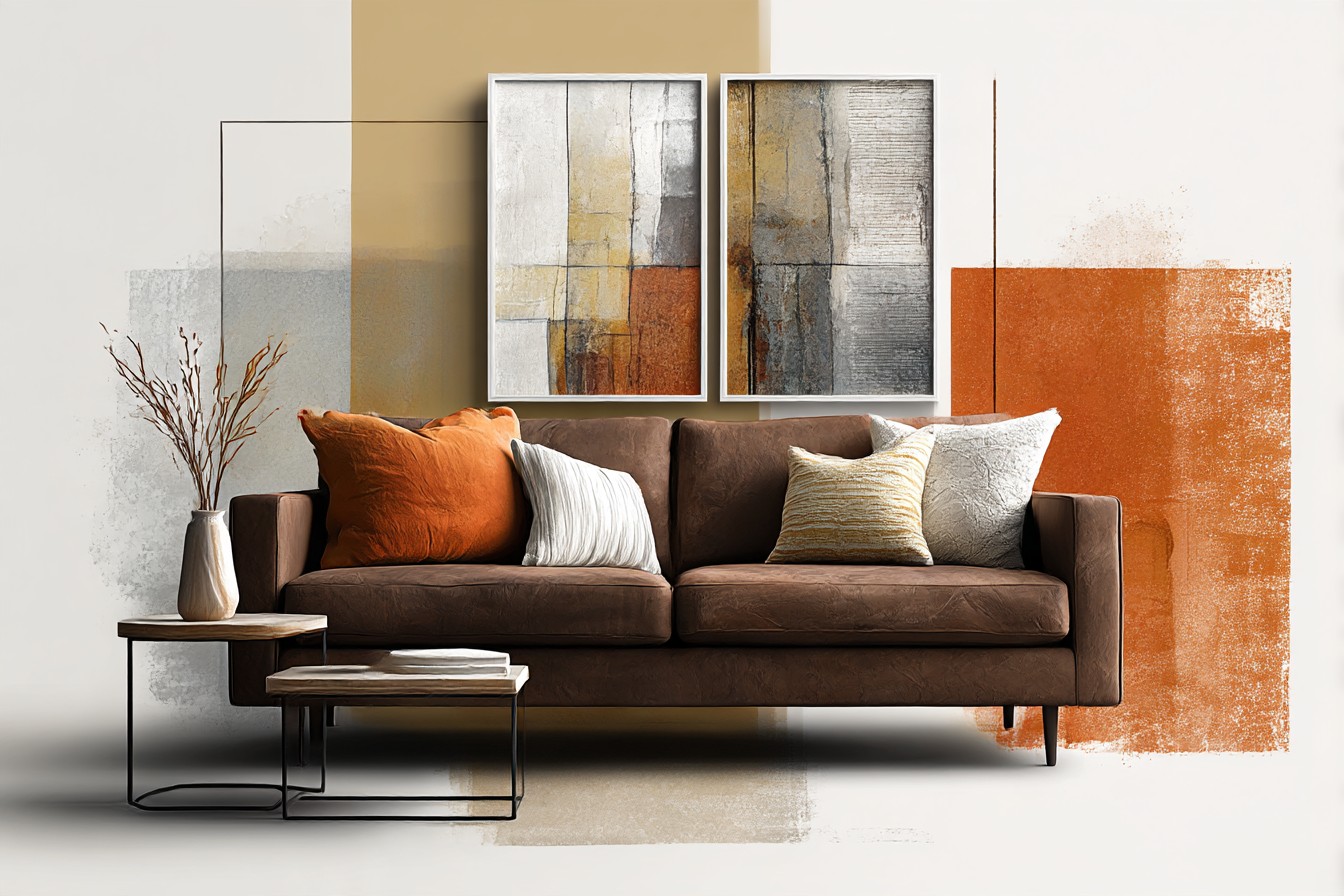
My sister walked into my living room in January, still wearing her coat because the house was doing its usual impression of a meat locker, took one look at the sofa, and said, “Since when do you own a brown sofa.” Not a question, really. More an accusation. I’d had it four months. She’d been over twice in that time and apparently registered neither the color nor the fact that it now takes up a third of the room. That’s the thing about chocolate brown, though. People don’t clock it as a decision.

They clock it as furniture that was probably always there, which is its own kind of compliment, I think, if you squint at it right.
I bought the sofa secondhand from a woman in Cranston who was moving to Arizona and wanted, her exact words, “furniture that doesn’t remind me of winter anymore.” I understood this completely and bought it anyway, because I live in a hundred and thirty year old triple-decker in Providence, where winter isn’t so much a season as a long-term tenant who never pays rent on time, and I wanted a sofa that looked like it had already braced itself for that. Chocolate brown does that. It doesn’t apologize for the radiator noise or the drafts coming up through floorboards that whoever built this place apparently never intended to insulate at all.
What I didn’t expect, four months and one upholstery cleaning bill in, is how much the whole thing depends on what you put around it. On its own, in low light, a chocolate brown sofa reads like a very large, very serious piece of furniture that’s shown up to have a stern word with you. Get the pillows wrong and it slides into waiting room territory. Get the coffee table wrong and the room goes heavy, like it’s wearing a winter coat indoors, at all times, forever. Get it right, though, and it’s the richest, warmest color in the house, which matters more than people think when your actual heat source is a hundred year old radiator having what I can only describe as an ongoing personal crisis. This is what I’ve worked out, mostly by getting it wrong first, in roughly the order I got it wrong.
[Chocolate Brown Sofa]
The Case for Doubling Down: Rust, Mustard, and Burnt Orange
My first instinct with the new sofa was to match everything to it, which is how I ended up with three throw pillows in slightly different shades of brown sitting on a brown sofa, and the overall effect was less “cohesive living room” and more “the sofa has grown tumors.” I took two of them back within the week.
What actually worked was going warmer, not matching. I found a rust colored velvet pillow at an estate sale in Pawtucket for four dollars, still has a small burn mark on the back from someone’s cigarette decades ago, and it did more for that sofa than anything I’d bought new. Mustard corduroy did the same thing, and a burnt orange linen one I nearly didn’t buy because I thought it would look like Halloween. It doesn’t. It looks like the sofa finally has some blood in it.
The logic, once I understood it, is straightforward. Chocolate brown already has warmth built into it, so pillows in the same warm family don’t compete with it, they extend it. Rust, terracotta, mustard, a deep pumpkin if you’re brave, they all sit in the same emotional register as the sofa itself, just louder. It’s the difference between whispering something and saying it at a normal volume. Same sentence.
The one thing I’d say, because I learned it the annoying way, is texture matters as much as color here. All velvet, all corduroy, all the same weight, and it flattens out again. Mixing a slouchy linen mustard pillow with a stiffer rust velvet one gives the whole arrangement somewhere to go visually, instead of just repeating the same warm note three times until it stops registering as intentional and starts registering as leftover.
[Warm Pillow Colors]
The Case Against Doubling Down: Sage, Ice Blue, and Cold Neutrals
The counterargument, which I resisted for longer than I should have, is that sometimes a room that’s already warm doesn’t need more warmth, it needs somewhere for your eye to land that isn’t brown. A friend of a friend, whose name I’ve forgotten and whose opinion I’ve never forgotten, once described a brown sofa with only warm accents as “a room having one long conversation with itself.” Harsh. Also correct, in my case, for about three months.
A sage green linen pillow changed the whole feel of the room, and a dusty ice blue one I was genuinely nervous about buying did even more work than I expected. Cold tones against chocolate brown create actual contrast, not just variation, and in a house where the light in January is the color of dishwater by three in the afternoon, contrast is doing real labor, not decorative labor.
Providence in winter gives you maybe four hours of what I’d call proper daylight, and everything in this house either fights that or gives in to it. A sage pillow against a chocolate brown sofa catches whatever light is available and holds onto it in a way another brown or tan pillow just doesn’t. I noticed this properly on a Tuesday when the sky was doing its usual impersonation of wet cardboard, and the sage pillow was the only thing in the room that looked like it hadn’t given up.
I’d avoid going too pale though. A cream or ivory pillow next to chocolate brown can look sharp and a little clinical if the rest of the room is warm, like someone brought a hospital corner into a den. Sage, teal, a muted denim blue, these hold their own without turning the whole arrangement cold.
[Cool Pillow Colors]
Light Wood Coffee Tables and Why Mine Almost Didn’t Happen
I nearly bought a dark walnut coffee table to match the sofa, on the theory that matching things is safe, a theory I have now retired entirely. A friend who does this for a living, actual paid work, not just an opinion, talked me out of it over the phone while I was standing in a furniture store parking lot in Warwick, and I’m grateful, because a dark table under a dark sofa in a room with limited natural light is how you end up with a corner of your house that photographs like a cave.
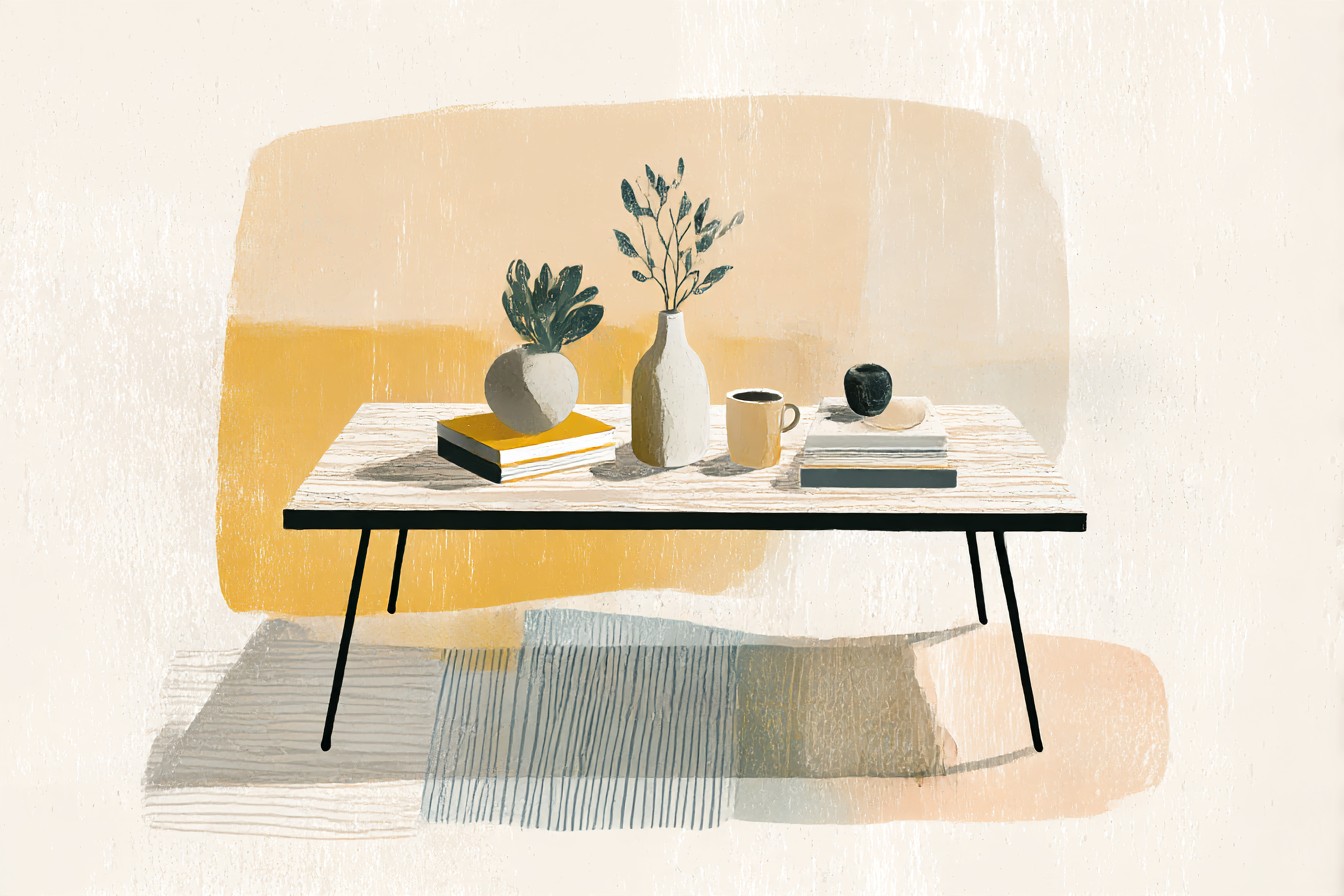
What I bought instead was a light oak table, honestly cheaper than the walnut one, with visible grain and a couple of knots in the wood that the sales guy apologized for like they were a defect. They’re my favorite part of it. Against the chocolate brown sofa, the oak reads almost blond by comparison, and it breaks up what would otherwise be a solid block of dark furniture sitting in one half of the room.
You Might Also Like

This is the coffee table advice I’d actually give, past the color swatches. In a room where the sofa is already the darkest, heaviest thing, a light wood table gives your eye a place to rest that isn’t more brown. Ash does the same job, so does a pale washed pine if you want something a bit more rustic. The point isn’t matching the sofa’s tone, it’s relieving it.
The table’s survived a mug ring, one candle wax incident I’m not proud of, and a student’s backpack that somehow ended up in my living room after a parent conference ran long. Oak forgives a lot. I’d trust it over walnut in a house like mine every single time.
[Light Wood Coffee Tables]
Glass and Metal, and the Honest Downside Nobody Mentions
The other direction that works, and I say this having tried it and then somewhat regretted the maintenance of it, is glass. A glass top table with black metal legs against a chocolate brown sofa does something the oak table can’t, it disappears a little, which sounds like an odd thing to want from a piece of furniture you paid actual money for, but in a small living room it means the sofa reads as the main event instead of competing with another solid, opaque object for attention.
I had one of these for about a year before I moved it to the sunroom, where it’s now covered in plant pots and forgiven for its sins. The problem, and nobody tells you this at the store, is that glass shows everything, in a house with radiators running constantly and a certain amount of dust that I choose to believe is historical rather than current. I was wiping that table down every second day. My mother, visiting once in November, ran a finger along it and held it up like evidence, which, fair.
If your house has decent humidity control and you’re not fighting a hundred year old heating system for supremacy, glass and metal against chocolate brown is genuinely one of the better combinations going, visually. It keeps the whole arrangement from feeling like a wall of furniture. Black metal legs specifically pick up on any black or charcoal accents elsewhere in the room and tie things together without adding more bulk.
I’d just go in knowing what you’re signing up for. It’s a beautiful, low, quiet-looking table right up until the dust and the radiator conspire against you, at which point it becomes a second household chore you didn’t budget time for.
[Glass and Metal Coffee Tables]
Texture as the Third Variable Nobody Asks About
Pillow colors and coffee tables get all the attention, understandably, they’re the two questions I get asked most, but the thing that actually finished the room was a rug and a throw blanket, and I almost didn’t bother with either.
The rug is a chunky jute one, oatmeal colored, nothing fancy, and it does something specific against a dark sofa that I didn’t anticipate, it gives the floor some texture so the sofa isn’t the only thing in the room with any visual weight to it. Before the rug, the sofa sat on plain wood floor and looked like it had been dropped into the room from somewhere else.

After, the whole space reads as one arrangement instead of one big dark object and some floor.
The throw blanket, cream colored cable knit, does similar work but higher up, draped over one arm. It softens the sofa’s edges in a way pillows alone don’t, because it’s not sitting rigidly against the back cushions, it’s loose, a bit rumpled, the way things actually look in a house where people sit down on the furniture rather than just photograph it.
One of my seventh graders, seeing a photo I’d accidentally left open on my laptop during a parent conference, asked why my living room looked “cozy but also kind of sad,” which is either the most honest review I’ve ever received or proof that twelve year olds should not be consulted on interior design. I’ve decided it was the rug that was missing at that point, not the sadness. The rug fixed it. Mostly.
[Rugs and Throws]
Final Thoughts
None of this was obvious to me starting out, and I bought and returned more than I’d like to admit before any of it clicked. What I’d tell anyone sitting on a chocolate brown sofa wondering what goes around it is that the color’s already doing the hard work of being warm and grounded, your job is just deciding whether to lean into that or push back against it, and both are correct depending on the room and the light you’re actually working with, not the light in the catalog photo.
In a house like mine, old, drafty, permanently negotiating with its own heating system, I’ve ended up leaning warm on the pillows and light on the wood, because the room needed relief more than it needed more richness stacked on richness. Your room might want the opposite, more contrast, more cold tones, a glass table that lets the sofa be the only heavy thing in the space. There’s no single right answer here, just a sofa that’s more forgiving and more flexible than its reputation suggests, and a room that’ll tell you fairly quickly which direction it actually wants to go, usually on the exact day the light’s worst and you finally notice what’s missing.

[…] first pumpkin patch arrangement more than I probably should, three sets of nearly identical orange pillows piled on a sofa that already had plenty going on without them. It wasn’t a bad sofa. It was just a loud one, […]