I was standing at the kitchen sink on a Sunday morning with the water running too hot, snipping the ends off a five dollar bunch of grocery store carnations because that’s what six dollars gets you at the Giant on a bad week, and I was staring at the empty jam jar next to it where the good stuff usually goes. Peony season. Three weeks, if I’m lucky, maybe four if the weather holds and nobody’s dog gets into my neighbor’s front bed before I do my usual guilty little clip over the fence line. I had exactly four peony stems that week, from the Saturday stand by the light rail stop, because the guy who runs it had marked them down at closing and I am constitutionally unable to walk past a markdown sign on anything, flowers included, furniture especially. Four stems, twelve dollars, and a whole empty vase that four stems weren’t going to fill on their own no matter how much I fluffed them.
That’s the thing nobody tells you about peonies. Everyone talks about them like they’re a finished arrangement all by themselves, big blowsy heads, done, gorgeous, hang it in a museum.
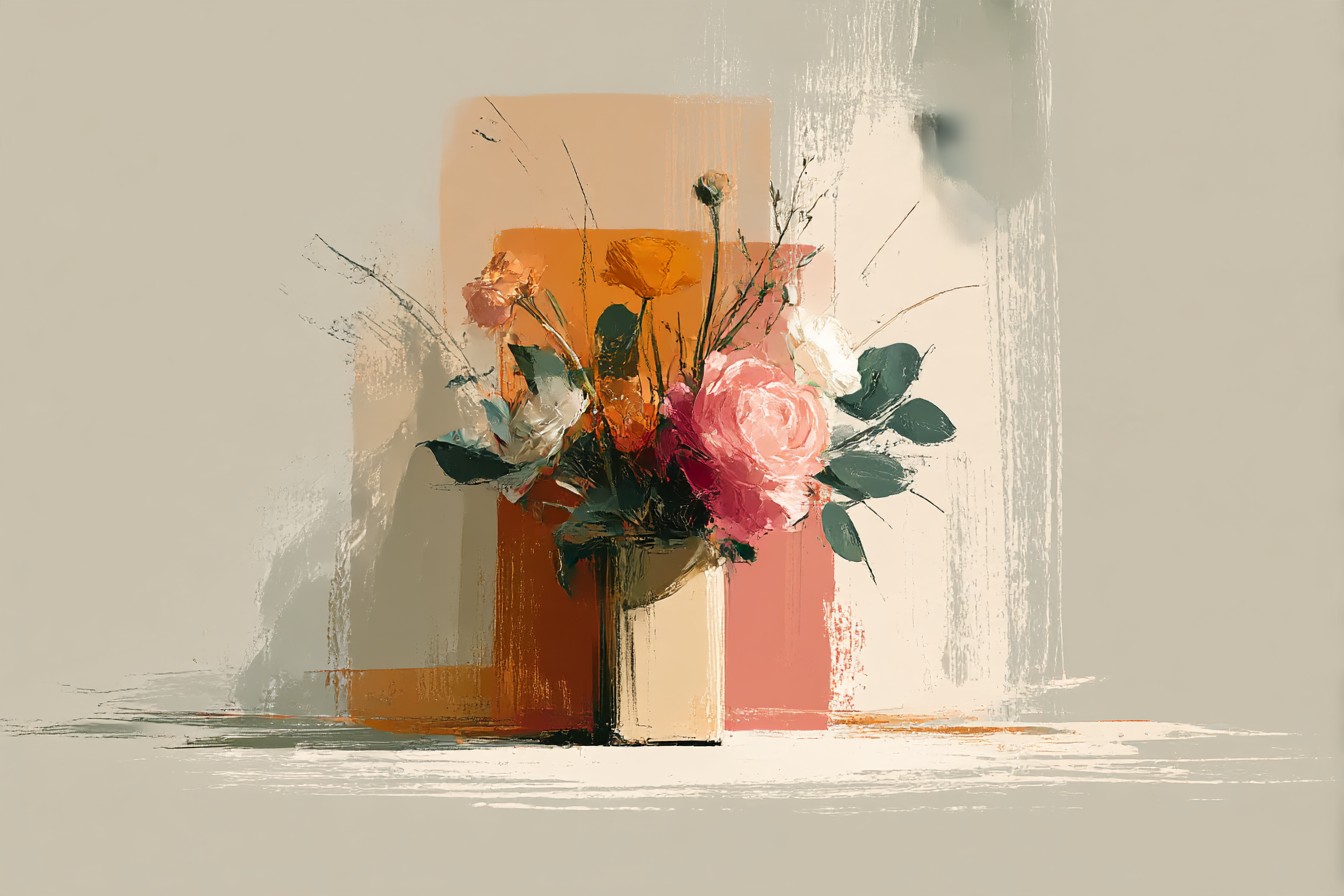
And sure, for about four days they are. Then they’re four days of the most expensive, most photogenic flowers in your house sitting in a vase that looks about sixty percent empty, because peony stems don’t branch, they don’t fill space sideways, they just stand there being magnificent and alone. I learned this the hard way the first spring I got serious about buying them, brought home a dozen, put them straight in a vase with nothing else, and my mom walked past it and said it looked like I was “having a moment,” which from her is not a compliment, that’s her way of saying it looks unfinished and possibly a cry for help.
So the real skill with peonies isn’t buying them. It’s knowing what to stand next to them so the whole vase reads like it was planned and not like you panic bought four stems off a discount bucket, which, again, I had.
[Flowers to Mix With Peonies in a Vase]
The Tulips and Ranunculus You Get for About Two Weeks Only
Here’s the window nobody talks about enough. In Baltimore, tulip season is basically wrapping up right as peonies are starting, so for about ten to fourteen days you get this narrow overlap where both are available at the same stand, and that overlap is the best two weeks of the whole flower year as far as I’m concerned. I did the math on this properly for once. A bunch of ten tulips runs me around eight dollars this time of year, marked down because the sellers know they’re on the way out, and a mixed vase of four peonies and eight tulips costs me maybe twenty two dollars total and looks like something you’d pay a florist forty for. That’s not me being smug, that’s just the actual number, I checked it against a real florist quote my coworker Denise sent me from a wedding thing, and I felt genuinely great about myself for a full afternoon.
Ranunculus does something similar but sneakier. The stems curl a little, the heads are smaller and tighter, and if you tuck them low in the vase they read almost like a second wave of peonies that haven’t fully opened yet, which tricks the eye into thinking you’ve got way more volume than you paid for. I’ll be honest, the first time I tried this I overdid the ranunculus, put in way too many, and the whole thing looked like a peony had a baby with a pom pom, too busy, too matchy. Five or six is plenty. Any more and you’ve lost the point of the peonies being the main event.
[Tulips and Ranunculus]
The Foliage That Makes Four Stems Look Like Twelve
This is the section where I admit I used to think greenery was filler in the bad sense, the padding you add because you’re too cheap to buy more real flowers. I was wrong, and it took an actual dollar amount to convince me. A bunch of eucalyptus at my corner spot runs about four dollars and it stretches into three separate arrangements if I’m careful trimming it, which works out to something like a dollar thirty an arrangement, which is such a stupidly good number I did the math twice because the first answer felt made up.
Mint does the same job but cheaper, and it smells like something, which eucalyptus doesn’t really, not fresh anyway. I grabbed a bunch from the farmers market herb stand once for two dollars, thinking I’d use it for tea, and ended up stuffing half of it around a trio of peonies instead because the vase looked thin and I had it sitting right there on the counter. It held up for nine days. NINE. Longer than the peonies themselves, honestly, which felt a little insulting to the twelve dollars I’d spent on the actual point of the arrangement.
Ferns are the other one, the cheap grocery store bear grass or leatherleaf stuff nobody thinks is glamorous, and it isn’t, but it fills the awkward gap low in the vase where stems cross and you can see the water line looking sparse. I used to skip this step entirely and just cram the peonies in tight to hide the gaps, which works for about a day before the stems settle and the gaps show up anyway. Foliage first, flowers after. Learned that one the annoying way, redoing an arrangement at eleven at night because it looked wrong in daylight and kept nagging at me.
[Foliage and Greenery]
Something With a Spike to It, Because Peonies Have None
Every peony head is round. Every single one, no exceptions, big soft round blobs of petal, gorgeous but visually one note if that’s all you’ve got going on. What actually makes an arrangement look composed rather than dumped in is a flower with a completely different shape doing something the peonies can’t, and that means anything with a vertical spike, delphinium, snapdragon, veronica, larkspur if you can find it, which around here is mostly a farmers market thing rather than a grocery store one.
You Might Also Like

I picked up snapdragons on a whim because they were three dollars a bunch and the color was this deep coral that matched a peony I had at home almost exactly, and the second I put them in together the whole vase suddenly had a shape to it, height in the back, round shapes clustered lower, instead of one big soft cloud. It’s a genuinely small move that makes a disproportionate difference, and it cost three dollars, so I’m calling that one an easy win for the good column.
Delphiniums are pricier and honestly more delicate than I want to deal with most weeks, they drop petals if you look at them wrong, but veronica is sturdy, cheap, and does eighty percent of the same job. I’ll take eighty percent of the job for a third of the fuss most Sundays. Not every week needs to be the showpiece week.
[Spike Shaped Flowers]
What Picks Up the Slack When Peonies Are Already Gone
Peony season ends and it ends fast, which is its own kind of heartbreak given what you paid per stem to enjoy it, and that’s when garden roses and dahlias earn their keep. Garden roses, the full messy David Austin looking kind, not the tight grocery store ones, are the closest thing in shape and softness to a peony you’re going to get once the real thing is out of season, and if you buy them at the right stand instead of the wire service markup places, they run maybe a dollar fifty more per stem than a regular rose, which felt like a rip off until I actually put one next to a spent peony head and understood the resemblance is doing real work.
Dahlias come in later, more of a July and August thing here, and they’ve got that same layered, dense petal structure, just in a slightly flatter, more graphic shape. I bought a single dinner plate dahlia for six dollars on a total impulse in August, no plan for it, just liked the color, and it sat alone in a bud vase looking more impressive than the twelve dollar peony trio I’d had in May. Told my mom that and she said maybe I should just buy dahlias then and save myself the spring anxiety over peony markdowns. She’s not wrong, but she also doesn’t understand the appeal of the chase, so I’m ignoring the sensible advice on principle.
[Garden Roses and Dahlias]
The Cheap Wild Stuff That Makes Everything Else Look Intentional
Last category, and honestly the one I use most often because it’s the cheapest by a mile.
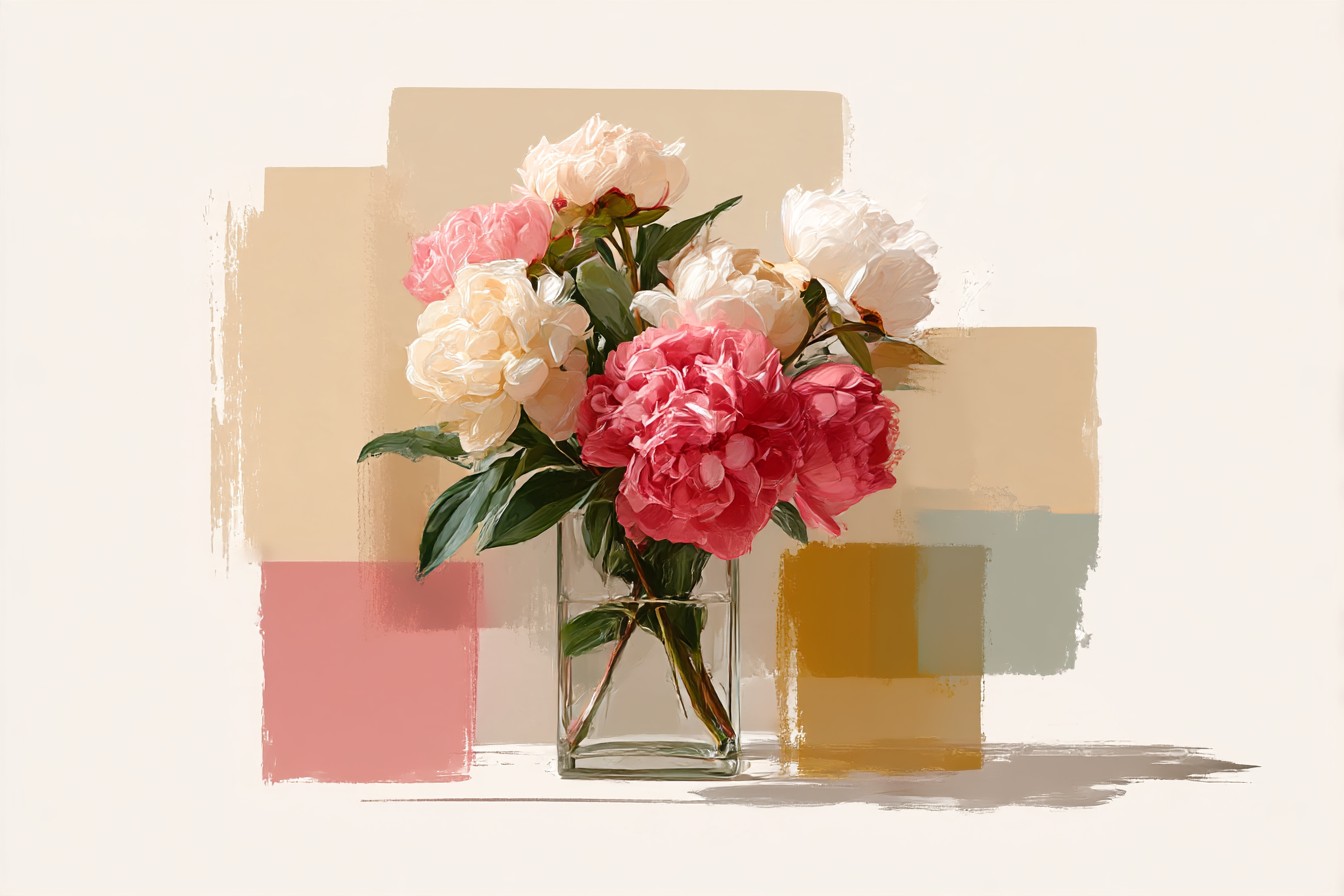
Queen Anne’s lace, sweet peas, any of the loose wild looking stuff you can grab from a farm stand bucket for two or three dollars a bunch, sometimes less if you’re there right before they pack up. This is the stuff that makes an arrangement look like it came from someone’s actual garden rather than a store, even though mine is a fourth floor apartment with a fire escape and exactly one very stubborn basil plant.
Sweet peas add scent, which peonies mostly don’t, not really, not the way people assume, and the two together in a jar smell like an actual spring morning instead of a florist’s cooler. I found this out by accident, grabbed a two dollar bunch because the color was pretty, had no plan for them, and the whole apartment smelled different by the next morning in the best way.
Queen Anne’s lace is basically free filler with a personality, delicate little umbrella heads that soften every hard edge in the vase, and I’ve paid as little as a dollar fifty for a bunch big enough to use across two separate arrangements. Cost per arrangement on that one is close to nothing, and I will die on the hill that it’s the single best value item in this entire piece.
[Wild and Filler Flowers]
Final Thoughts
Add all that up across a peony season and I’m looking at maybe forty five dollars total across four or five separate arrangements once you factor in the tulips, the eucalyptus that stretched three ways, the snapdragons, the one dahlia I bought on pure impulse. Compare that to what a single florist arrangement with peonies as the hero flower runs, and it’s not close, it’s not even the same conversation. That’s a solid entry in the good column of the ledger this year, genuinely one of the better ones.
What I actually learned, past the math, is that peonies want company more than they want to be the whole show. Four stems and nothing else photographs fine for a magazine spread but it’s a rip off in real life, the vase looks thin by day two and you’re annoyed you spent the money. Give them tulips while you still can, foliage to fill the low gaps, something with a spike for height, and wild filler for the smell and the softness, and suddenly twelve dollars of peonies reads like a forty dollar arrangement, which is the only kind of math I actually trust.