
I was sitting on the kitchen floor at seven o’clock on a Tuesday, cross-legged, peeling packing tape off a box of mismatched wine glasses I definitely didn’t need, when I sliced my thumb open on a shard of bubble wrap tape edge. Not dramatic. A paper cut with ambition. I got up to find a bandage and stood under the new sconce in my hallway, the one I’d bought three weeks earlier from the shop on the corner I’ve decided is mine now, and the light coming off it was doing something unkind to my kitchen. Flat. White.

The kind of light that makes you look at your own hand like a hospital chart.
Fast forward to ten that same night. Same sconce. Same bulb. I walked past it to get water and it looked completely different. Warmer somehow, though nothing had changed except the hour and the fact that everything else in the apartment had gone quiet and dark around it. Same fixture, same wattage, two entirely different rooms depending on what time you caught it.
That’s the whole question, isn’t it. Not “is this sconce nice” because obviously I’d already decided it was nice, I bought it. The actual question, the one I found myself doing math about while holding a bandage against my thumb, was whether a fixed light, on or off, one brightness, could ever really do a room justice across a whole evening. Seven pm light and ten pm light are not the same assignment. Seven is unpacking boxes and reading labels and being a competent adult. Ten is the version of the room where you’ve stopped being a competent adult and just want to sit there.
I didn’t get a dimmer with that first sconce. Didn’t even think about it, honestly, the listing didn’t mention one and I was three coffees deep in a hurry to check out before the price on a second one went up. Big mistake, in the sense that I now own four wall sconces across two rooms and exactly one of them dims, and it’s not a coincidence which one I actually sit under at night.
So I’ve been working this out properly, room by room, receipt by receipt, the way I work most things out. What kind of sconce needs the dimmer, which ones you can skip it on entirely, and where I got it wrong before I got it right.
[Do Wall Sconces Really Need a Dimmer]
Plug-In Wall Sconces
The plug-in ones are where I started, because they’re the cheapest way into wall lighting if you’re renting and can’t cut into drywall, which was me for about four years straight. Cord runs up the wall, tucked under one of those little plastic channel covers, plugs into the outlet. Mine was fourteen dollars from the thrift shop, minus the shade, which I replaced for another nine, so twenty three dollars total, which is nothing, which is why I didn’t think hard about the dimmer question at all going in.
Here’s the thing about plug-in sconces though. A lot of them come with an inline dimmer built right into the cord, a little wheel or slider sitting there like a nightlight switch, and I genuinely didn’t notice mine had one until my coworker Denise pointed at it and said “you know that turns, right.” I did not know that. I’d been living with one brightness setting for two months because I assumed the cord was just a cord.
Once I found it, the whole sconce changed jobs. At seven it’s on full, doing actual reading light work by the armchair. At ten I roll it down to about a third and it stops looking like a reading lamp and starts looking like something out of a hotel bar. Same twenty three dollar sconce. Cost per year on that, running it maybe three hours a night, is basically pennies, I did the sum twice because the first time I got a number that felt too good to be honest, and it held up. If you’re plug-in shopping, check the cord for that little wheel before you assume you need to buy a separate dimmer plug. Half the time it’s already there and nobody mentions it on the listing.
[Plug-In Wall Sconces]
Hardwired Sconces and Wall Dimmers
The hardwired ones are a different animal entirely, and this is where the actual dimmer switch question gets real money attached to it, not sconce money, electrician money.
I’ve got two hardwired sconces flanking my bathroom mirror, installed by the previous tenant, wired into a regular on off switch by the door. No dimmer. And for a solid year I just accepted that as fixed, because swapping a wall switch for a dimmer switch sounded like a job, and jobs cost money I’d rather spend at the thrift store.
Turns out it’s not actually a big job if the sconces use a regular bulb and not some integrated LED board, which mine thankfully do. A compatible dimmer switch runs somewhere between twelve and forty dollars depending on how fancy you get, and if you’re comfortable turning off a breaker and following a diagram you can do it yourself in under an hour. I did not do it myself. I paid a guy forty five dollars to do it because the last time I touched anything behind a wall plate I got a small shock that made me yelp in front of my own cat, who was unimpressed.
So total spend, dimmer plus labor, was about eighty dollars, which sounds like a lot until you remember I’m using that bathroom light every single day, twice a day, for years probably. Cost per year on eighty dollars over even five years is sixteen dollars, and that’s before I factor in that getting ready at seven am under full brightness and winding down under half brightness at ten pm is genuinely two different bathrooms now. Worth every cent of the forty five I handed over, and I don’t say that about many things.
[Hardwired Sconces and Wall Dimmers]
Smart Bulb Sconces
Before I paid the electrician, I tried talking myself out of it with smart bulbs, because a smart bulb that dims through an app sounds like it should solve the whole problem without touching a single wire.
You Might Also Like

I bought two, nine dollars each, screwed them into the bedroom sconces, downloaded the app, and for about a week it worked. Then the wifi hiccuped one night right as I’d dimmed the room down for reading, and the bulb just snapped back to full brightness with no warning, at ten thirty at night, like a searchlight. I actually said something out loud that I won’t repeat here. My mom would not have approved.
The math on smart bulbs is fine on paper, eighteen dollars total, no electrician, dims however you want it through a phone. The problem isn’t the cost, it’s the reliability, and reliability doesn’t show up on a spreadsheet until it fails you once at the worst possible hour. I still use them in the living room sconces, where a flicker to full brightness is just annoying rather than actually disruptive. I would not trust them in a bedroom again. Cost per year comes out low, maybe six dollars if the bulbs last, but I’ve started weighing that against the number of nights they’ve betrayed me, which currently sits at three, and three is enough for me to keep them out of any room where I actually need the dim to hold.
[Smart Bulb Sconces]
Sconces with Built-In Dimmers
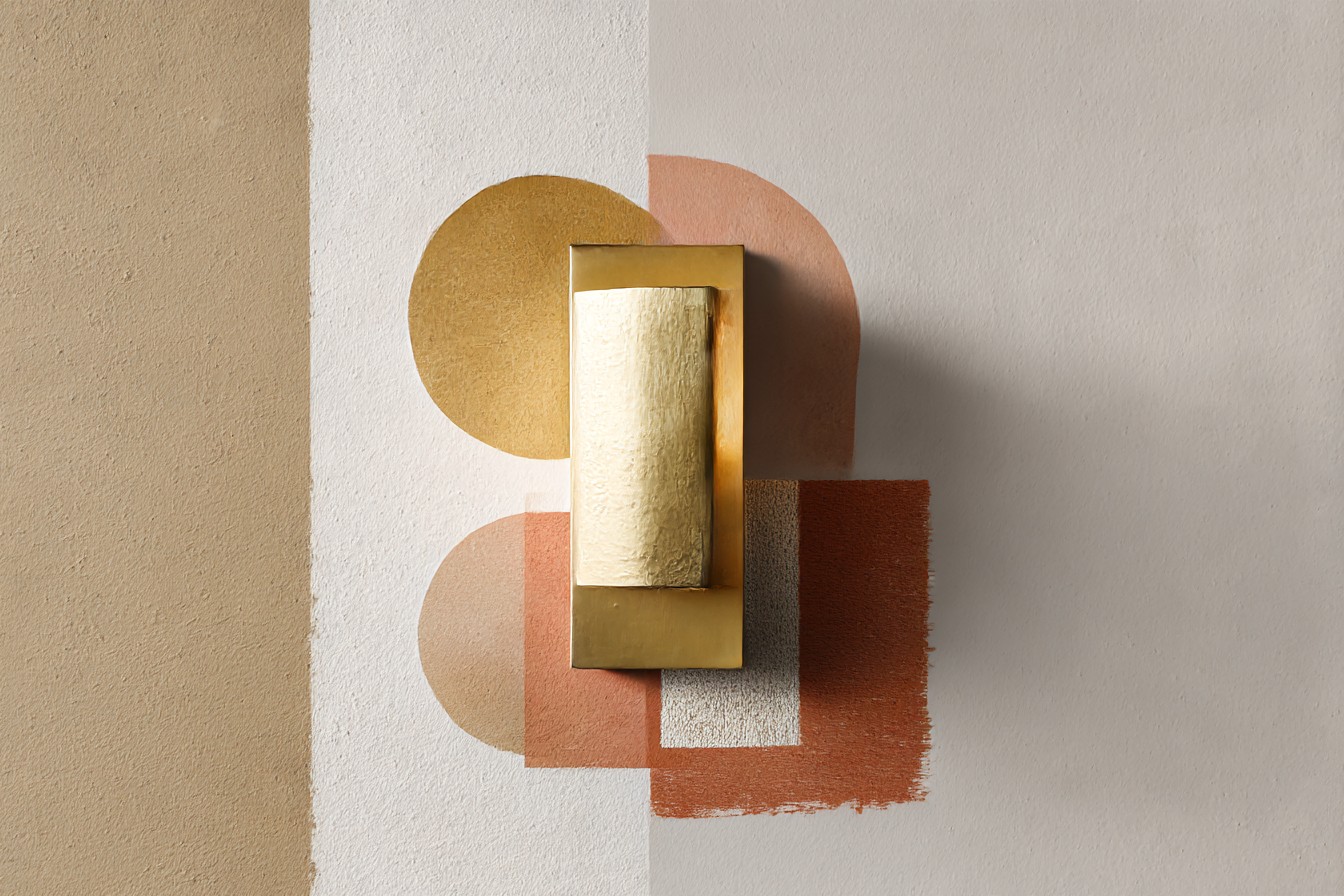
The good column entry, the one I mentioned earlier, is a sconce I found with a built in touch dimmer right on the base, no cord wheel, no app, just tap and hold and the light creeps down on its own. Thirty two dollars, which felt steep for a single fixture at the time, and I remember standing in the shop weighing it against buying two cheaper ones instead.
I bought the one. Best sconce decision I’ve made this year, and I say that having bought, let me actually count, six sconces total since January, which is three more than any apartment this size needs, but that’s a separate conversation with myself.
What makes this one work is that the dimming lives in the fixture, not somewhere upstream I have to remember to adjust. Seven pm, full tap, it’s bright enough to find things in a drawer. Ten pm, hold it down, and it eases itself to something closer to candlelight without me thinking about a switch or an app or a cord wheel at all. It’s the only sconce in the apartment where the mood shift happens without me doing anything extra, and that ease is worth the extra money over the plug-in version, even though on paper the plug-in one was cheaper. Cost per year on thirty two dollars, spread over what I’ll guess is a five year life given the build quality, comes to about six dollars and forty cents, and for the one sconce I actually reach for every single night, that’s nothing.
[Sconces with Built-In Dimmers]
Bathroom and Hallway Sconces
Not every sconce needs this treatment though, and I want to be honest about that instead of pretending dimmers belong everywhere, because they don’t, and pretending otherwise would be exactly the kind of oversell this whole blog is supposed to avoid.
My hallway sconce, the original one from that first Tuesday night, still doesn’t have a dimmer, and I’ve decided that’s fine. Nobody lingers in a hallway. You walk through it, you need to see where the floor is, full brightness is genuinely the correct setting for a hallway at any hour, seven or ten or two in the morning if you’re up for water. Same goes for the utility sconce over my kitchen sink, the one I use for actual tasks like checking if a pan is properly clean. That one earns its flat, honest, slightly unflattering light. I wouldn’t dim it if you paid me. I want to see the grease.
The bathroom ones I fixed were the exception because a bathroom does double duty, task lighting in the morning, something softer if you’re taking a bath at ten with a book and don’t want an interrogation. But a hallway or a utility spot doesn’t have that second job, and spending money on a dimmer for a light that only ever needs to be fully on is just paying to solve a problem you don’t have. I nearly did it anyway last month, standing in the hardware aisle with a dimmer switch in my hand for a hallway that has never once needed mood lighting, and I put it back. Small win for the good column, even if it’s the boring kind of win.
[Bathroom and Hallway Sconces]
Final Thoughts
So do wall sconces need a dimmer.

Some of them, desperately. The ones you actually sit under at night, the ones doing emotional labor as much as literal illumination, those earn every extra dollar a dimmer costs, whether that’s a built in touch dial or an electrician charging you forty five bucks on a Saturday. The ones just helping you find your shoes in a hallway don’t need any of it, and buying a dimmer for those is just paying extra to solve a problem that was never there.
What surprised me, working through this room by room, receipt by receipt, was how much the hour mattered more than the fixture itself. Seven pm and ten pm are asking completely different things from the same bulb, and a sconce that can only give you one answer is only ever going to be right for part of your evening. That’s the whole case for the dimmer, not luxury, just coverage. Making sure the light you bought is doing its job at both ends of the night, not just the convenient half.
Current tally, since we’re keeping score. Six sconces bought this year, four in the good column, one smart bulb experiment demoted to living room only duty, one hallway dimmer I nearly bought and didn’t. That last one might be the actual win of the whole year, knowing when to leave well enough alone.
[Final Thoughts]



[…] get hurt, and I’ve read enough forum threads of people asking “is it fine though, really” to know the honest answer needs saying without a hedge. Any gas appliance, any open flame, burns fuel and produces carbon monoxide […]