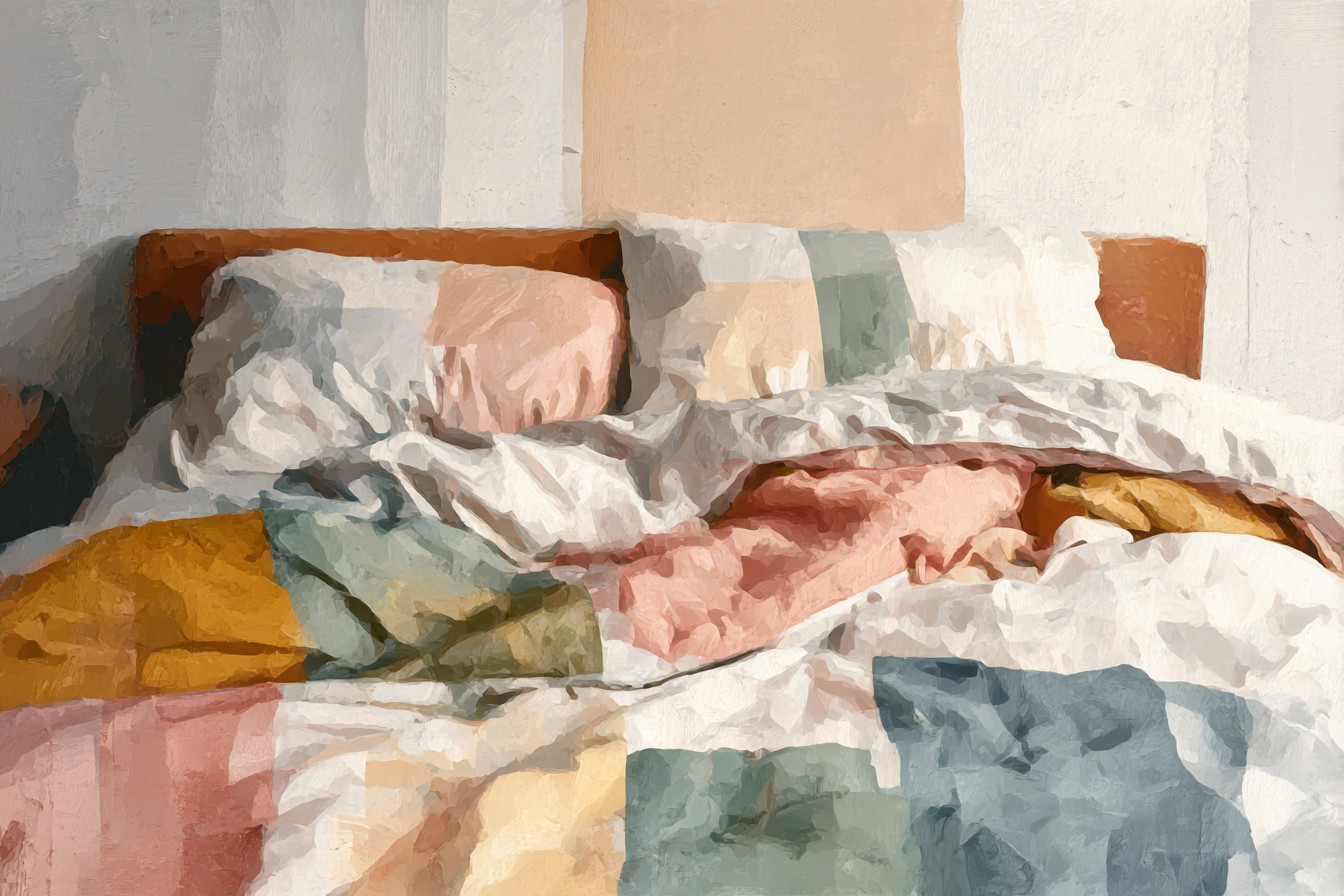
“What to put above your headboard” and “what to put behind your headboard” get typed into Google as if they’re two different questions with two different answers. They’re not. They’re the same wall, the same twelve or so square feet of real estate, and the only reason people phrase it two ways is that nobody agrees on where a headboard actually ends. Above implies there’s a clean line where the headboard stops and empty wall starts. Behind implies the headboard is basically transparent and you’re decorating through it. Neither is true.

There’s one zone, it starts around the top of your mattress and goes up to wherever your ceiling gets involved, and treating it as two separate design problems is how people end up with a piece of art AND a shelf AND a light AND a tapestry all competing for the same eighteen inches like it’s a group project nobody organized.
I say this as someone who spent a full year with a rental headboard that was really just a fabric covered board leaning against the wall, no legs, no frame, held up by the mattress itself and pure faith. Above it I had nothing for months because I was so worried about matching some rule I’d read that said art over a headboard needs to be two thirds the width of the bed. Measured my bed. Measured the “rule.” Realized the rule was written for a queen with a headboard, on a wall with no other furniture, in a room that was not my room. Once I stopped treating it as instruction and started treating it as one wall that needed one decision, everything got easier.
What’s actually going above (or behind, same thing) the bed
The honest answer to “what to put above a headboard” is that you’re choosing between three moves, and most people try to do all three at once, which is the actual mistake, not the specific choice. Move one is art, a single large piece or a tight grid, and this is the one that photographs well and is also the one people get wrong on scale most often. I had a client who bought a print sized for her old apartment’s eight foot ceilings and hung it in a new place with nine and a half foot ceilings and a taller headboard, and the print that used to feel generous suddenly looked like a stamp. Measure your headboard’s width, not your bed’s, because the headboard is what your eye compares the art to, and aim for something that reads as intentional against that width rather than technically centered above the mattress.
Move two is shelving, and this is where I get opinionated, because floating shelves above a headboard are one of the few genuinely useful pieces of furniture advice going, not because they look nice, which they do, but because they solve the specific problem of nightstand overflow without adding floor footprint in a room where floor footprint is the whole fight. I’ve put a single 36 inch shelve above more than one client’s headboard specifically because their nightstands were 16 inches wide and doing the job of a lamp, a phone, a glass of water and a stack of books all at once, which is not what a 16 inch surface is for. The shelf takes the overflow up and off the floor, and in a small bedroom that’s not styling, that’s function wearing a nice outfit. Just anchor it into studs. I say this every time someone asks me about shelves anywhere in a house because I’ve seen what a shelf full of hardcovers does to drywall anchors, and it’s not subtle.
You Might Also Like

Move three, and this is the one nobody asks about because it doesn’t sound like decorating, is leaving it bare on purpose. Not bare because you haven’t gotten to it yet, bare because the wall itself, the paint, the texture, a bit of wallpaper, is doing enough work that adding anything else would be noise. I did this in my own bedroom for almost two years, a deep green paint that I’d chosen specifically for that wall and nowhere else, and every time someone suggested I hang something there I said no, mostly because I was right and partly because I didn’t want to put another nail hole in a paint job I liked.
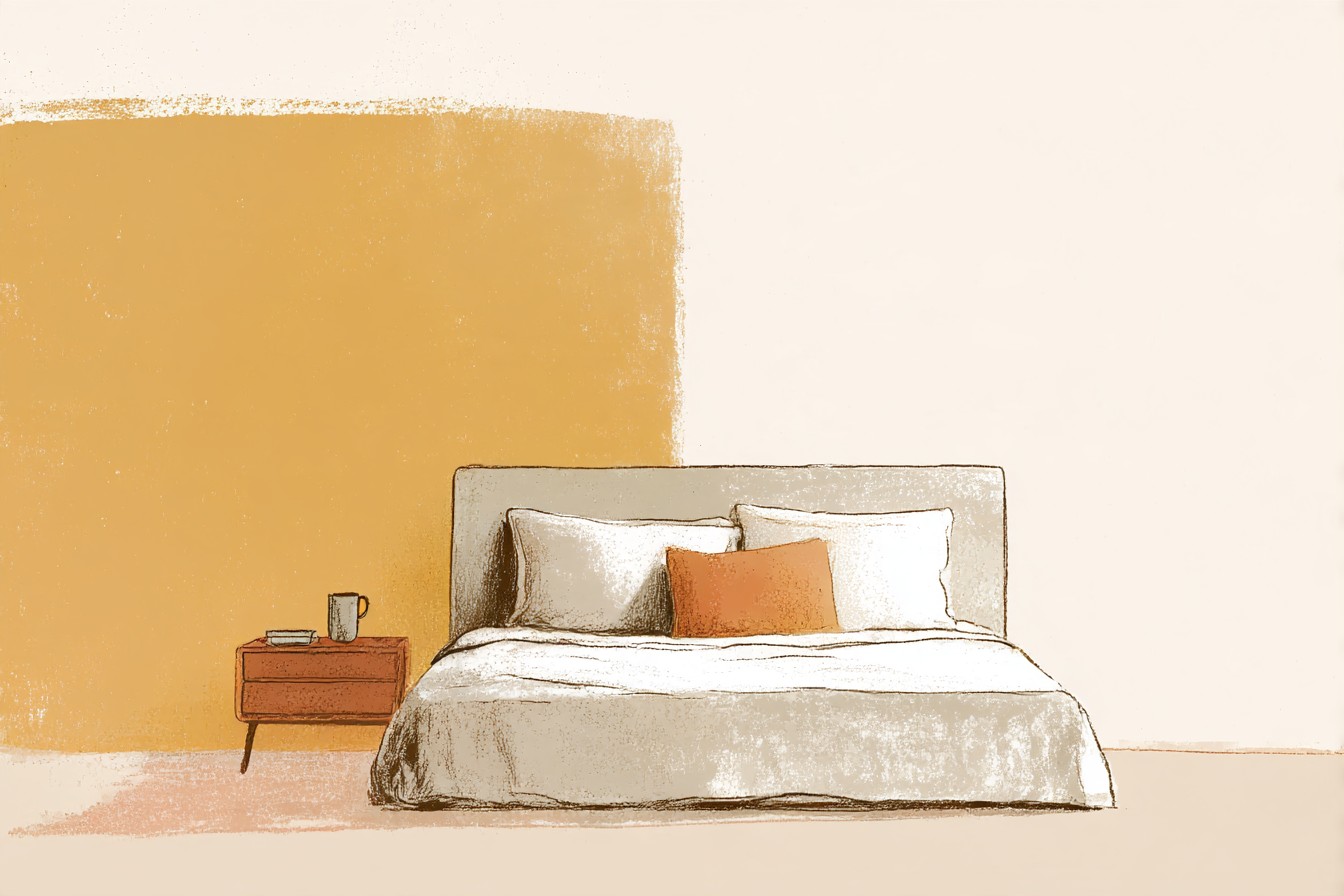
Bare isn’t a failure state. It’s a decision people rarely make on purpose, which is exactly why it looks so deliberate when someone actually commits to it.
What’s going over it, and why that’s a different question entirely
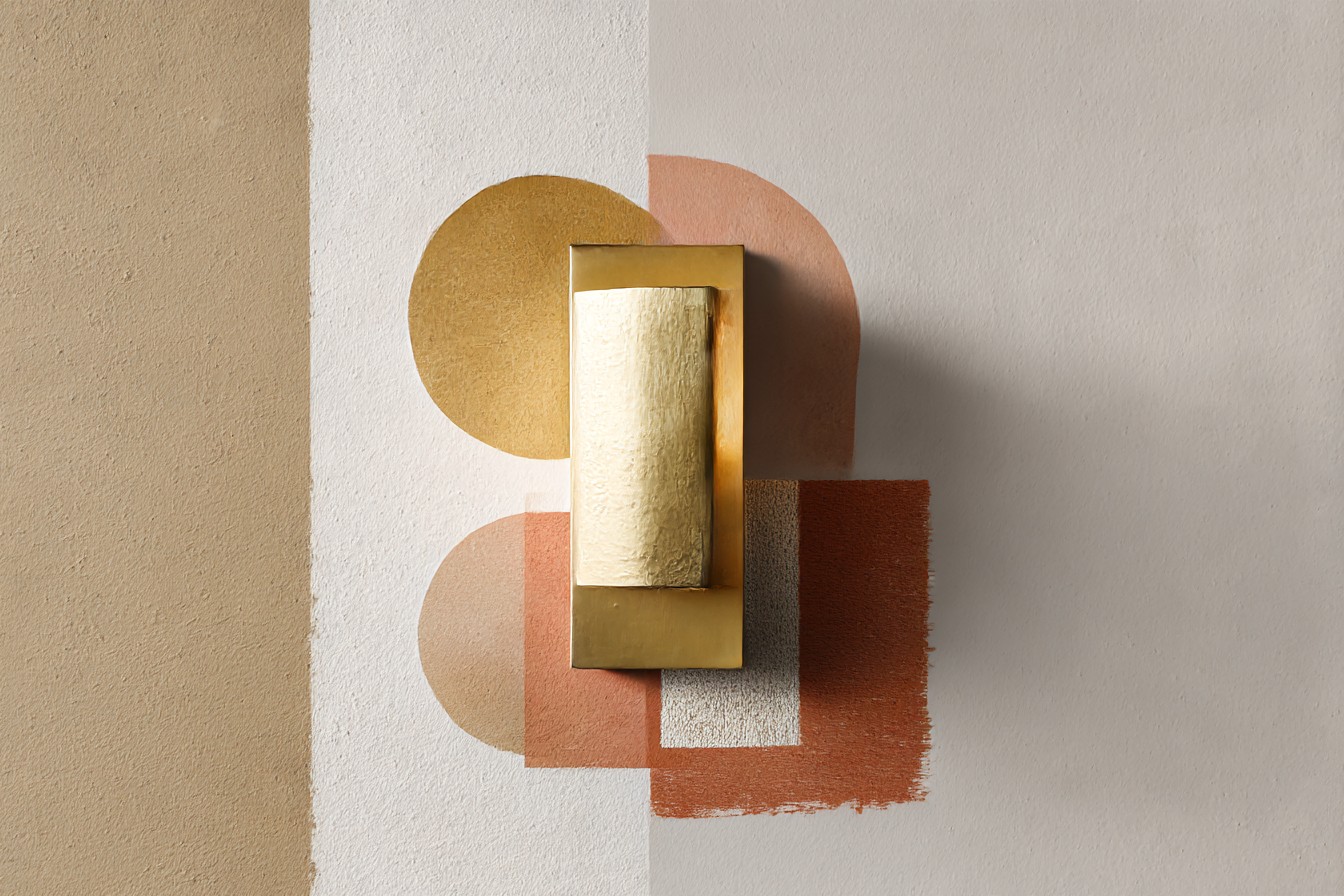
“What to put over a headboard” sounds like a rewording of the first question but it’s actually pointing at something else, the stuff that hangs above the bed in a more literal, structural sense, lighting mostly, and this is the category people underthink the hardest. Sconces mounted either side of a headboard do the job a nightstand lamp does without eating nightstand surface, and I’d take that trade in almost any small bedroom, because the surface is the scarce resource, not the wall space. I had a client insist on keeping two lamps because sconces felt “less cozy,” and six months later she’d swapped to sconces anyway because her nightstand had turned into a landing pad for everything except a lamp, which was the exact problem the lamps were supposed to solve and weren’t.
The other thing that goes “over” a headboard, and the one people are most anxious about, is anything with actual weight and a hanging mechanism, a mirror, a heavier framed piece, a small pendant if your ceiling height allows it. This is where the stud finder earns its keep and where I’ve watched more than one nicely chosen piece end up crooked six weeks later because it went up on a picture hook rated for a fraction of what it was holding. It’s not that this stuff is dangerous exactly, it’s a mirror not a chandelier, but a piece that slowly tilts every time the bed gets bumped is worse than no piece at all, because now instead of a decorating choice you’ve got a maintenance chore you do every Sunday without meaning to.
If I’m picking a side, and I always end up picking one, it’s this: the wall above your headboard should be doing one job, not four. Art if you want a focal point, a shelf if your nightstands are losing the fight against clutter, sconces if lamps are hogging surface you need, or nothing if the wall itself is already good enough to carry the room. Pick the actual problem you have, not the version of the room you saw on someone else’s wall, and the “rule” about two thirds width or symmetrical sconces stops being a rule and starts being a starting measurement you’re allowed to ignore.