I was stripping the bed on a Saturday morning, the way you do when you’ve finally noticed the pillowcases have gone a bit gray and you can’t remember the last time the duvet cover saw a washing machine, and my youngest wandered in holding a purple marker with the cap off, which is never a good sign in our house. By the time I’d wrestled the duvet into its cover and turned around, there were two small purple dots on the headboard, right at toddler shoulder height, like he’d been testing the wall for structural weakness. The headboard is white. Upholstered, linen look fabric, the kind you buy because it looks like something from a hotel catalog and then immediately regret the second a human under four feet tall enters your bedroom unsupervised.
Here’s the thing nobody tells you before you buy a white headboard: it’s not the headboard that’s the problem, it’s everything you put in front of it. White headboards are honestly one of the best things I’ve done to our bedroom, they make the whole room look brighter and less like a place where laundry goes to die, but they are merciless about showing you every bad decision you make with your bedding. Wrong white bedding against it looks flat and grubby by comparison, wrong colored bedding can look like an accident, and the headboard itself picks up marker, drool, hair oil, and apparently the enthusiasm of a three year old with a felt tip faster than any other surface in the house.
So this ended up being less “here’s some pretty bedding” and more a genuine crash course in what actually works with a white headboard when you live with it every day, plus what I’ve had to learn about keeping the thing clean without replacing it every eighteen months, because I did consider that, briefly, in a moment of pure defeat.
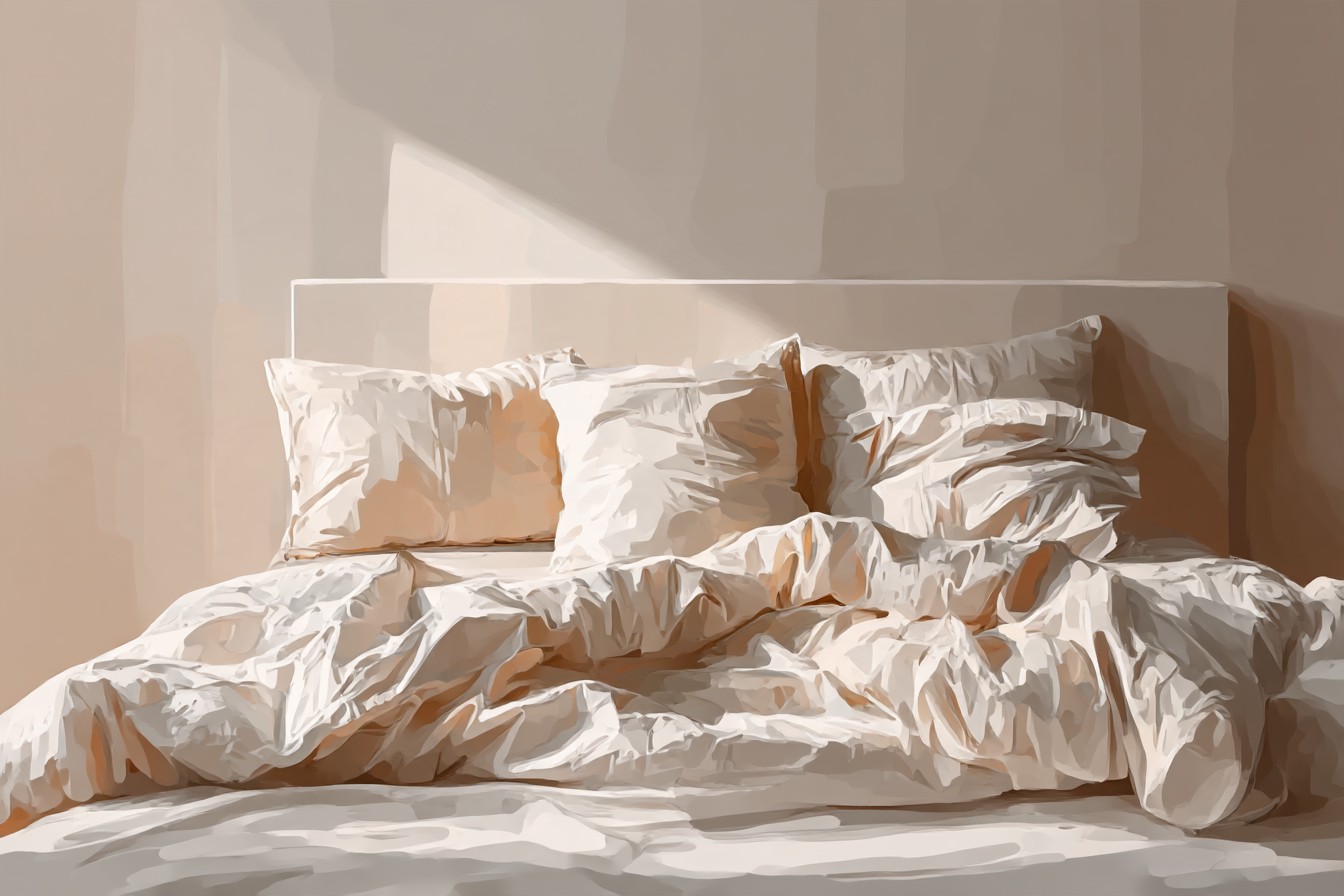
What follows is bedding that pairs properly with white, organized by what it actually does in real life, not what it looks like in a photo with nobody living in the room.
[White Headboard Bedding]
All White, Layered With Actual Texture
I resisted all white bedding for years because I assumed it would look like a hospital, flat and cold and a bit sad. Then I actually tried layering it properly, a waffle weave duvet cover, a chunkier ribbed throw folded at the foot of the bed, two different white pillowcase textures instead of a matching set, and it stopped looking clinical and started looking like the kind of bed you see in a magazine and assume belongs to someone with no children. It does not belong to someone with no children. It belongs to me.
The trick with white on white against a white headboard is contrast through texture, not color, because if everything’s the same flat white with the same finish, the whole bed disappears into the headboard and looks unfinished, like you ran out of budget halfway through. Mixing a matte cotton duvet with a slightly shinier sateen pillowcase does more work than you’d think. It’s also, and I’ll be honest about this, a genuinely bad choice if you’ve got a toddler who eats yogurt in bed on weekend mornings, which mine does, against my explicit instructions, every single time. The all white look survived exactly one such incident before I moved the yogurt policy to the kitchen table, permanently, no negotiation.
Where it does work, and works well, is in a room where the bed is more of a retreat than a battlefield. Ours gets the all white treatment maybe eight months of the year, swapped out the second anyone in this house shows signs of a cold, because a white duvet during flu season is a decision you only make once.
[All White Bedding]
What Color Bedding Actually Goes With a White Headboard
This is the question I get asked more than any other, usually by someone standing in a bedding aisle looking mildly panicked, so let me just answer it directly. Almost anything goes with a white headboard, that’s the whole point of white, but some colors do more flattering work than others and I’ve now tried enough of them to have actual opinions rather than vague ones.
Navy is the one I’d tell anyone to start with. It reads calm rather than cold, it doesn’t show dust the way a lighter blue does, and against a white upholstered headboard it looks properly deliberate, like you meant to do it, rather than like you just bought whatever was on the shelf. Sage green is the other one I keep coming back to, it’s soft enough not to fight with the white but has enough depth that the bed doesn’t look washed out under bad overhead lighting, which describes our bedroom lighting completely and unfairly.
Terracotta surprised me. I bought a terracotta duvet cover on a whim during a sale, fully expecting to regret it, and it’s become one of my favorites, it warms the whole room up without turning it orange, and it hides the inevitable dust and hair better than the white ever did. Blush is the one I’d be more careful with, it’s lovely but it shows watermarks and sweat faster than the darker colors, and I learned that the hard way after a summer without air conditioning I’d rather not relive.
What I’d avoid is anything too close to off white or cream, because next to a proper bright white headboard it just looks like laundry that didn’t come out right, which is a very specific and very avoidable kind of sad.
You Might Also Like

[Color Pairings]
Linen Against Linen, and Why That’s Trickier Than It Sounds
Keeping It Clean When You’ve Got an Actual Toddler InvolvedRight, the marker. I want to talk about the marker properly because it terrified me for about four minutes before I actually looked up what to do, and the answer turned out to be embarrassingly simple. Rubbing alcohol on a white cloth, dabbed rather than scrubbed, lifted both purple dots off the linen look fabric almost completely, with just the faintest shadow left that you’d only notice if you already knew it was there and went looking for it, which I do, obsessively, most evenings.
That incident led me to actually put a system in place instead of just reacting every time something happened, because with two kids something was always eventually going to happen again. I keep a fabric safe stain remover in the nightstand drawer now, not under the sink where it’s useless in an emergency, and I treat any mark within the hour rather than letting it sit overnight, which is the single biggest difference between a headboard that still looks white after a year and one that’s slowly turning the color of despair.
The bedding itself has been the easier part, honestly. Washable duvet covers in a decent cotton have survived juice, a nosebleed I won’t describe further, and one memorable incident involving a permanent marker that thankfully hit the duvet and not the headboard, and every single time it came out in a normal hot wash. My youngest tested the headboard’s patience by leaning his entire sticky handprint collection against it one rainy afternoon while I was on a work call, and a baby wipe handled every one of them before I’d even hung up, which is about the best endorsement I can give any fabric in this house.
[Keeping It Clean]
Neutral Layers for When You Just Want the Bed to Look Finished
Some nights I don’t have the energy for a color decision, and that’s when I reach for the neutral layer trick, a stone or oatmeal colored throw folded across the bottom third of a white or navy duvet, with two textured cushions in a similar tone up against the pillows. It sounds like a small thing and it makes a genuinely disproportionate difference to how finished the bed looks, especially against a white headboard, because the neutral tones pick up the same warmth without competing with whatever color the main bedding is doing.
I bought a boucle throw last winter purely because it looked cozy in the store, no real plan for it, and it’s ended up being the thing that pulls almost every bedding combination in this house together, white on white, navy, terracotta, all of it. It also hides the small imperfections better than any bedding does on its own, a slightly rumpled duvet looks intentional the second you throw something textured over the end of it, which has saved me from remaking the bed properly on at least a hundred mornings I’d rather not admit to.
The one caution here is washing frequency. Throws get forgotten in the laundry rotation because they’re not technically bedding you sleep under, and they end up being the grubbiest thing on the bed without anyone noticing for weeks.
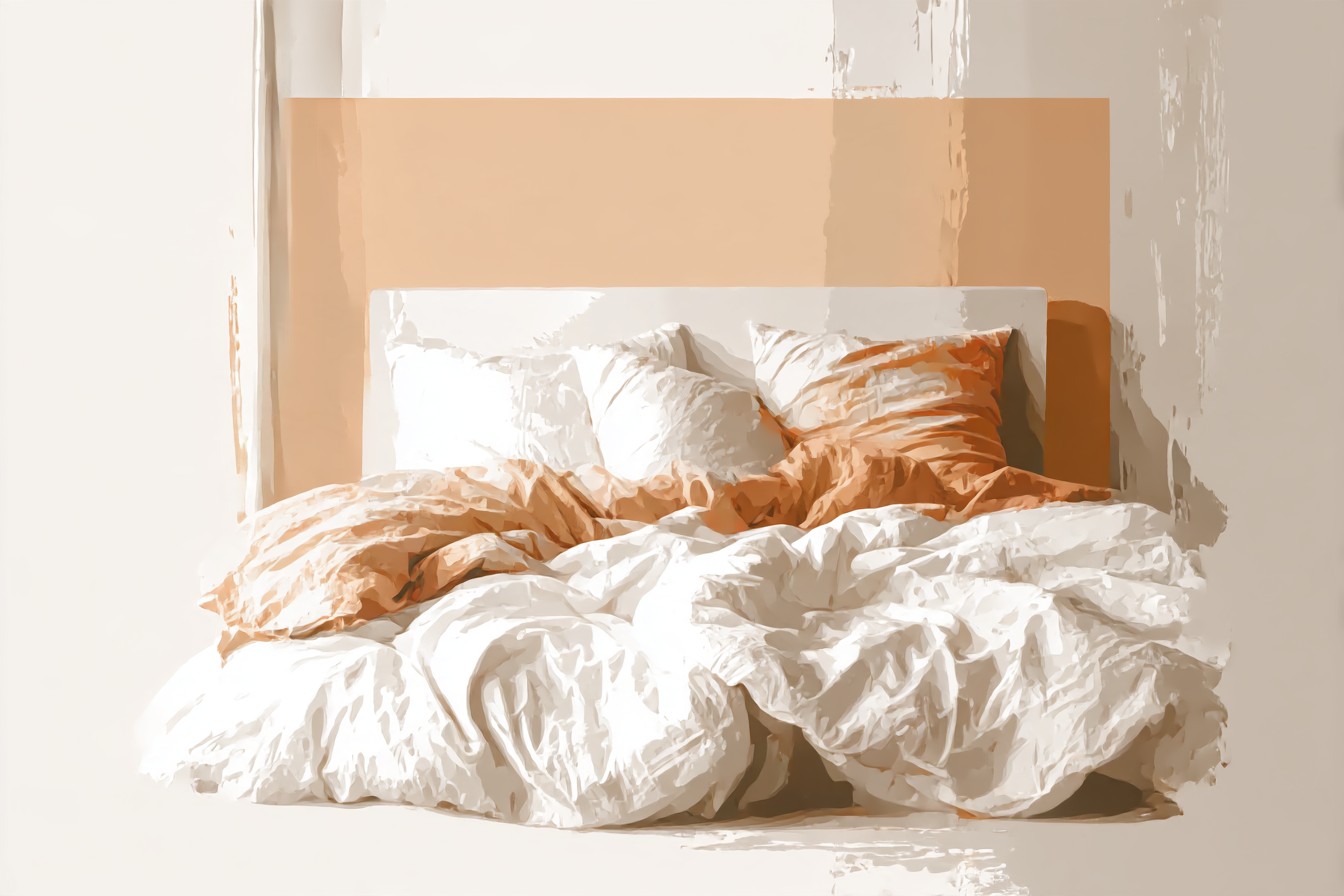
Mine goes in with the towels every other week now, non negotiable, because I found out the hard way that a throw can look fine and still smell distinctly of dog.
[Neutral Layers]
Final Thoughts
If you’d asked me two years ago whether a white headboard was a sensible choice for a house with small kids and a dog who thinks the bed is his by inheritance, I’d have said absolutely not, and I’d have been wrong in the most useful possible way. It’s held up. Marker came off. Yogurt disasters got relocated to the kitchen table where they belong. What actually matters isn’t avoiding white, it’s picking bedding that either matches its calm properly or does something deliberate against it, navy, sage, terracotta, whatever suits the room, and then having an actual plan for the inevitable mess rather than pretending it won’t happen.
The headboard still looks white, mostly, eight months in, under normal evening lighting and if you don’t look too closely at that one spot near the left corner. That’s a better result than I expected going in, and it’s entirely down to catching things fast rather than any special fabric magic. White headboard bedding rewards a bit of attention. It punishes neglect fast and visibly, which is honestly no different to most things worth having in a house full of kids.