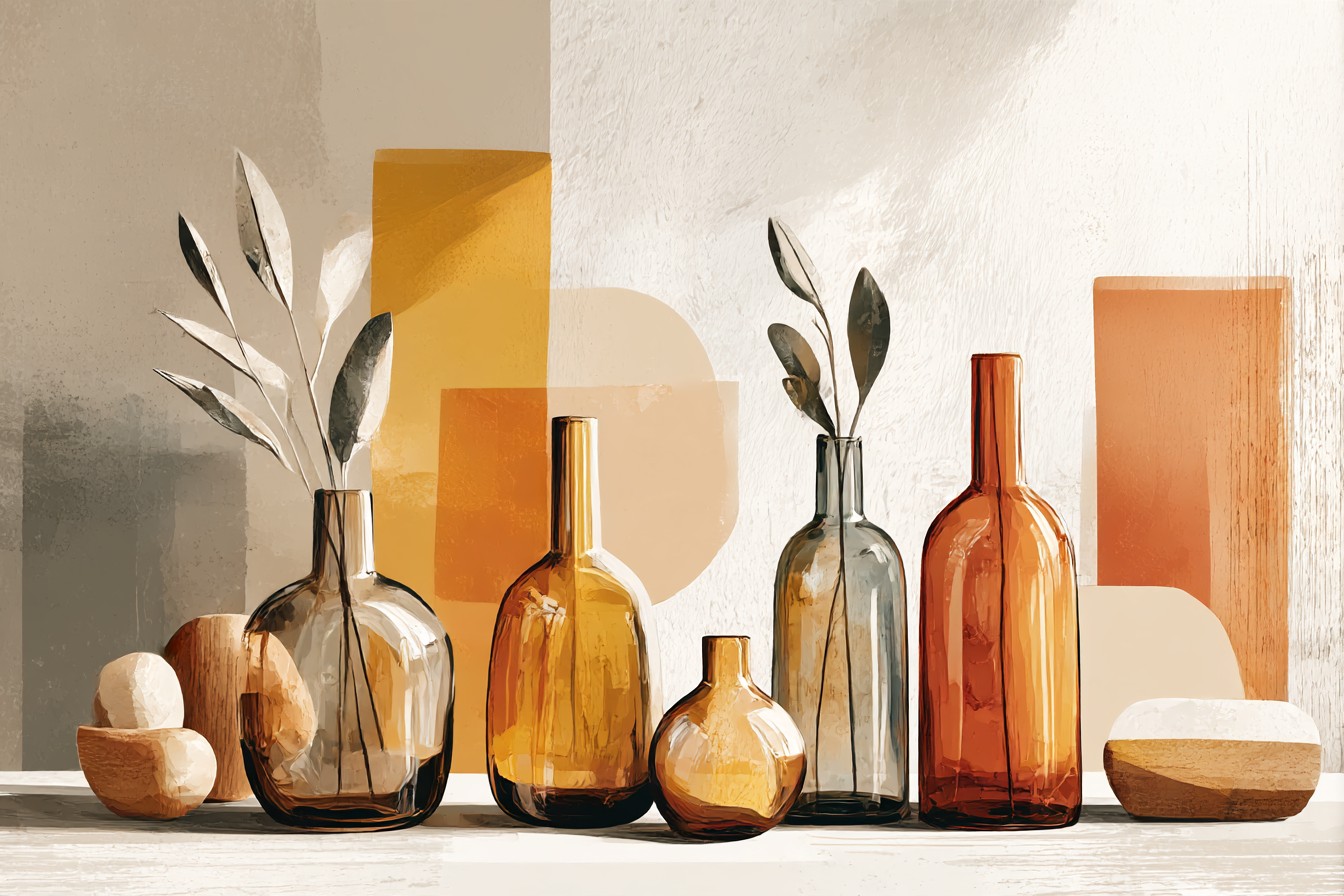
My sister Corrine walked into my den back in March, looked at the six foot glass vase in the corner with a single dried palm frond drooping out of it like it had given up on life, and said, “Isla. This is the fourth one. I counted.” She wasn’t wrong. Four tall glass floor vases in one house at that point, two more sitting in the garage waiting on a plan, and I didn’t even feel the tiniest bit embarrassed, which probably tells you everything about where this piece is headed.
Here’s the thing about tall glass floor vases nobody tells you when they roll their eyes at the idea. Everybody’s got a mental picture, a plain glass tube from some big box store with a bundle of pampas grass jammed in it because a decorator on the internet said so in 2019. And sure, that version exists, I’ve bought that version, it’s fine, it does a job.

But the actual good ones, the ones I’ve dragged home wrapped in a beach towel in the back seat because I didn’t trust them in the trunk, those aren’t decoration so much as they’re structure. A tall glass vase fills a corner that nothing else quite solves. Not a plant, not another side table, not a lamp you don’t need. It holds height in a room without asking anything of you, which after ten years of hauling furniture out of yards from Thunderbolt to Tybee, I’ve come to respect more than almost any other single object in a house.
What I’ve learned hunting for these, mostly at estate sales and the Sunday yard out past the Truman Parkway, is that not all tall glass is the same animal. Clear versus tinted versus properly old hand blown glass with the little bubbles trapped in it from whoever made it, they behave differently, they photograph differently, they hold light differently at four in the afternoon when the sun’s coming low through a window. And then there’s the question everybody actually types into a search bar at some point standing in their own living room feeling foolish, which is simply what do you put in the thing. A six foot vase with nothing in it looks like you forgot to finish decorating. So that’s what this is, really. The different kinds worth chasing, and what actually earns its place inside them.
[Tall Glass Floor Vase]
Clear Glass Floor Vases
I nearly walked past a booth at the Forsyth flea two summers back because the table was covered in mismatched drinking glasses and a stack of picture frames nobody wanted, and tucked behind all of it, half hidden, was a plain clear cylinder vase easily five feet tall, thick walled, heavy enough that I needed both arms. No maker’s mark, nothing fancy about it, but that’s honestly the point of this whole category. Clear glass is the workhorse. It’s the one that goes in the hallway, the empty corner by the stairs, the spot where a piece of furniture used to be before you finally admitted the room didn’t need it.
What I like about the plain clear ones is they disappear a little, in a good way. The glass itself isn’t asking for attention, it’s just doing the job of holding height, so whatever you put inside becomes the whole conversation. I’ve had mine full of dried eucalyptus stems in October and swapped it for three bare birch branches by January and the vase never looked wrong either time, because it’s not trying to be a personality, it’s trying to be a frame.
The thing to actually check before you haul one home, and I say this because I’ve been burned, is the base. A lot of the cheaper reproduction ones have a thin, almost fragile foot that wobbles the second you set anything with real weight into it, curly willow especially, which gets top heavy fast. Press down on it in the booth. If it rocks even slightly on a flat table, it’ll tip over on your floor eventually, usually at 2am when the cat’s involved. The good vintage ones, the properly old ones, tend to have a thicker, almost clumsy looking base because glass making back then wasn’t about elegance in the foot, it was about the thing not falling over. Bless it, ugly as some of those bases are, they’ve earned their keep.
[Clear Glass Floor Vases]
Colored Glass Floor Vases
The Sunday dealer, the one who runs the yard off Ogeechee Road, kept an amber glass vase back for me once without me even asking, just set it behind his truck tire under a tarp because he knew I’d been circling smoked and tinted glass for months and hadn’t found the right one. Ten years of showing up on Sunday mornings and that’s the kind of thing that happens, and honestly it still gets me every time.
Colored glass changes the whole temperament of a room in a way clear glass never will. Amber does something warm and almost autumnal even sitting empty in July. Smoked grey glass, the properly dark kind, reads moodier, more like something out of a study than a sunroom. Sea glass green sits somewhere in between, coastal without trying too hard to be coastal, which matters a lot down here where everything wants to look like a beach house whether it’s near water or not.
The mistake I made early on, and I mean genuinely early, first year or two of collecting, was buying a deep cobalt blue vase because it looked stunning on the shelf at the shop and then getting it home and realizing it fought with literally everything else in the room. Cobalt is a diva. It wants a neutral room built entirely around it, and my den was not that room. I sold it at my own yard sale two years later for less than I paid, which stung, but it taught me something useful, which is to actually picture the vase empty in your own space before you buy it, not just admire it under shop lighting where everything looks better than it is.
Amber and smoke are the forgiving ones. They pair with wood tones, they don’t compete with a rug, and they hold dried florals especially well because the tint hides the murky water line longer than clear glass ever will, which nobody tells you until you’ve had to explain away a cloudy vase to a guest.
[Colored Glass Floor Vases]
Hand Blown Glass Floor Vases
There’s a specific kind of tall glass vase I look for now that I mostly didn’t understand ten years ago, the hand blown kind, properly old, with the little imperfections still in the glass, a stray bubble, a slight lean to one side, a seam where the glassblower’s tool left its mark. I found one at an estate sale out past Isle of Hope, buried in a box of Christmas ornaments of all things, and I nearly didn’t dig deep enough into that box to find it. I ALMOST LEFT IT THERE. The lady running the sale had it priced like it was nothing because to her it was just a tall vase, and it wasn’t until I got it home and turned it under a lamp that I saw the pontil mark on the base, the little rough scar left where it was snapped off the blowpipe, and I knew I’d walked out with something that hadn’t come off a factory line.
You Might Also Like

I’ll admit my blind spot here plainly, because I’ve written myself into this hole before. I fell for that vase at the sale before I’d properly checked it over, turned it maybe once in bad light, and it wasn’t until it was sitting in my den that I noticed a hairline crack running about two inches up from the base, invisible unless the light hits it a certain way. It still holds water fine, it’s held dried stems for two years now with no trouble, but I paid full asking price for something I should have negotiated down once I’d found that flaw. Happens more than I’d like to admit.
What makes hand blown glass worth the extra hunting is exactly that imperfection. No two are identical, the walls are never perfectly even, and next to a mass produced clear cylinder they just have more presence sitting empty in a corner. Check the base for a pontil mark, hold it up to a window before you buy, and don’t be afraid of a little unevenness. That’s the maker’s hand still in it.
[Hand Blown Glass Floor Vases]
Ribbed Glass Floor Vases
Ribbed and fluted glass is the one I associate most with a specific decade, the seventies mostly, occasionally slipping into early eighties, and I’ve gotten fairly particular about telling the genuine ones from the newer copies that flood the shops now trying to cash in on the whole retro wave. The real ones have deeper, less uniform ribbing, sometimes with a slight color cast from age, a faint yellowing or smokiness that no amount of cleaning will fully lift. The reproductions are too perfect. Every rib exactly the same width, glass too clear, and honestly that’s usually my first clue before I even flip it over looking for a mark.
I found a genuinely lovely fluted one at a barn sale out toward Guyton, tall, maybe four and a half feet, with ribbing that ran in a gentle spiral rather than straight up and down, which the woman selling it swore was from her grandmother’s sunroom in Augusta. No way to confirm that kind of thing, provenance at that scale is mostly a story you choose to believe or don’t, but the wear pattern on the base matched decades of being set down and picked back up, so I believed her enough.
Ribbed glass does something interesting with light that flat glass can’t, it scatters it, breaks it into little vertical lines across a wall in the late afternoon, which sounds like a small thing until you’ve actually watched it happen in your own hallway around five in the evening in October. It works especially well with simple fillers, single stems rather than a bundle, because the texture of the glass itself is already doing visual work and you don’t want to compete with it. One tall stem of dried allium, one branch, that’s usually enough.
[Ribbed Glass Floor Vases]
Floor Vase Fillers
This is the part everybody actually needs, if I’m honest, because I’ve watched more than one gorgeous vase sit empty in a corner for months while its owner tries to figure out what on earth goes inside something that tall. The answer depends almost entirely on the glass itself and the room it’s standing in, but a few things have held up for me across every single vase I own, clear, colored, hand blown, ribbed, doesn’t matter.
Branches are the easiest starting point and the most forgiving. Curly willow, dried magnolia branches which I cut straight off a tree two streets over with the neighbor’s blessing, or plain bare birch stems from a florist supply out on Abercorn. They fill height without weight, and dried ones won’t rot the way fresh cut greenery eventually will sitting in a few inches of standing water nobody remembers to change.
Pampas grass gets a bad reputation for being overdone and I understand why, but in a tall clear or amber vase, three or four stems, not a dozen crammed in like a broom, it still works, it’s just become a cliché because it works so reliably. Dried hydrangea heads, several stems bundled together rather than single, give you width at the top without needing to fill the whole vase, which matters because filling a five foot vase entirely with stems gets expensive fast and honestly looks stiff.
My real mistake, made more than once, was buying fillers too short for the vase. A branch needs to clear the rim by at least two feet, sometimes more, or the whole thing looks apologetic, like the vase is wearing a shirt one size too small.

Measure the vase, add height, and don’t trim until it’s actually standing in place.
[Floor Vase Fillers]
Final Thoughts
Corrine still brings up the vase count every time she visits, and the number’s only grown since March, which I’m choosing not to disclose here. But standing in my den now, looking at five of them in a room that somehow still has walking space, I don’t feel like I’ve overdone it. Each one came from somewhere specific, a booth I nearly skipped, a box of Christmas ornaments, a tarp behind a truck tire on a Sunday morning. That’s the part that never gets old for me, the not knowing exactly what a piece has seen before it landed in a booth priced like nothing.
Tall glass floor vases get dismissed sometimes as an easy decorating shortcut, and the mass produced ones can be exactly that, nothing wrong with easy. But the real find, the hand blown one with a pontil mark and a crack I should have caught sooner, or the ribbed one from a sunroom in Augusta that may or may not be true, those hold a room in a way nothing bought new quite manages. Fill it with a branch, fill it with pampas grass, fill it with nothing for a week while you decide, just don’t let it sit empty in a corner looking apologetic. Go dig through a box you almost skipped. That’s usually where the good one’s hiding.

[…] go quiet, that you do not put anything heavier than a coaster near the edge when the surface is glass and the floor underneath is not carpet. That lesson got learned exactly once and then repeated at every dinner […]