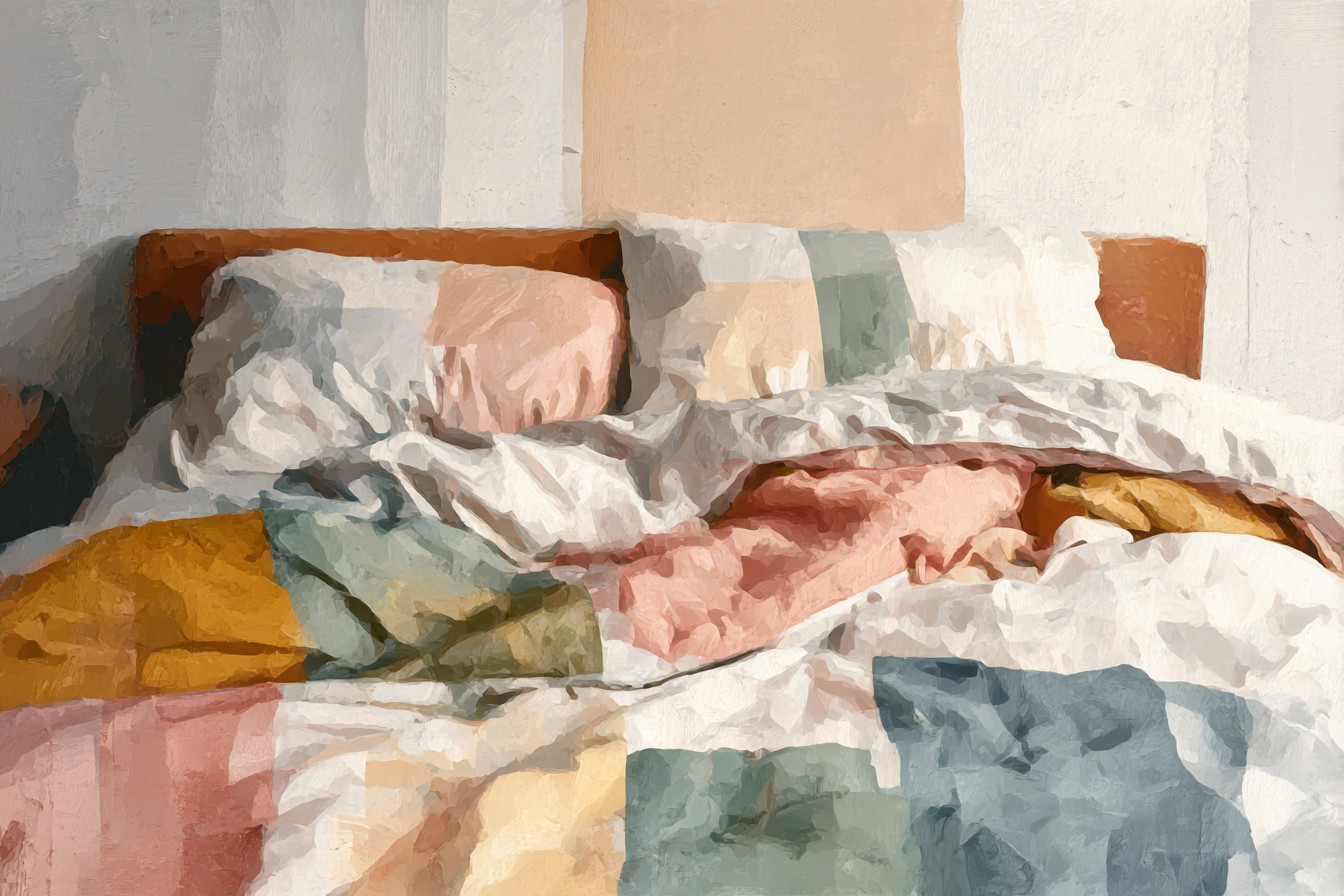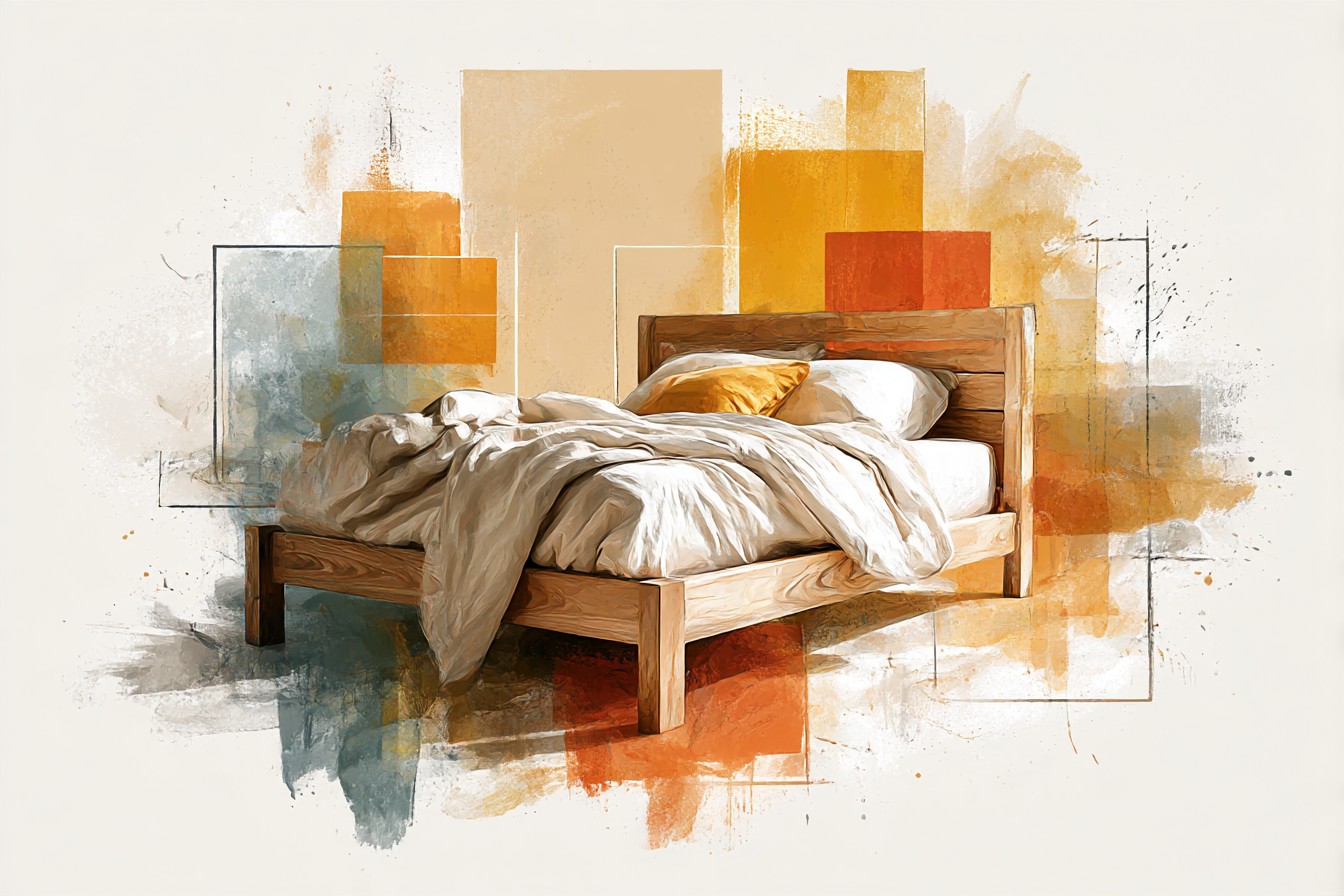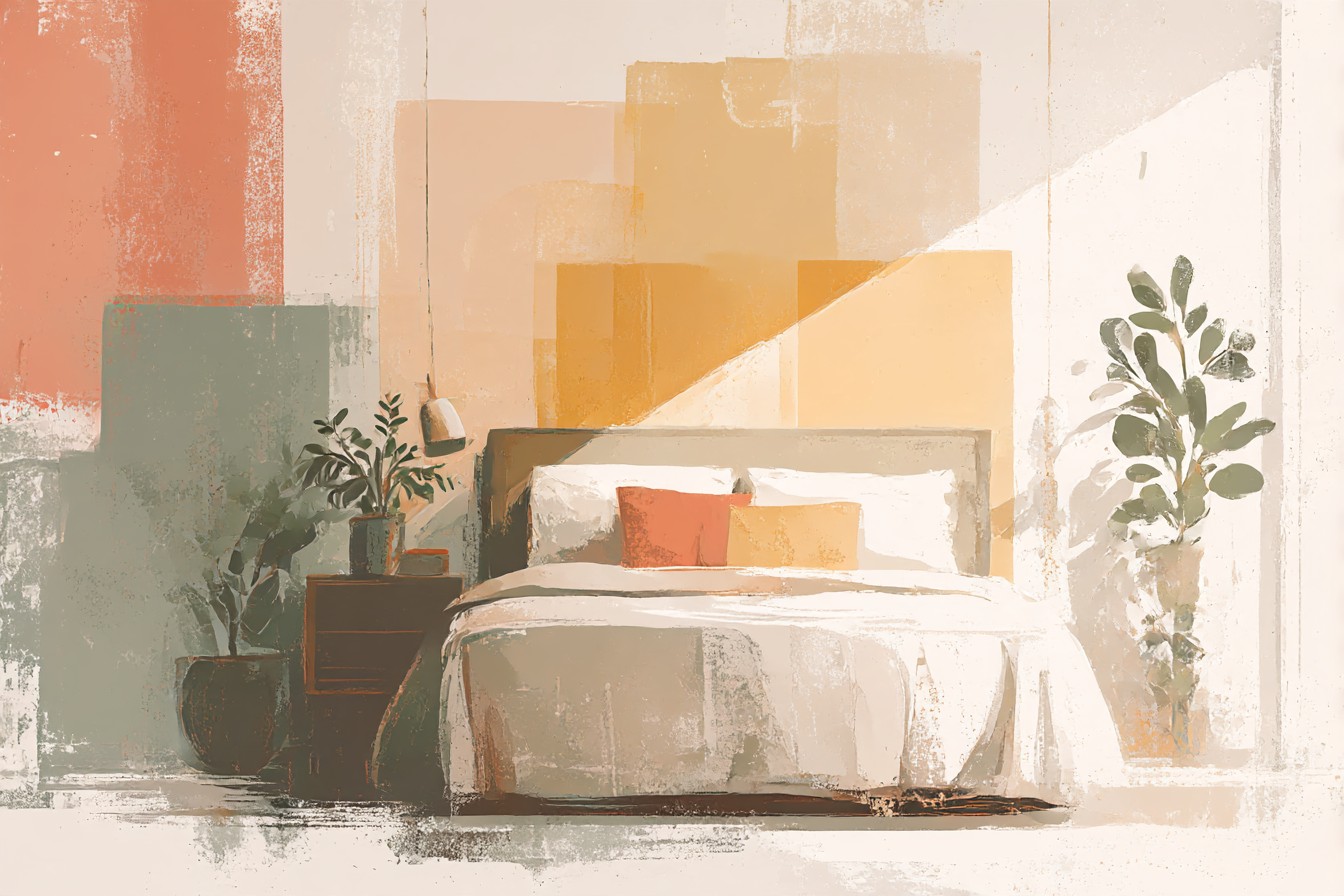
I’m on the floor of my own bedroom, knees complaining about it, holding up four paint chips against a stack of quilts I got off a woman clearing her mother’s house down near Isle of Hope. The quilts are all faded in that particular way old cotton fades, not gray exactly, more like the color just got tired and gave up. I’ve got a headboard leaning against the wall next to me, a plain oak frame I picked up two Sundays back for eleven dollars because nobody else at that yard seemed to want it, and I’m trying to work out what color it wants to be. Not what color I want it to be. What color it actually wants to be, if that makes any sense, which I know it doesn’t to most people, but bear with me.
This is the part nobody tells you about headboards. Everyone talks about the shape, the tufting, whether you go upholstered or wood or one of those cane ones that are suddenly everywhere again like they never left.
Nobody talks about the color being the thing that actually decides whether the room works or whether you lie there every night mildly annoyed without knowing why. I’ve painted the same headboard three different colors over two years because I kept getting it wrong, and each time I was so sure. That’s the trap. Headboard color feels like a small decision, smaller than the sofa, smaller than the rug, so you rush it, and then it’s the first thing you see every morning for the next five years.
I’ve been doing this long enough, hunting through estate sales and salvage yards and the occasional overpriced antique mall that calls a 1990s reproduction “primitive,” to have opinions about which colors actually earn their keep on a headboard versus which ones just photograph well for about a week. So I’m going to walk through the ones I’ve lived with, the ones I’ve regretted, and the one I nearly walked straight past at a yard that looked like nothing from the gate. If you’re standing in your own version of my bedroom floor right now, paint chips fanned out like a bad hand of cards, this ought to help you put a few of them down.
[Headboard Colors]
White and Cream Headboards
This is the one everybody reaches for first because it feels like it can’t go wrong. Clean, bright, goes with everything, you’ve heard all of it. I believed all of it too, right up until I bought a white lacquered headboard from an estate sale out past Thunderbolt, gorgeous thing, curved top, looked like something out of a French film. Got it home, styled it up with white bedding because I was fully committed to the bit, and within about three weeks it looked like a dry erase board somebody had wiped badly. Every fingerprint. Every water spot from a glass set down too close. My dog Beau used to rest his chin on the edge of it and left a faint gray smudge that never fully came out no matter what I scrubbed it with.
So white isn’t the safe choice everyone thinks it is, not on a headboard, which gets touched constantly, leaned against, used as a hand rail at two in the morning. Cream is the smarter cousin. It’s got enough warmth in it to hide the fingerprints and enough softness that it doesn’t read stark against wood floors or older trim, which around here is almost always got some yellow in it whether the previous owner admits it or not. If you’ve got a room with good natural light, east facing especially, cream headboards do this lovely thing where they pick up whatever’s happening outside the window, warmer in the morning, cooler by evening. White just sits there being white regardless.
Where white earns its place is a small, dark room that needs the visual lift, a north facing bedroom with one stingy window, that kind of thing. Just go with an eggshell or a slightly textured linen instead of anything glossy, and understand upfront you’re signing up for wiping it down more than you’d like.
[White and Cream Headboards]
Dark and Moody Headboards
I nearly talked myself out of this one entirely, years back, because I’d convinced myself dark colors shrink a room, which is true right up until it isn’t. I painted a headboard almost black, a deep charcoal with the tiniest bit of blue mixed in, for a guest room that’s got no business being called spacious by any definition. Everyone who stays in there says the same thing, that the room feels bigger than it is, not smaller, and I think it’s because the dark headboard reads as intentional rather than crammed in. A pale headboard in a tight room just draws attention to how much furniture is fighting for the same square footage. A dark one recedes, weirdly, like it’s decided not to compete.
Navy does something similar with a bit more personality, less severe than black, still moody enough to hold its own against brass hardware or an old brass lamp with a shade that’s gone slightly amber with age. I’ve got one dealer, runs a stand most Sundays out near the flea market, who always seems to have exactly one navy piece tucked at the back of his truck, like he knows I’m coming before I do. Kept a navy painted iron bed frame back for me once without me even asking, which after this many years of showing up feels like the actual prize, more than the piece itself sometimes.
The mistake people make with dark headboards is pairing them with dark everything else, dark walls, dark floors, dark bedding, and then wondering why the room feels like a cave nobody wants to wake up in. Dark headboard, light walls, one good lamp. That’s the whole trick.
[Dark and Moody Headboards]
Natural Wood and Cane Headboards
This is where I get properly obsessed, if I’m honest, because a natural wood or cane headboard isn’t really about color at all, it’s about what the piece actually is before you decide anything about how it looks. I’m skeptical of anything a dealer calls antique without me getting a proper look at the joints first, dovetails, the back of the frame, whether the caning is original or a replacement someone did badly with the wrong gauge reed. Half the stuff labeled vintage at the bigger antique malls is a decade old at best, mass produced somewhere that isn’t here, and priced like it came out of somebody’s grandmother’s attic in Beaufort.
You Might Also Like

Found a rattan headboard once behind three stacked radiators at a yard I nearly didn’t bother visiting, looked like nothing from the gate, half the sellers hadn’t even bothered setting up properly. And there it was, tucked away like it was hiding on purpose, the caning original, the frame some kind of dense honey colored wood I still haven’t fully identified. Fell in love with it right there in the aisle, got it home, and found the woodworm I’d somehow missed entirely in my rush to claim it before anyone else spotted it. Which happens more than I’d like to admit. Cost me a proper treatment and a nervous few weeks before I trusted it back in the bedroom.
Natural wood tones work in almost any room because they’re not really competing with your wall color, they’re sitting alongside it, and cane specifically brings a lightness that upholstered pieces can’t manage. If your room already leans neutral and you want warmth without adding another color to think about, this is the category. Just check the joints before you fall for it.
[Natural Wood and Cane Headboards]
Jewel Tone Upholstered Headboards
I resisted color on a headboard for years, genuinely thought it was a step too far, too much commitment for something you can’t easily change your mind about later. Then I had a rust colored velvet headboard reupholstered, three yards of fabric, more than I expected to need, and it turned out to be the single most complimented thing in that whole room, more than the bed itself. Rust, forest green, a deep dusty blush that’s got more brown in it than pink, these colors do something a plain neutral headboard simply can’t, they give the room a focal point that doesn’t need art or a gallery wall to justify itself.
The thing about jewel tones is they read completely differently depending on the fabric they’re in. That same rust in a linen looks rustic, almost worn in, but the exact color in velvet reads formal, a little dramatic, like the room’s dressed up for something. I learned that the hard way, ordered a swatch expecting one thing and got sent something that photographed identical online but felt entirely different once it was three feet from my face every night.
Bless it, but a lot of people avoid these colors because they’re worried about resale or matching future decor, and I understand the instinct, but a headboard is one of the easier things to swap out down the line compared to, say, a sofa. If you’ve got a room that’s otherwise fairly plain, white walls, simple furniture, a jewel toned headboard is doing more work per square foot than almost anything else you could add.
[Jewel Tone Upholstered Headboards]
Choosing a Headboard Color by Room
If you want the short version, without all my rambling about radiators and woodworm, here’s roughly how I’d walk a friend through it standing in her own bedroom. Room gets strong afternoon sun, west facing, warm light most of the day? Cream or a natural wood tone, because anything too cool will fight the light instead of working with it. Room’s north facing, gray and flat most of the day regardless of season? That’s your white or a soft blush, something with enough warmth built in to compensate for what the light isn’t giving you.
Small room, genuinely tight on space, furniture practically touching?
Go dark. Charcoal, navy, deep green, something that recedes instead of announcing itself. Big room with high ceilings and not much else going on? That’s exactly where a jewel tone earns its keep, because the room’s got the space to let one bold thing exist without feeling crowded.
Renting, or just not ready to commit to paint and fabric choices that feel permanent? Natural wood or cane, every time, because it’s the one option that isn’t really a color decision at all, and it’ll outlast whatever else you do to the room around it.
[Choosing a Headboard Color by Room]
Final Thoughts
I still think about that oak headboard on my bedroom floor, paint chips fanned out beside it, and how long it actually took me to admit the answer was staring at me the whole time, plain wood, no paint at all, just a coat of wax and enough patience to let the grain do the talking. Headboard color isn’t really about trends or what’s photographing well this year. It’s about the light in your specific room, the size of the space you’re actually working with, and being honest about how much you’re willing to clean if you go pale or how much drama you can live with if you go dark.
I’ve gotten it wrong more times than I’ve gotten it right, painted things three times over, fallen for a piece before checking it properly, learned every lesson the slow way because that’s apparently how I learn things. But that’s the part worth trusting, not the piece that looked perfect on day one, but the one that earned its color the hard way, same as I did.