
“Just get a nice tray, it’ll pull the whole table together.” That’s what the woman two desks over told me when I mentioned my coffee table looked like a table and nothing else, back when I’d just closed on the condo and was still buying furniture in a slight panic. I went and bought a tray. A fine tray, actually, a mango wood one that photographed well. It did not pull anything together. It sat there looking exactly as unfinished as the table underneath it, because a tray is not a magic patch you apply to a problem, it’s a frame, and a frame around nothing is still nothing. It took me embarrassingly long to figure out that the tray isn’t the fix, it’s the thing that makes the fix visible.
Here’s the actual mechanism, as far as I can tell after three coffee tables and one genuinely unhinged number of tray purchases (I’m at five, which is four more than any household needs, and I stand by exactly two of them).
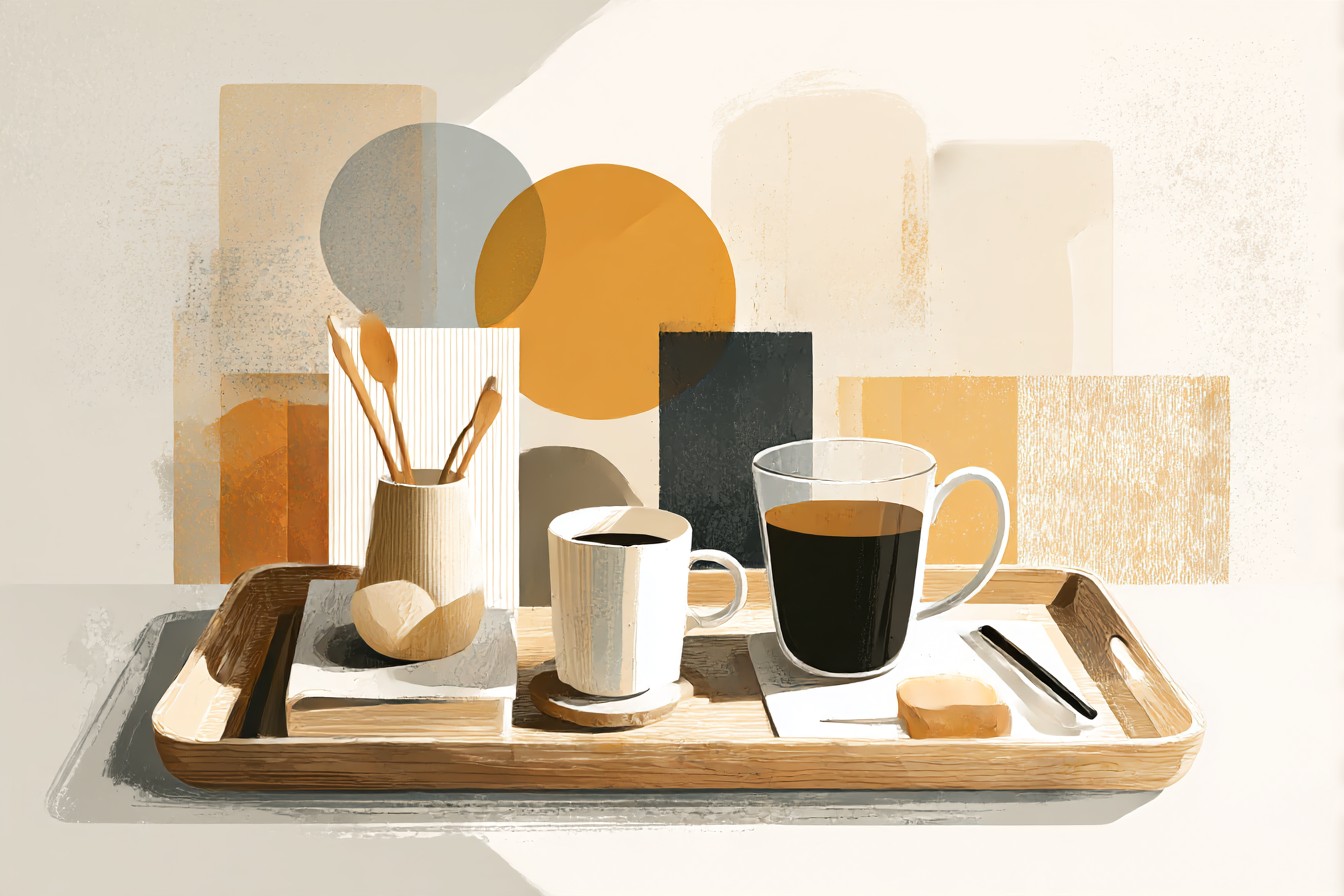
A coffee table without a tray is a flat surface with objects scattered on it in whatever arrangement gravity and laziness produced. A remote here, a coaster there, a candle nobody’s lit since 2022, all of it reading as clutter because nothing tells your eye where to stop looking. A tray draws a border. It says, everything inside this line is intentional, everything outside it is not my problem. That’s the whole trick, and it’s a genuinely simple one, but it only works if you get two things right, and almost nobody talks about them properly.
The tray itself has to earn its spot, not just occupy one
The first mistake, the one I made with the mango wood tray, is treating the tray like a neutral container instead of a piece of the design in its own right. It isn’t neutral. It’s the single largest object sitting on your coffee table, which means its material, its color, its shape, all of it is doing more visual work than the candle or the coasters ever will. A glossy black lacquer tray on a warm oak table looks like an argument. A woven rattan tray on a glass table with black metal legs looks like it wandered in from a different apartment. I know this because I did both of those things, in that order, over about eighteen months, and each time I stood there wondering why the table still looked wrong even with the tray doing its job.
What actually worked, for me, was matching the tray’s material logic to the table’s, not its exact finish but its general vibe. My current table is a dark walnut with brass hardware on the drawer, borderline too formal for how I actually live, and the tray that finally sat right on it is an aged brass one with a slightly imperfect, hammered finish, not a mirror shine. It picks up the hardware without trying to match the wood, which would have been too matchy and honestly a bit try hard. If your table is lighter, pale oak, whitewashed, whatever, a tray with some visual weight to it, a dark wood or a matte black metal, does more for the “finished” look than another light piece would, because it gives the eye a contrast point instead of letting everything blur into one tone.
You Might Also Like

Shape matters more than people think too. A round tray on a rectangular table breaks up all those straight lines in a way that reads as considered rather than accidental, which is probably why round trays show up in basically every well styled living room photo you’ve ever half noticed and never questioned. A rectangular tray on a rectangular table is fine, it’s just safer, and safer isn’t always what a room that’s been bothering you actually needs. I switched to round on my current table for exactly this reason and the difference was bigger than I expected from something that cost less than dinner for two.
What goes on it decides whether the trick actually works
Here’s the part that undoes people even after they’ve bought the right tray, myself included on multiple occasions. You cannot put everything you own on it. The instinct, when you’ve got this nice new boundary drawn around a section of your table, is to fill it, because empty space feels like wasted opportunity when you’ve just spent money on the container. Wrong instinct. A tray with six things crammed onto it looks exactly as chaotic as no tray at all, just chaotic in a smaller, more concentrated area, like you’ve taken the mess and put a frame around it instead of solving it.
The arrangement that’s held up longest for me, through one move and a genuinely unreasonable number of rearrangements on slow Sunday afternoons, is three items, maybe four if one of them is small.
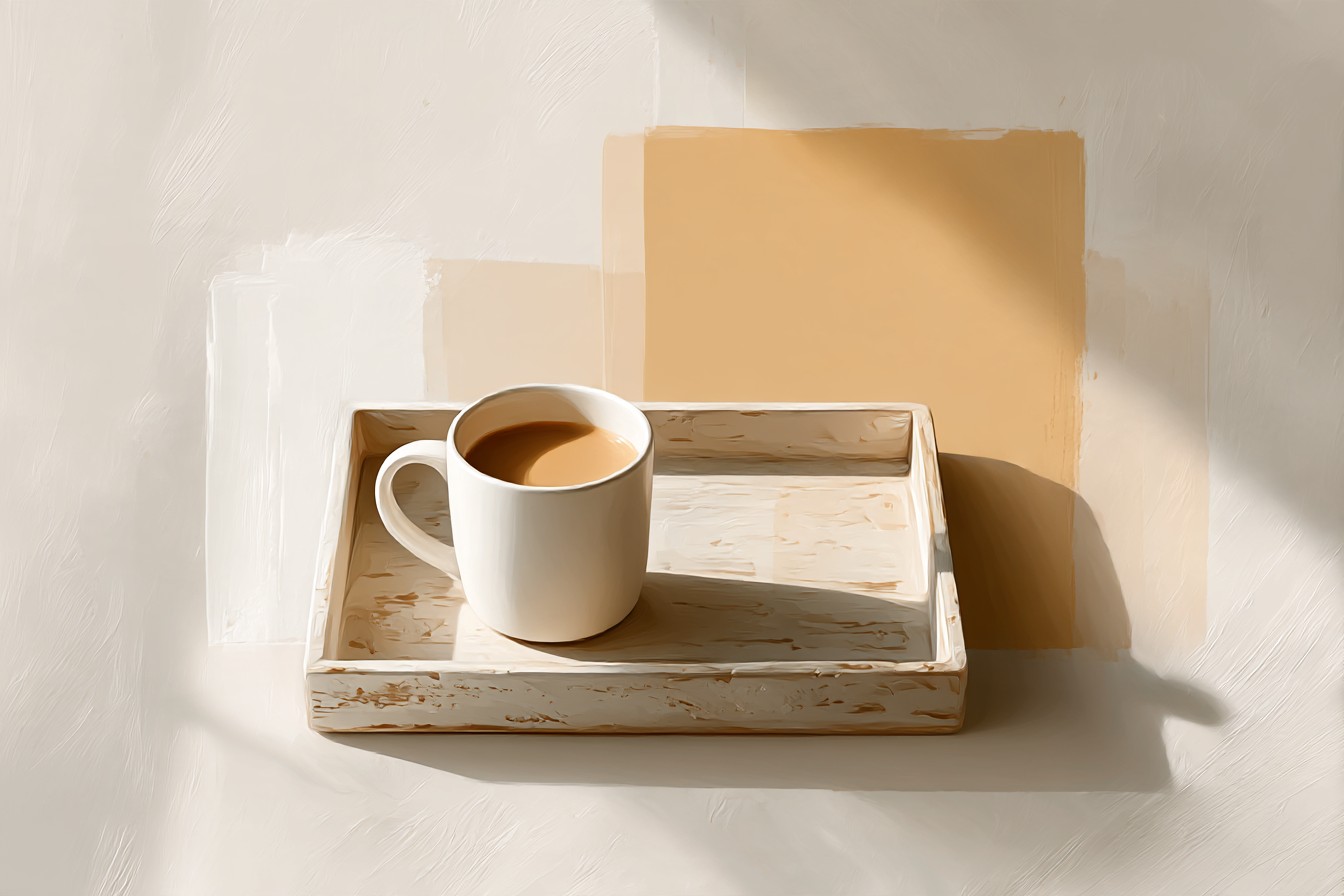
A candle, something with height, so usually a small vase or a single stem in a bud vase, and one object that’s just there to be looked at, a small dish, a stone coaster stack, a little ceramic thing with no function whatsoever. That’s it. The remote does not go on the tray. I fought this for a while because the remote has to live somewhere and the tray is right there, but the second I moved it to the drawer instead, the whole table looked calmer, and I felt slightly ridiculous that a TV remote had been the thing quietly wrecking my living room’s vibe on every video call.
Books work if you’re using the tray as the anchor for a small stack rather than a single flat layer, one or two hardcovers with actual spine color you don’t hate, topped with the candle or a small object, height doing the same job the vase does elsewhere. What I’d stop anyone doing is using the tray as extra storage for coasters, chargers, hand cream, the actual detritus of living in a room, because that’s not styling, that’s just relocating the mess to a nicer looking box, and it stops working the first time a guest goes looking for a coaster and finds four things instead. The tray earns its keep by being slightly impractical, honestly, by holding less than you want it to. That’s not a flaw in the idea. That’s the whole idea.


[…] the table to look a certain way for people who, it turns out, were never coming over to judge my coffee table books […]