My sister walked into my condo two Saturdays ago, took one look at my console table, and said, “Aisha, this looks like a garage sale that got promoted.” She wasn’t wrong. There were eleven objects on it. I counted after she left, out of spite, mostly at myself. A lamp, two candles, a dried eucalyptus stem in a vase too small for it, three framed photos at competing heights, a ceramic dish with nothing in it, a stack of coasters nobody uses, and a small wooden bowl I bought at a market in 2019 and have never once put anything in.
Here is the thing about a console table that nobody tells you when you buy one: it is the single highest visibility, lowest square footage surface in your entire home. You walk past it fifteen times a day. It’s the first thing anyone sees when they come through your door, and on a video call, if your desk faces the hallway the way mine used to before I fixed that particular disaster, it’s sometimes the first thing your entire team sees too.
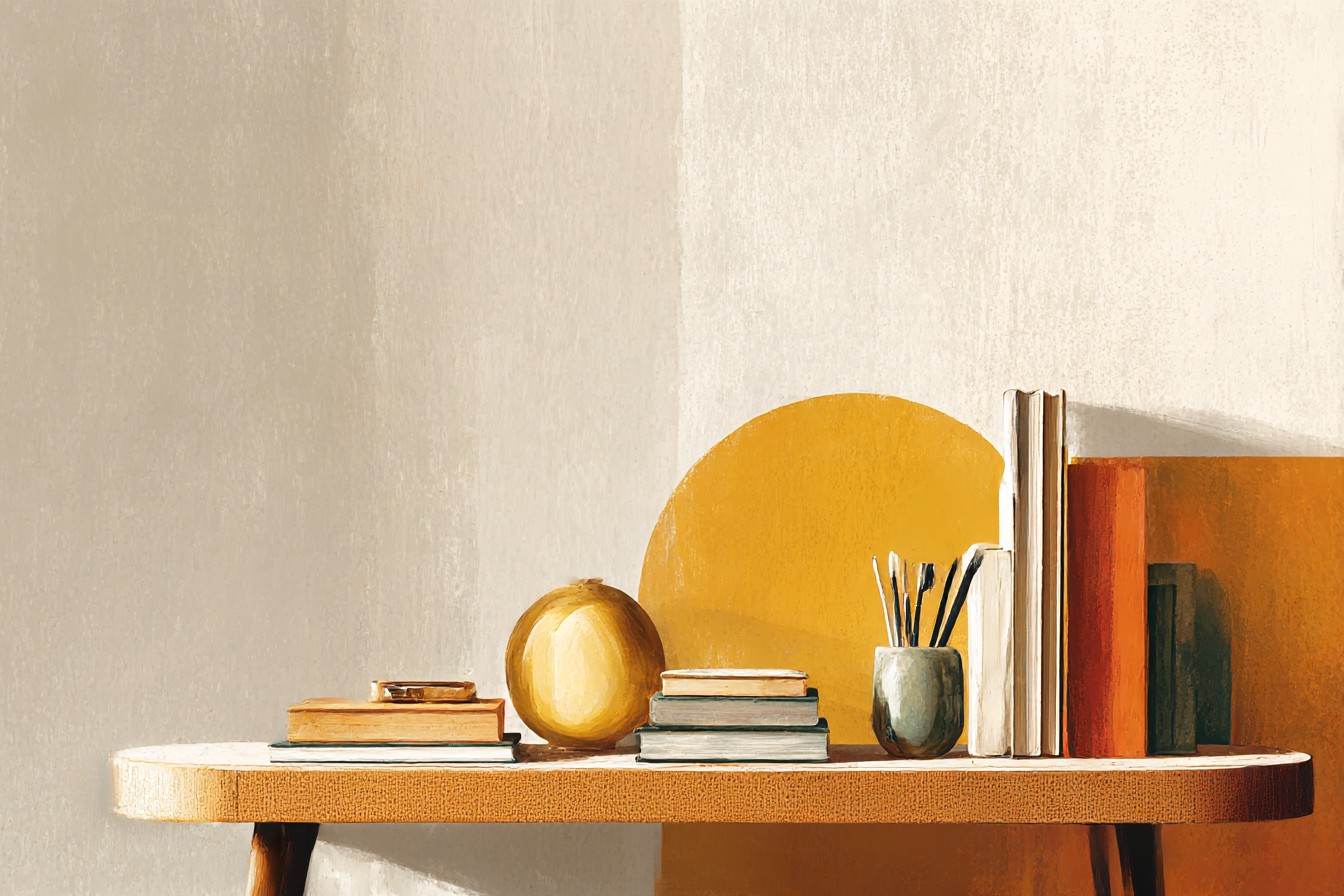
Cost per square inch of visual real estate, that table is doing more work than my actual sofa, and I have been treating it like a junk drawer with better lighting.
I’ve spent an embarrassing number of Saturday mornings rearranging that surface, which, for a woman who builds actual financial models for a living, should probably tell me something about where my brain goes when it needs a break from real decisions. But the exercise taught me something I didn’t expect: the problem was never finding the right eleventh object. The problem was that I had eleven objects competing for a job that maybe three or four could do properly. Restraint isn’t a design philosophy I arrived at gracefully. I got there by process of elimination, and by my sister’s face.
So this is the case, section by section, for what actually earns a spot on that surface, and what doesn’t. Not a mood board. A shortlist, argued properly, the way I’d argue anything else I was willing to spend money defending.
[Top of a Console Table]
The Lamp, Singular
I want to start here because it’s the one item I will not compromise on, and also the one I got wrong for almost a year. I originally put two small lamps on my console, symmetrical, matching, the kind of thing that photographs well and does almost nothing else. What I actually needed was one lamp, slightly oversized for the table, on a warm bulb, positioned so it does real work after 6pm instead of just existing as a shape.
The return on this is higher than people expect. A console table sits in a hallway or behind a sofa, which means it’s usually catching ambient light badly or catching none at all once the sun’s down. One properly scaled lamp fixes that entire problem in a way two decorative ones never did, because I was buying them for symmetry, not for lumens, and symmetry doesn’t turn a hallway into a place you’d actually want to stand in for more than four seconds.
The other case for exactly one: on a call, if that console is anywhere in frame, a warm lamp reads as intentional in a way overhead light never does. I learned this after watching a recorded meeting back and noticing the wall behind me had gone this strange flat yellow, completely lifeless, while a colleague two floors up had this soft, editorial glow behind her the entire time. Turned out she’d just put a lamp on her console table facing slightly toward the wall. That’s the whole trick. I felt faintly robbed that something so simple had been sitting there the whole time.
Buy one lamp you’d be comfortable spending real money on. Skip the pair.
[Lamps]
One Vessel, Chosen for Scale Before Style
I have bought four vases in my adult life for this table and used exactly one of them correctly. The other three were wrong before I ever got flowers into them, because I bought them for how they looked empty on a shelf at the store, not for how they’d behave once they had actual stems in them at actual height on my actual table.
Here’s the miscalculation I keep making and am now flagging so you don’t: a vase that looks substantial in a shop, next to fifty other vases, often looks tiny and apologetic once it’s alone on a six foot console with nothing beside it for scale. My eucalyptus stem disaster was exactly this. Gorgeous vase, four inches too short, so the stems flopped sideways and it looked less like a display and more like something that had given up.
The fix wasn’t a better vase. It was a bigger one, and fewer other things around it, so the vessel could actually read as the moment on that surface instead of one competitor among eleven. I now run one ceramic vessel, wide mouthed, heavy enough that it doesn’t shift when I dust around it, and I fill it with whatever’s cheap and in season rather than anything precious. Grocery store stems, mostly. Nobody has ever once asked me where they’re from, which tells you something about how much the source actually matters compared to the scale.
If flowers aren’t your thing, an empty vessel with real presence still earns its spot. What doesn’t earn it is a small pretty object bought on impulse that then spends the next two years looking slightly wrong and you can’t quite say why. I can say why now. It was the scale, the whole time.
[Vessels]
A Short Stack of Actual Books
I resisted this one for a long time because staged books, the kind arranged by cover color with a candle balanced on top, always struck me as the interiors equivalent of a resume with the font sized up to hit two pages. Performative. Not for me.
You Might Also Like

Then I noticed my own shelves were full of books I’d actually read and loved, sitting there doing nothing decorative at all, and I pulled three onto the console instead, not sorted by color, just the three I’d go back to. A worn hardcover, a paperback with a cracked spine, and one oversized art book my manager gave me as a joke gift that I ended up genuinely liking. The stack does two jobs at once: it adds height, which a flat table full of small objects never achieves on its own, and it’s the one thing on that surface that actually says something true about me instead of something I bought because it photographed well.
Height matters more than people account for. A console table with everything sitting at the same low level reads as flat and slightly indecisive, even if every individual object is nice. Three books stacked to eight or nine inches gives your eye somewhere to land before it drops to the vessel, then the lamp, then back down again. It’s basic composition, the kind of thing I’d have dismissed as fluffy a few years ago and now recognize as doing real structural work.
The rule I’ve landed on: books earn the spot if you’d defend them individually in conversation. If you can’t name why a book is on your table beyond the color of its spine, it’s not a book anymore, it’s a prop, and props are exactly the kind of thing this whole exercise is meant to weed out.
[Stacked Books]
The Tray That Actually Earns Its Keep
On paper, a tray is the most defensible object on this entire table. It contains the small chaos, keys, a lighter, the one hair tie that’s always loose somewhere, so instead of six tiny items scattered across the surface, you’ve got one contained zone that reads as intentional even when what’s inside it absolutely is not.
In reality, mine became a landfill within about six weeks. Receipts. A single earring waiting for its pair to resurface, which it has not, eighteen months later. A hotel key card from a trip I took last spring that I have no explanation for keeping. The tray didn’t fix the clutter, it just gave the clutter a nicer address.
I’ve made peace with this, mostly, because the alternative, no tray, means all of that ends up loose on the table itself, which is worse. The trick that actually changed things wasn’t buying a better tray, it was committing to emptying it every single Sunday along with the rest of my weekend reset, which sounds almost aggressively organized of me to admit and is, and I’m not sorry about it. The tray works as a system, not as a display. Judge it on that basis and it earns its spot easily. Judge it as decor and it will disappoint you the way mine did for most of a year before I figured out the actual problem was me, not the object.
Material matters here more than I expected too. A shallow wooden or stone tray disguises the mess inside it far better than glass ever will, and I say that as someone who bought the glass one first and could see every single item in there at all times, which is not the aesthetic anyone’s going for.
[Trays]
One Object With No Job at All
Everything so far has had a function, light, containment, height, water for flowers. This last one doesn’t, and I think that’s exactly why it matters. A small brass elephant my grandmother gave me sits on the far left corner of my console and does absolutely nothing except exist there, and it’s the object my sister actually commented on, unprompted, the same visit where she roasted the rest of the table.
The case for this, in proper cost benefit terms, doesn’t really hold up, there’s no return here, no utility, it’s just an object with weight I’ve attached to it that a stranger walking past would register for maybe half a second before moving on. And I’ve decided that’s fine. Actually, better than fine. A surface with nothing but function on it reads like a hotel lobby, competent and forgettable. One object that means something specific to you, and only you, is what stops the whole arrangement from feeling like it was assembled from a catalog in one afternoon.
The rule I’d give here is the opposite of everything above: don’t buy this one. It should already exist somewhere in your life, on a shelf, in a box you haven’t unpacked, at your parents’ house waiting to be claimed. If you find yourself shopping for “a meaningful object,” you’ve missed the point of the category entirely, and you’ll end up with something that looks meaningful but isn’t, which is somehow worse than having nothing there at all.
[One Meaningful Object]
Final Thoughts
If I strip my own table back to the version I’d actually defend, it’s four things, maybe five: one lamp, sized up rather than doubled. One vessel, scaled to the table rather than the store shelf. A short stack of books I’d actually recommend to someone. A tray I empty on a schedule. And one object that does nothing except mean something.
That’s it. That’s the whole list.
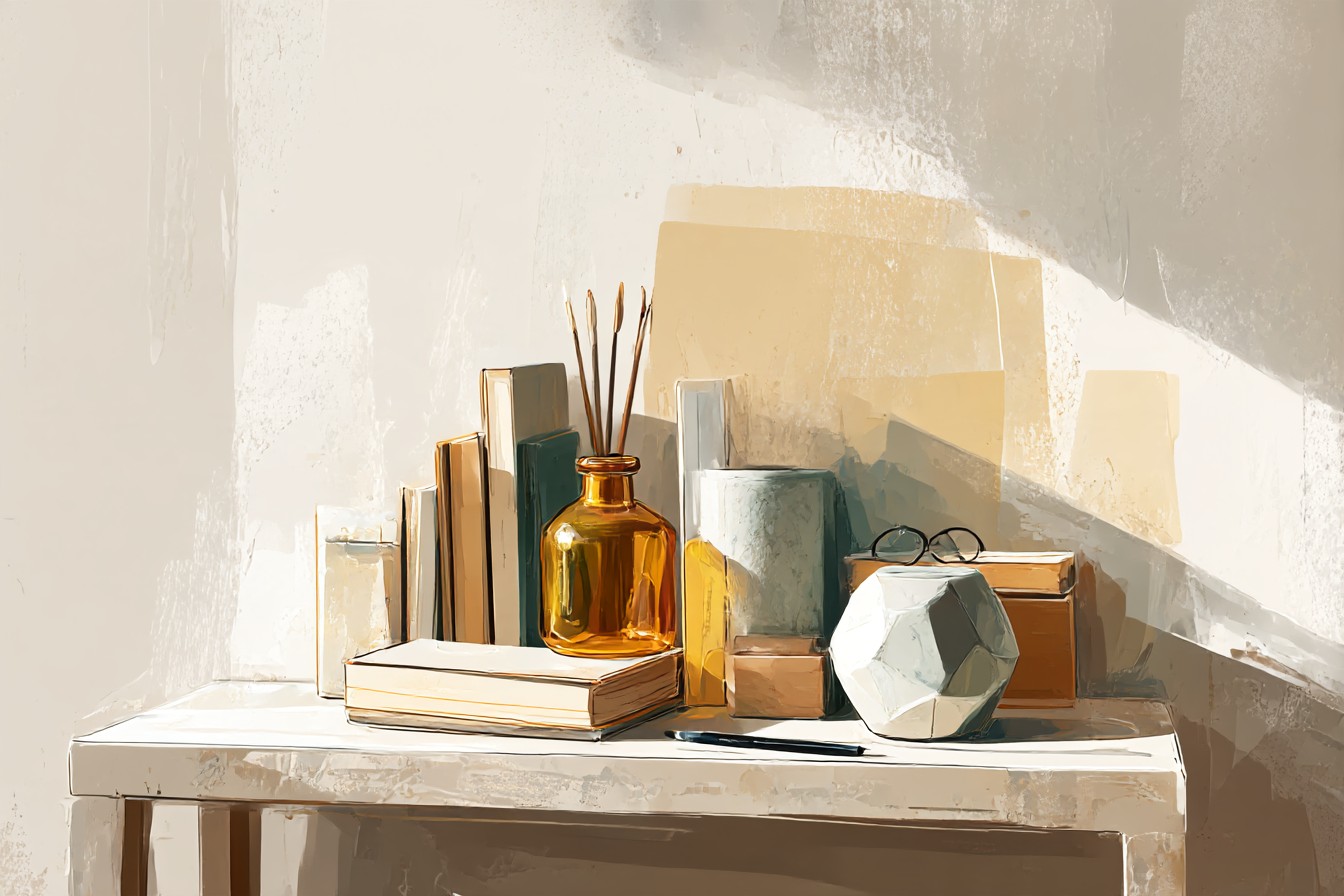
Everything else I’ve bought for that surface over the past two years has either broken this rule or made the table worse the moment I added it, and the eleven object version my sister walked in on is proof of exactly how that happens, one reasonable-seeming addition at a time until the whole thing stops reading as a table and starts reading as storage.
The math, if you want it in those terms, is simple: fewer objects means each one has to work harder, and objects that have to work harder get chosen more carefully. That’s not a decorating principle so much as it’s just how attention works. Eleven things get glanced at. Four things get looked at properly, sometimes even commented on by someone standing in your hallway with her coat still on. I’d rather have the version people actually notice, on purpose, than the version that just accumulates because nothing ever got removed. Pick the four things you’d defend out loud. Remove the rest. It’s a smaller table than you think it is.