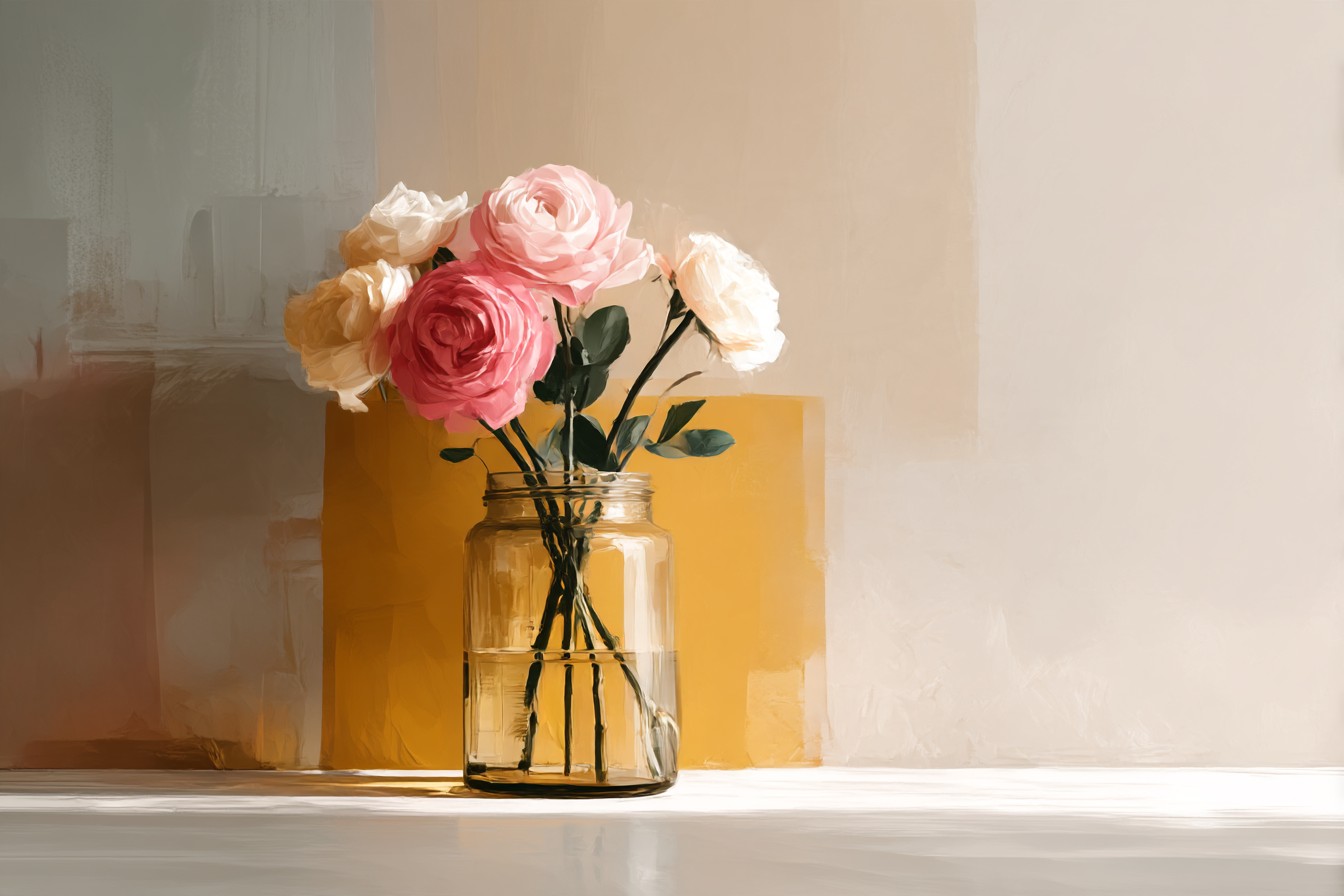
I was standing at the kitchen sink last Tuesday tipping a week’s worth of vase water down the drain, and it came out in that thick, slightly ropy way that tells you exactly what’s been growing in there. Grey. A bit slimy. The smell got there before the water did, somewhere between pond and old lettuce, and I stood there holding an empty vase thinking, not for the first time, that I have absolutely no idea what I’m doing with cut flowers, and I’ve been buying roses from the same corner shop for eleven years.
That’s the thing nobody tells you about roses specifically. Tulips forgive you. Carnations will outlive a nuclear event.
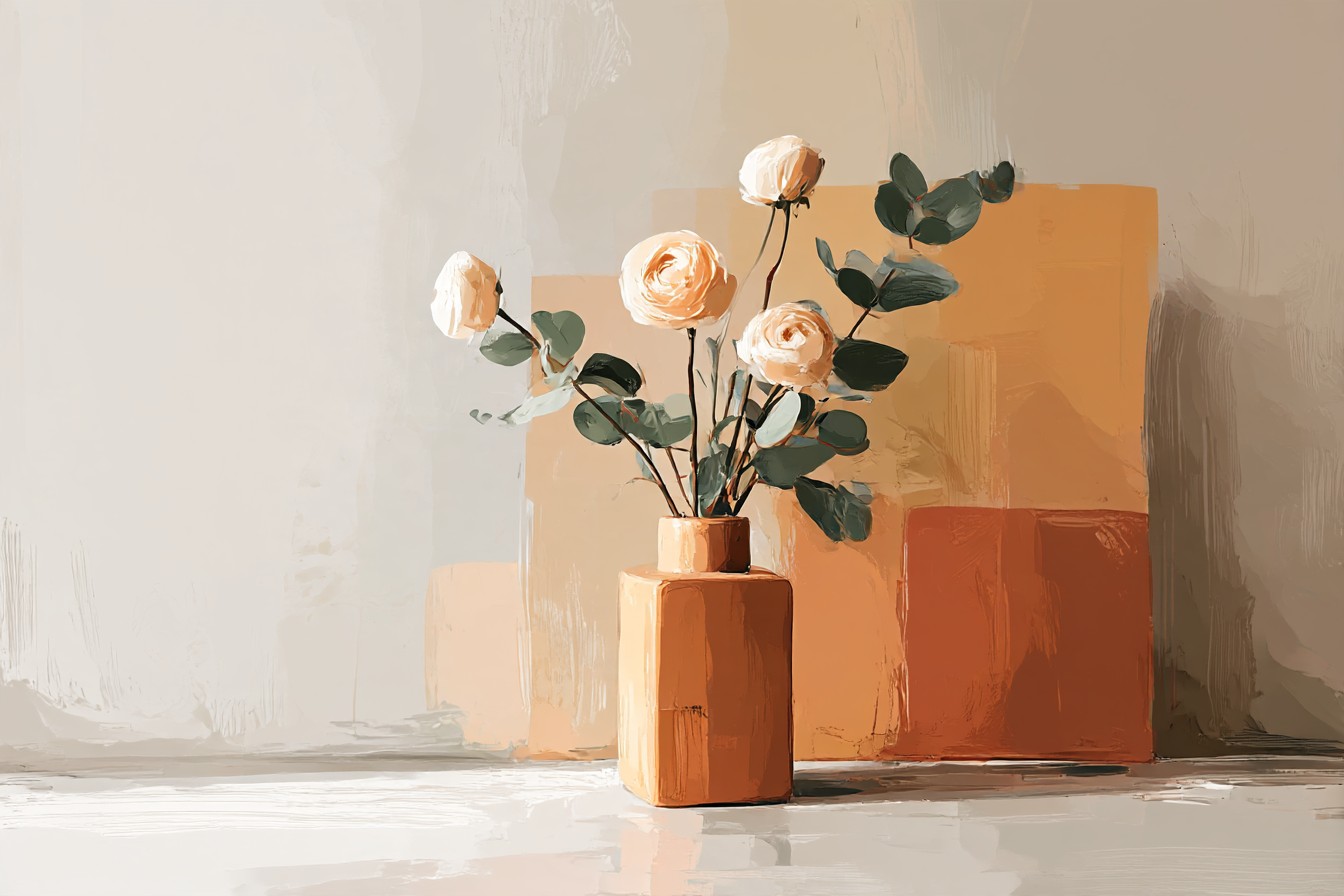
Roses are the ones that punish bad habits, and they punish them fast, sometimes within forty eight hours, which is roughly the amount of time it takes most people to notice the water’s gone off in the first place. I’ve had a dozen roses go from upright and hopeful to drooping at the neck like they’ve given up on the whole arrangement, and every single time it traced back to something I did, or more often didn’t do, with the water itself.
This house doesn’t help. It’s a hundred and thirty years old, drafty in ways I’ve made peace with for the sake of the sofa I love, and it turns out that a building with genuinely unpredictable temperature swings between rooms is not a neutral environment for cut flowers. I found this out the hard way with a bunch of pale pink roses I’d put on the hall table, which is directly above where the radiator pipe runs, and which I discovered only later runs warm enough to keep that whole corner about six degrees hotter than the rest of the downstairs. Those roses were dead in three days. Not wilted. Dead, heads down, petals dropping onto the table like they were making a point.
So this is roughly what I’ve worked out, through a fair amount of trial and error and one truly upsetting bunch of yellow roses I’d bought myself as a treat after a bad parent conference. It’s not glamorous. None of it involves anything you’d photograph. But it’s the difference between roses that make it a week and roses that make it three days, and honestly, at the price roses cost me in Providence, three days is not an acceptable return.
[Rose Water Vases]
What Actually Goes in the Water
Everyone has a theory here, and most of them came from someone’s grandmother rather than anyone who tested it against a control group. Pennies in the water. A splash of vodka. Crushed aspirin. I have tried all three, separately, over three different bunches of the same roses bought on the same day from the same shop, which is about as close to a proper experiment as my kitchen counter gets, and I can report that the penny did nothing measurable, the aspirin did nothing measurable, and the vodka bunch actually did slightly worse, which I choose to believe was a coincidence and not a comment on my methods.
What actually works is the packet that comes with the flowers, the little foil sachet everyone throws away without reading. It’s not filler. It’s citric acid to keep the water at the right pH, a tiny bit of sugar to feed the stems, and enough of a mild antibacterial agent to slow down exactly the swampy situation I was scrubbing out of my vase on Tuesday. If you’ve lost the packet, and you will lose the packet, a teaspoon of sugar and a few drops of white vinegar or lemon juice per liter does something close enough. Skip the bleach unless it’s a genuinely tiny amount, a few drops, because a generous glug will kill the bacteria and the rose in one move, which I did once, to a bunch of deep red roses I was rather attached to, and I’ve never made that exact mistake again.
[Rose Vase Water Additives]
The Cut Matters More Than the Vase
I used to think the vase did the heavy lifting. It doesn’t. A rose drinks through the stem, and if that stem end has sealed itself shut, which happens within about an hour of the flower leaving water, no vase on earth is going to fix that for you. I learned this properly, not from a gardening book but from watching one bunch wilt within a day despite sitting in perfectly clean, perfectly fed water, and realizing I’d never actually recut the stems before putting them in.
Now I trim every stem at an angle, under running water if I can manage it, right before it goes into the vase, and again every couple of days after that, taking off maybe half an inch each time. The angle matters because it stops the stem sitting flat against the bottom of the vase and sealing itself off from the water entirely, something I spent years not knowing. I also strip off any leaves that would sit below the waterline, which sounds fussy until you remember that submerged leaves are exactly what turned my sink water grey and swampy in the first place. It’s not decorative tidiness. It’s the difference between clean water on day four and the smell I was dealing with on Tuesday.
[Stem Cutting for Roses]
You Might Also Like

Glass, Ceramic, and the One Metal Vase I Regret
I own too many vases, in the specific way that anyone who buys flowers regularly ends up owning too many vases, currently somewhere around fourteen, which is not a number I’m proud of but is at least an honest one. Glass is what I reach for most, mostly because I can actually see when the water’s gone cloudy without having to remember to check, which given my track record with the swampy sink situation is not nothing. A clear vase turns “I should probably change that water” into something I can’t ignore, because it’s sitting right there on the counter looking wrong.
Ceramic looks better, I’ll admit that plainly, and I have a heavy cream jug I use for shorter stemmed roses that does the job beautifully, but I’ve definitely left water in it two days longer than I should have purely because I couldn’t see the problem building. The one metal vase I own, a narrow brass thing that was a gift, I’ve mostly stopped using for roses specifically, because metal can react with the acid in flower food and speed up the water going off, and I noticed my roses in it consistently looked tired a day or so before the exact same bunch in glass. Could be coincidence. I’ve stopped testing it, because the brass vase looks lovely and I didn’t want the data to ruin it for me.
[Glass Ceramic and Metal Rose Vases]
Neck Width Is Doing More Work Than You Think
This one took me embarrassingly long to work out. I’d bought a wide mouthed vase, the kind that looks proper and generous and holds a big loose armful of stems, and every bunch of roses I put in it flopped outward within a day, stems splayed against the rim like they were trying to escape. I assumed it was the roses. It was the vase.
A wide neck gives stems nothing to lean against, so the heavier rose heads pull the whole stem sideways, out of the water, sometimes clean over the lip and onto the counter. A narrower neck holds each stem upright and close enough together that they support each other, which sounds like a small thing until you watch a dozen roses stay properly vertical for a week instead of drooping outward by day two. For a big domed arrangement I’ll use the wide vase and just accept it looks a bit looser, more relaxed, whatever word you want to put on flowers that are basically lying down. But if I actually want roses standing up straight for more than forty eight hours, it’s the narrow necked vase every time, no exceptions, and I’ve stopped fighting that.
[Vase Necks and Rose Support]
Where the Vase Sits Matters as Much as What’s in It
Which brings me back to that hall table, the one directly above the radiator pipe, which I now think of as the exact spot where I learned that roses and old house heating systems do not get along. I’d assumed a hall table was neutral ground, away from direct sun, nowhere near a window. What I hadn’t accounted for was the floor heat coming up through those old pine boards, warming that whole corner in a way you can’t feel standing there but the roses absolutely could.
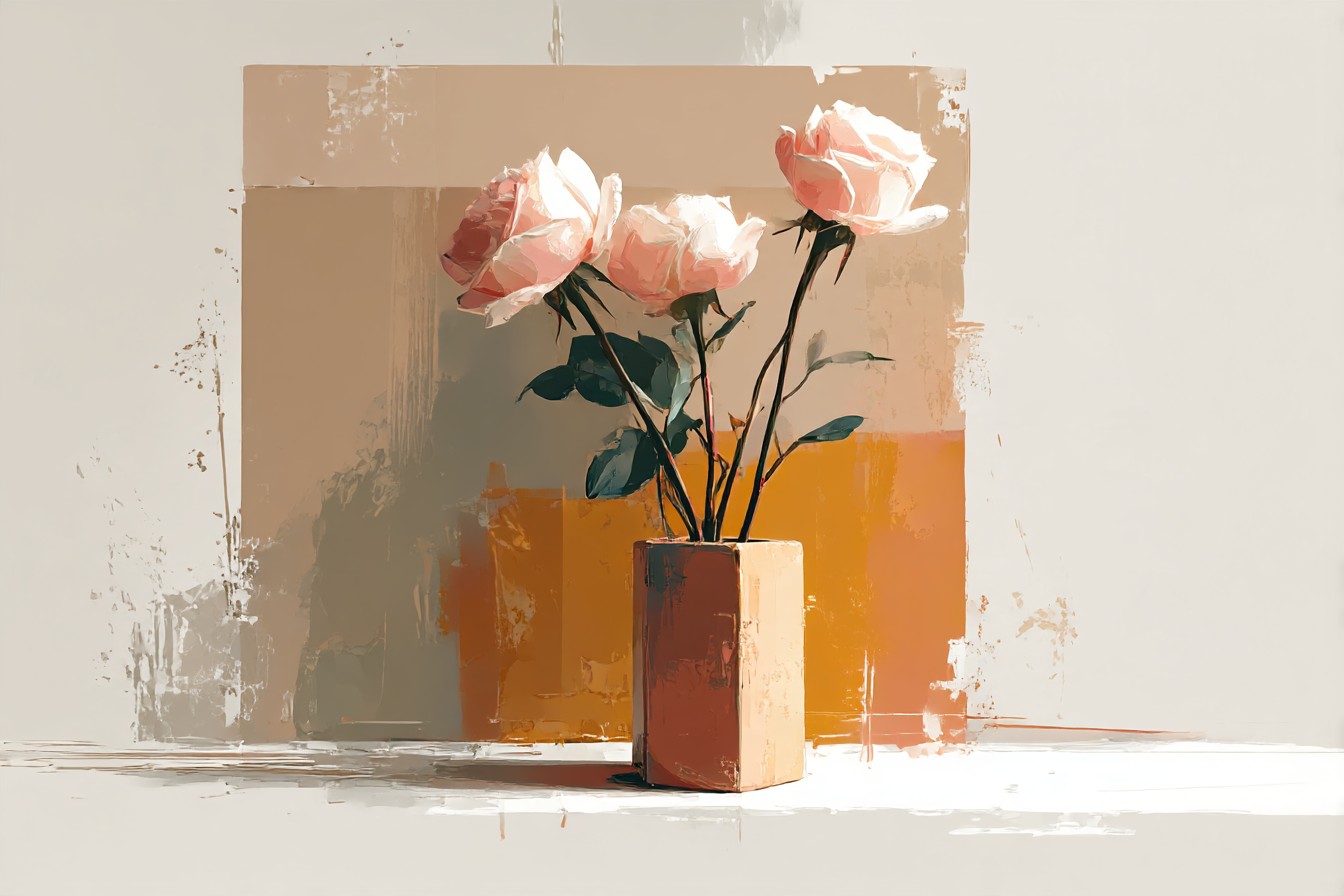
THREE DAYS. That’s how long it took to kill a bunch that should have lasted a week, and I only worked out why when I knelt down to pick up a dropped petal and felt how warm the floor was under my hand.
Since then I keep roses somewhere genuinely cool, away from radiators, away from the drafty window in the front room that I’ve complained about in every season of the year, and definitely away from anywhere that gets direct afternoon sun, which in this house is really just the kitchen windowsill between about two and four in the afternoon. A cool spot with indirect light, out of a direct draft but not sitting in dead still warm air either, is doing more to keep a bouquet alive than any additive I’ve ever put in the water. I found that out properly, expensively, with a bunch of roses I genuinely liked.
[Vase Placement for Cut Roses]
Final Thoughts
None of this is complicated, which is honestly the most annoying part. It’s clean water, a fresh angled cut every couple of days, the right vase shape for what you’re actually trying to achieve, and putting the thing somewhere that isn’t secretly six degrees warmer than you think it is. I spent years assuming a wilted rose was just what roses did, an inevitable countdown from the moment you bought them, and it took an unreasonable number of ruined bunches to work out that most of the damage was happening in the water, not the flower.
I still buy too many vases. I still occasionally forget to check the water until it’s gone that particular shade of grey. But I haven’t lost a bunch to the radiator table since, and my roses now reliably make it a week, sometimes longer, which in this house, with these floors, feels like a genuine achievement rather than luck.