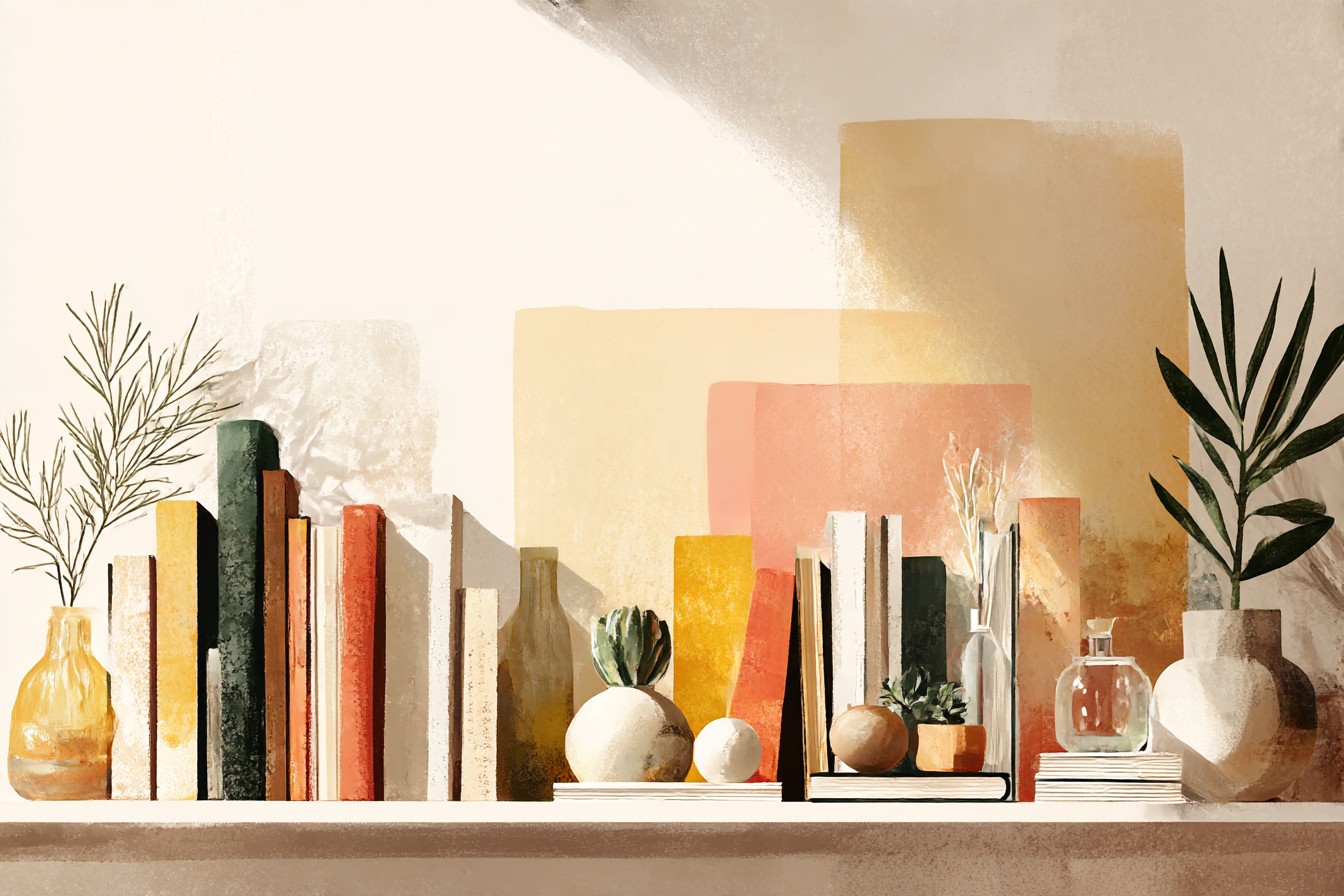
I bought my first bookcase off a listing that used the word “investment” unironically, which should have been my first warning, and then spent an entire Saturday alphabetizing by author surname like I was curating a small municipal library instead of furnishing a one bedroom condo in South End. It looked, and I say this with the benefit of hindsight and several unflattering video calls, like a waiting room. A very organized, very beige waiting room where you’d expect someone to call your name for a root canal. I had built a case for that bookcase the way I build a case for everything, cost per square foot of visible storage, flexibility across a starter place and hopefully a house after that, shelving that would “grow with me,” whatever that means for a piece of furniture. On paper it was sound. In practice it was 42 books arranged by last name and absolutely nothing else, and it read on camera like I’d moved in that morning and given up unpacking everything except the paperbacks.
It took a colleague, the woman two desks over who redid her whole living room during lockdown and has never once let me forget it, glancing at my screen during a call and asking, entirely without malice, “did you just move in?” for me to actually look at the thing properly.
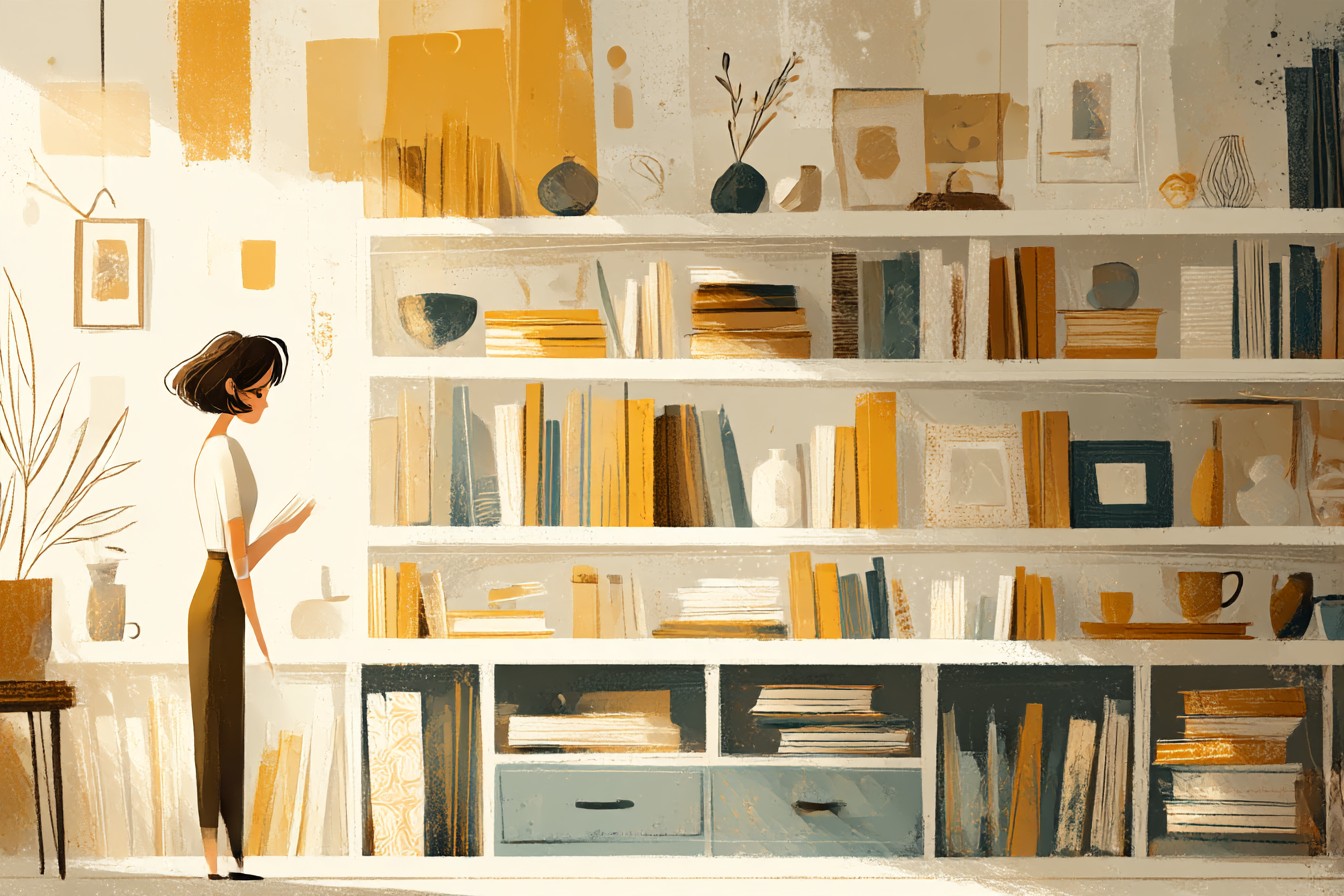
Six months in, not delivery day, six months, and it still looked like a display, not a shelf someone actually lived near. That’s the moment the spreadsheet brain kicked back in, except this time the answer wasn’t buy more books. The answer was that a bookcase full of only books is, structurally, a filing system, and nobody wants to look at a filing system for four hours a day on a laptop camera. What actually makes a bookcase work, what makes it look inhabited instead of installed, is everything that isn’t a book. The ceramic thing with no clear function. The empty patch of shelf you didn’t fill because you ran out of stuff, or because you finally understood that the gap was doing something. I got there eventually, at some real financial and emotional cost, and what follows is what I’d tell that Saturday version of myself if I could, which is mostly that alphabetizing was never the problem, having nothing else to say was.
[Bookcase Ideas Beyond Books]
Objects With No Job Description
The first shelf I actually got right had nothing useful on it at all, which felt, for a woman who once built a full cost benefit case for a lamp, uncomfortably close to admitting defeat. A ceramic bowl I bought at a market in Savannah that holds precisely nothing, because I never put anything in it, sits next to a small brass object I genuinely cannot identify, might be a paperweight, might be part of something else entirely, and I’ve had it two years without once needing to know. That’s the part I had to unlearn. Everything on that first bookcase justified itself. Everything had a function, a spine, a reason for being there that I could explain to a stranger in one sentence. Objects that just sit there, taking up space, being a shape and a color and nothing else, felt indulgent in a way I wasn’t built for.
What changed my mind, embarrassingly, was watching the recording of a call where the shelf behind me had exactly one object on it, a small stone bookend shaped like a fox that does no bookending whatsoever, and it was the only thing in the whole frame anyone commented on afterward. Not the sofa. Not the rug I’d agonized over for three weeks. The fox. A single object with a bit of personality does more work on a shelf than four more books ever will, because it breaks the rhythm, it gives your eye somewhere to land that isn’t a spine. I now keep a small rotating group, a chunk of rose quartz someone gave me as a joke gift that I’ve decided to take completely seriously, a wooden bowl, a candle I’ve never lit because it’s too pretty to burn down, which is a genuinely stupid reason to own a candle and I’m aware of that. None of it earns its keep in any measurable sense. That’s precisely the point I spent a year not understanding.
[Objects]
Baskets, Boxes, and the Art of Hiding Your Actual Life
The Shelf You Leave AloneThis is the section I resisted longest, because empty space on a shelf reads, to a certain kind of brain, as an opportunity missed rather than a decision made. I filled every inch of that first bookcase because empty felt like failing to finish the job, like leaving a slide blank in a deck. It took an actual professional, not a designer, just a friend who’d done her own place properly and has strong unsolicited opinions about mine, pointing out that the busiest looking shelf in my whole apartment was also the one nobody’s eye ever rested on for more than a second, for me to understand that a shelf packed edge to edge doesn’t read as abundant. It reads as noise.
So now one full shelf, sometimes two depending on how disciplined I’m feeling that month, has almost nothing on it. A short stack of three books lying flat, one object on top, and then just shelf, bare wood or bare paint, doing nothing except existing as a pause. It felt genuinely wasteful the first time I did it, like paying for square footage and then declining to use it, which is a very specific kind of anxiety for someone who thinks about her home the way I think about a portfolio. But breathing room on a shelf works exactly the way it works in a sentence or a slide, it makes whatever’s next to it easier to actually see. The single ceramic piece on an otherwise empty shelf gets noticed precisely because nothing’s competing with it. I had to actively stop myself twice while writing this section from adding “just one more thing” to that shelf, which tells you how deep the instinct runs, and how worth fighting it actually is.
[Breathing Room]
You Might Also Like

Light That Isn’t the Overhead
I resisted a lamp on a bookcase for a long time on the grounds that a bookcase is not a side table and shouldn’t be asked to do a side table’s job, which is the kind of rigid category thinking that has cost me more than one good decision over the years. A small lamp on the middle shelf, the kind with a narrow base that doesn’t eat much real estate, changes the entire personality of the unit after dark in a way overhead lighting just can’t manage, because overhead light flattens everything underneath it into the same flat brightness, while a single warm lamp source throws actual shadow across the objects near it, gives the ceramic bowl a highlight on one side, makes the whole shelf look considered instead of just illuminated.
The real conversion moment for me was a work call that ran late, past seven, when the overhead light in my apartment does something genuinely unflattering to everything in the room, my skin included, and the only light on in frame was that small bookcase lamp. Someone actually asked what lighting setup I was using, which has never once happened to me on a call before or since, and the honest answer was a fourteen dollar lamp I bought without much thought because the shelf looked dark. I’ve since added a second one on the opposite end for balance, which I told myself was a design decision and was actually just me liking the effect of the first one enough to want it twice. Fine. I’ll say it plainly, once, because Aisha doesn’t swear twice a page and this isn’t worth the word anyway: it just works, and I spent way too long assuming a lamp on a bookshelf was a strange idea instead of an obvious one.
[Lighting]
Frames That Lean Instead of Hang
Every piece of art in my apartment used to be hung, properly, with a level and picture hooks and a genuine argument with myself about placement, because hanging felt permanent and permanent felt like the correct, adult way to display anything you cared about. Leaning a frame against the back of a bookshelf instead of hanging it on the wall felt, when I first saw it done somewhere, almost too casual, like admitting you couldn’t commit to a wall.
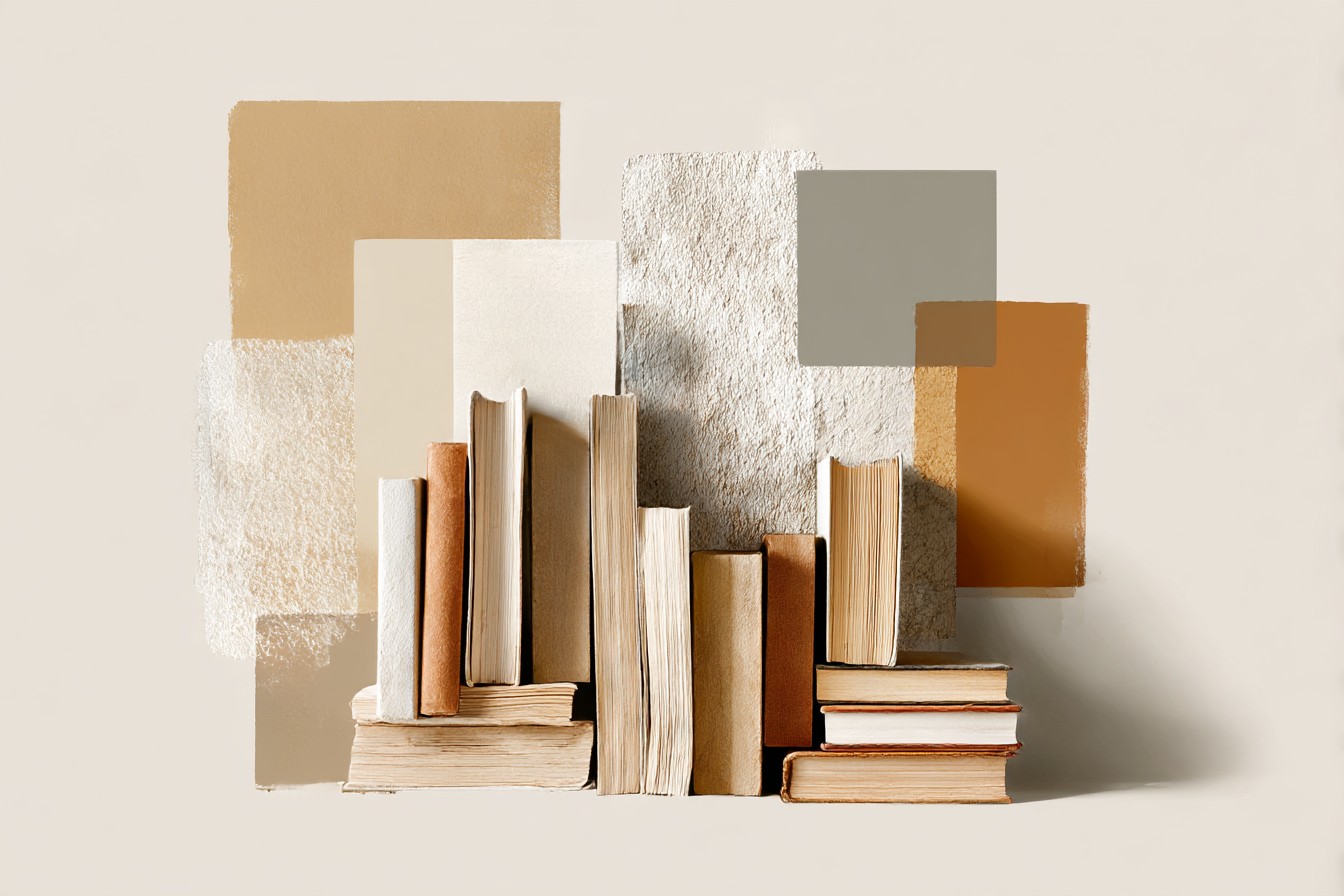
I tried it anyway on a slow Sunday with a small print I’d had rolled in a tube for over a year because I could never settle on where it should live, and it solved a problem hanging never could, which is that leaning lets you actually change your mind.
A frame propped against the back panel, partly hidden by a stack of books in front of it, does something layered that a fully visible hung piece can’t, it adds depth to a shelf that’s otherwise just a flat row of objects side by side. I rotate two small prints and a postcard I’ve had framed since a trip I won’t bore anyone with the details of, depending on my mood or, more honestly, depending on what’s visible behind me on calls that week. That’s the bit nobody warns you about with a home office situation, how much you end up styling a shelf around a rectangle of camera frame rather than around how the room actually feels to stand in. It’s a slightly absurd way to make a decorating choice, styling for a webcam rather than for yourself, and I know it, and I do it anyway, because the alternative is watching a recording back and not liking what’s sitting over my shoulder for forty five minutes.
[Framed Art]
Final Thoughts
If you’d told me two years ago that the most useful thing I’d learn about furnishing an apartment would come from a bookcase, of all things, the least glamorous piece of furniture I own, I’d have assumed you meant the books. The actual lesson was almost the opposite, that the books were doing the least interesting work on the whole shelf, and everything I added around them, the objects with no real function, the baskets quietly hiding my actual mess, the deliberately empty patches I had to fight my own instincts to leave alone, the lamp I resisted for no good reason, the frame I finally let lean instead of hang, all of it did more to make the room feel like somewhere a person actually lives.
I still think about this stuff the way I think about most decisions, weighing cost against use, asking whether something earns its place. But a shelf isn’t a spreadsheet, and the things that made mine actually work were mostly the ones I couldn’t fully justify on paper. That’s a strange thing for me to admit in writing, and I’m doing it anyway. If your bookcase currently looks like my first one did, alphabetized, complete, and somehow still empty feeling, start with one object that does nothing, leave one shelf half bare, and see how much easier everything else on it becomes to actually look at.