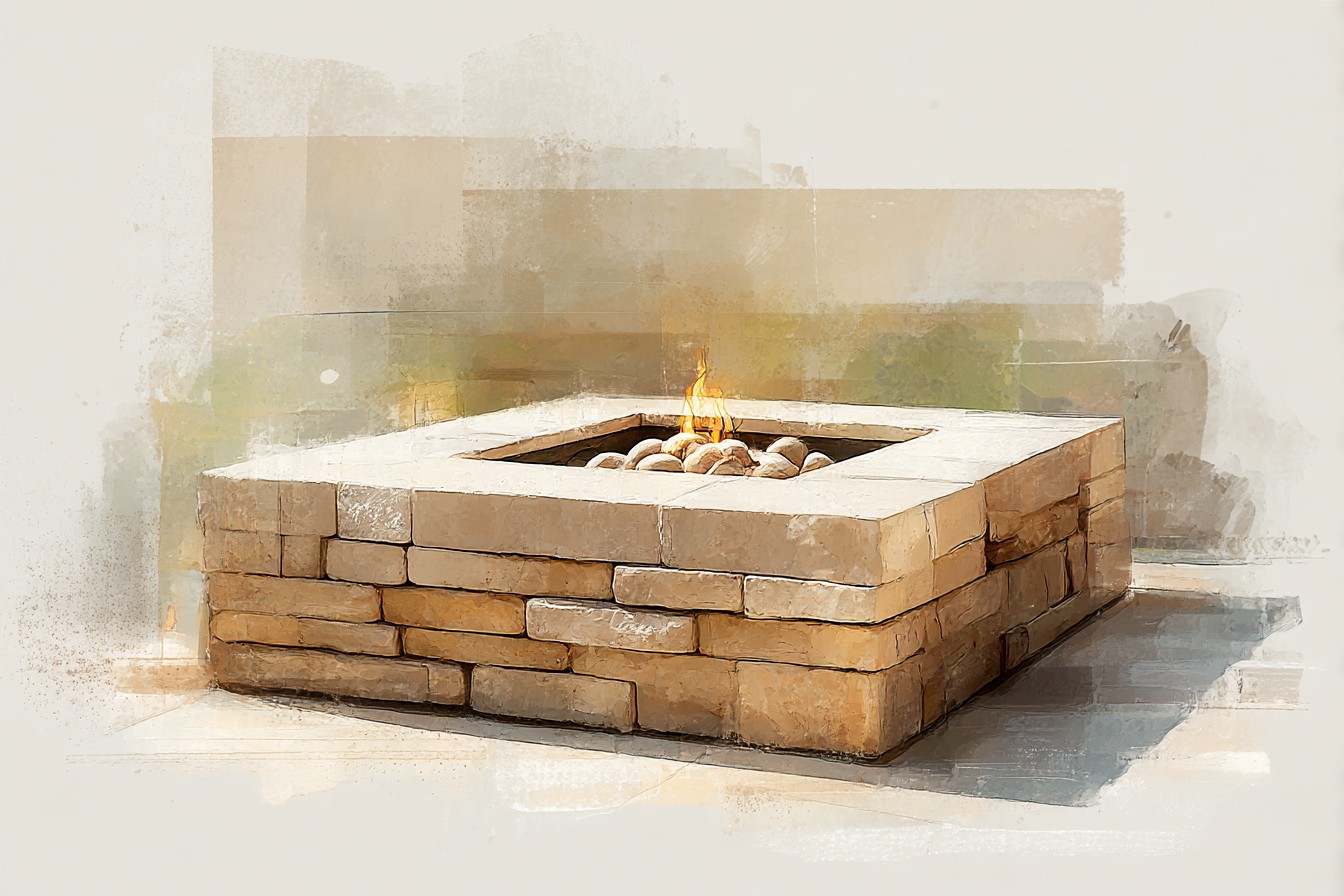
I built my first fire pit out of raw sandstone slabs I bought from a landscape yard on the east side of Indianapolis, and I want to be upfront that I did almost everything wrong, because it’s the fastest way into why this stone behaves the way it does. I’d seen photos online of these gorgeous rustic pits, warm tan and rust colored stone stacked up in a ring, looking like something out of the desert, and I thought, that’s it, that’s my weekend project. I hauled about 240 pounds of chopped sandstone home in the back of my car, stacked it dry in a circle with zero base prep beyond flattening the grass a bit, and lit a fire that first evening feeling pretty proud of myself.
About forty minutes in, right when the fire had really gotten going, I heard a crack like a small firework going off, and a chunk of stone the size of a deck of cards popped clean off one of the pieces closest to the flame. Then another. Then a third piece, further round the ring, just sort of exploded quietly and sprayed grit a few feet. I actually jumped up off my chair, which, in front of nobody, was still embarrassing.
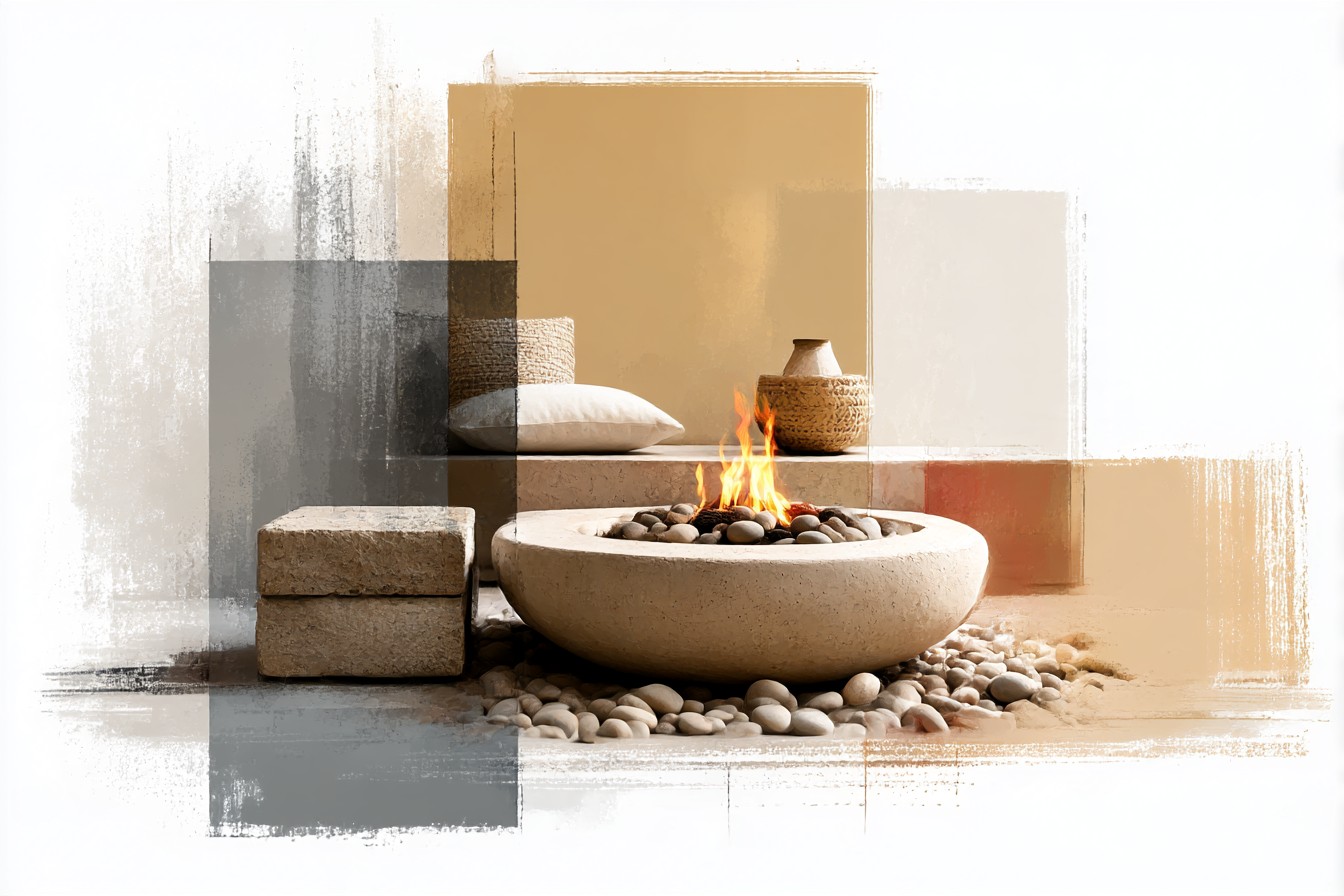
One little shard landed close enough to my shin that I felt the heat off it even though it didn’t actually touch me. I sat there for a second thinking I’d bought bad stone, some kind of dud batch, and it took me way longer than I’d like to admit to actually understand what had happened. It wasn’t a bad batch. It’s just what sandstone does when you put it somewhere direct heat cycles fast, and once you understand why, the whole “can you use sandstone for a fire pit” question stops being a yes or no thing and turns into a where thing.
I’ve since built two more fire pits, read more about sedimentary rock than I ever expected to in my life, and come around to a much more specific opinion. Sandstone earns a real place around a fire pit. It just isn’t the part that should be touching the flame, and once you know how the stone is actually put together, that stops feeling like a compromise and starts feeling obvious.
[Sandstone Fire Pits]
How Sandstone Actually Forms, and Why That Matters Once It’s Hot
Here’s the part I skipped entirely before my little firework display, and it’s the part that explains everything else in this piece. Sandstone forms in layers, literally, over unbelievable stretches of time, as sand grains settle in beds, get pressed down by whatever settles on top of them, and slowly cement together with minerals like silica or calcite acting as the glue. That’s why when you look at a slab of sandstone, you can often see faint horizontal lines running through it, sometimes barely visible, sometimes obvious as stripes. Those lines are bedding planes, and they’re basically the seams between one layer of ancient sand and the next.
The problem is those seams are the weakest part of the stone. Sandstone also holds moisture inside those layers, more than you’d think looking at a dry piece sitting in a yard in August. When you put direct flame against it, the surface heats up fast while the inside stays cooler, and any water trapped between those layers turns to steam and looks for a way out. It usually finds it along the bedding plane, which is exactly where my three chunks let go. That’s called spalling, and it’s not really a flaw in a specific piece, it’s just physics doing what physics does to a layered, water holding rock when you heat one side of it aggressively and then let it cool back down for the night, over and over, fire after fire.
[Sandstone Layers and Formation]
Why I’d Never Build the Actual Fire Ring Out of It Again
I want to be really specific here because I think this is where most of the confusion lives. There’s a difference between sandstone existing somewhere near your fire pit and sandstone being the material that holds the fire itself. The ring, the inner wall, whatever’s taking direct flame contact and holding coals against it, that’s genuinely a bad job for this stone. Even the denser sandstones, the kind that feel almost like they’d survive anything when you’re hauling them, still have those internal layers working against them once the heat gets serious.
After my first attempt, I actually tried a second, slightly smarter version where I moved the sandstone back about eight inches from the true fire ring, thinking distance alone would fix it. It helped, a little. But over about six uses that winter I still watched hairline cracks creep across the face of two pieces, and by spring one had split clean into two chunks I could pick up separately. Nothing dramatic that time, no popping, just a slow quiet failure that told me the same story again. The stone wasn’t built to be a fire bowl. It was built to be a lot of things, just not that one.
[Sandstone Fire Rings]
Where Sandstone Actually Earns Its Spot Around the Pit
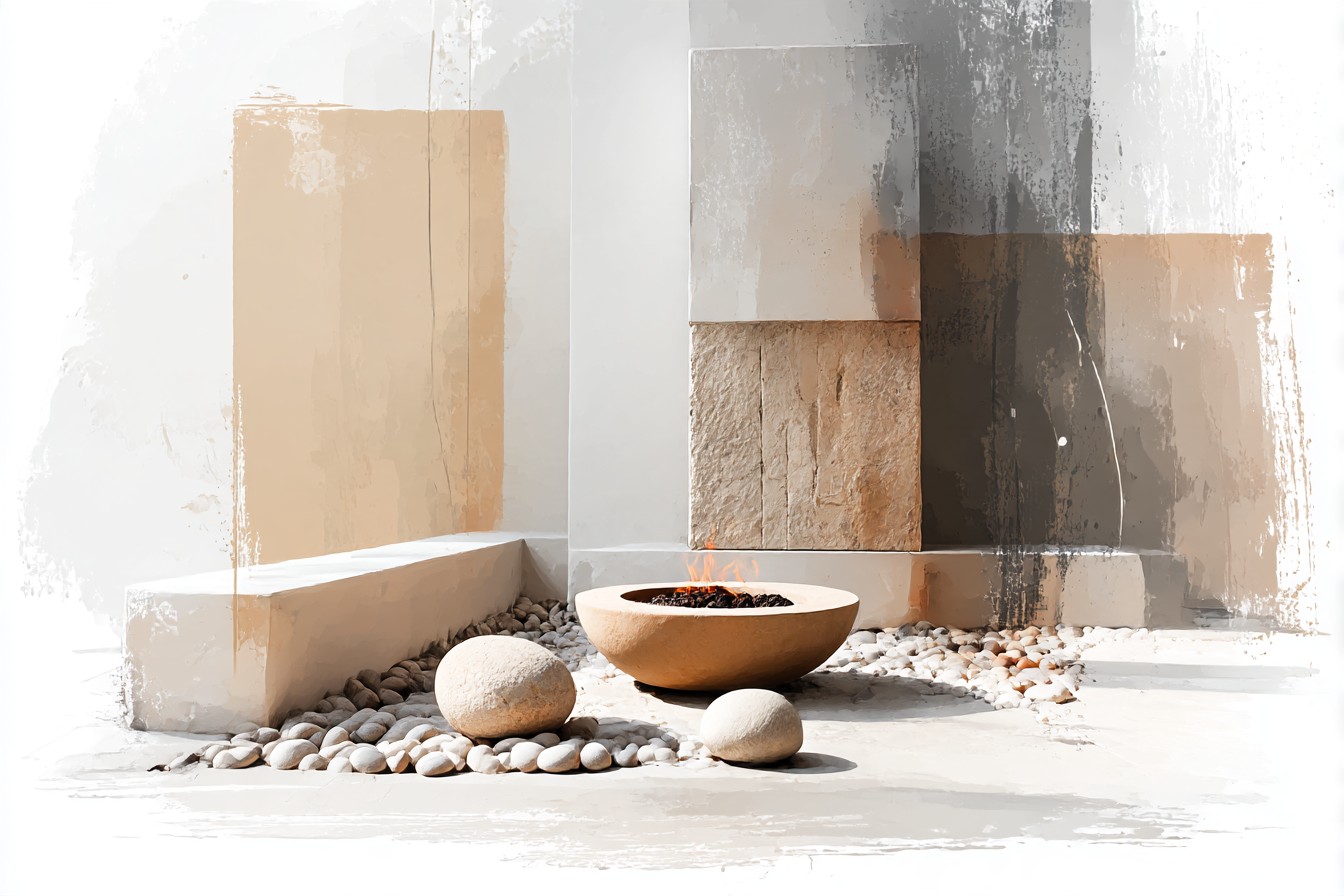
This is the section where I stop sounding like I’m talking you out of sandstone entirely, because I’m not. My current setup uses sandstone as the seat wall ring a good two feet back from the actual fire, and honestly it’s the best looking part of the whole thing. The color variation you get, that warm buff running into deeper rust and even a bit of grey depending on the batch, does something a plain concrete block wall just can’t. Sitting on it in the evening, it holds a bit of gentle warmth from radiant heat without ever getting hot enough to stress the layers, and I’ve had zero cracking on that ring in going on two years now.
You Might Also Like

I’ve also used sandstone flags as the surrounding patio surface, the actual ground you walk on to reach the pit, and that’s held up completely fine through two brutal Indiana winters, including one stretch where it sat under snow for what felt like three straight weeks. Ambient outdoor temperature swings are nothing like direct flame contact. It’s not remotely the same stress, which is honestly the whole point I wish someone had explained to me before my first attempt.
[Sandstone Surrounds and Seat Walls]
What’s Actually Supposed to Take the Heat
Once I accepted sandstone wasn’t going anywhere near direct fire again, I had to figure out what actually should be. The answer, in every fire pit I’ve built or fixed since, is a steel fire ring insert or a proper fire brick lining, sometimes both together, the brick facing in and the steel doing structural work underneath. Fire brick is made to handle thermal shock precisely because it’s fired at extreme temperatures during manufacturing already, so it’s not fighting trapped moisture or weak bedding planes the way sedimentary stone is. A decent steel liner, the kind sold specifically for fire pit builds, runs maybe sixty to a hundred dollars depending on diameter, and it completely removes the guessing game.
I’ll be honest, adding the steel liner felt like admitting my original aesthetic vision had failed a bit. It hadn’t, not really, it just moved. The pretty stone is still there, doing the job it’s actually good at, and the liner sits inside doing the job that requires something else entirely. My pit now runs a fire almost every week through fall, and in eighteen months the liner shows scorching and a bit of warping at the top edge, which is exactly what it’s meant to absorb instead of my seat wall.
[Fire Pit Liners and Inserts]
Sealing, Sun, and the Freeze Thaw Problem Nobody Mentions
Even kept away from direct flame, sandstone around a fire pit still needs a bit of upkeep if you want it to look good past year one. Because it’s porous, it soaks up rain and irrigation water more than something like granite ever would, and if that water sits in the stone through a hard freeze, it expands and can crack the surface in a completely separate way from the heat spalling I dealt with earlier.
I sealed my seat wall pieces with a basic penetrating sealer the spring after I installed them, reapplied once more the following year, and haven’t had a single freeze crack since, which given how our winters have gone, feels like a genuinely fair trade for an afternoon of work.
The sun angle matters too, more than I expected. The side of my patio that gets full afternoon sun has faded slightly lighter over two summers compared to the shadier side, which isn’t a flaw exactly, just something worth knowing before you fall in love with a specific color at the yard, because it may not stay exactly that color forever.
[Sealing and Maintenance]
Final Thoughts
So can you use sandstone for a fire pit. Yes, and also, please don’t put it where the fire actually lives. That’s the whole conclusion, and it took me one ruined evening, a scorched shin close call, and a second slightly wiser rebuild to actually land on it properly. The layered way this stone forms is exactly what makes it beautiful, that banding and color shift you don’t get from cut concrete, and it’s also exactly why it can’t handle direct, repeated flame contact without eventually letting go along those same lines.
Give it the jobs it’s actually suited for. The seat wall, the surround, the capstones, the patio underfoot, all places where sandstone will sit there looking better every season while doing basically nothing structurally dramatic. Let steel and fire brick handle the part that actually gets hot. My current setup has run for two winters without a single crack in the wrong place, and every time I catch that warm color in firelight I think about those first three chunks popping off into the grass and feel a little grateful I didn’t just give up on the stone entirely out of embarrassment.