
Lava rock has a reputation problem, and it is entirely the fault of every 1970s gas grill photograph ever taken. Say the words “lava rock” to most people and they picture a sad little tray of gray pebbles sitting under a rusting grate at a Motel 6, or possibly a fish tank. It reads as dated at best, a fire hazard at worst, something your uncle insists on because it’s what he’s always used and nobody’s corrected him yet. I held this exact opinion for years. I taught seventh grade earth science for a while, which meant I technically knew what lava rock actually was, igneous, full of trapped air pockets, genuinely useful for a specific set of physical reasons, and I still dismissed it as the fire pit equivalent of wood paneling.
What changed my mind was my friend Marnie, who has a propane fire pit table on her deck in Cranston and who corrected me with the patience of someone who has had this argument before. I’d made some comment about how her fire pit looked like it belonged outside a diner, all gray rock instead of the nice glass everyone was using, and she just said, “Helen, the rock is doing something.

The glass is doing an outfit.” Which is, annoyingly, correct. Lava rock in a gas fire pit isn’t there for the aesthetic, not primarily. It’s there because it’s porous, it holds and radiates heat, and it hides the burner and the ugly steel ring underneath without blocking the flame or trapping moisture in a way that could crack the burner over winter. It’s function first, in a way that appeals to me a great deal more than I expected it to.
But here’s the thing that the search itself tells you, if you think about it for a second. Nobody asks “can you use lava rock in a fire pit” out of pure curiosity. They’ve usually got a wood burning pit in front of them, a bag of lava rock from the hardware store in the other hand, and a half formed plan already. And that’s exactly where this gets complicated, because the honest answer depends entirely on which kind of fire pit you’re standing in front of, and that distinction matters more than any influencer video showing rocks glowing prettily under a gas flame is going to tell you.
[Lava Rock in a Fire Pit]
Gas Fire Pits, Where Lava Rock Actually Belongs
If you’ve got a gas fire pit, propane or natural line doesn’t much matter, lava rock is doing real, measurable work, not decoration. The burner itself is a ring or a pan full of holes, not something you want staring back at you while you’re trying to have a nice evening, and the rock’s job is to sit over it, disguise it, and let the flame come up through the gaps. But the reason it’s specifically lava rock and not, say, gravel from the driveway, comes down to what it’s made of. Lava rock is full of tiny air pockets from cooling rapidly after volcanic eruption, and that structure means it heats up, holds heat, and radiates it back out slowly, instead of just sitting there being hot and useless like a regular stone would.
I tested this properly, because of course I did, over one specific weekend at Marnie’s when the temperature dropped into the 40s in October and her fire pit table was the only thing standing between us and going inside. The rock held visible heat for a good twenty minutes after she turned the gas off, still faintly warm to a hovering palm, radiating outward the way a woodstove does after the fire’s died down. Regular gravel wouldn’t do that. It also wouldn’t survive the direct, repeated heat cycling of a gas flame the way lava rock does, because dense non porous stone can actually crack or, worse, explode slightly under thermal shock, trapped moisture expanding with nowhere to go. Lava rock’s whole porous structure is precisely what prevents that. This is the one case where the material and the appliance were basically designed for each other, and it’s the only fire pit type I’d unreservedly recommend it for.
[Gas Fire Pits and Lava Rock]
Wood Burning Pits, Where the Whole Idea Falls Apart
This is the section where I have to be the annoying one, because this is the actual answer to what most people typing that search are hoping to hear, and it isn’t the answer they want. Wood burning fire pits do not need lava rock, and putting it in one is, at best, pointless, and at worst, a genuine hazard. There’s no hidden burner to disguise. There’s no consistent, controlled gas flame heating the rock evenly from below. What you’ve got instead is an open wood fire, with flames and embers and logs shifting around unpredictably, direct and inconsistent heat hitting rock from random angles at wildly different intensities depending on how the fire’s burning that minute.
That inconsistency is the actual problem. Lava rock handles steady, even heating from a gas burner beautifully. It handles the chaotic, uneven blast of a wood fire much less gracefully, and there have been enough documented cases of rocks cracking, popping, or in rarer instances fragmenting sharply enough to send hot debris outward, that most manufacturers and plenty of fire safety guidance explicitly advise against it. I found this out secondhand rather than the hard way, thankfully, from a neighbor two doors down who lined his wood pit with what he thought was decorative volcanic rock from a garden center, had a log shift and roll directly onto it mid burn, and ended up picking small fragments out of his patio for a week afterward. Nobody was hurt. It was still not a good Tuesday for him.
If you’ve got a wood fire pit and you want that layered, textured look at the base, lava rock genuinely is not the tool for it, no matter how many aesthetic photos suggest otherwise.
[Wood Burning Fire Pits]
What the Rock Is Actually Doing Down There
I think the confusion around lava rock comes from people assuming it’s purely cosmetic, something you scatter in for a finished look the way you’d add mulch to a flower bed. It isn’t. In a gas fire pit specifically, the rock is performing three separate jobs at once, and understanding them is what actually tells you whether you need it at all.
You Might Also Like

First, it disperses heat. Instead of one concentrated column of flame coming straight up out of a burner ring, the rock spreads the fire out across a wider surface, so you get a broader, more even glow rather than a single jet. Second, it protects the burner components underneath from direct exposure, weather, debris, the occasional dropped marshmallow skewer, extending the life of parts that are genuinely a pain to replace. Third, and this is the part that actually sold me, it retains heat after the flame’s turned down or off entirely, keeping the immediate area warmer for longer than the gas alone would manage. That’s the same porous, air pocket structure doing double duty, heating up gradually rather than all at once, and releasing that heat slowly back into the evening air.
None of this happens by magic or because the rock looks nice sitting there. It’s a genuinely functional layer, doing a specific mechanical job, in a system designed around it being there. Swap it for river rock or plain gravel and you lose most of that, plus you risk the cracking issue from trapped moisture I mentioned earlier, since not every stone has lava rock’s escape routes for expanding steam.
[What Lava Rock Actually Does]
Size, Grade, and the Bag I Bought Wrong
Here’s a mistake I made personally, entirely avoidable, and slightly embarrassing given that I supposedly know what porous rock is for. Lava rock isn’t sold as one uniform product. It comes in different sizes, generally something like half inch pieces up to two inch or larger chunks, and the size actually matters for how it performs, not just how it looks. I bought a bag of the smallest grade I could find for a gas fire pit insert I was helping Marnie set up, thinking smaller would mean a neater, more finished appearance, more coverage per bag, better value.
It was, instead, a minor disaster. Small grade lava rock sitting directly over a burner tends to fall into the ports and holes that the gas needs to escape through, partially blocking the flame pattern and making the whole thing burn unevenly, sputtering in some spots and barely lit in others. The correct approach, which I learned after Marnie’s fire pit spent one very unimpressive evening barely producing more than a candle’s worth of flame, is to use a coarser grade directly around and over the burner itself, something closer to an inch or more, and reserve the finer material, if you want it at all, for decorative infill around the edges where it isn’t sitting on top of anything gas needs to pass through. It’s a small detail, easy to overlook when you’re standing in the fire pit aisle trying to remember what the internet told you, but it’s the difference between a fire pit that performs the way it’s supposed to and one that just sort of smolders apologetically.
[Lava Rock Size and Grade]
Lava Rock Versus Fire Glass and the Other Options
Once you’ve accepted lava rock is a gas fire pit thing and not a wood fire pit thing, the next honest question is whether it’s actually the best gas fire pit thing, because it isn’t the only option, and the alternatives all do slightly different jobs. Fire glass, the tumbled, reflective glass pieces that have gotten enormously popular, does the same basic job of covering the burner, but it doesn’t retain heat the way lava rock does. It looks fantastic while the flame’s going, genuinely more striking, catching and throwing light in a way plain gray rock never will, but it cools down almost immediately once the gas is off, and it doesn’t have that same slow radiant warmth afterward. If ambiance is the entire point, fire glass wins easily. If you actually want lingering warmth after you’ve turned the flame down for the night, lava rock still has the edge.
There’s also lava rock’s slightly showier cousin, sold sometimes as lava glass or reflective lava rock, which is lava rock with a reflective coating baked on, trying to split the difference between the two.
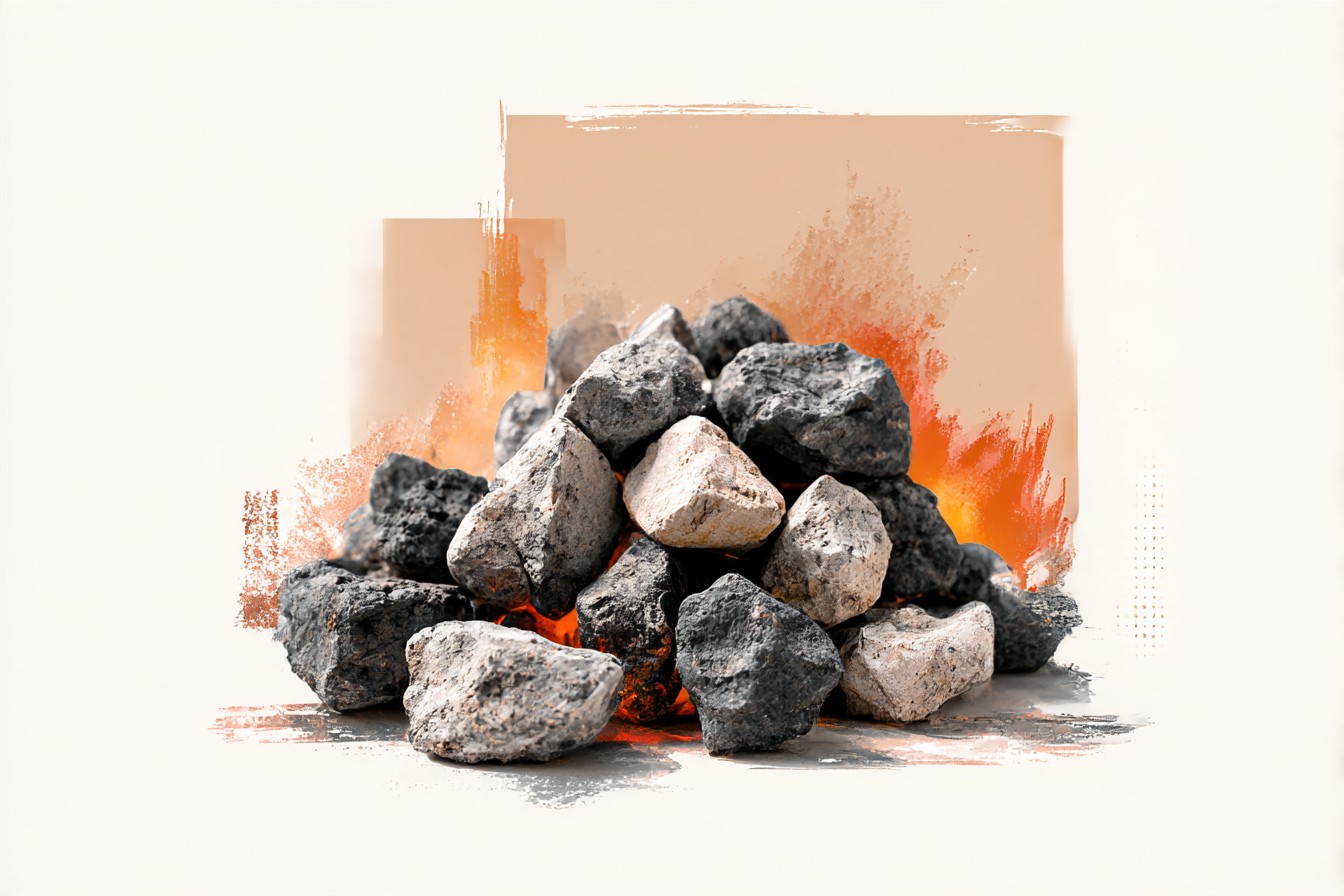
It looks better than plain gray rock under firelight, reasonably close to fire glass, while keeping most of the porous structure’s heat retention underneath. It costs more, predictably, and the coating can wear thin in patches over a couple of seasons of heavy use, something I’d have wanted to know before I paid extra for it.
None of these are wrong choices exactly. They’re just doing different things, and treating them as interchangeable is where a lot of the confusion in this whole category starts.
[Lava Rock versus Fire Glass and Other Fillers]
Final Thoughts
If you take one thing from all of this, it’s that the question was never really “can you,” it was “should you,” and the honest answer splits cleanly down the middle depending on what’s actually under the rock. Gas fire pit, yes, genuinely, it’s doing real work and it’ll outperform gravel or nothing at all every time. Wood burning pit, no, and not out of snobbery, out of the fairly unglamorous fact that inconsistent direct flame and stone don’t mix safely.
I still think about my old dismissal of lava rock as some dated relic from a bad grill photo, and honestly, I was just wrong, the way I’ve been wrong about a fair number of things marketed with more style than substance. This is the rarer case where the unglamorous, slightly boring gray rock is the one actually earning its place, quietly doing three jobs at once while the fire glass gets all the compliments. Get the right grade, put it where it belongs, and leave the wood pit alone. That’s genuinely the whole answer, no matter how long the internet insists on making it.


[…] held on with a hose clamp and good intentions. I checked one for a neighbor last summer, pulled the lava rock tray off, and found the gas line routed straight across a sharp edge of the burner pan with zero […]