I counted them last week, mostly out of curiosity and slightly out of dread, and it’s fourteen. Fourteen strands of outdoor string lights currently living in a tote in my basement, at least four of which are plugged in somewhere in my house right now doing absolutely nothing outdoor about their existence. That’s not a design choice I’m proud to announce, that’s an accumulation, the kind that happens when you buy one thing for one deck party in 2019 and then just never stop.
Here’s how it actually went. First strand was globe lights for my sister’s engagement thing, cafe style, the kind you see strung over restaurant patios, bought because they were on clearance at the end of September and I’m not made of money. Those looked so good over the deck that I bought a second set the following spring to double up the run. Then a friend was doing a backyard birthday and needed color, so I grabbed a multicolor party set for that, borrowed it, never gave it back properly, it’s been living in my garage since.

Somewhere in there I picked up a battery powered fairy light set for camping that turned out to be rated for outdoor use, brought it inside one winter to wrap around a shelf because it was cold and I wasn’t driving anywhere to buy indoor only lights, and that’s when the real slide started. Now I’ve got outdoor rated bulbs strung across my kitchen window, over a bookshelf, along the stair rail, and yes, I know how that sounds.
The thing is, once you start bringing outdoor string lights indoors, you start noticing how differently they’re built compared to the delicate little indoor fairy lights everyone else seems to be hanging. Thicker wire. Heavier sockets. Bulbs that actually look like bulbs instead of grain of rice specks. That’s the appeal, and it’s also exactly where the questions start, because a fixture built to survive rain and a Wisconsin winter isn’t automatically a fixture that’s a good idea plugged into a strip inside your living room. Some of it’s fine. Some of it needs a second look at the box before you commit. I’ve done both, gotten it wrong once in a way that made my breaker panel very unhappy, and I’ve got opinions now that go a bit further than “yeah just plug it in, it’ll be fine.”
[Outdoor String Lights Indoors]
The Cafe Look
This is the one everyone wants and honestly the one that translates indoors the best without a fight. Warm white globe bulbs, evenly spaced, strung tight enough that they read as a line of light rather than individual dots hanging in space. Mine went across the kitchen window first, then a second run above the sink, because once I saw how it looked with the sun down I got a little obsessive about it.
What I’ll say about the cafe look specifically is that spacing does most of the work. Outdoor sets built for patios are usually spaced further apart, twelve inches between bulbs is common, because they’re meant to be seen from across a yard, not from six feet away on a kitchen island. Bring that spacing indoors in a smaller room and it can look sparse instead of cozy, like someone started decorating and gave up halfway. I ended up doubling a run behind mine, two strands run parallel about four inches apart, just to get the density I actually wanted for a space that size. That’s not a hack anyone told me, that’s just standing in my kitchen at 9pm going “this isn’t it” three nights in a row until I fixed it.
The other thing about cafe style specifically is the sockets are usually screw base, and the bulbs are swappable, which matters more than people think. I’ve had two bulbs blow on the same strand over two winters and just twisted new ones in rather than replacing the whole set, which you cannot say for the cheaper fused strands where one bulb dying takes out the whole run with it. Check whether the bulbs are replaceable before you buy, it’s on the packaging, and it’s the difference between a five dollar fix and buying the whole set again in March.
[Cafe String Lights]
The Party Look
The multicolor stuff is a different animal and I think it gets unfairly lumped in with cafe lights when really it’s built for a completely different job. Party string lights are usually brighter, more saturated color, sometimes with novelty shapes thrown in, and they’re designed to be seen at a distance in a crowd, which is exactly why they can feel like a lot indoors if you’re not careful about where you put them.
I learned this the hard way with the borrowed set from my friend’s birthday. Strung it along a bookshelf in my living room thinking it’d feel festive, and instead it looked like I was perpetually mid party in a room where nobody was ever actually partying, which is a weirdly specific kind of wrong. Took it down within a week. Where it’s actually worked for me is temporary, an actual event indoors, a kid’s birthday moved inside because of rain, a holiday thing, somewhere it gets to do the job it’s built for instead of trying to pass as permanent ambient lighting.
If you’re set on bringing party style lights in for something more lasting, dim it down. Some sets have a dimmer inline on the cord, and if yours doesn’t, that’s worth checking before you buy if you know you want it as everyday lighting rather than event lighting, because full brightness multicolor in a living room at dinner time is a lot, in the same way a disco ball is a lot at brunch. It’s not that it’s built wrong, it’s built exactly right for what it’s for. What’s for is the question worth asking before it goes up.
[Party String Lights]
The Chunkier Bulbs
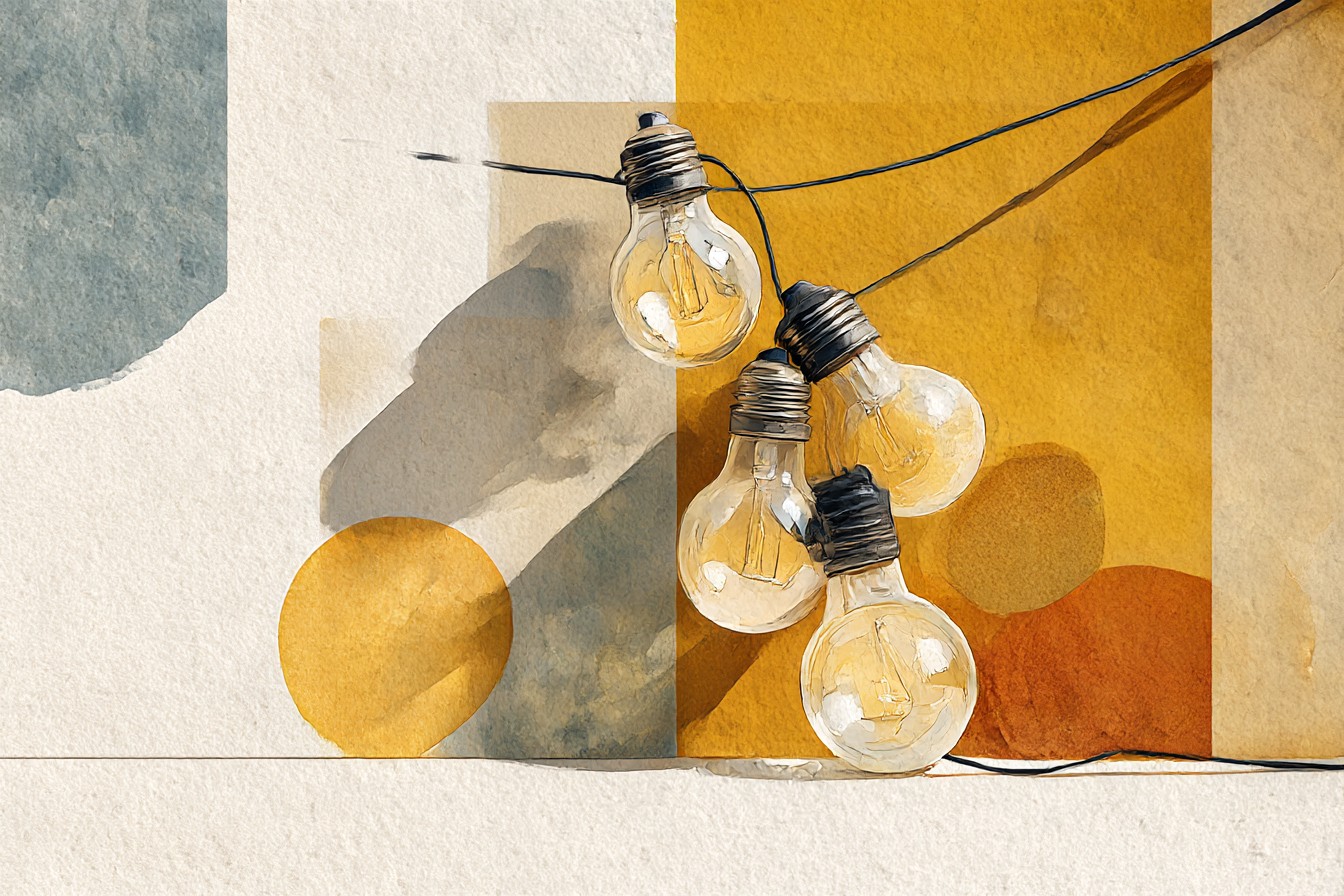
Now this is the part I actually get excited about, because chunkier bulbs, the G40 or G50 globe style, sometimes with the visible filament inside like an old Edison bulb, are where the build quality conversation gets interesting. Bigger bulb means more heat, more weight on the socket, and a completely different feel to the light itself, warmer, more amber, more like an actual bulb glowing rather than a point of light.
I took one of these strands apart once, just the socket end, because I wanted to see how the bulb was actually seated before I strung a run of them across a stairwell where a bulb coming loose and dropping would mean it’s dropping onto stairs. Found a proper threaded socket with a decent bit of plastic housing around it, not the flimsy pinch fit you get on the cheapest fairy light sets, which told me it was built to actually hold a heavier bulb rather than just technically accommodate one. That’s the kind of thing that matters more indoors than out, honestly, because outside a dropped bulb hits grass, inside it might hit your floor or worse, a kid’s foot.
The other thing with chunkier bulbs is they run hotter, plain fact, more glass and filament means more heat off each one. Fine outdoors where there’s airflow doing its job for free. Indoors, strung close to fabric, curtains, anything that catches, I’d actually give it a foot of clearance minimum and not treat that as optional. LED versions of these run much cooler than the incandescent originals and honestly if you’re bringing chunky bulb style lights inside permanently, LED is the smarter call, not because the incandescent look isn’t gorgeous, it absolutely is, but because heat management indoors is a different equation than heat management on a covered patio in July.
You Might Also Like

[Chunky Bulb String Lights]
What To Actually Check Before You Buy Or Install
Here’s where I get technical, because this is the bit that actually matters and it’s the bit nobody talks about when they’re just posting a nice photo of lights strung over a bed.
First thing, check the wattage per bulb and multiply it by the bulb count, then check that against what your circuit can actually handle if you’re running multiple strands off one outlet, especially if that outlet’s already carrying a lamp, a phone charger, whatever else lives on that wall. I plugged three strands into one power strip once without thinking about total draw and tripped a breaker mid dinner party, which is a genuinely embarrassing way to lose the lighting you just spent an hour hanging.
Second, look at whether it says indoor/outdoor rated or outdoor only, and don’t assume outdoor rated automatically means indoor safe, they’re not opposites but they’re also not the same claim. Outdoor rated tells you it can handle moisture and temperature swings. It doesn’t tell you anything about how it behaves against drywall, curtains, or a stack of books, which is genuinely a fixture concern, not a weather one.
Third, check whether it’s UL listed, that little mark on the box actually means something got tested rather than just assumed safe, and I don’t buy string lights without it anymore after seeing a cheap set with a socket that had visible daylight through a gap where the plastic housing didn’t quite meet. My dad, who’s been doing electrical adjacent work on job sites longer than I’ve been alive, taught me that gap test years ago, look for daylight where there shouldn’t be any, and it’s saved me from buying garbage more than once.
Fourth, plug type and cord length matter more indoors than you’d think, because outdoor sets are built assuming you’re stringing them a long way with fewer accessible outlets, so cords are often longer between the plug and the first bulb than you’d want inside a normal size room, leaving you with a long stretch of dead cord to hide or coil somewhere.
[What To Check Before Buying]
Mounting It Properly Indoors
This is the part that separates lights that look good from lights that are actually going to survive being lived with, and it’s the part I care about most because it’s construction, plain and simple, the same as anything else I hang on a wall.
Outdoor hardware is usually built around hooks screwed into fascia boards, pergola beams, actual structural wood that can take a bit of tension without complaint. Bring that same strand indoors and you’re often dealing with drywall, which is basically cardboard with delusions about what it can hold, and a strand of chunky glass bulbs has real weight to it, more than people register until they’re holding the whole run in one hand at the top of a ladder.
I’ve mounted strands using cup hooks into actual studs wherever I could find them, and where I couldn’t, small adhesive backed hooks rated for at least a pound or two more than what I’m actually hanging, because a hook rated exactly to the weight limit with zero margin is a hook I don’t trust, on principle. Command strips work fine for a lightweight fairy light set. They are not what I’d use for a run of G50 bulbs with any kind of sag or tension in the line, that’s asking drywall paint to do a job it was never built for, and it will let you know it disagrees, usually at 2am, usually loudly.
Tension matters too. A strand pulled tight corner to corner puts steady pull on both end points constantly. A strand with a bit of slack, draped rather than stretched, spreads that load differently and looks better doing it, cafe style especially wants that gentle sag rather than a tight diagonal line.
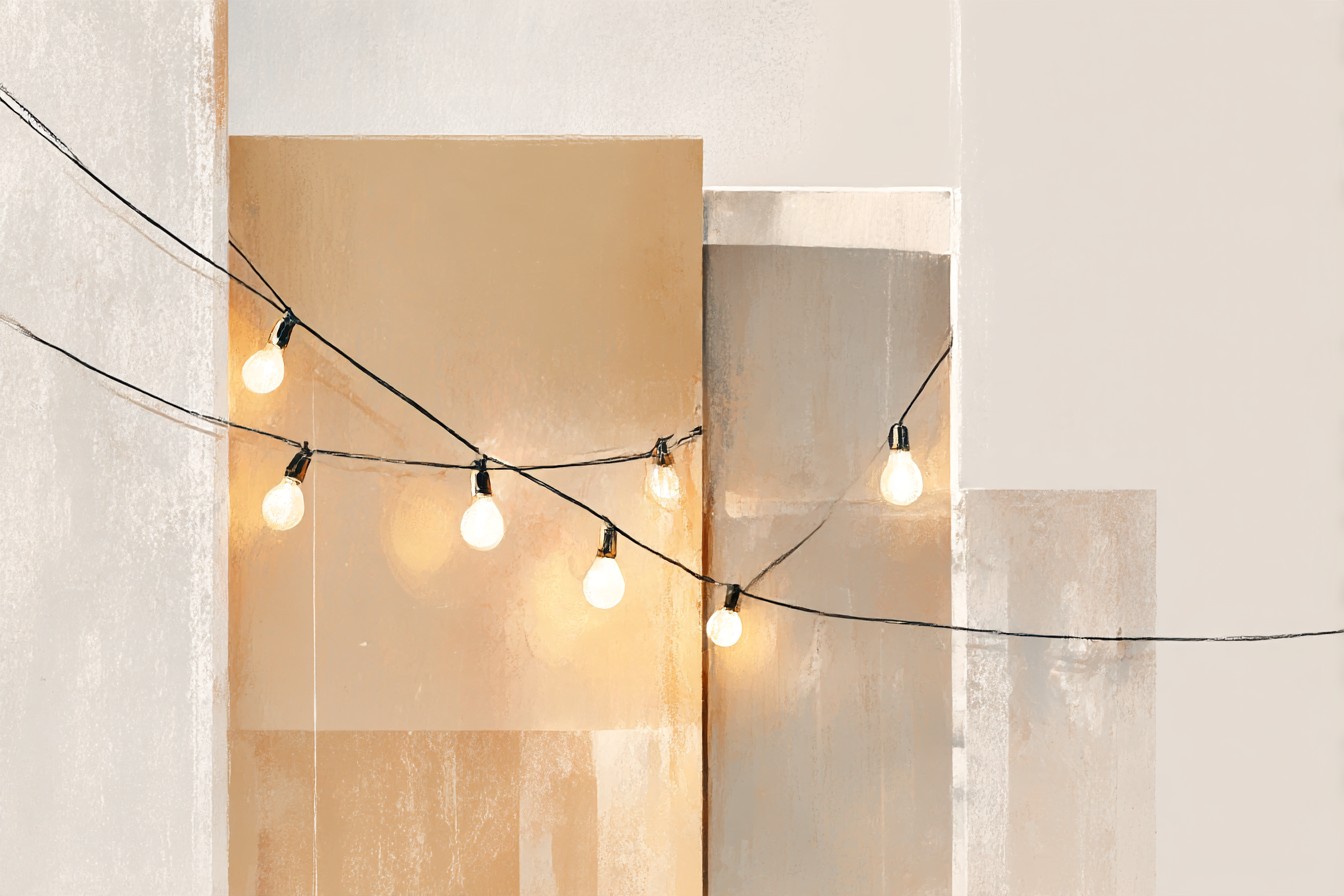
Small detail, makes a real difference in both how long it holds and how it actually reads once it’s up.
[Mounting String Lights Indoors]
Final Thoughts
So yes, you can absolutely bring outdoor string lights inside, and honestly some of the nicest lighting in my house came from lights that started life rated for a deck. But it’s not a straight swap, it’s a decision with a few real questions attached, wattage and draw, what the hardware’s actually built to hold, whether the bulb style you love is going to run hot three feet from your curtains. None of that’s complicated once you know to look for it, it’s just stuff nobody mentions on the box because the box assumes you’re hanging it outside where a lot of these questions answer themselves.
Fourteen strands in, I’m not saying stop buying them, I clearly haven’t. I’m saying check the socket, check the wattage, check what’s actually holding the weight before you commit a whole wall to it. The cafe look earns its reputation. The chunky bulbs are worth the extra thought about heat. The party lights know exactly what job they’re built for, and it’s not necessarily the job of quiet everyday lighting in your living room. Match the light to the room instead of just the light to the mood, and it holds up a lot longer than the alternative, which I know from experience, several tripped breakers, and one drywall hook that let go at exactly the wrong moment.