My sister walked into the living room, looked at the ring already sitting on the coffee table from somebody’s iced tea, looked at me, and said, “You wrote a whole thing about protecting furniture and there’s a water mark on yours right now.” She wasn’t wrong. That’s the thing nobody tells you about this particular obsession, you can know everything about protecting a surface and still leave a glass sitting directly on the wood while you go answer the door, because you’re human and you got distracted, and the table doesn’t care how much research you did.
I’ve had this coffee table, the real one, the good one, since 2011. Cherry, a proper dovetail joint on the drawer, bought from an estate sale for less than a third of what it was worth because the woman running it wanted it gone by four o’clock. I have loved this table in the specific, slightly irrational way you love a piece of furniture that’s outlasted two sofas and a marriage’s worth of arguments about whether the sofas matched it. And for about six years I protected that table the way most people protect a table, badly, inconsistently, and mostly by yelling “coaster” across the room like it was a magic word that solved the problem on its own.
It doesn’t. What actually solves the problem is understanding that “protecting a coffee table” isn’t one task, it’s about four different tasks wearing the same coat, and the mistake I made for years was assuming one flat felt pad situation would cover all of them.

Heat is a different enemy than moisture. Moisture is a different enemy than a scratch from a belt buckle when the toddler down the street decides the table’s a good place to sit. And covering the whole surface with a runner or a big glass sheet solves the problem the way putting a tarp over a garden solves weeds, technically, but you’ve also just hidden the thing you bought the table to look at in the first place.
So this is the piece I wish someone had handed me in 2011, before I put a hot mug straight onto the cherry and left a ring so faithful to the mug’s shape my sister could’ve identified the brand from it. Coasters, trays, runners, the whole business of protecting a surface without pretending the surface isn’t there. What to put on a coffee table so it survives your household and still looks like your table when the company leaves.
[Coffee Table]
Coasters, and the Argument I Finally Won
I want to be honest about something. For years I resisted coasters as a household rule because I found the whole “coaster police” energy a bit much, the sort of thing that turns a living room into a place you’re not allowed to relax in. I’ve since revised that opinion entirely, and the revision came from one specific ring, the aforementioned mug ring, which took an afternoon with mineral oil and a lot of muttering to mostly, not fully, lift out.
What changed my mind wasn’t a design magazine, it was cork. Plain cork coasters, the kind that cost almost nothing, that I bought eight of from a hardware store because I assumed I’d lose half of them within a year. I lost two. The other six have been on that table for going on nine years now, and they’ve done more heat and moisture protection than anything fancier I’ve bought since, including a set of marble ones my sister gave me that look wonderful and are, frankly, cold and slightly useless, marble conducts heat rather than blocking it, which is a fact I learned only after putting a hot cup on one and watching the ring form anyway.
The trick with coasters isn’t the coaster, it’s where you put them and how many you own. One coaster per person, sitting in the middle of the table hopefully waiting to be used, does nothing, because nobody’s going to get up mid conversation to fetch it. You need enough scattered around that there’s always one within reach of wherever a drink actually lands, which for me meant buying more than felt reasonable, eleven at last count, spread across two trays and a drawer, which is a genuinely absurd number of coasters for one table but has finally, FINALLY, stopped the ring problem for good.
[Coasters]
Trays, Which Do the Job of a Tablecloth Without the Commitment
I’d like to have a word with the woman who spent 2004 through roughly 2009 covering every coffee table she owned in a tablecloth because she’d seen it done somewhere and thought it looked “finished.” It looked like a table hiding from a dinner party that wasn’t happening. What I actually needed, and didn’t discover until my sister bought me one as a joke gift that turned out to be the best present she’s ever given me, was a tray.
A good tray does the tablecloth’s job in a fraction of the space. Mine’s a lacquered wood one, about two feet by fourteen inches, sitting on the third of the table closest to the sofa where the actual activity happens, the mugs, the remote, the bowl of whatever we’re eating that week. Everything that would otherwise scratch or ring or stain the wood lands on the tray instead, and because the tray only covers a third of the surface, the rest of the cherry is still visible, still doing the job I bought it to do, which is look like a nice table.
I’ve gone through three trays since that first one. A metal one rusted faintly at the rim within a year, which I should have expected given it lived two feet from a window. A rattan one looked lovely for exactly one spilled glass of red wine before it absorbed the stain permanently into every fiber, and I mean permanently, that tray went in the trash. The lacquered wood one is still going, still fine, and I’ve since bought a second, smaller one for the opposite end of the table because apparently once you understand what a tray does, you start finding excuses to add another.
[Trays]
Runners, and Where I Draw the Line on Covering the Whole Thing
A table runner is where this whole conversation gets a little contentious, because a runner sits in that uncomfortable middle ground between protecting a table and disguising one, and which side it lands on depends entirely on width. Too wide, and you’ve essentially built yourself a tablecloth with delusions of being casual about it. Narrow, maybe six or eight inches down the center, and it’s doing real protective work while leaving both long edges of the wood completely visible, which is the whole point of owning a table you actually like.
You Might Also Like

I own a linen runner now that does exactly this, undyed, slightly rough in the way good linen is, and it sits down the center of the cherry catching the odd splash and the occasional set down glass that misses whatever coaster was nearby. It’s not decorative in the way a runner on a dining table is decorative, nobody’s admiring the embroidery, it’s simply there, quietly absorbing the risk. My sister took one look at it the first week I had it and said nothing, which from her is a review in itself, and not a flattering one, she thought it looked like I’d given up on the table. I think it looks like I finally understood what a table needs.
Where I’d caution anyone is the quilted runners, the padded ones marketed as extra protective, because I bought one in 2015 that trapped moisture underneath it after a spilled glass of water sat there overnight without my noticing, and I found the ring waiting for me under the padding a full week later, which is a worse outcome than no runner at all. Thin, breathable, narrow. That’s the whole formula. Anything thicker is just a tablecloth that hasn’t admitted what it is yet.
[Runners]
Felt Pads and the Underside Nobody Checks
Nobody thinks about the bottom of their own coffee table, which is exactly why I’m bringing it up, because the damage that actually worries me most as a piece of furniture ages isn’t on top, it’s the legs and the underside of anything that sits on the surface permanently, a lamp, a stack of books, a vase that lives there year round. Every one of those needs a felt pad on its base, and I mean every single one, because the slow scratch from a vase being nudged an inch every few weeks over a decade will do more damage than any single dramatic spill.
I learned this the hard way with a ceramic bowl I’ve owned since the nineties, no pad, no thought given to it, and after about eight years I noticed a faint ring worn into the finish exactly where its base sat, not from heat or moisture, just from friction, from the bowl being lifted and set back down slightly differently each time. Self adhesive felt pads cost about four dollars for a pack of twenty, and I now put them under anything with a hard flat base without exception, lamps, vases, the wooden box where the remotes live. It’s the least visually interesting thing in this entire piece and it might be the one doing the most work.
I’d also gently flag that felt pads wear out and need replacing, mine go thin and flat after a couple of years and stop cushioning anything, which I only discovered when I finally turned the bowl over out of curiosity and found what was left of a pad I’d put on in maybe 2016, barely there anymore, doing nothing.
[Felt Pads]
Placemats and Trivets for the Table That Also Has to Feed People
If your coffee table doubles as the place where dinner actually happens on a Friday night in front of the television, which mine absolutely does, you need something between the surface and hot dishes that isn’t a coaster, because a coaster’s built for a glass, not a casserole dish straight out of the oven.
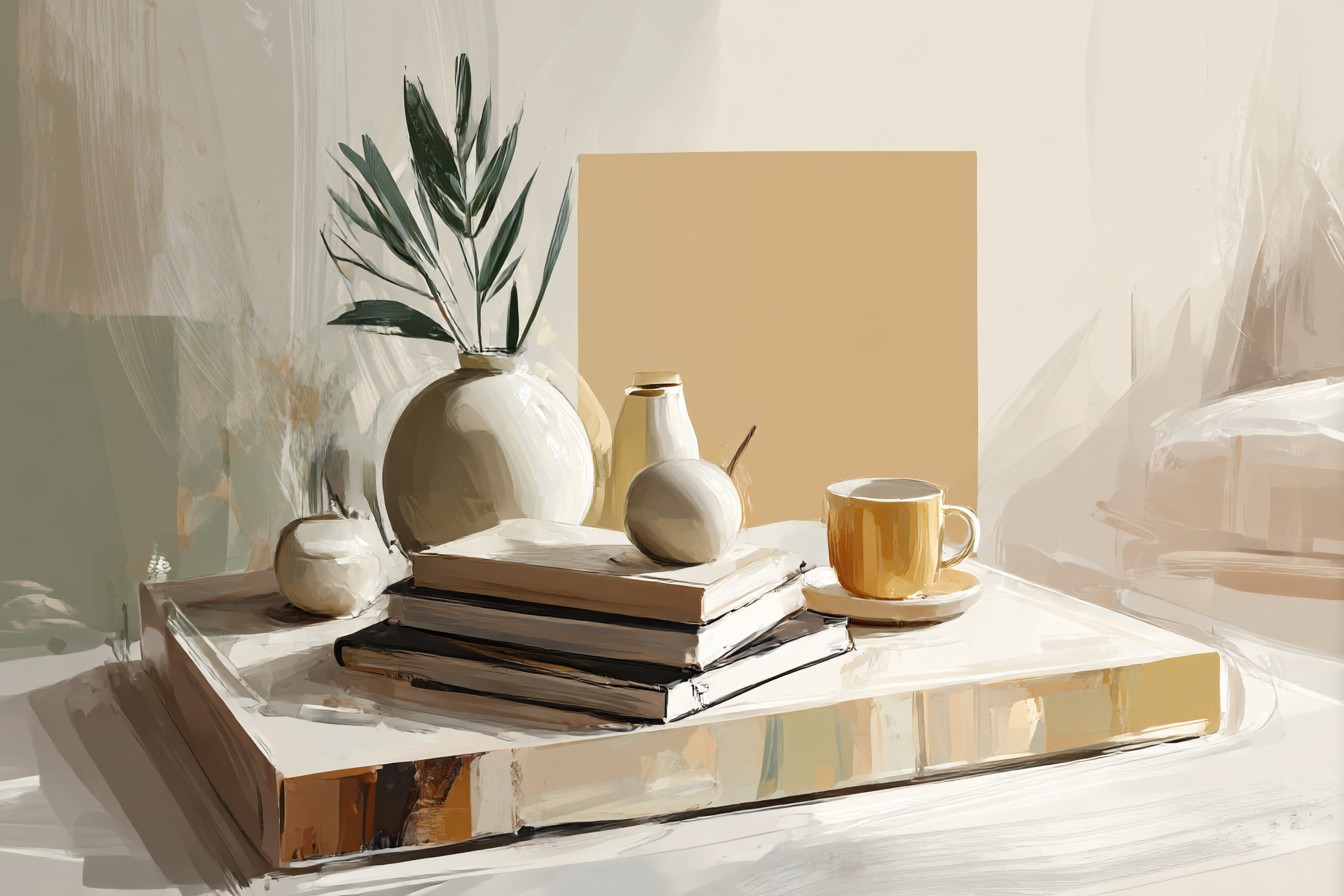
This is where trivets earn their spot, and where I’ll admit I underestimated how much heat travels through even a folded tea towel, which was my method for years and which left a faint discoloration on the cherry that I only noticed once, annoyingly, after it had already set in.
Cork trivets do the job cheaply and I have four now, but the ones I actually reach for are a pair of wooden trivets with little raised feet, bought from a kitchen shop for a few dollars each, that lift the hot dish a half inch off the surface entirely rather than just insulating against it. That half inch of air makes a bigger difference than any material underneath, and once I understood that, the folded tea towel era of my life ended for good.
Placemats matter here too, especially if plates are landing there rather than on laps, and a set of washable cloth ones has done more for that table’s surface than almost anything else on this list, because they catch the small drips a trivet doesn’t, the sauce that runs off the edge of a plate. They live folded in the drawer, table shaped memory, ready in about four seconds.
[Placemats and Trivets]
Final Thoughts
If I’ve learned anything across three decades of furnishing the same rooms over and over, it’s that protecting a table properly isn’t one purchase, it’s a handful of small, unglamorous habits stacked on top of each other, coasters within reach, a tray doing the heavy lifting where the activity actually happens, a narrow runner rather than a wide one, felt pads on everything that sits still, trivets with feet instead of a folded towel. None of it is exciting. All of it works, which after a certain age is the only quality I’m actually shopping for.
What I’d never do again is cover the whole thing, glass sheet, full tablecloth, wall to wall runner, because a table you can’t see isn’t a table you’re protecting, it’s a table you’ve replaced with a slightly nicer looking blank surface. The cherry table is still sitting where it’s sat for years, rings and all from the early mistakes, still visible around the edges of every coaster and tray I’ve since added, and that visibility was always the point. You buy the table because you like the table. Everything on this list exists so you get to keep looking at it.