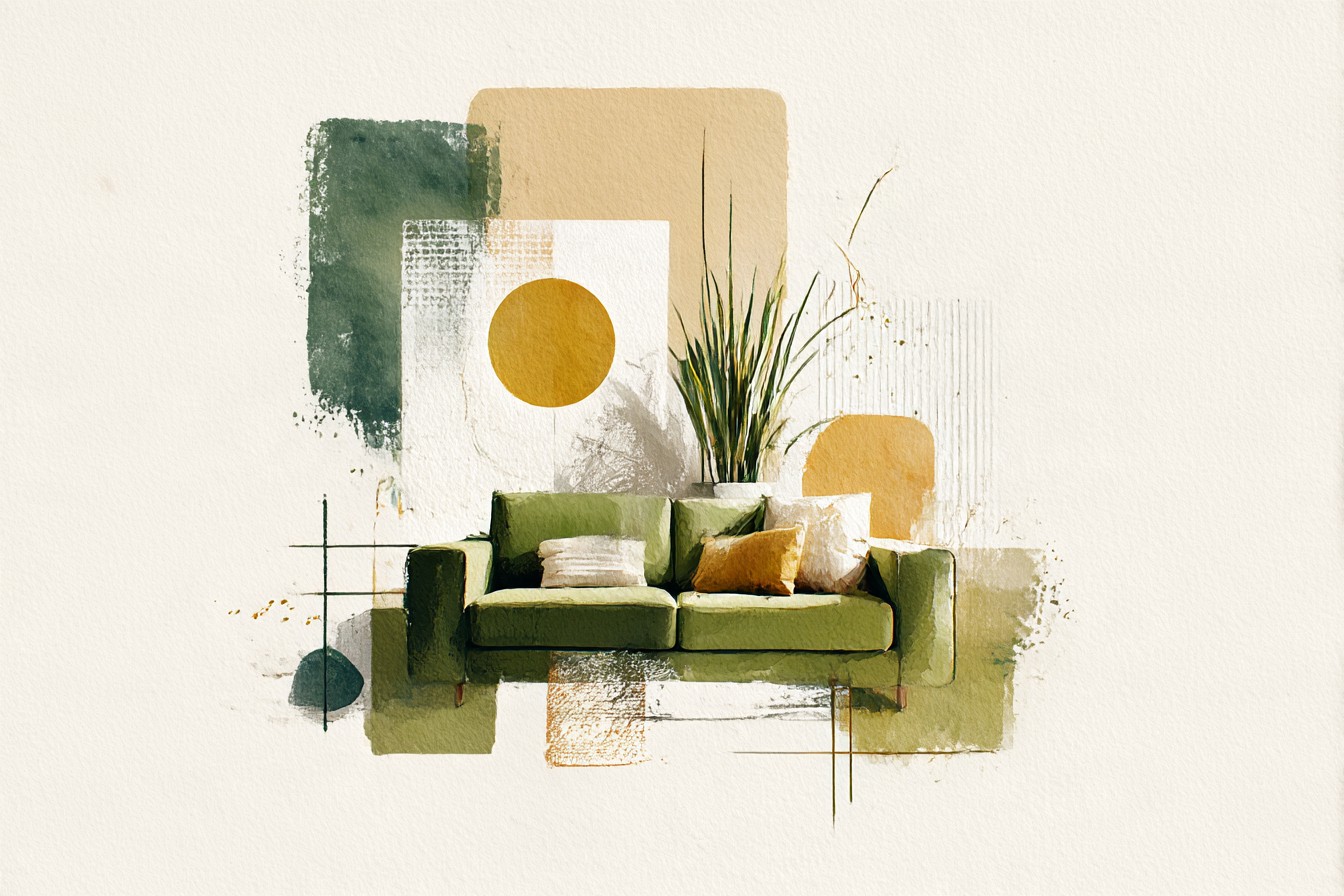
I saw someone on a Facebook furniture group declare, with real confidence, that olive green sofas should only ever get white or oatmeal pillows because “anything else fights it.” Scrolled down and found someone else in the same thread saying olive is basically a neutral now, practically beige with ambition, so you can throw literally any color at it and it’ll behave. Both of these people are wrong, and both of them are a little bit right, which is the most annoying kind of disagreement to referee. Olive is not white’s quiet cousin, and it’s not a neutral either, it’s a color with a strong personality that happens to play well with others if you actually pay attention to which others.
I bought an olive velvet sofa two years ago after swearing off green entirely because of a sage armchair that made my old apartment look like a dentist’s waiting room. The olive one is warmer, deeper, more forgiving, and it took me exactly one wrong pillow order to work out that not all greens are made equal and not all pillow colors read the same against them. That’s really the whole answer to this question, once you get past the group chat opinions. It comes down to two things: what kind of olive you actually have, and how much contrast the room needs from it.
The Undertone Decides Whether You’re Pairing or Fighting
Olive green sofas are not one fabric swatch pretending to be many, they split pretty clearly into warm and cool, and almost every pillow disaster I’ve seen starts with someone ignoring which side theirs falls on.

A warm olive leans toward khaki and mustard, it’s got yellow underneath doing the work, and it wants pillows that lean the same direction. Rust, terracotta, burnt orange, a proper mustard a shade or two brighter than the sofa itself, these all sit next to warm olive like they were always meant to be there because, chemically speaking, they kind of were. My sofa is warm olive and the rust linen pillow I eventually landed on looks like it was mixed from the same paint can, in the good way.
Cool olive is the trickier one, it’s got grey and sometimes a hint of blue underneath, closer to what people mean when they say sage but pushed darker and dirtier, and it does not want to be paired the same way. Throw a mustard pillow on a cool olive sofa and you get a fight, both colors trying to claim the warm end of the room and neither winning cleanly. Cool olive wants blush pink, dusty blue, a soft greige, or plain cream, colors that don’t compete for temperature and instead just quietly agree with it. The mistake I made, the one that cost me a pillow I now use on a chair nobody sits in, was buying a mustard cover for what turned out to be a cooler olive velvet than I’d registered in the store’s lighting. It looked fine under the shop’s warm bulbs and then looked like a mistake the second it got home under my actual windows, which brings me to the other half of this.
You Might Also Like

The Room’s Light Decides How Much Contrast You Actually Need
Here’s the thing nobody in that Facebook thread mentioned: the sofa doesn’t exist in a vacuum, it exists in your specific room, with your specific windows, and that changes what “matching” even means. My house is a hundred and thirty year old triple-decker with windows that let in about sixty percent of the light God intended, and I found out the hard way that my olive sofa looks completely different depending on which room I put it in. In the front room, which gets real afternoon sun, it reads rich and warm and the rust pillows sing.

I tried the exact same sofa cushion arrangement in the back room, which gets almost no direct light most of the year, and the olive went muddy, borderline swampy, like something you’d find at the bottom of a pond rather than on a sofa. That room needed cream and ivory pillows, not earthy ones, just to give the eye somewhere bright to land, otherwise the whole corner disappeared into itself by four in the afternoon.
This is really the second big factor, alongside undertone: how much brightness the room is contributing on its own, because that decides whether you’re pairing tones or rescuing them. A sunny room with good natural light can carry a full earthy palette on an olive sofa, rust and terracotta and even a deep burgundy without it going heavy or dark. A dim room needs at least one pale, high contrast pillow doing the work of a lamp, cream, blush, or a soft dove grey, something that isn’t trying to blend in with the olive at all. I mentioned this to a friend who redid her whole living room in navy and olive and swore it looked incredible, and it does, but her living room has floor to ceiling windows on two sides and mine has a window well one story below street level that mostly lets in the sound of my neighbor’s dog. Same sofa color, completely different pillow strategy required, and neither of us is wrong, we just live in different amounts of daylight.
If I’m being straight about it, the “any color works” crowd and the “only white or oatmeal” crowd are both answering a question they haven’t actually looked at properly. Figure out if your olive leans warm or cool, look honestly at how much light your room gives it for free, and pick pillows that either match that undertone or correct for what the room’s missing. That’s not a rule, it’s just paying attention, and it’s saved me from buying a fourth wrong pillow, which at this point would just be embarrassing.