I have typed “can you have a fire pit indoors” into a search bar four separate times over the past two years, always in November, always on the first night the furnace kicks on and the house suddenly feels like it needs something more primal than a thermostat setting. And I have never once bought one. That’s the whole confession right there, before I’ve even gotten to the point.
There’s something about an open flame that a gas furnace simply cannot compete with, and I understand why. My sister has a fire pit on her patio in south county, one of those steel bowl ones she got on clearance at the end of a season maybe six years back, and every time we sit around it in October I think, why doesn’t my living room have this. The light moves differently than anything electric. The smell gets into your sweater and you don’t mind.

There’s a reason people built their whole lives around hearths for thousands of years before central heating existed, and no amount of a radiator clanking in the corner replicates that particular kind of comfort.
So the appeal isn’t the question. The appeal is obvious, and if you’re reading this because you’ve had the exact same thought I’ve had, standing in your own living room wondering if you could just bring that patio experience inside, I’m not going to pretend the instinct is silly. It isn’t.
But here’s where I had to slow down and actually think it through rather than just clicking add to cart on the first bioethanol pit that showed up in my search results looking sleek and Scandinavian and entirely too convincing. A fire pit, by design, is an open, unenclosed thing. That’s sort of the whole point of it outdoors, the smoke goes up and away and disperses into an entire sky that doesn’t care. Bring that same open flame into a room with four walls and a ceiling, and now you’re asking that smoke, and the carbon monoxide that comes with incomplete combustion, and the moisture, and the soot, to go somewhere. In a house, “somewhere” usually means your lungs, your walls, your smoke detector at three in the morning, and in the worst cases, somewhere far more serious than a headache.
That’s not me being dramatic for the sake of a good line. Carbon monoxide doesn’t announce itself. It doesn’t smell like the campfire smell you’re chasing. It just accumulates in an enclosed space until it doesn’t. Every single option I’m about to walk through has to be measured against that fact first, and the appeal second.
[Indoor Fire Pits]
Bioethanol Fire Pits
These are the ones that show up first in every search, sold hard on the promise of a real, visible flame with “no smoke, no soot, no venting required.” I bought a small tabletop version of one about four years ago, a rectangular steel tray thing that took a bottle of liquid bioethanol and produced an honestly lovely, low blue and orange flame with almost no smell for the first twenty minutes.
The trouble is the word almost, and the trouble is the fine print, which I read properly only after the fact, the way I do most things. Bioethanol burns cleaner than wood or gel fuel, that part is true, but clean isn’t the same as harmless in an enclosed room. It still consumes oxygen as it burns and it still produces carbon dioxide and water vapor, and if you’re burning it in a small space with the windows shut against a Missouri cold snap, you are, whether you meant to or not, running an experiment on your own air quality. Mine lived on a dining table for exactly one winter before I started noticing a faint headache after longer dinners, and I can’t prove it was the flame and not the two glasses of wine, but I stopped lighting it indoors after that and moved it permanently to the screened porch, where it’s frankly much happier and so am I.
If you go this route, and plenty of people do without issue, cracking a window is not optional, it’s the entire point of the exercise, and the manufacturers who bury that instruction in paragraph six of an assembly booklet are not doing anyone favors.
[Bioethanol Fire Pits]
Ventless Gas Fire Pits and Inserts
This is the category where I want to be the most direct, because it’s also the one that gets marketed with the most confidence, and confidence is not the same thing as safety. Ventless, sometimes called vent free, gas fireplaces and fire pit inserts run on natural gas or propane and are built with an oxygen depletion sensor that’s supposed to shut the unit off before the room’s oxygen drops too low. When installed correctly, in a room sized appropriately for the unit’s output and used with the manufacturer’s exact clearance and code requirements followed, they can be a legitimate option, and plenty of homes run them safely for years.
But “installed correctly” is doing a great deal of work in that sentence, and it is not a job for a Saturday afternoon and a YouTube tutorial. These units are illegal in some states and cities for a reason, they’ve been banned or restricted in bedrooms specifically, and the oxygen depletion sensor is a backup, not a substitute for actual ventilation and a working carbon monoxide detector on every level of the house. I looked at one of these for the family room a few years back, got as far as calling a local installer for a quote, and the very first thing he asked was how many carbon monoxide detectors I currently had. I had one. He told me I needed three before he’d even discuss it, and I appreciated him more for that question than for anything in his actual sales pitch.
If you’re going to consider this category, it’s a professional installation and inspection, not a purchase you make alone.
[Ventless Gas Fire Pits]
You Might Also Like

Electric Fire Pits
This is where I eventually landed, and it took me longer than it should have to admit that the compromise wasn’t a compromise at all, it was actually just the right answer for indoors specifically. Electric fire pits use LED lights, sometimes with a bit of vapor or a rotating reflector, to fake the movement of flame, and the good ones are considerably more convincing than I expected going in.
I bought one for the family room two winters ago after the ventless gas quote scared me straight, and the box it came in claimed the flame effect was, and I’m quoting this directly because I still think about it, “INDISTINGUISHABLE FROM A REAL WOOD FIRE.” It is not indistinguishable from a real wood fire. It is a nice light show that throws real heat from a built in element, and it has never once made me smell smoke or worry about a carbon monoxide detector going off at two in the morning, and after four years it still works exactly the way it did on day one, which is more than I can say for the space heater it replaced.
My sister took one look at it the first Thanksgiving I had it out and said, well, that’s clever, in a tone that meant she wasn’t fully sold but wasn’t going to argue either. That’s about the review it deserves. It’s not romance. It’s a genuinely sensible answer to a question that doesn’t have a romantic one.
[Electric Fire Pits]
Gel Fuel Fire Pits
Gel fuel fire pits, the small tabletop ones that burn canned gel fuel in a little dish, sit somewhere between the bioethanol pits and a candle, and they’re the ones I’m most wary of recommending for actual indoor use despite how often they’re marketed for exactly that. They produce a real, open flame, which means real combustion byproducts and real soot, and I have a small black stain on the underside of a shelf in my old house from 2011 that will testify to that fact forever, because I once let one burn too long under a shelf that was closer than I’d measured.
They’re inexpensive, they’re popular for patio tables and outdoor entertaining, and honestly that’s where they belong. Bringing an open gel flame indoors near curtains, near a pet’s tail, near a table runner nobody’s thinking about in the moment, is asking for the kind of accident that happens fast and is entirely preventable by simply not doing it in an enclosed room. I use mine outside now, on the same porch as the bioethanol tray, and that arrangement suits both of them fine.
[Gel Fuel Fire Pits]
Real Fireplaces and Wood Stoves
If what you actually want is real fire indoors, and I mean actual wood, actual crackle, actual smell, the honest answer isn’t a fire pit at all, it’s a proper wood burning fireplace or stove with a real flue and a real chimney, built specifically to take smoke and carbon monoxide and send it somewhere other than your living room. That’s not a modern invention dressed up as one. It’s the original technology, and it works because someone centuries ago figured out that fire indoors needs an exit route, which is the exact thing every tabletop fire pit skips.
I’d like to have a word with the version of me in the 1990s who thought our old house’s fireplace was purely decorative and never had it inspected for the first eight years we owned it. It wasn’t decorative. It worked fine once we finally had someone clean and check the flue, and we used it for actual fires for the next two decades without incident, which is a better track record than any indoor fire pit trend I’ve seen come and go since.
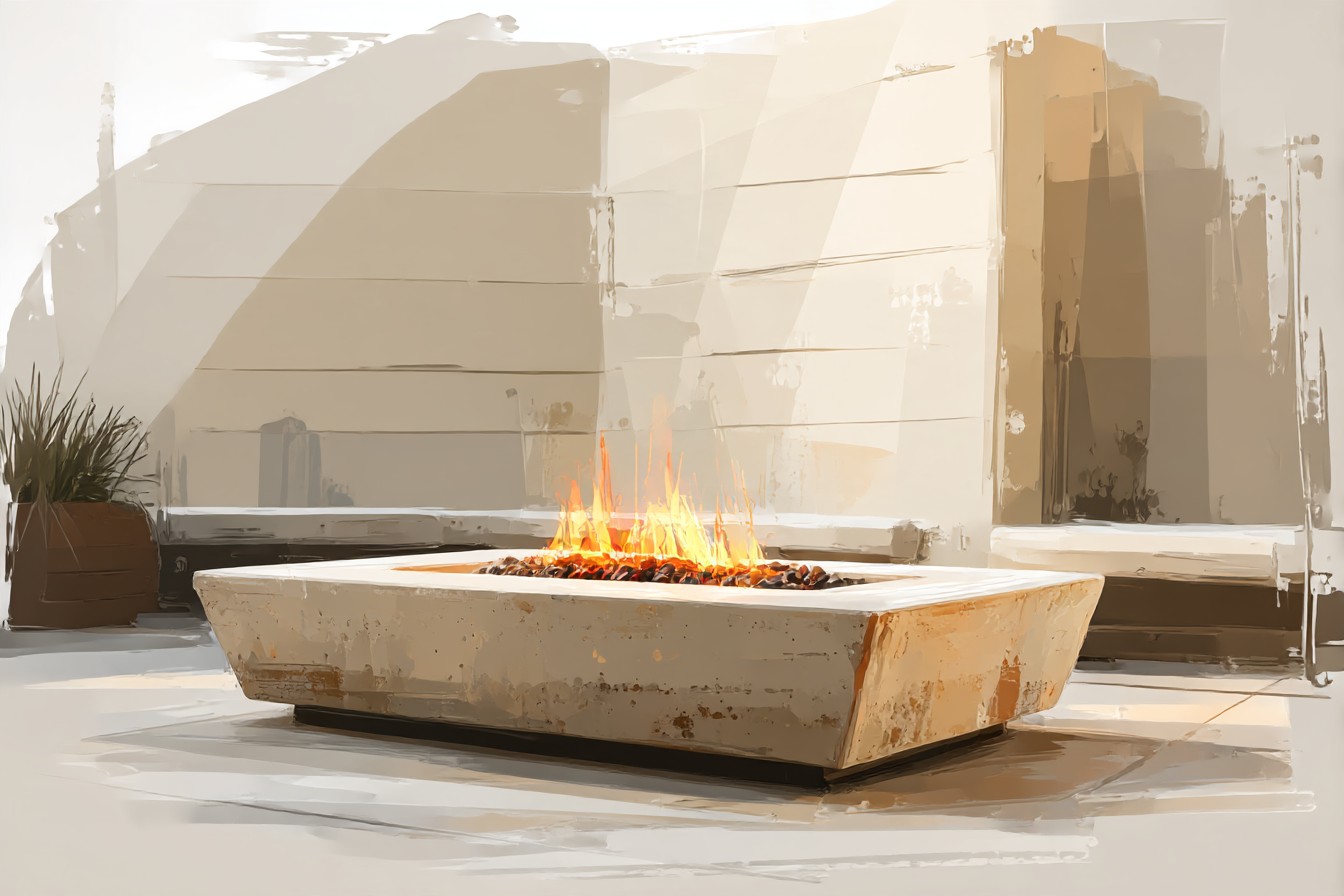
If you have one of these already, or the bones to install one properly, that’s the fire you’re actually craving, not a bowl on a coffee table.
[Real Fireplaces and Wood Stoves]
Final Thoughts
So, can you have a fire pit indoors. Technically, in a few narrow, carefully installed, properly ventilated forms, yes, sort of. Should you, without a professional involved and a genuine carbon monoxide detector on hand, no, and I say that as someone who wanted to say yes for two straight years of November searches.
What I actually use, four years running now, is the electric one, which never once asked me to worry about my family’s air quality while I was trying to enjoy a Tuesday evening. What I keep outdoors, where it always belonged, are the bioethanol tray and the gel fuel dish, both of which are lovely on the porch and neither of which needed to be my problem in the family room. And what I’d tell my younger self, the one who kept adding fire pits to online carts every time the temperature dropped, is that the craving was never really for a fire pit specifically. It was for the light and warmth an actual hearth provides, and a house either has the infrastructure for that or it doesn’t. Buying something shaped like a fire pit and putting it in your living room doesn’t build a chimney where none exists.
The instinct is a good one. Just point it at the right kind of fire.