
I bought a dresser off Facebook Marketplace once, seventy dollars, drove forty minutes each way to get it, absolutely thrilled with myself, and got it home to stand next to my Pax wardrobe only to discover I had just introduced two completely different species of white into the same room. The Pax was that cool, almost blue white, the one IKEA calls white but which actually reads more like the inside of a fridge. The dresser, bless it, was a warm ivory, practically beige next to the Pax, like someone had left it out in the sun for a decade. Standing there in my bedroom in Boston with both pieces side by side, I actually said out loud, to no one, “oh no.” My downstairs neighbor heard me through the floor and texted to ask if I was okay. I was not okay. I was staring at seventy dollars of mismatched white furniture wondering how I’d managed to get something so simple so wrong.
That’s the thing nobody tells you about a Pax wardrobe.

It’s not really a wardrobe, it’s a wall. It’s the biggest, most dominant piece of furniture most of us will ever own, and once it’s built and bolted and full of your entire life, everything else in the room has to answer to it. You can’t just wander into a furniture shop and grab a dresser that “looks nice.” It has to negotiate with something that’s already six and a half feet tall and taking up an entire elevation of your bedroom. I learned that the hard way, returned the ivory dresser to Marketplace at a twenty dollar loss just to be rid of it, and spent the next several months actually paying attention to finishes, tones, proportions, all of it, in a way I genuinely hadn’t bothered to before.
So this is me, several dressers and one very specific white related trauma later, walking through what actually works next to a Pax, and what I’d steer you away from before you make my exact mistake and have to explain yourself to your own downstairs neighbor.
[Dressers with a Pax Wardrobe]
Matching the Whites, Properly
If your Pax is in one of the white finishes, and a huge number of them are, you have to stop thinking of “white” as one color. It isn’t. IKEA alone sells white in at least three distinct temperatures depending on the door front, and none of them are the same white you’ll find on a random dresser from a big box store or a secondhand listing. The Pax white with a Fardal or Grimo door leans cool and slightly glossy. The Pax white with a Vikanes or Bergsbo panel is flatter, chalkier, warmer. You genuinely have to know which one you’ve got before you go shopping for a dresser to sit next to it, because a warm white dresser against a cool white Pax doesn’t read as a matching set, it reads as two separate purchases made by two separate people who never spoke to each other.
The safest move I’ve found is sticking within the IKEA family on purpose, a Malm six drawer in white, or a Kullen if you’re on a tighter budget, because they’re manufactured to the same cool white standard as most Pax doors. It’s not romantic, buying two things from the same catalog, but it solves the problem instantly instead of you standing in your bedroom having a small crisis about it like I did. If you want something with more personality than flat IKEA white, look for a matte, chalky painted dresser rather than anything with a satin or gloss finish, gloss white next to Pax’s more matte doors just highlights how different the sheens are, and suddenly your “matching” furniture looks like it’s competing for attention.
[White Dressers]
Bringing In Warm Wood
Not every Pax is white, and honestly, some of the nicest ones I’ve seen have been the white stained oak effect doors, the Hemnes ish ones with visible grain running through them. If that’s your situation, you’ve actually got more freedom than the all white crowd, because wood grain gives you something to play against rather than something to match exactly.
A friend of mine redid her whole bedroom around a white oak effect Pax and paired it with a walnut toned dresser, properly dark, almost espresso, and it worked because the two woods were different enough not to be compared directly. That’s the trick with wood tones next to Pax. You’re not trying to find the identical grain, you’re trying to avoid the awkward almost match, where the dresser is close enough to the Pax finish that every slight difference in tone becomes the only thing you notice every time you walk past it. Go properly lighter, a pale ash or birch dresser, or go properly darker, a rich walnut or a stained oak that leans toward brown rather than honey. The middle ground, a medium oak dresser next to a light oak Pax, is where I’ve seen it go wrong most often, two woods that are trying to be the same thing and failing quietly, forever, in every photo you take of that room.
[Wood Tone Dressers]
You Might Also Like

Going Dark on Purpose
If your Pax is in one of the darker finishes, black brown, or that deep charcoal that IKEA occasionally rotates in and out of stock without warning, you’re actually working with the easiest wardrobe to dress a room around, and I don’t think enough people realize it. Dark furniture reads as intentional. It doesn’t have the same tonal minefield that white does, because you’re not trying to match a precise temperature, you’re matching a mood.
A black or near black dresser next to a black brown Pax gives you that heavy, grounded look, and it photographs beautifully in low light, which matters more than people admit, most of us see our own bedroom furniture at seven in the morning and ten at night, not in a bright afternoon shoot. Where I’d actually push you is toward contrast instead of a flat match here. A dark walnut dresser against a black brown Pax gives you two dark tones that are clearly related but not identical, and it stops the wall of storage from reading as one giant block of furniture, which is a real risk once a Pax gets past about eight feet wide. I did this in my own bedroom eventually, matte black dresser, black brown Pax, and the only note I’d add is skip anything with chrome or brushed steel handles unless the Pax hardware matches, because mismatched metal on dark wood is somehow more obvious than mismatched white ever was.
[Dark and Black Dressers]
The Six Drawer Rule Nobody Mentions
Here’s a genuinely underrated problem. Everyone talks about color and finish and completely ignores proportion, and proportion is where most of these pairings actually fall apart in real rooms. A Pax wardrobe is tall, often taller than most people expect once it’s actually installed against a wall with a bit of ceiling clearance. Put a narrow, tall dresser next to it, one of those five drawer chest styles that comes up to your chest, and you end up with two vertical shapes competing for the same visual space, and the room ends up feeling like a hallway of furniture rather than a bedroom.
What actually works, almost every time I’ve seen it done well, is going low and wide. A six drawer dresser that sits around waist height does two things at once, it gives the Pax room to be the tall statement piece it already is, and it gives you a flat surface at a genuinely useful height for a lamp, a tray, whatever chaos accumulates on top of a dresser in real life, mine currently has three hair ties, a candle I’ve never lit, and a receipt from 2022. I made the tall narrow dresser mistake myself in a rental years ago and the room never sat right the entire time I lived there, it wasn’t until I swapped it for a long low six drawer piece that the whole wall finally made sense together.
[Low and Long Dressers]
When You Don’t Want Everything to Match
I want to be clear about something, because I think a lot of interiors content quietly implies that everything in a bedroom needs to come from the same three word finish name, and that’s not actually true, it’s just easier to photograph. You do not need your dresser to be a sibling of your Pax. You need it to not actively argue with it.
That means you can absolutely bring in a rattan fronted dresser, or a vintage brass handled piece you found secondhand, next to a plain white or oak Pax, as long as the base tone, the wood or paint underneath all that texture, is roughly in the same family.
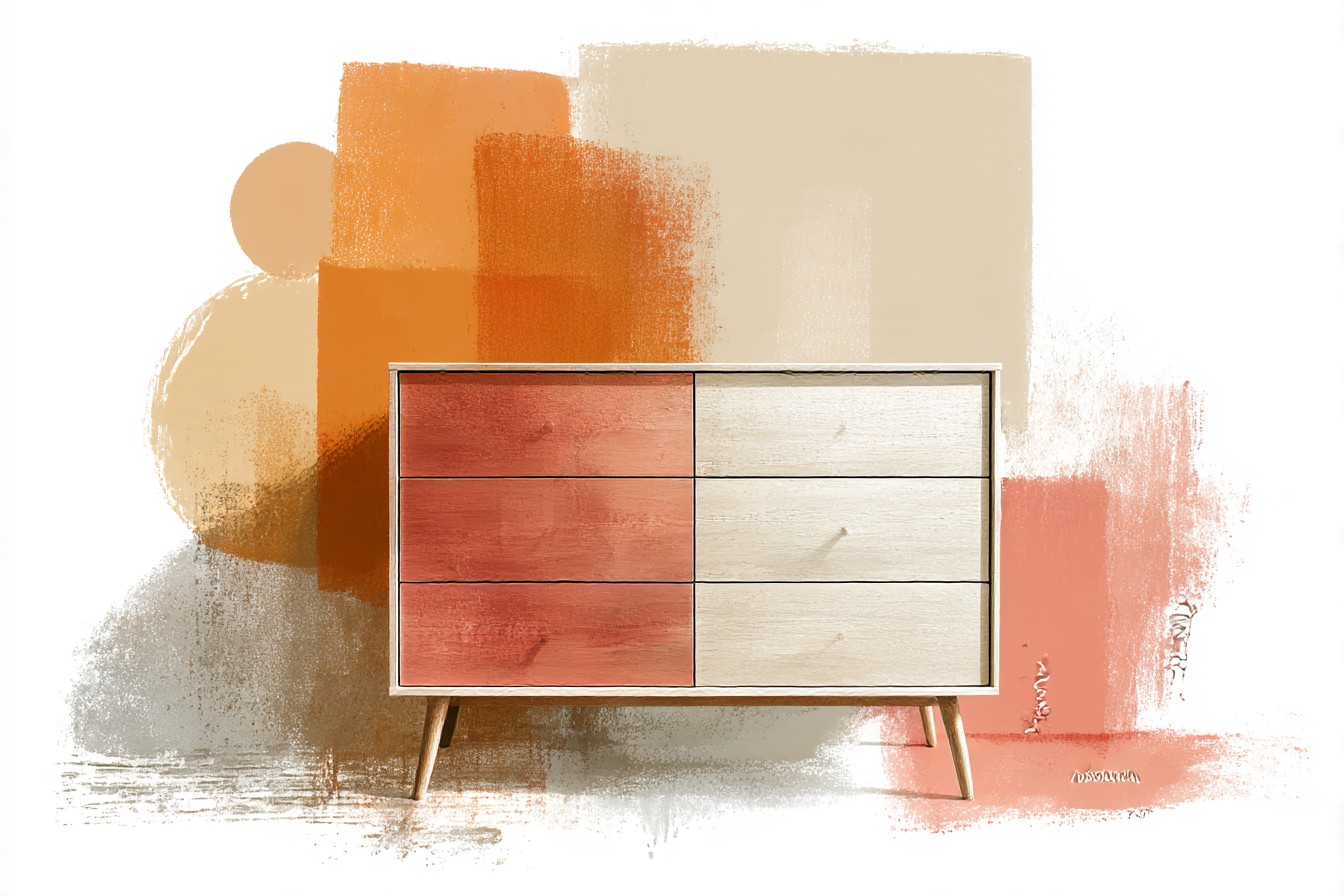
What you cannot do, and I will die on this hill, is put a high gloss, ultra modern lacquered dresser next to a flat matte Pax and expect it to read as a considered choice rather than two different decades having an argument in your bedroom. I tried this once with a cheap gloss finish dresser that was marketed as “a modern statement piece for under two hundred dollars,” which, by the way, is not a statement piece, it’s a two hundred dollar box with a shiny front, and next to my matte Pax it looked like it had wandered in from a different apartment entirely. It went back within the week.
[Mixed Style Dressers]
Final Thoughts
If there’s one thing I’d actually want you to take from all of this, it’s that the Pax gets to set the terms, whether you like it or not. It’s too big and too permanent in most bedrooms to treat as background furniture, so the dresser you put next to it is really answering a question the Pax already asked, cool or warm, light or dark, tall shapes or low ones. Get that answer roughly right and the rest of the room relaxes around it. Get it wrong, the way I did with that ivory dresser and my very confused downstairs neighbor, and you’ll notice it every single day whether you mean to or not. I’m not saying it has to match exactly. I’m saying it has to at least be having the same conversation.