
You’re standing in the delivery guy’s way while he waits for you to sign off on this dark brown leather couch that just got carried up three flights of stairs, and he’s asking if this is definitely the spot, and you realize you have thirty seconds to figure out what’s going next to it before he leaves and you’re stuck staring at a giant brown leather rectangle in an otherwise empty room. That’s the moment this question actually matters. Not when you’re pinning mood boards at midnight, when the truck’s outside and your neighbor’s already annoyed about the stairwell. I bought my couch off a guy in Hampden who was “downsizing,” which is what people say when they got a couch for a partner who left, and I had exactly that window of panic before I nodded and said yes, right there, that spot’s fine.
Here’s my actual opinion, formed over eighteen months of living with this thing: everyone overthinks the couch and completely ignores the two decisions that make or break the room, which are what touches the floor near it and what sits across from it. Pillows are decoration. The coffee table and the armchair are structure.

Get those two wrong and no amount of pillow arranging saves you.
The Coffee Table Is Doing More Work Than You Think
I went through three coffee tables before I landed on the right one, and the first two mistakes taught me more than the eventual win did. Mistake one was a dark walnut table I bought because I figured matching wood tones to leather tones was smart, some kind of unified brown situation. It was a disaster, the whole corner of the room turned into a single dark blob, and my mom, visiting for the first time since the move, asked if I was “going for a cave look.” She wasn’t wrong. Dark brown leather absorbs light instead of bouncing it, and stacking another dark, dense material right in front of it just doubles down on that heaviness until the room reads smaller than it is.
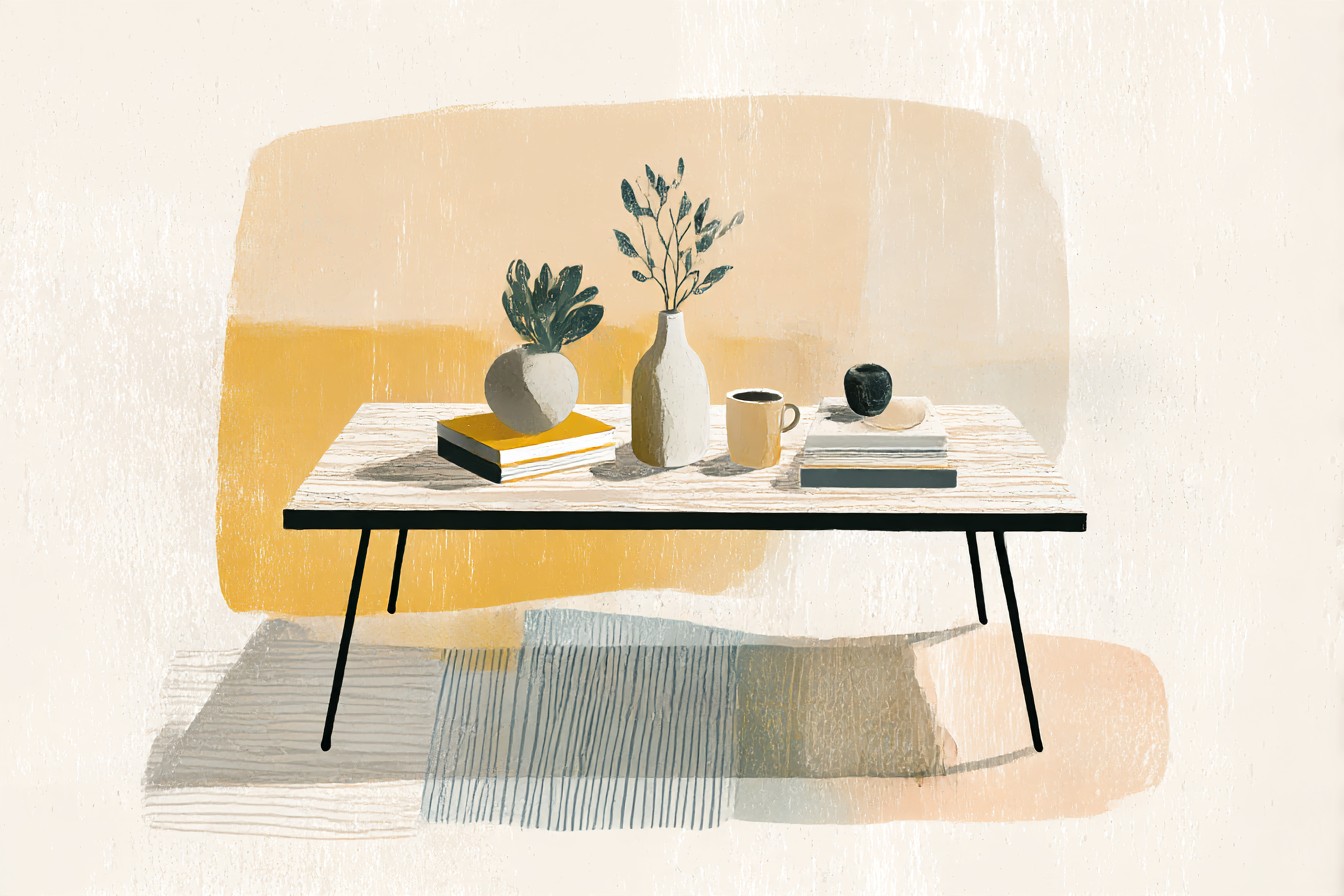
What actually works is contrast, and I don’t mean stark white marble like you’re staging a magazine shoot, I mean something lighter in tone or lighter in visual weight. A light oak or ash coffee table, something with actual grain you can see, breaks up the brown without fighting it. Glass top with a black or brushed metal frame does the same job differently, it gives your eye somewhere to land that isn’t just more leather-adjacent darkness. I ended up with a secondhand ash table, twenty two dollars from the Friday restock at my usual spot, and it’s the single best cheap decision I’ve made in that room, it just lifts everything around the couch without trying too hard.
You Might Also Like

The other thing nobody tells you is that a coffee table’s job with a big leather couch is partly about scale, not just color. Dark leather couches tend to be chunky, thick arms, deep seats, the kind of furniture that takes up visual real estate whether you like it or not. A dainty, spindly little table in front of it looks like it wandered in from a dollhouse. You want something with enough presence to hold its own, a proper slab of wood or a table with real legs, not something that disappears next to the couch. Get the tone lighter and the scale right and that table stops looking like an afterthought and starts looking like it was planned, even when, like mine, it very much wasn’t.
Pillows Are Cheap Opinions, the Armchair Is the Real Commitment
Pillows are where I let myself be a little reckless, because pillows are the one part of this equation you can get wrong for under fifteen dollars and just try again. My honest answer for what color pillows go with dark brown leather is anything that isn’t also brown, and ideally something with actual pattern or texture, because plain brown-on-brown pillows just vanish into the couch like they were never bought at all. Rust, mustard, deep teal, a faded terracotta, these all read as warm without competing with the leather, and they photograph better too if that’s a thing you care about, which apparently I do now, against my will.

I have four pillow covers in rotation depending on my mood, which is three more than any functioning adult needs, and I don’t regret a single one of them because the whole set cost less than one bad candle.
The armchair is a completely different level of decision and I think people treat it like it’s pillow-tier when it’s actually couch-tier, it’s a real piece of furniture you’re going to look at every single day for years. My answer to what color armchair works with a dark brown leather sofa is that you’ve basically got two honest routes and both are defensible. Route one is a lighter neutral, a cream or oatmeal boucle, a tan linen, something that gives the room a breathing point so the whole space isn’t just a wall of brown leather closing in on you. Route two is going bolder and treating the armchair as the accent piece the pillows were only rehearsing for, a deep green velvet or a burnt orange fabric chair that basically does the job of one giant pillow, at chair scale, permanently.
What I won’t defend is matching leather to leather, a second brown leather chair next to the couch, because I did try this with a chair I found for thirty five dollars that I was certain was a genius buy at the time. The math was good. The room was not. It looked like a furniture showroom display rather than somewhere a person actually lives, all that leather just blurring into one shapeless brown mass with no relief anywhere, and I ended up reselling that chair for twenty dollars a few months later, which stings less than it should but still counts against the ledger. If you take one real piece of advice out of this whole thing, let it be that: the couch is allowed to be the anchor, but everything sitting near it needs to be doing a different job, in a different material, in a different tone, or the whole room just reads as one big brown decision instead of a room you actually chose on purpose.

[…] structural duty as much as decorative duty, which is not a sentence I expected to write about a coffee table, but here we […]