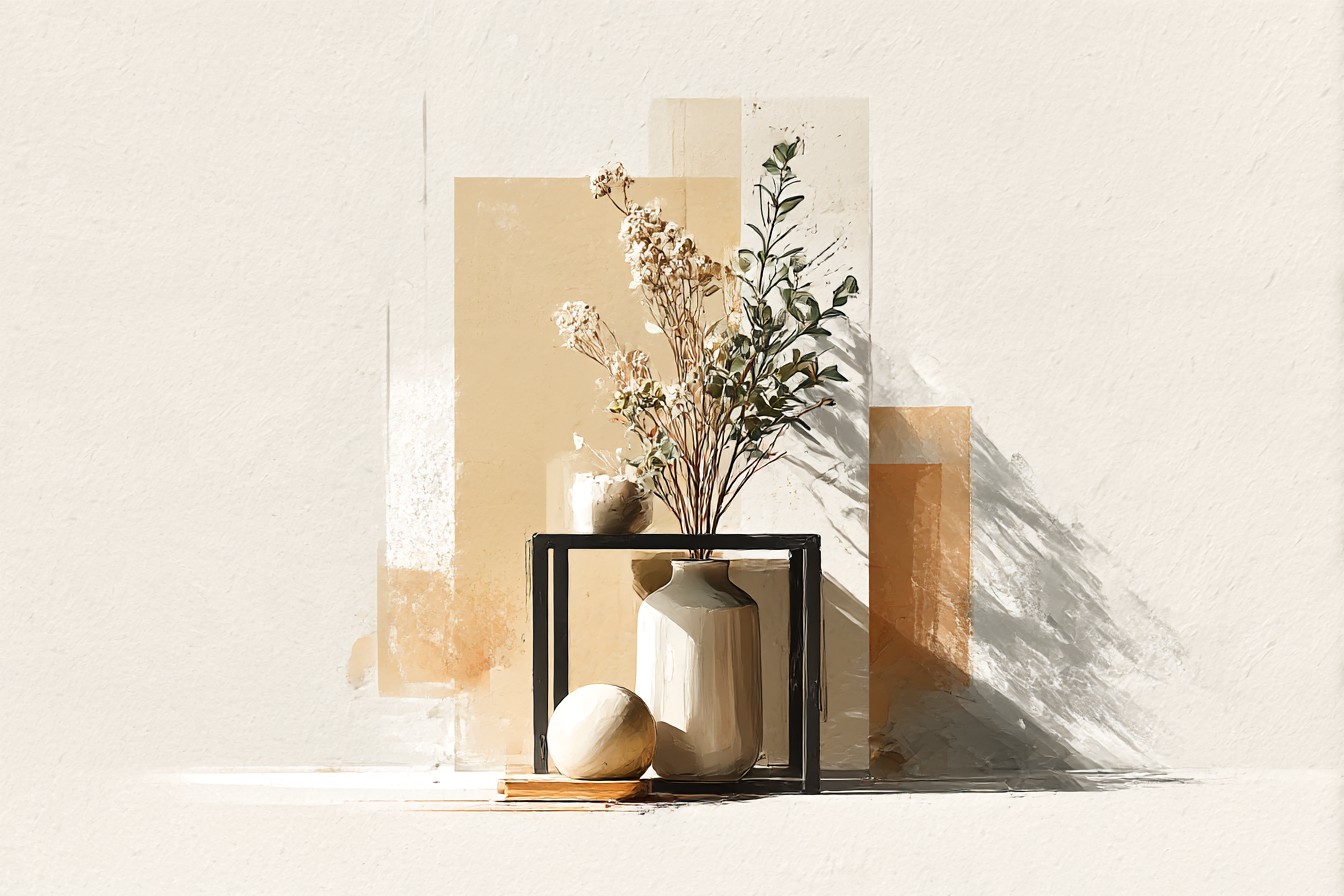
I was on the floor of my hallway last Saturday, cross legged on a drop cloth, going through a coffee can of drawer pulls I’ve been hoarding since a barn sale outside Guyton maybe four years back. Brass ones, glass ones, one lonely bakelite knob that doesn’t match anything I own. My coffee was going cold on the little black table by the stairs, the one I use for keys and mail and, apparently, lukewarm coffee I forget about constantly. And I kept looking up at that table between fistfuls of hardware, thinking about how hard it’s working in that hallway. It’s black lacquer, it’s got a bowed leg, it came from an estate sale on the south side where the whole house smelled like camphor and old hymnals, and it does not match a single other thing in that hallway. Not the rug, not the runner, not the brass mirror hanging crooked above it.
And somehow that’s exactly why it works.
That’s the thing nobody tells you about a black side table. Everybody treats black like it’s the safe choice, the one that goes with everything because it’s neutral, like beige’s moodier cousin. And sure, technically it’s neutral. But black doesn’t disappear the way beige does. It sits there. It announces itself a little, even in a corner, even holding nothing but a lamp and a coaster nobody uses. So the real question isn’t whether a black side table will “go” with your room. It will, probably. The real question is what you’re asking it to do once it’s in there, because black behaves differently depending on what you sit it next to, and I’ve bought and sold and dragged home enough of these things now to have opinions about all of it. Strong ones. The kind that get me side eyed by my husband when I come back from a Sunday yard with a third one.
So here’s what I’ve learned, piece by piece, table by table, mostly from getting it wrong first.
[Black Side Table]
The Lacquered Ones, Playing Off Warm Wood
The table by my stairs I mentioned, the one from the camphor scented estate sale, that’s a lacquered piece, proper old lacquer with the kind of depth you only get from about six coats and forty years of somebody dusting it religiously. And what I’ve noticed, having lived with a few of these now, is they need warm wood around them or they go flat. Cold, almost. I made that mistake in my first apartment, paired a black lacquer table with a gray oak floor and gray toned shelving, and the whole corner looked like a waiting room. Nobody wants their living room to feel like they’re about to get a filling.
Swap the gray for something with actual warmth, honey oak, a reclaimed pine console, even a walnut picture frame propped nearby, and the black table suddenly reads rich instead of stark. I’ve got a friend named Delphine who restores old sideboards out of her garage in Thunderbolt, and she told me once that black lacquer is basically a mirror for whatever’s around it, it just gives back double whatever mood you put next to it. Warm wood, it goes warm. Cold gray, it goes cold. She’s right, and I hate how right she is because it means I have to actually think before I place things instead of just shoving furniture wherever it fits.
Brass hardware helps too, obviously, but it’s the wood that does the heavy lifting. A black lacquer table next to a butter soft leather armchair and a wood floor with some grain still visible, that’s the combination that makes people stop in your hallway.
[Black Lacquered Side Tables]
Wrought Iron and the Almost Missed Yard
I nearly didn’t stop at a yard off Highway 17 back in March. It looked like nothing from the gate, just a folding table with paperbacks and a card table of Tupperware, the kind of setup that usually means you turn around without even getting out of the truck. But something made me pull in anyway, and tucked behind three identical particleboard bookshelves, half under a tarp, was a wrought iron side table with a scalloped edge and a glass top gone cloudy with age. FORTY DOLLARS. I nearly ran back to the truck for cash before the guy changed his mind.
Iron tables like that one are a different animal from the lacquered stuff. They’re not trying to be a mirror, they’re trying to be a skeleton, all that visible structure, the legs doing something interesting instead of hiding underneath a solid slab. Which means they pair best with things that have their own softness to offer, because the table itself is all hard line and negative space. Linen curtains. A slouchy boucle chair. A rattan basket on the floor beside it holding throws nobody folds properly. I’ve got mine next to a canvas sling chair on my back porch and it’s the one spot in the house that photographs like it belongs somewhere warmer than Georgia in August, which is saying something.
The glass top matters here too. A solid black iron table can feel heavy in a small room, but glass keeps the eye moving through it instead of stopping dead. My mother in law, bless her, tried to talk me out of the glass top version for exactly that reason, worried it’d feel too delicate with grandkids running through. Four years and two kids later, that top’s survived a wooden train set thrown from a standing position. It’s fine. Better than fine, honestly, it’s the toughest thing in that room.
You Might Also Like

[Black Wrought Iron Side Tables]
Marble Tops, and the Table I Almost Left Behind Out of Pride
Painted Cane and Rattan, for When Black Needs to Soften UpNot every black table needs to be hard edged or shiny. I’ve got a cane sided piece, black painted rattan really, that I found at the Sunday yard I’ve been going to for going on nine years now. The dealer who runs it, an older fellow named Corliss who knows exactly what I’m after before I’ve said a word most weekends, kept this one back without me even asking. Didn’t mention it until I was halfway to my truck. Ten years of showing up for that, and that’s still the part that gets me every time.
That table is proof black doesn’t have to mean sleek. The paint’s a little uneven in spots, brushed on by hand decades ago probably, and the woven sides give it texture instead of a flat surface, which changes the whole conversation around it. This is the table that goes next to a linen slipcovered sofa, or tucked beside a boucle armchair, something nubby and soft where the black cane adds a bit of graphic weight without turning the room stark. I keep a stack of paperbacks and a trailing pothos on mine and it looks lived in immediately, in a way the marble table never will no matter what I put on it.
Worth saying, I did find a bit of woodworm in the frame after I got it home, which happens more than I’d like to admit given how many of these pieces I’ve hauled back over the years. A weekend with the right treatment sorted it, but check the joints before you fall in love the way I did at that yard, standing there grinning like an idiot before I’d even flipped it over.
[Black Rattan Side Tables]
Small and Mixed Material, for the Room That Can’t Commit
Last one, and it’s the category I probably use most in my own house, which is the small mixed material black table, a wood top on black metal legs, or a black frame with a woven or cane insert, something that isn’t trying to be one dramatic thing. These are the workhorses. The ones you put next to a bed, or wedge into a reading nook that’s really just the gap between a bookshelf and a window.
What I like about them is they let you cheat a little. A black metal framed table with a light oak top gives you the warmth argument and the graphic line argument in one piece, so you’re not stuck choosing between the lacquer camp and the iron camp.
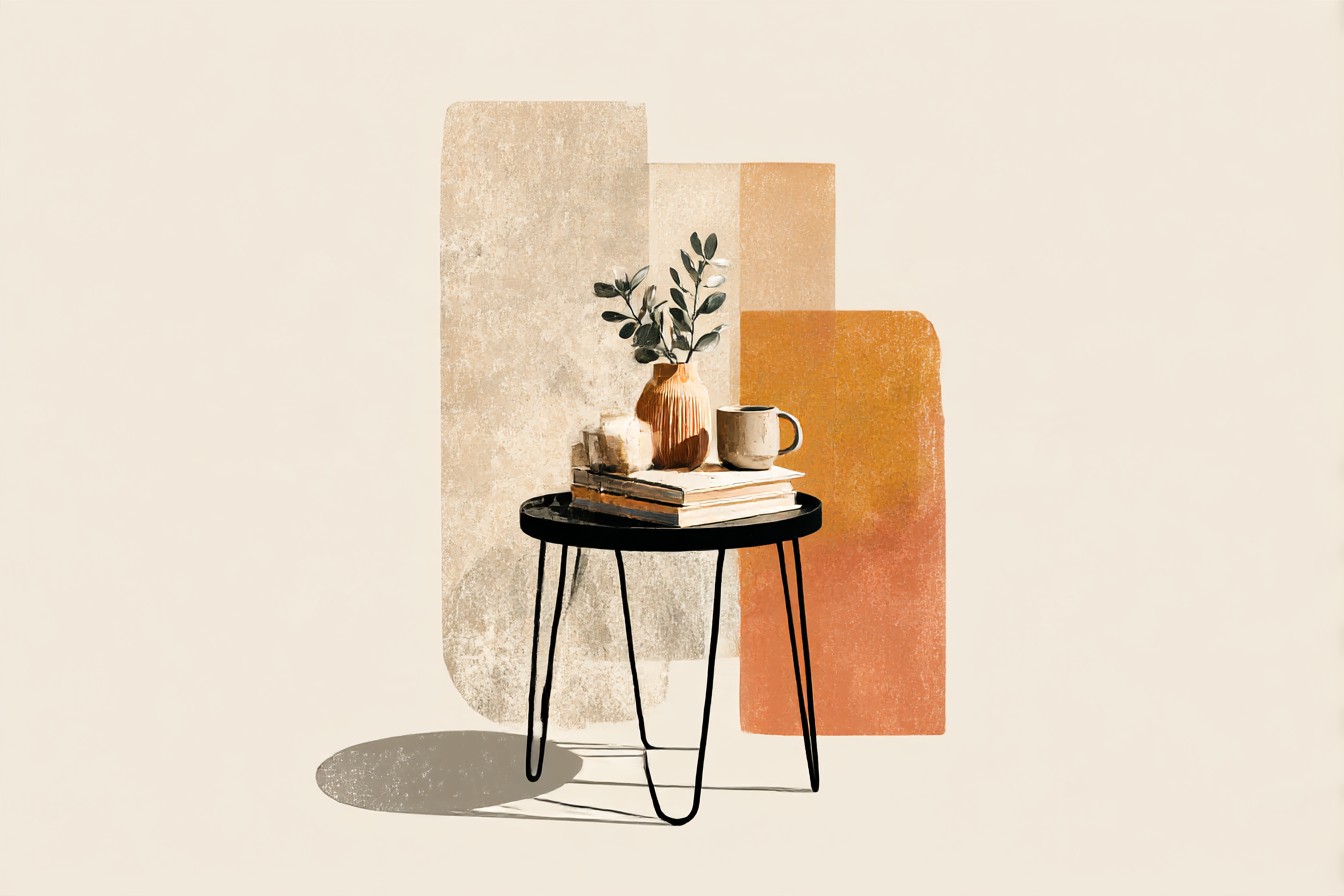
I’ve got one holding up a stack of library books that are properly overdue at this point next to my reading chair, and it does exactly what a side table should do, which is disappear into usefulness while still looking like somebody meant to put it there.
These are also, practically speaking, the easiest to find secondhand in decent shape, because they were made in such volume through the sixties and seventies that every estate sale from Savannah to Statesboro seems to have three of them stacked in a garage somewhere.
[Small Black Side Tables]
Final Thoughts
If there’s a thread running through all of this, it’s that black isn’t the neutral everybody claims it to be, it’s more like a decision, a small dramatic one, every time you bring one into a room. It reflects whatever’s near it, softens next to the right texture, turns cold next to the wrong one. What I’ve come around to after years of hauling these things home in the back of a truck that really shouldn’t be hauling furniture anymore is that the table itself matters less than what you’re brave enough to sit beside it. Warm wood, worn brass, a bit of linen, a plant nobody’s watering properly. That’s the actual formula, if there is one.
I still think about that forty dollar iron table behind the tarp more than I probably should. Not because it was rare, it wasn’t particularly, but because I almost didn’t stop, and the whole hunt is built on almost. Every good black table I own came from a moment where I could have kept walking and didn’t. That’s worth more to me than matching anything perfectly.

[…] the thing nobody tells you about side tables. Everyone talks about them like they’re a footnote to the sofa or the bed, an afterthought […]