Everyone told me a teal sofa was going to be the hardest piece of furniture I’d ever own to build a room around. My sister in law said it, my wife’s coworker said it at a barbecue like she was warning me about a bad neighborhood, and about four different comment sections on furniture forums basically said “teal is a commitment, good luck matching anything to it.” I believed all of it. For about eight months I had a big velvet teal sofa sitting in my living room in Indianapolis with absolutely nothing in front of it, because I was terrified that whatever footstool I picked would either disappear into the sofa or fight it so hard the whole room would look like it was having an argument with itself.
Here’s what actually happened, and it took me embarrassingly long to figure it out. Teal isn’t hard to accessorize because it clashes with everything. It’s hard to accessorize because it’s already doing so much work in the room that people panic and think the footstool needs to match it exactly, like a puzzle piece, or else the whole thing falls apart. It doesn’t.

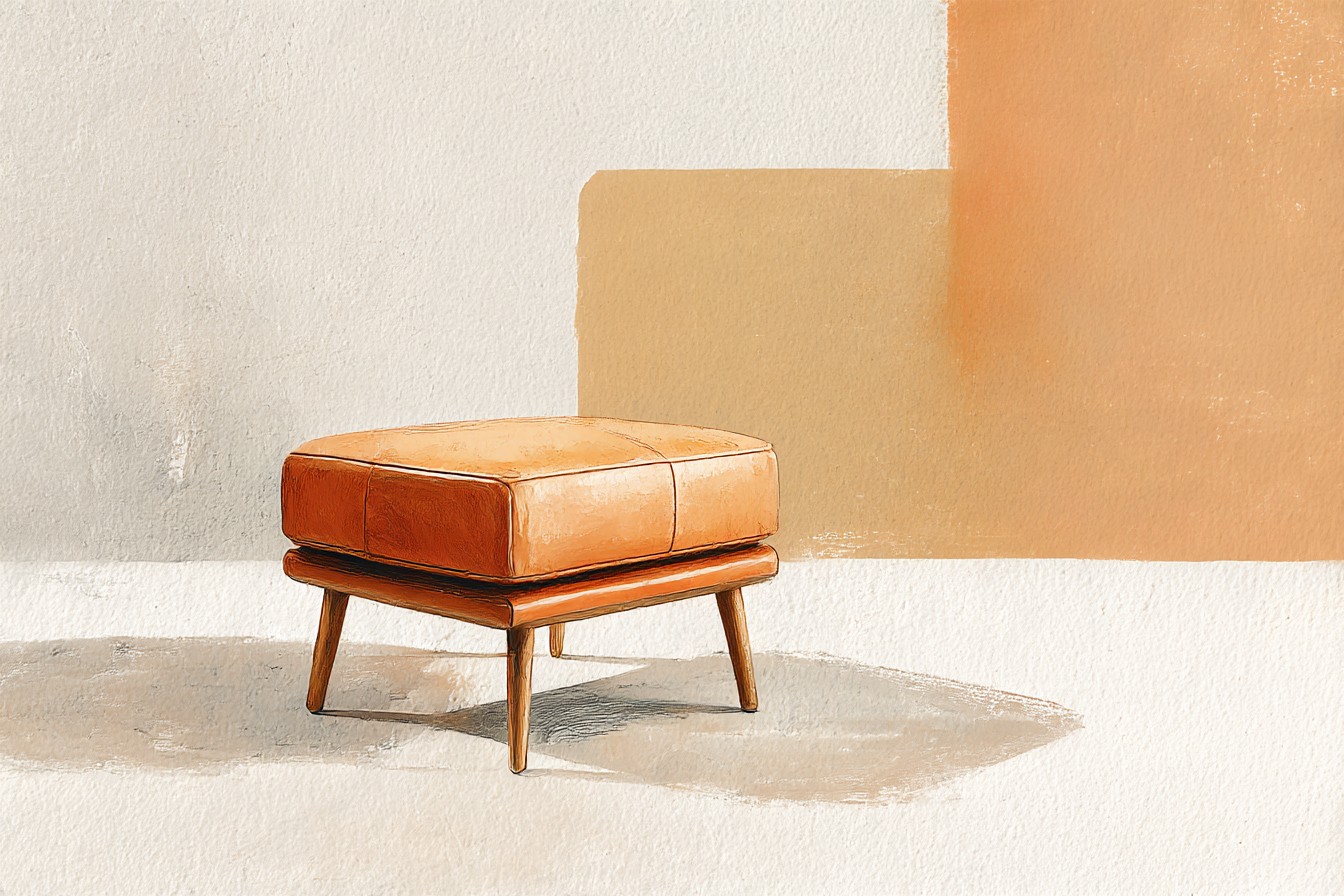
A teal sofa is bold enough that your footstool’s job isn’t to blend in, it’s to have its own opinion. Once I stopped trying to find “the teal that goes with my teal” and started looking at completely different colors, the whole thing clicked. The stool that finally broke the standoff in my living room was a rust colored ottoman I found at a shop that was closing down, marked half off because nobody wanted the color. I almost walked past it. It’s been the best two hundred dollars I’ve spent on this house.
So if you’re standing in your own living room right now, staring at a teal sofa and asking the exact question I asked, what footstool color actually goes with teal, I’ve got more than one answer, because there isn’t one right answer, there’s a handful of directions that all work for different reasons. Some are warm, some are quiet, one is basically a dare. I’ve lived with versions of most of these, tested them against two kids who treat every soft surface in this house as either a trampoline or a napkin, and I’ve got opinions about which ones survive that and which ones just look nice on delivery day.
[Footstool Colors for a Teal Sofa]
Mustard and Ochre
This is the one people are most scared of and it’s my favorite by a mile. Mustard sits almost directly across from teal in terms of temperature, warm against cool, and instead of clashing it does this thing where both colors look more like themselves. The teal looks bluer and richer, the mustard looks warmer and less “school bus,” and the room stops feeling like one giant cool colored blob.
I put a mustard boucle footstool in front of our teal sofa about two years ago, half convinced I’d hate it within a week. My youngest tested it almost immediately by using it as a launch pad for a jump onto the sofa cushions, missed, and came down with a juice box in hand that was somehow still half full on impact. It went everywhere. Boucle is not a fabric I’d have picked for stain resistance if you’d asked me cold, it looks like it should hold onto everything, but this one had a performance weave underneath and wiped clean with a damp cloth and zero drama. Genuinely shocked me.
The one thing I’ll say honestly is that mustard is a color you either commit to or you don’t. A small footstool in mustard reads as a deliberate, confident choice. If you’re nervous about it, start with a smaller piece rather than a huge tufted ottoman, because a little goes further with this color than you’d think, and you can always add more later once you trust it.
[Mustard and Ochre Footstools]
Blush and Dusty Rose
I did not expect to like this pairing. Pink next to teal sounds like a toddler’s bedroom on paper, and I mean that as someone with two actual toddlers who has seen exactly that room. But dusty rose, the grayed down, almost clay colored version of pink rather than anything bubblegum, does something soft and honestly a little bit fancy against a teal velvet sofa. It’s the pairing my wife picked out for our reading nook and I fought her on it for about a week before admitting she was right.
The trick with blush is picking the right material. We went with a velvet footstool in dusty rose, not a flat cotton, because the velvet has enough depth to it that it doesn’t read as pastel and precious, it reads as warm and a bit moody, which matches the teal’s energy instead of undercutting it. A flat matte pink next to a rich teal velvet can end up looking a little cheap, like they’re from two different decades of furniture. Velvet on velvet solves that.
Full disclosure on durability, because I always end up here eventually. Velvet footstools are not what I’d put directly in the path of a dog that thinks every soft surface belongs to him, which mine absolutely does. Ours lives slightly out of the main traffic lane, near the window, and it’s stayed clean for over a year specifically because it’s not the piece everyone’s feet land on first.
[Blush and Dusty Rose Footstools]
Warm Neutrals: Oatmeal, Cream, and Camel
If you want the safe answer, and there is nothing wrong with wanting the safe answer, this is it. Oatmeal boucle, cream linen blends, camel colored leather, they all work with teal because they’re warm without being loud, and they let the sofa stay the main character of the room. This is the direction I’d point a first time teal sofa owner toward if they messaged me in a panic, because it’s genuinely hard to get wrong.
You Might Also Like

We have a camel colored faux leather pouf that’s taken more abuse than anything else in this list. It’s the one my oldest uses as a footstool, a step stool, a drum, and once, memorably, a bed for a stuffed dinosaur that was apparently “too tired” to sleep anywhere else. A permanent marker incident happened on it about four months in, one of those moments where you hear the cap come off across the room and just know. It wiped off completely with rubbing alcohol, no ghost mark left behind, which I did not expect and am still a little amazed by.
The only warning I’d give with warm neutrals is texture matters more than the color itself here. A flat, smooth cream fabric can look a bit lifeless next to a rich teal velvet sofa. Boucle, ribbed cord, or a leather with some visible grain gives it enough presence to hold its own instead of just sitting there being inoffensive.
[Warm Neutral Footstools]
Charcoal and Black
This is the pairing for people who want drama without adding another loud color into the mix. Charcoal or black grounds a teal sofa the way a dark frame grounds a bright painting, it gives your eye somewhere to land that isn’t fighting for attention with the sofa itself. It’s also, practically speaking, the option that hides the most sins, which matters a great deal in a house with two kids and a dog who has never once wiped his own paws.
We tried a small black leather footstool in our front room for about a year, and I’ll be honest, I underestimated how much it would change the feel of the space. The teal sofa suddenly looked more expensive, more considered, like the room had been thought about rather than assembled in a panic during a Wayfair sale, which is closer to what actually happened. The leather held up to everything, scratches from the dog’s nails buffed out with a bit of leather conditioner, and a full glass of red wine that got knocked over during a game night survived because it beaded up and wiped away instead of soaking in.
The downside, and I noticed this within a couple weeks, is that charcoal and black can start to feel a little heavy in a smaller room if it’s the only dark element. In our front room, which is not huge, I balanced it with a lighter rug so the whole space didn’t tip into looking like a moody photo shoot nobody asked for.
[Charcoal and Black Footstools]
Rust and Terracotta
This is the one that actually started this whole thing for me, the half price ottoman I mentioned earlier, and it’s still the pairing I recommend most when someone asks me directly what color goes with a teal sofa. Rust sits in that same warm family as mustard but it’s quieter, earthier, more grounded, and it reads as intentional rather than trendy, which matters if you’re not the type to redecorate every couple years.
Our rust ottoman is a heavier woven fabric, almost like an upholstery grade linen, and it’s taken four Indianapolis winters of muddy boots being propped on it, one dog who insists on resting his chin on it every single evening, and at least three separate spill incidents I can specifically recall, including a full bowl of spaghetti that landed largely on the floor but partly on the corner of the stool. It scrubbed out. The color actually seems to hide the aftermath of daily life better than either the blush or the cream options, probably because it’s already got some depth and variation built into the weave.
If your teal sofa leans more blue than green, rust looks even better, because the contrast is stronger and it reads as a proper complementary pairing rather than something that’s merely not clashing. It’s the one on this list I’d call the most quietly confident choice, understated but doing more work than it looks like at first glance.
[Rust and Terracotta Footstools]
Final Thoughts
If you’d asked me two years ago what footstool color goes with a teal sofa, I’d have shrugged and told you to just buy a matching set and hope for the best, which is exactly the advice that had me sitting in front of an empty patch of floor for the better part of a year.

The actual answer, after living with about five different versions of this problem, is that teal wants contrast more than it wants matching. Warm tones like mustard, rust, and terracotta play off it because they’re on the opposite end of the temperature scale. Softer tones like blush add contrast without shouting. Neutrals like oatmeal and camel let the sofa keep the spotlight. Charcoal and black ground the whole thing and hide more mess than any of the others, which counts for a lot in a house like mine.
None of these are the “correct” answer, because there isn’t one, and honestly that’s the part I wish someone had told me before I spent eight months staring at an empty spot on my living room floor. What actually matters more than the color chart is the fabric holding up to whatever your household throws at it, literally, in the case of that spaghetti bowl. Pick the color that matches the mood you want the room to have, then pick the material based on who’s actually going to be sitting on it, climbing it, or using it as a launch pad. Mine’s rust, it’s survived four years of chaos, and I still like looking at it, which is more than I can say for half the stuff we bought in a hurry when we first moved in.