I own three coffee tables right now, spread across a two bedroom apartment in Boston that does not have three living rooms to put them in. One is doing its actual job in the living room. One is currently functioning as a plant stand in the corner because I couldn’t bring myself to get rid of it after it disappointed me so specifically. And one is in my building’s storage cage, wrapped in a moving blanket, because I bought it during a period of my life I now refer to as “the Facebook Marketplace years” and it turned out to be the wrong size for literally every room I have ever lived in since.
That is a genuinely deranged number of coffee tables for one adult woman who does not run a furniture consultancy. I know this. I’ve said it out loud to myself while standing in the storage cage, which is its own small horror.
Here’s how I got there, and it’s not really about shape or size, even though I spent two of those three purchases obsessing over exactly that.
It’s about color. Every single one of those tables was bought, and then eventually rejected or demoted, because of what it looked like, not what it did. The glass one photographed beautifully and then showed every fingerprint like a crime scene. The pale oak one looked warm in the shop and looked like a rotisserie chicken under my living room’s overhead light. The black one, the one that’s actually in my living room right now doing its job properly, I almost didn’t buy because a friend of mine, Marisol, told me black furniture would make my apartment look like “a dentist’s waiting room.” She was wrong, for the record, but it took me three months of hesitating to find that out for myself.
So this is the piece where I actually walk through it properly, color by color, including the mistakes, because I think most coffee table advice skips straight to shape and leaves color as an afterthought, when color is genuinely the thing that decides whether you like walking into your living room or not.
[Coffee Tables]
Black Coffee Tables
Black is the decision you make when you’re tired of making decisions. That’s not an insult, it’s the actual appeal. A black coffee table doesn’t ask your sofa a question. It doesn’t need to match your rug’s undertone or negotiate with your wood floor. It just sits there, does its job, and hides an unreasonable amount of sin.
Mine has survived a full glass of red wine, knocked over by me, not a pet, not a child, just me, being a person who talks with her hands near a full glass of wine. On a pale wood table that’s a story I’d be telling with my head in my hands. On black, I wiped it up and moved on with my evening. It’s also survived candle wax, a dropped phone, and a truly aggressive amount of coffee ring buildup that you’d only notice if you got down at eye level and looked, which, again, nobody does.
The one thing nobody tells you, and I found out the hard way with the table I now use as a plant stand, is that gloss black and matte black are not the same purchase at all. Gloss black shows dust like it’s being paid to. Fingerprints, water rings, every bit of cat hair in a two mile radius, all visible under any kind of lamp light, which defeats half the point of choosing a low maintenance color in the first place. Matte black hides all of it. If you’re choosing black specifically because you want to think about your coffee table less, and that is a completely valid reason to choose a color, go matte, every time.
[Coffee Tables]
Wood Tone Coffee Tables (Oak, Walnut, and the Trap of “Safe”)
Everyone recommends wood tone as the safe choice, and it is, mostly, but “safe” is doing a lot of quiet work in that sentence that nobody unpacks properly.
The oak table I bought during the pandemic looked, in the shop, like a warm honey color that would go with everything. I got it home, put it under my living room’s overhead light, which is a slightly warmer bulb than I realized, and it turned faintly orange. Not offensively orange, but orange enough that it clashed with my actual wood floor, which has cooler gray undertones, in a way I hadn’t clocked until they were sitting six feet apart in the same room looking like they’d never met.
That’s the actual risk with wood tone. It’s not that it’ll look bad, it almost never looks bad on its own. It’s that wood has an undertone, warm or cool, orange leaning or gray leaning, and if that undertone doesn’t roughly agree with your floor, you end up with two different woods in one room having a visible disagreement nobody asked them to have.
Walnut solves some of this because it skews darker and cooler, which plays more politely with gray floors and cooler rugs. Oak skews warmer and lighter, which works beautifully with warm floors and honestly looks a bit wrong against anything cool toned, the way my apartment proved to me directly. My advice, the actual practical version, is to hold a sample against your floor in the room’s real light before you commit, not the shop’s lighting, not a photo, your actual living room at seven in the evening when the lamps are on. That five minute check would have saved me a coffee table’s worth of regret and a plant stand I didn’t need.
[Coffee Tables]
White and Cream Coffee Tables
I need to be honest about this one because I think white coffee tables get recommended by people who don’t actually live with mugs, kids, or red wine anywhere near them.
I had a cream lacquered coffee table for about fourteen months. It looked incredible in photos, genuinely, my apartment looked like somewhere a person with their life together might live. Then real life happened to it. A mug ring that never fully lifted no matter what I used on it. A streak of blue ink from a pen that rolled off a notebook. A scuff from moving it four inches to vacuum that turned into a permanent gray smudge along one edge. None of these were dramatic incidents. That’s the point. White doesn’t need a disaster to look wrecked, it just needs ordinary Tuesday use.
What actually bothers me is how furniture brands market white pieces as practical or family friendly without saying what they actually mean, which is “practical if nobody in your household ever puts a mug on it directly.” That’s not practical, that’s a display piece with a price tag attached, and I wish the copy just said so instead of implying I’m the problem when it inevitably shows marks within a month.
If you love the look, and I understand the appeal completely, go for a textured or matte finish rather than glossy lacquer, and accept a few coasters as a non negotiable house rule. I didn’t do either of those things the first time, and that table is now somebody else’s problem via a very honest Marketplace listing.
You Might Also Like

[Coffee Tables]
Bold Color Coffee Tables (Sage, Terracotta, Navy)
Right, this is the one that makes me want to write a strongly worded email.
Colored coffee tables, proper color, sage green, terracotta, navy blue lacquer, are having a moment, and I actually love them as an idea. A colored coffee table can do the work an accent chair usually does, it gives a room a focal point without needing to repaint anything. I’ve seen a terracotta lacquered round table make an otherwise entirely beige rental apartment look like someone with actual taste lives there.
What I cannot get past is the pricing on some of these. I found a sage green lacquered coffee table from a brand that markets itself, in its own words, as “affordable modern design,” priced at four hundred and twenty dollars. For a painted wood table, no marble, no brass, no special joinery, just paint and a shape. FOUR HUNDRED AND TWENTY DOLLARS, and the brand’s own homepage still had the word “affordable” sitting right there in the header like it wasn’t embarrassed about it.
You do not get to call yourself affordable at that price, and you know it, and I know it, and everyone who’s put that exact table in a cart and then quietly closed the tab knows it too. A can of the right lacquer paint and an unfinished wood coffee table from a secondhand shop will get you ninety percent of that look for about sixty dollars and an afternoon, and the only thing you lose is the ability to say the brand’s name out loud at a dinner party.
Maybe that’s just me being precious about paint. No, actually, no, I’ve thought about it, it’s not fine.
If you want the color, get it, but get it because you found the right shade, not because a brand told you affordable and charged you like it wasn’t.
[Coffee Tables]
Matching Your Coffee Table to Your Sofa and Room
Here’s the actual decision path, stripped of all the color theory nonsense, because most people just want to know what to do tonight.
If your sofa is dark, charcoal, navy, deep green, go lighter on the table. Wood tone or even white keeps the room from feeling like a cave. My sister has a bottle green sofa and a black coffee table and it reads heavy in a way she didn’t intend, the whole seating area just absorbs light instead of doing anything with it.
If your sofa is light, cream, beige, pale gray, you have the most freedom of anyone reading this. Go dark and dramatic with black or walnut for contrast, or stay light and let the room feel airy and a bit more Scandinavian. Both work, it’s genuinely a taste call at that point, not a rule.
If your room is small or short on natural light, avoid a dark glossy table as your only piece of dark furniture, it’ll read as a hole in the middle of the room.
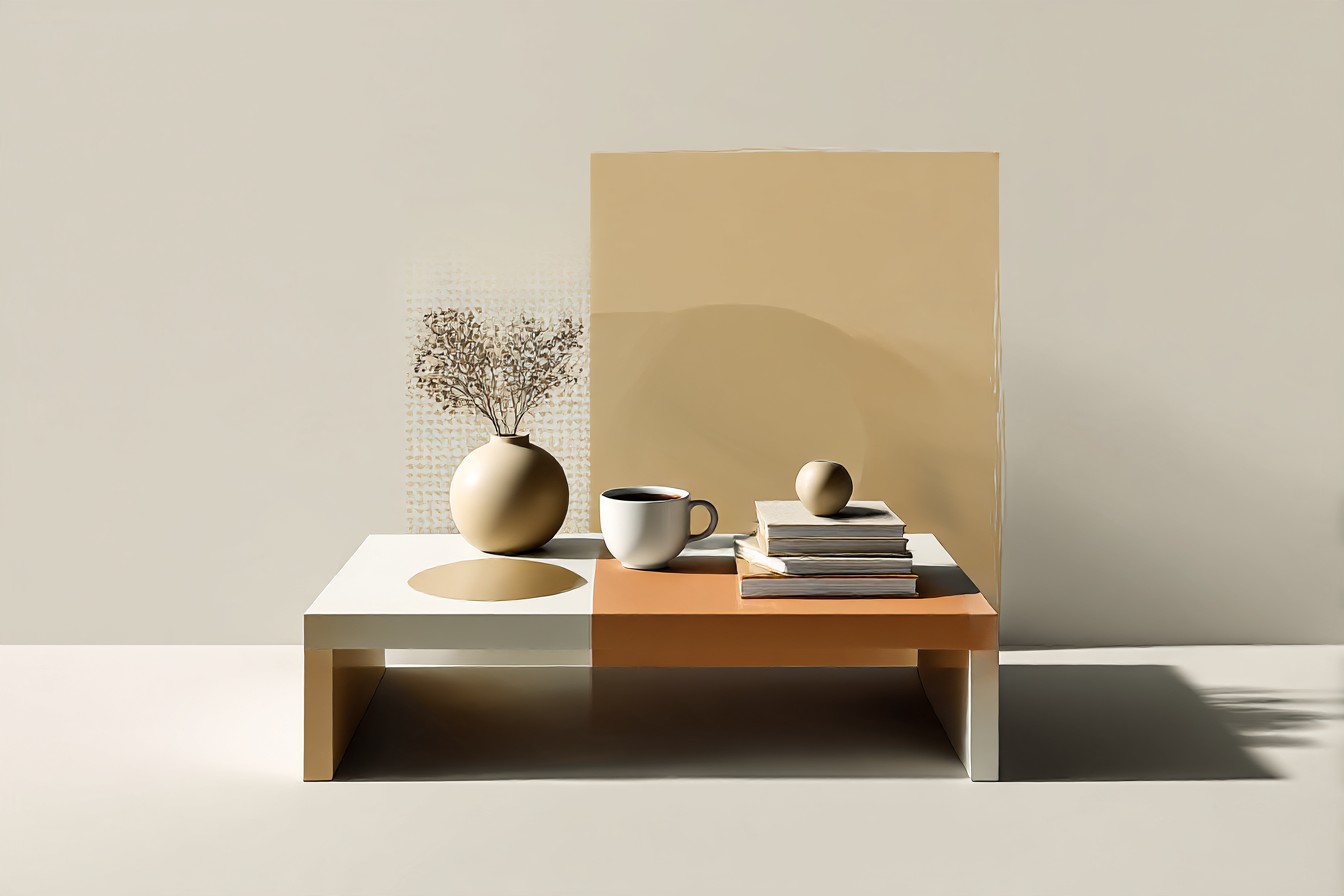
A lighter wood tone or a glass top will bounce light around instead of eating it. If your room already has a busy rug or patterned curtains, keep the table simple, black or plain wood, because a bold colored table on top of a busy rug is just visual noise arguing with itself.
And if you genuinely cannot decide, default to a warm mid tone wood. It’s the compromise choice for a reason, it plays fair with almost every sofa color and most floors, and it’s the one option on this whole list I’ve never once regretted buying.
[Coffee Tables]
Final Thoughts
If you asked me flat out what color coffee table to get, I’d say black if you want to stop thinking about it, wood tone if you want the safest real answer, white if you’re disciplined about coasters in a way I clearly am not, and a bold color if you found one that isn’t charging you three times what the paint and plywood are actually worth.
But the bigger thing I’ve learned across three coffee tables, one demoted to plant stand duty and one currently rotting in a storage cage, is that color is not the small decision people treat it as. It’s the decision that determines whether you notice your living room or just pass through it. Shape and size matter, sure, but I have never once regretted a coffee table’s dimensions the way I’ve regretted a color that fought with my floor or showed every mark I made on it.
So look at your actual room, in its actual evening light, next to your actual sofa, before you decide anything. Not a showroom, not a product photo shot in perfect daylight. Your room. That’s the only test that’s ever told me the truth.
[Coffee Tables]