I was up on a step stool in my own bedroom on a Sunday morning, not doing anything productive, just finally dealing with the top of my wardrobe because my wife had started leaving passive aggressive sticky notes on it. “Is this a shelf or a time capsule.” Fair. I pulled down a shoebox with a broken guitar tuner in it, a gift bag from a wedding I couldn’t remember attending, and a single hiking boot with no partner anywhere in the house. That’s the honest starting point for most of us. The top of a wardrobe isn’t a design decision to begin with, it’s just the place gravity and laziness send things, and it stays that way until you make a call on it.
Here’s the thing though, and this is the bit I actually care about professionally, not just as a guy who hates clutter. Before you put anything up there on purpose, you need to know what that surface is actually made of.
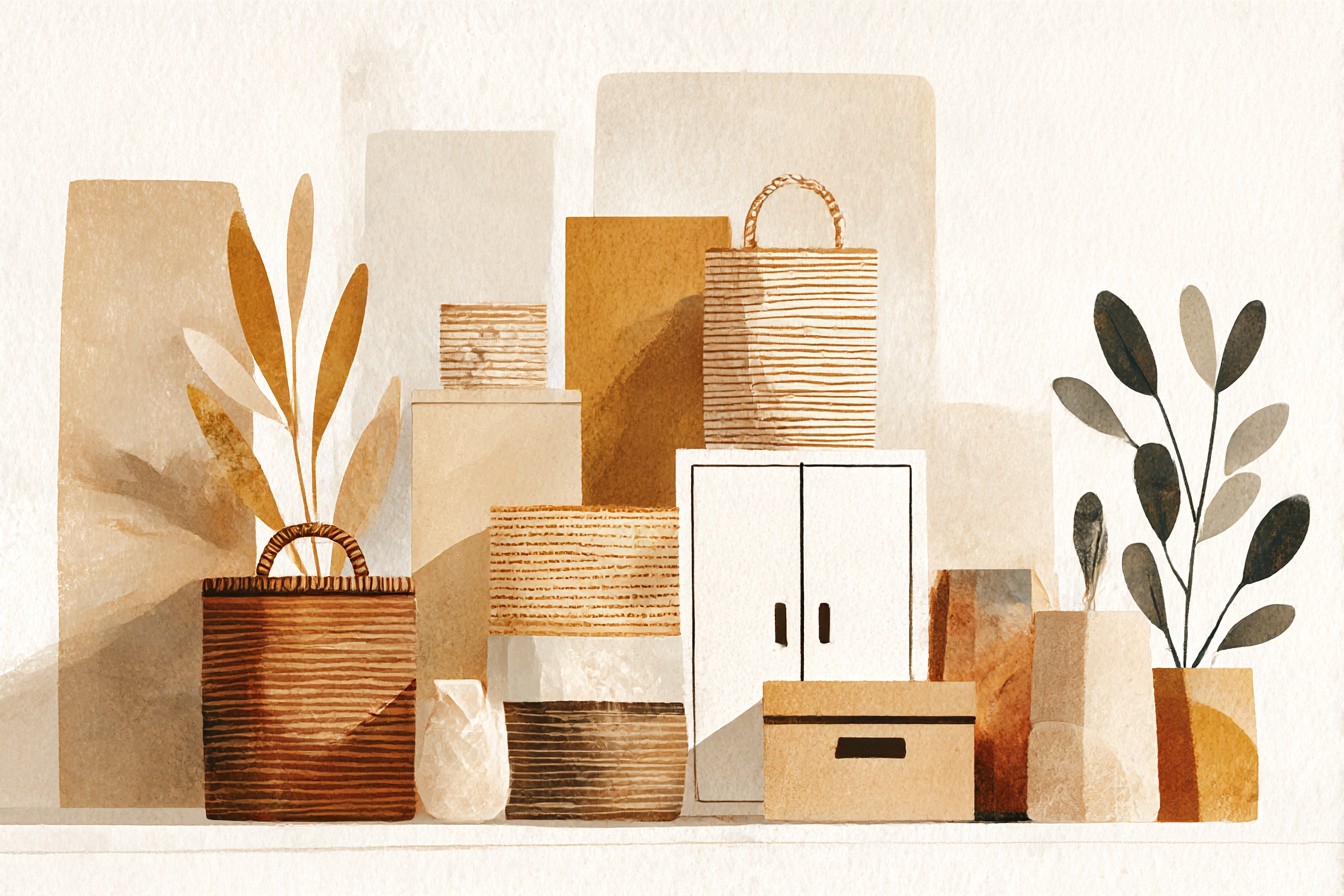
I build wardrobes for a living, or close enough to it, and the top panel on a lot of flat pack units is not built to hold weight, it’s built to look finished. It’s often a thin sheet of MDF or particleboard sitting on cam locks and dowels, not a structural shelf. Put four heavy woven baskets stacked with winter bedding up there and you’re testing joints that were never rated for it. My dad, who’s been doing this thirty odd years longer than me, has one rule he drilled into me early: know what’s holding the weight before you decide what the weight is going to be. That applies here just as much as it applies to a bookshelf.
Once you’ve actually checked that, though, the top of a wardrobe is honestly one of the more useful bits of dead space in a bedroom. It’s high enough to be visually quiet, low enough that you can still reach it without a ladder if your ceilings are normal height, and it’s got just enough surface area to do something with instead of just staring at a flat expanse of MDF dust. Baskets, boxes, plants, the odd trunk, there’s a real logic to what goes up there and what doesn’t, and it’s not the same logic as a shelf at eye level. What follows is basically the sorting I did that Sunday morning, minus the mystery boot.
[Ideas for the Top of a Wardrobe]
Woven Baskets
Baskets are the first thing most people reach for and honestly, they’re the right instinct. Seagrass, rattan, that woven water hyacinth stuff you see everywhere now, all of it is light for its size, which matters more than people think when you’re loading a surface that might not be structurally generous. A basket the size of a small suitcase might only weigh three pounds empty. Compare that to a wooden trunk of the same footprint, which could be twenty pounds before you’ve put a single scarf in it.
The failure point on baskets isn’t the wardrobe top, it’s the basket itself. Cheap woven baskets are held together with a handful of staples where the base meets the sides, and I’ve pulled apart enough of them to know that’s where they let go first, usually right when you’re lifting one down one handed while holding a coffee in the other. Check the base seam before you buy. If you can see staples through the weave, or the base flexes when you press it, that basket’s going to be fine for spare pillowcases and completely wrong for anything with actual weight to it, books, shoes, whatever.
What I’ve landed on in my own place is two mid sized baskets with lids, used for off season stuff, spare duvet covers in one, beach towels in the other. Lids matter more than people give them credit for up there. Without one, everything up top collects dust like it’s got a personal vendetta, and you end up needing to wash bedding before you use it, which defeats the point of storing it.
The other thing worth saying, because nobody does, is that baskets read as a “storage” object even when they’re empty or barely full, which is useful if you want the top of the wardrobe to look intentional without actually doing much organizing. A basket with a single spare blanket in it looks purposeful. A basket that’s a quarter full of loose cables does not. Load them like you mean it, or don’t put them up there at all.
[Baskets]
Lidded Boxes and Bins
If baskets are the honest option, lidded boxes are the one that hides the evidence better. I mean that as a compliment. Matching fabric covered boxes, the kind with a solid cardboard or fiberboard core wrapped in linen or canvas, do a specific job that baskets can’t, they go completely opaque. Nobody’s peering through a woven gap and spotting the tangle of phone chargers you swore you’d sort out in January.
The construction detail that actually matters here is what’s under the fabric. A lot of these boxes are corrugated cardboard, which is fine dry, and genuinely not fine the second there’s any humidity in the room, a leaky window, a bathroom next door, a Milwaukee basement bedroom in August. Cardboard boxes that have taken on moisture once don’t fully recover, the corners go soft, the lid stops sitting flush, and within a year you’ve got a box that looks like it’s slowly melting. If your bedroom runs humid at all, spend the extra and get boxes with a proper MDF or thin plywood core. You’ll feel the difference just picking one up, it’s stiffer at the corners and doesn’t flex when you press the side panel.
Stacking is where I see people go wrong most. Two lidded boxes stacked is fine on most wardrobe tops. Three starts putting real pressure through a single point if the boxes aren’t the exact same footprint, and I’ve seen a top box slide clean off because the base box had a slightly domed lid instead of a flat one. Buy them as an actual matched set from one line, not three separate boxes that look similar in photos, the half inch of mismatch is exactly where things go wrong.
I use these for the stuff that needs to stay clean and out of sight but isn’t heavy, spare cushion covers, gift wrap, a box of cables I keep meaning to sort. Not books. Never books. Books belong on an actual shelf, and if you’re using a wardrobe top as your overflow library, that’s a separate conversation about how much stuff you own.
[Boxes]
Vintage Trunks and Suitcases
This is the one where I have to be the annoying guy in the room and say it plainly: a stacked pair of old leather suitcases, or a proper steamer trunk, looks fantastic up there and is also the heaviest option on this list by a wide margin, sometimes forty or fifty pounds once you count what’s actually inside them. Before that goes anywhere near the top of a wardrobe, I want to know what’s under that top panel, and so should you.
Flip your wardrobe around if you can, or just look up from underneath with a flashlight, and check whether the top is a full sheet fixed into the side panels with proper cam locks and dowels, or whether it’s basically resting there decoratively with a couple of small brackets doing the actual work. My dad’s had a blanket box on top of a wardrobe in the spare room at his place for I want to say fifteen years now, no sagging, no creak, because that wardrobe’s got a solid ply top screwed straight into the carcass sides, not floated on cams. That’s the difference between furniture built to be used and furniture built to be photographed once and never touched.
You Might Also Like

If your wardrobe passes that check, trunks are genuinely one of the best options here, because unlike baskets or boxes they don’t need anything inside them to look finished. An empty trunk with a good patina does the job on its own. If you do use the inside for storage, keep it to soft, light stuff, spare linens, out of season clothes folded flat, nothing dense like books or tools.
If your wardrobe doesn’t pass that check, don’t force it. Get a smaller vintage case, the kind that weighs next to nothing, and skip the full sized trunk entirely. There’s no styling win worth a cracked top panel.
[Trunks and Suitcases]
Plants
I’ll be straight, I’ve killed more plants on top of a wardrobe than anywhere else in the house, and it took me an embarrassingly long time to work out why. Heat rises. The top eighteen inches of a room, right where a wardrobe top sits, runs noticeably warmer and drier than the rest of the space, especially in a house with forced air heating blasting from a vent up near the ceiling, which is exactly the setup in my place. A plant that’s perfectly happy on a windowsill will slowly cook up there.
Real plants that actually cope with it are the tough, ignore me ones. Pothos, that trailing devil’s ivy stuff, does fine because it’s basically unkillable and the trailing habit works with the height instead of against it, letting a vine hang down the side of the wardrobe looks deliberate instead of like you’re just storing a plant out of the way. A snake plant works too, it’s built for exactly this kind of neglect. What doesn’t work is anything that wants consistent humidity, ferns, most tropical stuff, they’ll brown at the tips within a month and you’ll spend more time troubleshooting than enjoying it.
Faux plants have gotten properly good in the last few years, good enough that I’ve got one on a bookshelf that guests have watered by mistake, which I take as the highest possible compliment to whoever engineered that plastic leaf. Up on a wardrobe, where nobody’s touching it or checking the soil, faux is honestly the lower maintenance and often more sensible call, and I say that as someone who generally prefers real everything.
One practical note that’s purely structural, not aesthetic. Ceramic plant pots are heavier than they look once the soil’s wet, and if you’re putting a real plant up there, that’s dead weight sitting on the same panel as everything else. Factor it into the total, don’t just add it on top and assume there’s room to spare.
[Plants]
Rotating Seasonal Storage
The last category isn’t really about the object, it’s about the job the top of the wardrobe should actually be doing, which is holding things you need twice a year, not things you need never or things you need daily. This is where most of the junk problem I started with actually comes from, people put current stuff up there because it’s out of the way, and then it just stays, becoming that shoebox with the broken tuner in it.
What I’ve actually settled on, after that Sunday morning clear out, is plain labeled fabric bins, one per season, nothing fancy, just enough structure to hold their shape and a printed label on the short end so I can read it from the floor without pulling each one down to check. Christmas decorations in one. Summer bedding in another. Off season shoes in a third, though I keep that one lighter than the others on purpose, because shoes add up in weight faster than people expect and I’d rather not find out the hard way which corner of that panel is weakest.
The system only works if you’re honest about rotation. Stuff goes up when its season ends, comes down when the season starts, and nothing lives up there permanently just because it’s found a home.
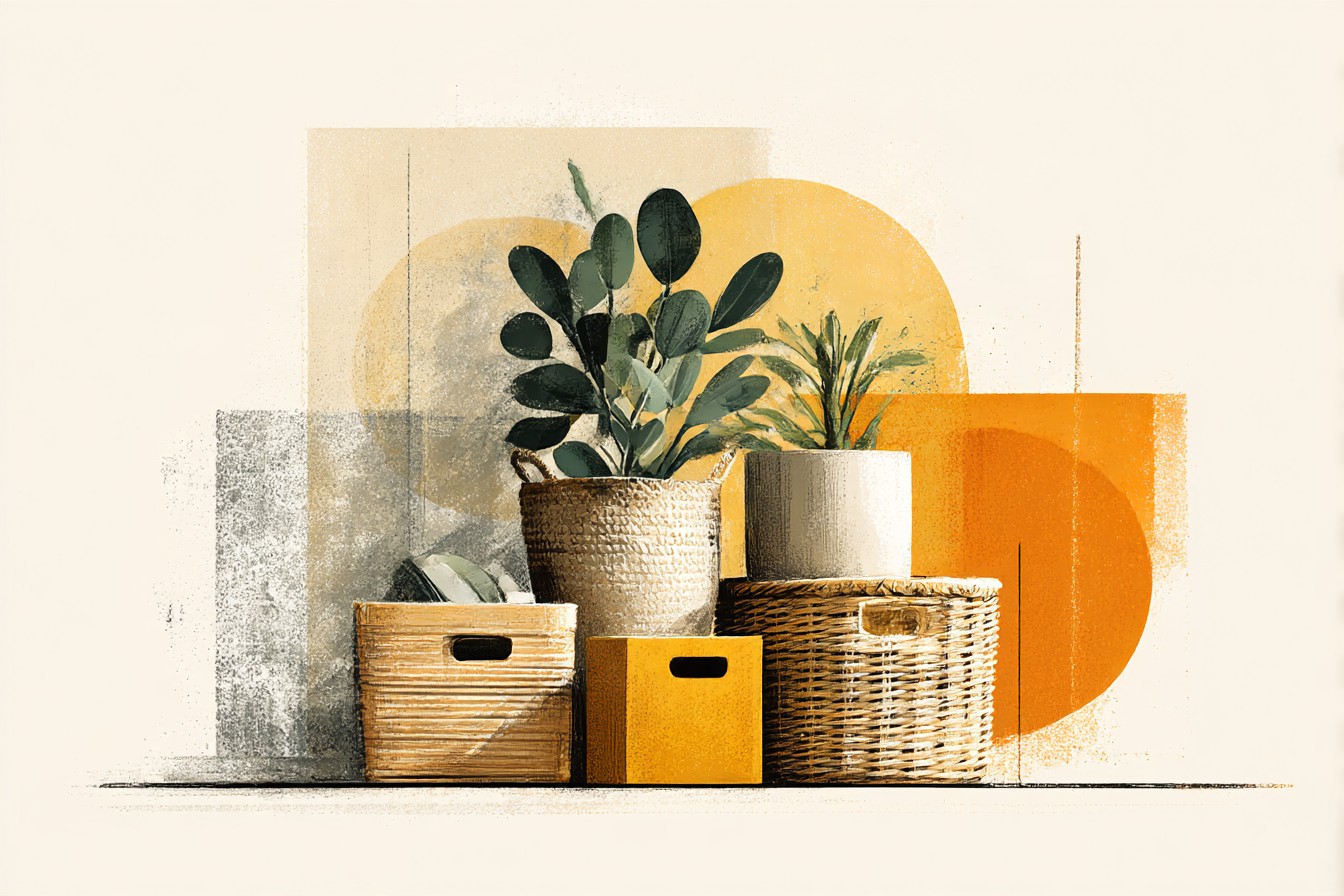
The moment something’s been up there two years without moving, it’s not storage anymore, it’s just been relocated junk, and it’s taking up weight capacity that could be doing an actual job.
This is also where I’d say skip the baskets and boxes entirely if what you actually need is decoration up there rather than storage. Not every wardrobe top needs a function. Sometimes one good trunk and a trailing plant is the whole answer, and adding a rotation system on top of that is just recreating the clutter problem with better packaging.
[Seasonal Storage]
Final Thoughts
If there’s one thing I’d want someone to take from all this, it’s to check the panel before you fill it. Everything else, baskets versus boxes, real plant versus faux, trunk versus nothing at all, is a matter of taste and how much dusting you’re willing to sign up for. Whether the top of your wardrobe can actually hold what you’re planning to put on it is not a matter of taste, it’s a fact about how that piece of furniture was built, and it’s worth thirty seconds with a flashlight to find out before you commit forty pounds of vintage trunk to a panel that’s basically decorative.
Past that, my honest advice is to pick one job for that surface and let it do that job well, rather than splitting it three ways between storage, decoration, and wherever your hiking boots end up. My own wardrobe, since I fixed it, has one lidded box, one trailing pothos that’s outlasted every fussier plant I’ve tried up there, and nothing else. It’s not the most photogenic version of this idea I’ve seen. It’s the version that’s stayed exactly like that for eight months without turning back into a shoebox graveyard, and at this point, that’s the only result I’m actually trying to build for.