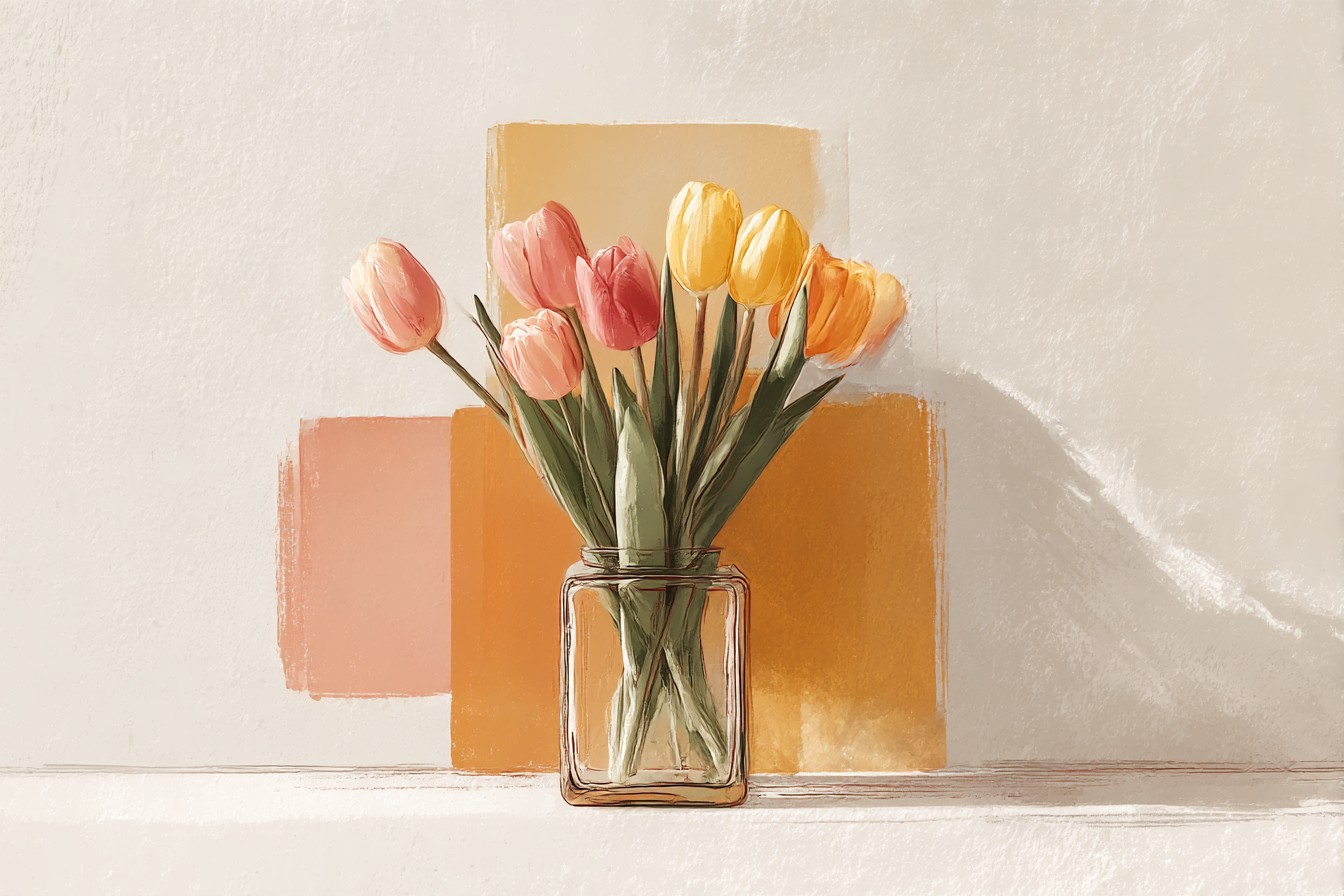
Okay so tulips have this reputation as the beginner flower. The “I don’t know anything about flowers but I need a vase to not be empty” flower. Cheap, cheerful, grab a bunch from the grocery store on your way home, shove them in whatever jar’s under the sink, done, look at you, you have flowers now. And for a while I fully believed that. I treated tulips like the paper towels of the flower world, functional, forgettable, replace when needed.
Then I actually filmed a full week of them for a spring content series, ten bunches, five vases, way too much counter space given to flowers for someone who was supposed to be working, and I found out tulips are not the low maintenance flower everyone thinks they are. They keep growing after you cut them.
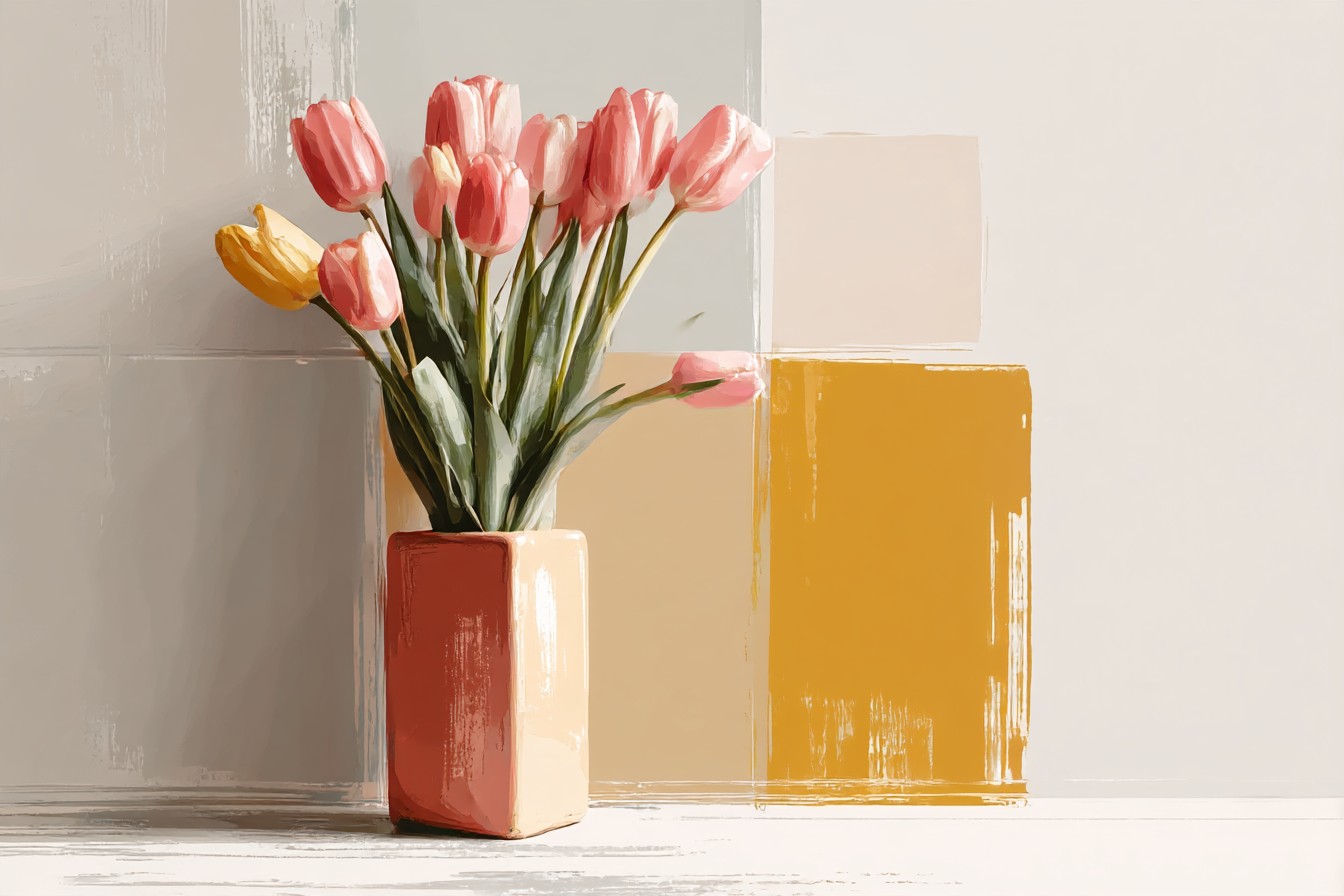
Like, actively, visibly, an inch overnight sometimes. They bend toward whatever window light is nearest, which means the arrangement you styled at 9am looks completely different by 3pm, which is either annoying or the most interesting flower content you’ll ever accidentally make, depending on your mood. They droop dramatically if the water’s even slightly off. They have more personality per stem than anything else in my kitchen, my ex included, and that’s not even the joke I planned to make, it just came out that way.
What actually changed my mind was pairing them with something else for the first time instead of doing the classic all tulip, one color, done bunch. I’d always assumed mixing tulips with other flowers would look messy, like they’d fight each other for attention. Sent a photo of my first attempt, tulips plus ranunculus plus one very confused sprig of eucalyptus, to my roommate group chat before I’d even trimmed the stems properly, and got back “okay this is actually giving something” from one person and total silence from the other two, which I’ve decided means they were speechless in the good way.
So if you’ve been Googling what flowers go with tulips in a vase at 11pm the night before a dinner party, hi, same, this is everything I’ve actually tried, what worked, what wilted by day two, and what I will never, ever pair a tulip with again.
[Tulips in a Vase]
Ranunculus, Because Tulips Get Lonely Fast
Ranunculus is the pairing I didn’t see coming and now cannot shut up about. They’ve got that same papery, almost fake looking petal texture as tulips, so visually they read like cousins instead of strangers, but ranunculus stays put. Doesn’t lean toward the window. Doesn’t grow another inch overnight and throw off your whole composition. It just sits there being perfect and slightly smug about it, which is exactly the kind of stability a tulip arrangement needs, because left alone tulips will absolutely do whatever they want.
Color wise, I did a blush tulip and a deeper coral ranunculus together and it looked genuinely expensive, like a florist did it, not like I panic bought two bunches at Trader Joe’s on a Tuesday. That’s the whole appeal here honestly, ranunculus makes tulips look intentional instead of impulsive. Went with white tulips and a pale yellow ranunculus for a friend’s engagement thing and someone asked if I’d used a florist. I had not. I used a coupon.
The one thing I got wrong the first time, I put them in equal amounts, and it ended up looking a little busy, a little “I couldn’t decide so I bought both.” Now I do tulips as the majority and ranunculus as more of an accent, maybe a third of the stems, tucked slightly lower so the ranunculus peeks through instead of competing for the front row. Works so much better and took me exactly one failed vase to figure out.
Stem length matters more here than with almost any other pairing, because ranunculus stems are noticeably thinner and shorter than tulip stems usually, so if you don’t trim your tulips down to roughly match, you get this weird two tier effect where the tulips are doing their own tall dramatic thing up top and the ranunculus is just kind of hovering awkwardly below like it wasn’t invited to the same party.
[Ranunculus Pairings]
Stem Length Is Doing More Work Than You Think
Nobody tells you this part but stem length is basically the entire game with tulips, more than color, more than what you pair them with, more than the vase you picked. I ignored this for probably two years. Bought tulips, trimmed a stingy inch off the bottom like I was told to do with every other flower, dropped them in a tall vase, and wondered why they always looked kind of sad and floppy within a day. Turns out tulips need way more room to actually drink water and stay upright than most flowers, and a lazy trim is basically setting them up to fail.
Now I cut aggressively, at an angle, and I actually vary the lengths within the same bunch on purpose instead of keeping them all identical. A few taller stems standing proud at the back, a handful cut shorter for the front, gives the whole thing depth instead of that flat “I lined them all up like soldiers” look you get from a florist shop bunch straight out of the wrap.
Vase height changes the math completely too. Short, wide vase, think something closer to a bowl, and you want your tulips cut way down, sometimes down to just a few inches above the rim, so they can flop and curve the way tulips naturally want to without toppling the whole arrangement over. Tall skinny vase, you can let them run longer and lean into that dramatic curving stem thing tulips do, which honestly is half the reason to buy them in the first place. I put fifteen full length tulips into a short vase once assuming taller automatically means fancier and it looked like the flowers were trying to escape. Structurally a disaster. Visually somehow still fine on camera, which is the most Freya sentence I’ll write in this whole piece, looked incredible on screen, looked unhinged in person.
[Stem Length and Vase Shape]
Greenery That Doesn’t Try to Steal the Scene
I went through a phase, and I’m not proud of it, where every single arrangement I made had to have eucalyptus in it because eucalyptus was Having A Moment and I was, unfortunately, extremely online. Tulips plus eucalyptus everywhere, every color, every occasion, and eventually I had to admit the eucalyptus was doing too much. Its scent is strong, its silvery color pulls focus, and next to something as delicate as a tulip petal it can genuinely just win the fight, which isn’t the goal, the tulips are supposed to be the main character.
What’s actually worked better for me is something quieter. A little bit of olive branch, if you can find it, gives you that same soft green without shouting. Or just plain leftover leaves trimmed off the tulip stems themselves, which sounds like a cheat code because it kind of is, free filler that already matches perfectly since it grew there in the first place.
You Might Also Like

Ferny stuff, like a soft fern frond or two tucked low, adds texture without adding a whole second personality to the vase. I did this for a brunch I hosted, tulips with just their own trimmed leaves plus two small fern pieces from a bunch I already had in the fridge from another arrangement, and it looked more finished than the eucalyptus version I’d spent actual extra money on. My upstairs neighbor came down to borrow a charger, saw the vase on her way out, said “wait who did your flowers,” and I got to say “me, for free, with garbage,” which might be my favorite sentence I’ve said all spring.
Keep whatever greenery you use noticeably shorter than your tallest tulip. The second it pokes above the tulip line, it stops being background and starts being competition.
[Foliage and Greenery]
Hyacinth and Daffodils, the Actual Spring Combo
If you want something that reads as unmistakably spring, not just flowers that happen to be around in spring but actually spring as a concept, hyacinth and daffodils are the move, and it’s the pairing that made the most sense the second I tried it, like duh, why was I overthinking this.
Hyacinth brings the smell, which people forget flowers can even do, mine made my entire apartment smell like something instead of nothing for the first time since I moved in, and daffodils bring that bright, almost cartoonish yellow that tulips in softer colors can lean against without clashing. I did white tulips, purple hyacinth, and a few daffodils tucked in low and it looked like an actual garden bed had been relocated into my kitchen, in a good way, not in a “there’s dirt everywhere” way.
The timing here needs a heads up though, because daffodils are secretly kind of rude to other flowers. Fresh cut daffodil stems release this sap that can shorten the life of everything else in the vase with them, tulips included, which I did not know the first time and could not figure out why my tulips gave up after two days instead of the usual five or six. The fix is stupidly simple once you know it, cut your daffodils, let them sit alone in their own water for a few hours or even overnight before you introduce them to the rest of the party. Skip that step and you’re basically inviting one guest who ruins the vibe for everyone else at the gathering.
Stem length here I keep fairly close together across all three flowers, unlike the tulip and ranunculus situation, because the whole point of this pairing is that clustered, just picked from an actual garden look, not a tiered, styled one.
[Hyacinth and Daffodil Pairings]
Anemones, and the Mix I Finally Gave Up On
Okay, honesty time, because I promised myself I wouldn’t only write the wins in this one. Anemones and tulips, I wanted this to work so badly. Both have that black centered, slightly dramatic thing going on, both photograph beautifully on their own, I figured together they’d be unstoppable. Bought a bunch of each, white anemones with the black centers, red tulips, thought it would look bold and a little bit gothic in the best way.
It looked like a mess. Both flowers are trying to be the moment, both have big open faces that want attention, and putting them together just felt loud in a way that wasn’t intentional, more like two people talking over each other at dinner than a conversation. I let it sit for two days hoping it would settle into something and it just didn’t, it stayed chaotic the whole time, and I ended up pulling the anemones out entirely on day three and the tulip only vase that was left looked ten times better immediately.
That’s the actual lesson from that whole experiment, not every flower needs a pairing, sometimes tulips alone, one color, cut at slightly varying lengths so they’re not lined up like a school photo, is the better call.
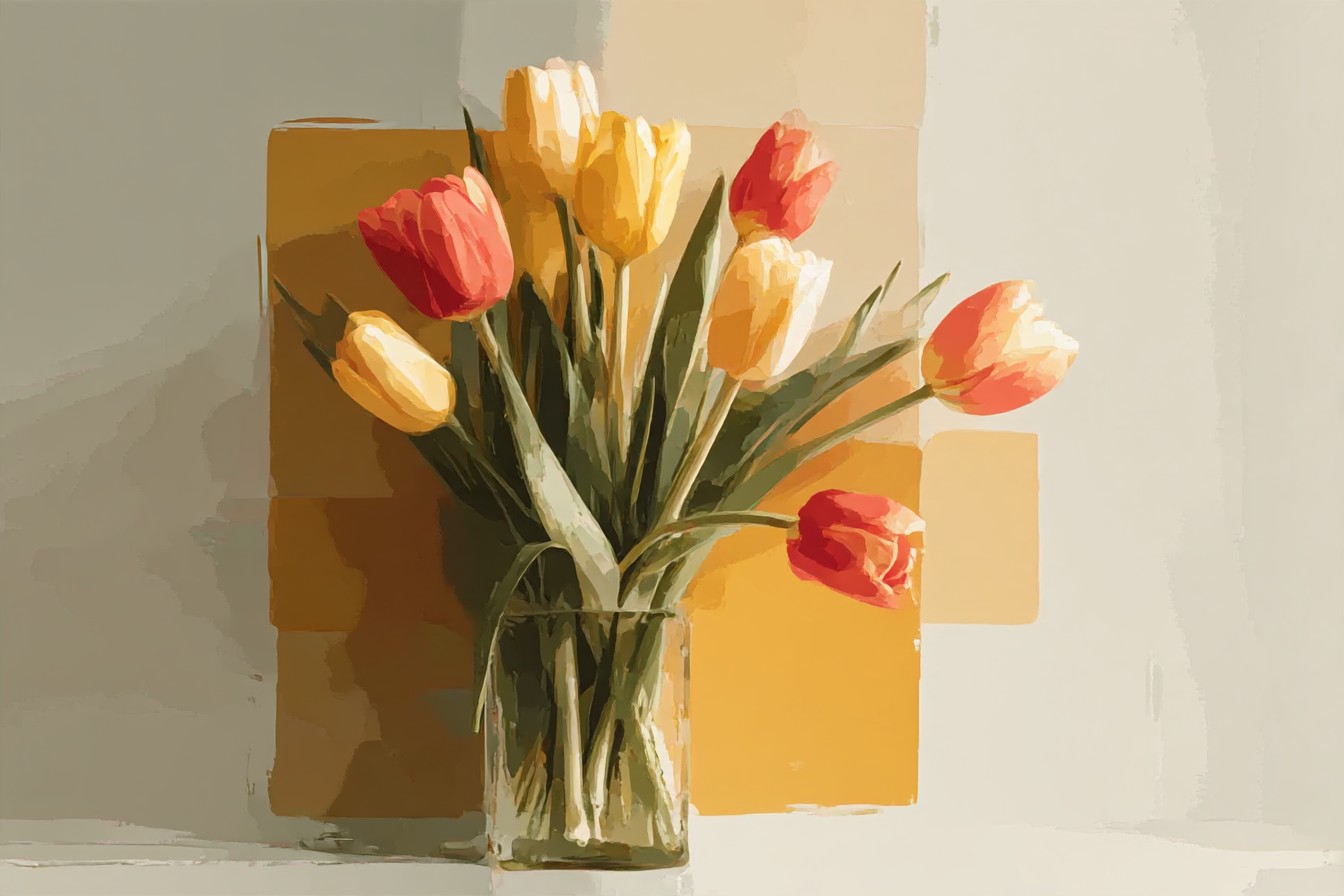
A single dense bunch of, say, twenty deep purple tulips with nothing else added has more presence than half the mixed arrangements I’ve tried. It’s not a cop out, it’s restraint, which I don’t naturally have a lot of, so when I say it’s the right call here, it’s genuinely the right call.
If you do still want to try anemones, do it with fewer of them, maybe a quarter of the bunch, tucked in rather than mixed evenly, so they read as an accent and not a co-headliner.
[Anemones and Mono Tulip Arrangements]
Final Thoughts
If there’s one thing this entire spring long tulip obsession taught me, it’s that the “cheap easy starter flower” reputation is doing tulips a disservice. They’re needier than that, weirder than that, and honestly more rewarding than that once you stop treating them like an afterthought you grab on the way to checkout. Cutting them properly, matching the stem length to your vase, being thoughtful about who they’re sharing water with, all of it actually matters, and all of it is stuff nobody tells you when you’re standing in the flower aisle at 6pm making a decision in about eleven seconds.
My honest ranking, if you want it, ranunculus for anything that needs to look a little more put together than it actually is, hyacinth and daffodils for genuine full spring energy and the best smelling apartment you’ll have all season, plain trimmed foliage when you want it to look finished without buying a whole second bunch of anything, and tulips completely alone when you want maximum drama for minimum effort. Anemones I’m retiring from this particular pairing, not because they’re bad flowers, they’re just bad roommates for this specific one.
Buy the tulips. Cut them shorter than feels right. Trust me on that part especially. And don’t be afraid to let them be the whole show sometimes, because a flower that keeps growing and bending and doing its own thing after you’ve already arranged it doesn’t really need backup half the time anyway.