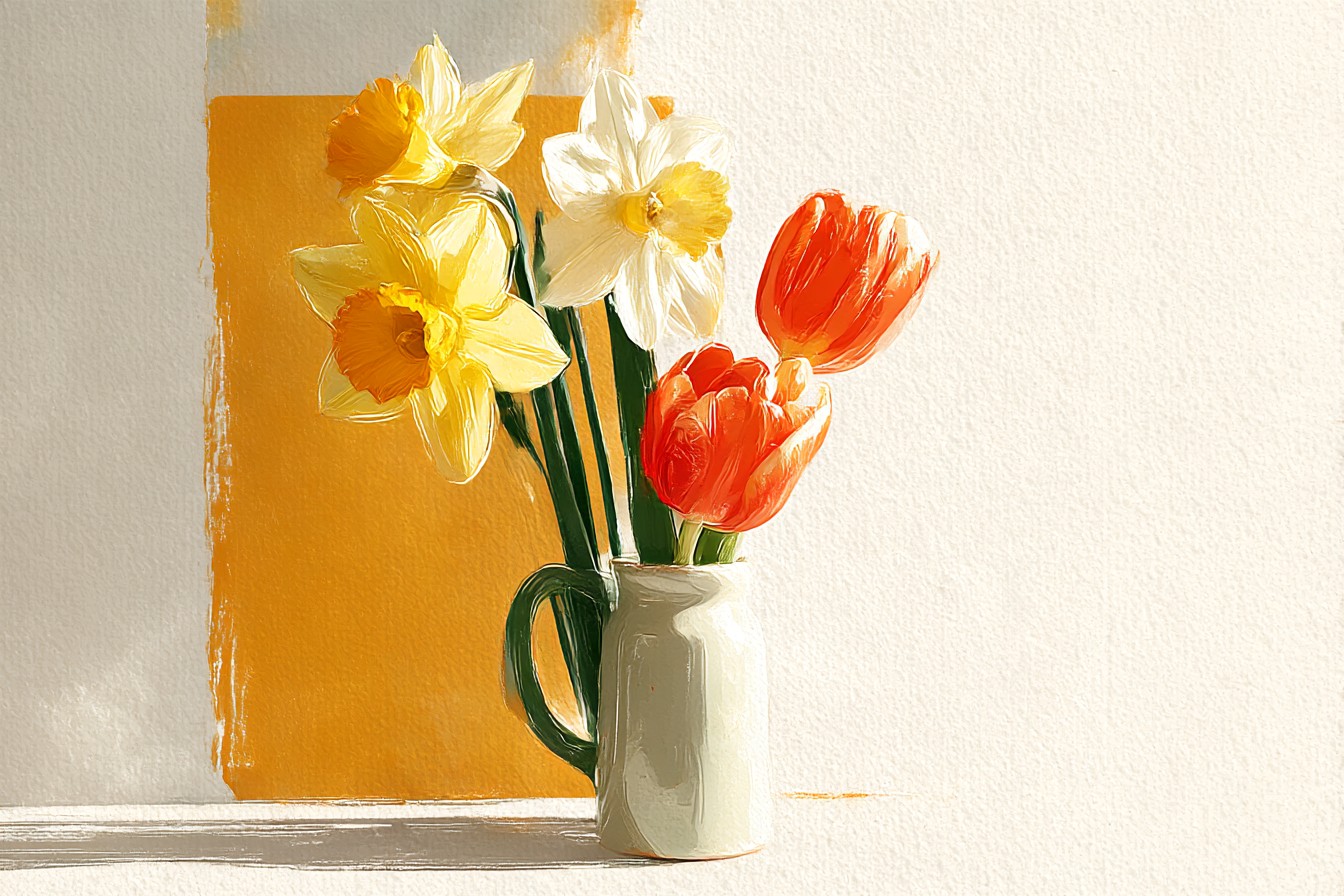
My mom walked into my kitchen last week, saw the daffodils sitting in a jam jar next to a bunch of tulips I hadn’t put in water yet, and said, and I’m quoting this exactly, “you know those’ll kill the tulips, right.” Not a question. A verdict. Delivered the way she tells me my hall closet looks like evidence.
I didn’t know that, actually. Six years of buying grocery store flowers on the way home from work, mixing whatever looked good together, and nobody had ever mentioned that daffodils are basically the flower equivalent of that one friend who’s great at parties but ruins your car upholstery if you let them ride in the front seat. My mom knew this because her mother knew this, some inherited bit of flower lore that skipped my generation entirely because we buy our flowers at CVS and don’t ask questions.
So I looked it up, half convinced she was just repeating something she’d heard once at a garden club in 1994. She wasn’t.
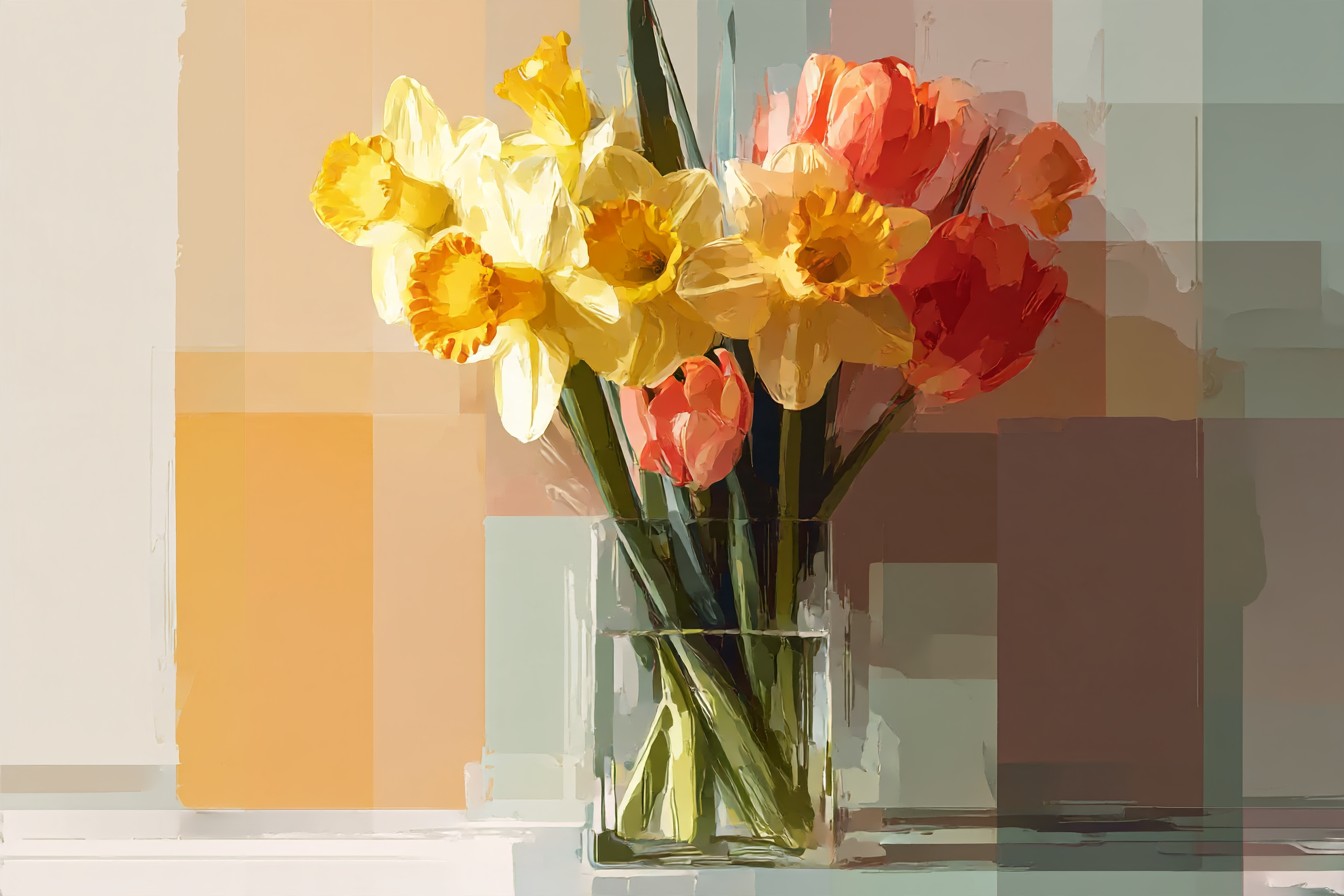
Daffodils, when you cut them, weep a sap out of the stem, and that sap is genuinely a problem for other flowers sharing their water. It’s not folklore. It’s chemistry, and it’s the kind of thing that changes how you think about every bouquet you’ve ever thrown together in a five dollar vase from the thrift store, mine specifically, corner of Fayette, I check it every Friday because that’s restock day and the volunteer who does it has taste I trust more than most florists.
I’m not writing this as a checklist. Nobody wants “step one, step two” for putting flowers in water, that’s not a real problem that needs solving with bullet points. But I did the math on what it actually costs to get this wrong, a wilted five dollar bunch of tulips isn’t a tragedy, it’s an annoyance, and I’d rather tell you what actually happens in the vase and let you decide what you care about. Because some of it matters and some of it is the kind of thing my mom worries about that I genuinely don’t.
[Daffodils and Tulips]
What the Sap Actually Does
Here’s the part that’s real, not superstition. When you cut a daffodil stem, it releases a sappy substance, sometimes people call it a mucilage, which is a word I had to look up and now can’t stop using, and that stuff contains a mix of compounds that are mildly toxic to other cut flowers. Tulips especially. The sap doesn’t kill tulips outright, nothing dramatic happens, no wilting on camera, but it shortens their vase life and can cause them to droop faster than they would on their own. I tested this myself, badly, over two weeks, because I am incapable of reading a fact online without needing to see it fail in my own kitchen.
Bunch one, straight in together, no precautions, cost me four dollars for the daffodils and six for the tulips, so ten dollars total, lasted maybe four days before the tulips looked like they’d given up on life. Bunch two, same money, daffodils conditioned separately first, lasted seven days. That’s not nothing. That’s basically double the vase life for zero extra cost, just a bit of patience I don’t usually have.
The sap is worse in the first twelve hours after cutting, which is the bit nobody tells you, it’s not a permanent threat sitting in the water the whole time, it’s mostly a first day problem. Which is actually good news, because it means the fix isn’t complicated, it’s just annoying enough that most people, myself included until recently, skip it entirely and blame the tulips for being delicate when really it was never their fault.
[The Daffodil Sap Problem]
The Separate Bucket Trick
The actual fix, the one my mom’s flower lore was gesturing toward without explaining the mechanism, is conditioning the daffodils on their own before they ever meet the tulips. You cut them, put them in their own container of water, and just leave them there for a good twelve to twenty four hours. The sap does its worst leaking in that window, and once it’s done, it’s mostly done, the stem stops being the menace it was on day one.
I’ll be honest, I ignored this for years because it felt like an extra step invented by someone with more patience than me, and I do not have patience, I have a job that ends at five and flowers that need to be in water by five fifteen. But once I actually tried it, it’s genuinely a five minute inconvenience, not a project. Separate jar, same tap water, same kitchen counter, just don’t combine them yet.
The bit that actually got me was realizing I could prep the daffodils the night before I even bought the tulips, if I was buying them on different days anyway, which I usually am because the corner store gets tulips on Tuesdays and daffodils whenever they feel like it. So this isn’t even always extra effort, sometimes it’s just accepting that the two bunches were never going to meet on day one regardless.
Once the daffodils have had their sulk in isolation, you can recut the stems if you want to be thorough, just a fresh half inch off the bottom, and then combine them. The sap that leaks after that recut is a fraction of what came out originally, not zero, but not enough to do real damage to whatever’s sharing the vase with them.
[Conditioning Stems Separately]
Does the Vase Itself Matter
I went down a whole rabbit hole convinced a certain vase shape or material would somehow protect the tulips better, because I wanted an excuse to buy a specific glass vase I’d been eyeing at my thrift store for three weeks, the tall cylinder one with the slightly wonky rim that tells you someone shaped it by hand and possibly not very well. Eight dollars. I wanted it to be load bearing in this story. It is not.
The vase material doesn’t change the sap chemistry. Glass, ceramic, that ugly plastic one my mom keeps from a funeral home fifteen years ago, none of it neutralizes what the daffodils are putting into the water. What actually matters is water volume, and this is the bit that’s genuinely useful rather than me finding an excuse for a purchase. More water dilutes the sap concentration, so a wider, taller vase with more water in it is doing you a small favor just by being bigger, not because the material is special.
You Might Also Like

I did buy the eight dollar vase anyway. It’s lovely. It has nothing to do with the tulips surviving, I just wanted it and the math was fine, eight dollars for something I’ll use for years works out to basically nothing a year, so I’m not going to pretend I need a botanical justification for owning it.
Where the vase does matter is visibility. If you’re using something clear, you’ll actually see the water clouding faster with daffodils in it than with most other cut flowers, which brings me to the next thing, because that cloudy water isn’t just aesthetic, it’s a sign you’re overdue for a change.
[Choosing the Right Vase]
Keeping the Water Honest
This is the maintenance bit, and it matters more with daffodils in the mix than with almost any other combination I’ve tried. The water clouds faster. Not eventually, immediately, sometimes within a day, and once it’s cloudy it’s basically a bacteria party that’s bad news for every stem in there, tulips included.
My rule now, and it took me embarrassingly long to land on this, is changing the water every single day for the first three days, then every other day after that. It sounds like a lot. It’s genuinely about ninety seconds, dump it, rinse the stems under the tap, fresh water, done. I timed myself because I wanted to know if I was exaggerating the inconvenience to myself as an excuse to skip it, and no, ninety seconds, I was being dramatic for nothing.
The other habit that actually extends things is a fresh trim on the daffodils each time you change the water, just a sliver off the bottom, because a stem that’s been sitting can seal itself over slightly and stop drinking properly. Tulips are more forgiving here, they’ll keep drinking through almost anything, which is honestly part of why people assume they’re the tough ones and daffodils are precious. It’s the opposite. The daffodil’s the one causing problems for everyone else and somehow getting away with looking delicate while it does it.
I did the cost math on this too, because I can’t help myself. A ten dollar bunch that lasts four days is two fifty a day. The same bunch, properly conditioned and with daily water changes, lasting seven days, is about a dollar forty a day. That’s not a huge number in isolation but it’s nearly double the value for genuinely a few minutes of effort a day, and once you frame it that way it stops feeling like a chore and starts feeling like a good trade.
[Keeping the Water Fresh]
When None of This Actually Matters
Here’s where I’ll admit something that undercuts everything I just said, because that’s fair. If you’re doing flowers for a single dinner party, a one night thing, a table that’s getting cleared by Sunday morning anyway, none of this matters even slightly. Skip the conditioning, skip the separate bucket, just shove them in together and enjoy it for the one evening you needed it for.
I did this at my own birthday thing back in March, mixed daffodils and tulips straight into one vase with zero prep because I had forty minutes and a lasagna in the oven, and by the time anyone noticed the tulips looking a bit sad, the party was long over and the flowers were already in the trash. Cost me about eleven dollars for one evening of decoration, which is fine, that’s basically what a mediocre bottle of wine costs and nobody expects that to last a week either.
The conditioning routine earns its keep specifically when you want longevity, a bouquet that’s meant to sit on your kitchen table looking decent for the better part of a week rather than one night.
If that’s not the goal, don’t let anyone, including my mother, make you feel like you’re doing flowers wrong by skipping a step that only pays off over time you weren’t planning to give them anyway.
[Quick One Day Arrangements]
Final Thoughts
So the sap thing is real, my mom wasn’t just repeating garden club gossip from decades ago, but it’s also not the emergency it sounds like the first time someone says it to you in your own kitchen. It’s a first day problem with a fifteen minute fix, and honestly most of the actual improvement comes from just changing the water more often than you think you need to, which is true of nearly every flower arrangement I’ve ever owned regardless of what’s in it.
What changed for me isn’t that I now treat daffodils like a hazard. It’s that I finally understand why some bouquets I loved died fast and others lasted, and it wasn’t luck or a better florist, it was twelve hours in a separate jar before I ever let them near the tulips. That’s the whole trick. Not complicated, just a step I used to skip because I didn’t know what it was buying me.
I still buy them together most weeks, because the corner store sells them next to each other in spring and I’m not going to pretend I have the willpower to walk past a good daffodil bunch and wait a day out of principle. I just plan for it now. Separate jars for the first evening, combine the next morning, change the water more than feels necessary. Costs me nothing extra, buys me a good three extra days most weeks, and that’s a trade I’ll take every single time, math or no math.