
My mom stood in my backyard with a tape measure hanging out of her coat pocket, looked at the eight feet between my back door and the fence, then looked at me, and said, “Chloe. Where exactly do you think fire goes in this.”
Fair question. I’d been eyeing fire pits online for about three weeks at that point, the way you eye something you know is a bad idea but keep adding to a cart anyway, and I had conveniently not thought about the part where my backyard in Baltimore is basically a hallway with grass in it. Fences on three sides, neighbor’s kitchen window close enough that I can smell what she’s cooking most nights, and a gate that’s maybe two feet wide. Not exactly the sprawling gravel patio situation you see in the photos next to these things.
Here’s the thing though, and I say this having now bought and returned and kept various fire adjacent objects over the better part of a year. You can absolutely have something with actual flame in a tight city yard.
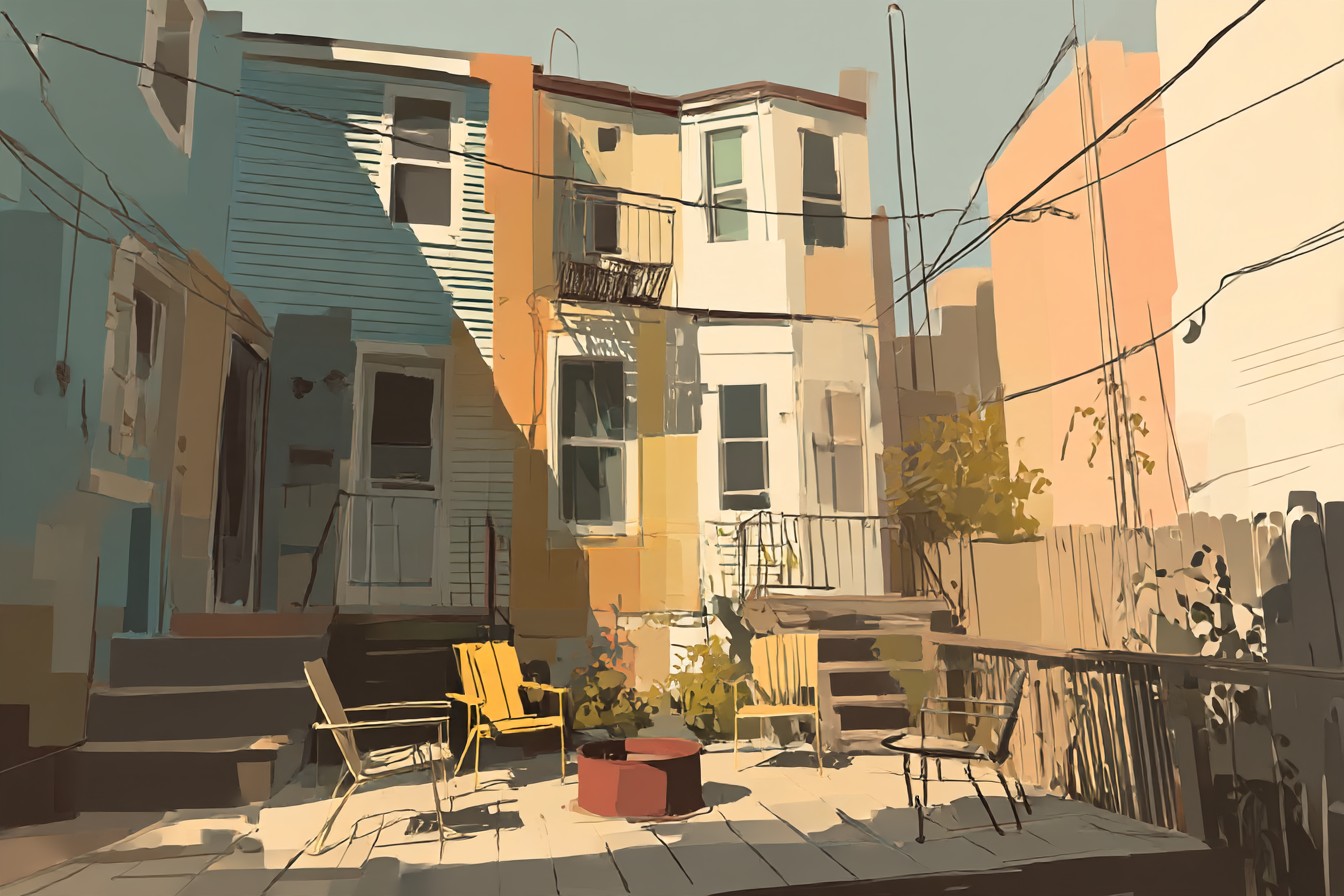
People do it constantly. It’s just that the fire pit you picture, the big steel bowl with the crackling logs, the one from the catalog photo with six feet of clearance on every side, that one probably isn’t it, and figuring that out cost me one return shipping fee and a slightly singed patch of fence I’m not proud of.
I want to be clear before I go further, because rules on this genuinely vary block to block and change constantly, some cities want a permit, some ban wood burning outright in certain zones, some care about how close you are to a fence and some care more about smoke complaints from the guy two doors down who works nights. I’m not going to sit here and tell you what your specific city allows, because I don’t know, and anyone who tells you with total confidence based on a blog post is guessing. What I can tell you is what actually works when the space you’ve got is small, boxed in, and shares walls with people who can hear you through a fence.
So that’s what this is. Not a legal rundown, just the honest version of what fits in a yard like mine, what I wasted money on, and what earned its spot on the good side of the ledger.
[Fire Pits]
Tabletop Fire Pits
I want to start small because that’s genuinely where most people in a city yard should start, even if it feels a little underwhelming at first. Tabletop fire pits are the little ones, usually running on a small propane canister or sometimes a gel fuel, sitting right on your outdoor table or a stand, and they put out maybe as much heat as four candles having a really good day.
I bought one for eighteen dollars from the thrift store I check every Friday, brand new in box, somebody clearly got it as a gift and never used it, and I have used that thing more than any other outdoor purchase I’ve made this year. No smoke. No sparks landing on the fence three feet away, which, given my fence, matters a lot. You light it, you sit near it, the neighbor’s cat watches from the top of the wall like she’s judging your life choices, and nobody ends up smelling like a campfire for two days after.
The math on this one is stupid in the best way. Eighteen dollars, I’ve used it maybe thirty times since spring, so that’s sixty cents a use, and the fuel canisters run a couple bucks and last several sittings. Did the math twice because I didn’t believe it the first time and it held up both times, which almost never happens.
The catch, and there’s always a catch, is that it’s ambiance, not actual heat. If you want to sit outside in October and feel your hands thaw out, this isn’t doing that job. But if what you actually want is a little flicker of fire on a table in a yard where a real pit would be sitting two feet from a fence anyway, this is the honest answer, not the aspirational one.
[Tabletop Fire Pits]
Portable Propane Fire Pits
The next step up is the portable propane fire pit, the ones that look like a real fire pit, usually round or square, sitting on legs, running off a standard propane tank you’d use for a grill. These are the ones I actually recommend most to people with a tight backyard, because they solve the two biggest problems at once, which are heat output and the fact that nobody wants embers drifting toward a wooden fence eighteen inches away.
Propane burns cleaner than wood. No floating embers, no shower of sparks if a log shifts, and critically, way less smoke drifting into the next yard, which in my case is the difference between a pleasant evening and my neighbor Denise leaning out her window asking if something’s on fire, which, yes, technically, but not like that.
I bought a decent one for around ninety dollars, used it maybe twenty five times over a summer, so that’s three dollars sixty a use before you even count the propane, which honestly isn’t bad for something that made my backyard feel like an actual place to sit instead of a strip of grass between two fences. Do I wish it threw more heat on a properly cold night? Sure. But I also didn’t wish that hard enough to risk the wood burning version two feet from a wooden fence that’s already older than I am.
The other upside nobody mentions is that it’s portable in the actual sense of the word, you can drag it to whichever corner of the yard gets you furthest from the fence line and the neighbor’s window on a given night, which in a small space means you’re constantly negotiating with your own yard rather than committing to one fixed spot forever.
[Portable Propane Fire Pits]
Wood Burning Fire Pits
Okay, the wood burning ones. I’m not going to pretend I don’t understand the appeal, there’s something about actual burning wood, the smell, the pop and crackle, that propane just can’t fake no matter how good the flame effect looks. But I want to be straight with you about what this actually means in a tight city yard, because I learned some of this the annoying way.
You Might Also Like

Wood burning means sparks. It means smoke that goes wherever the wind decides it’s going, which in my yard means directly into Denise’s kitchen window about sixty percent of the time based on absolutely no scientific tracking, just vibes and one very pointed conversation over the fence. It means embers can drift further than you’d expect, and when your fence is close, that’s not a small detail, that’s the whole ballgame.
I did try it, once, with a secondhand steel pit I picked up for twelve dollars that I was convinced was a steal. It was not a steal. I had it maybe four feet from the fence because that’s genuinely all the room I had, and within twenty minutes I had a scorch mark on the wood that’s still there, a lecture from my mother about liability, and a neighbor who very politely asked me to consider “one of those propane ones instead.” That fire pit went straight to the bad side of the ledger, twelve dollars and one fence mark isn’t a huge loss, but it’s the principle of the thing.
If your yard genuinely has real distance from any fence, structure, or overhanging tree, wood burning can work. Mine doesn’t. Most city yards I’ve seen don’t either, honestly, which is the whole reason this article exists.
[Wood Burning Fire Pits]
Fire Pit Tables
This one surprised me, mostly because I resisted it for months on the grounds that it sounded like a gimmick, a table pretending to be a fire pit or a fire pit pretending to be a table, and I generally don’t trust furniture with a secret identity.
A fire pit table is exactly what it sounds like, a proper outdoor table, usually with a propane insert set into the middle, sometimes covered with a lid or a glass topper when you’re not using the fire part, so during the day it’s just where you put your coffee and at night it’s the whole evening’s entertainment. For a small backyard this is genuinely one of the smarter moves, because you’re not sacrificing a chunk of limited square footage to a fire pit that just sits there doing nothing most of the day. It’s doing double duty on space you were going to use anyway.
I ended up buying one off a moving sale for sixty dollars, which felt borderline criminal for something that would’ve run three or four hundred new, and I’ve had people over probably fifteen times this year where it did both jobs in one evening, drinks and snacks on it at six, fire going by eight. Sixty divided by fifteen puts me at four dollars a use, and that’s before I even factor in that it replaced a table I would’ve bought separately anyway, so really the fire part came basically free, which is the kind of math that makes me a little smug at the bar and my coworker Marcus roll his eyes because he thinks I’m inventing numbers to feel better. I’m not. I checked twice.
Space wise, it just makes more sense when every square foot of yard is doing a job.
[Fire Pit Tables]
Chimineas and Fire Bowls
Last category, and this is the one I underestimated the most going in.
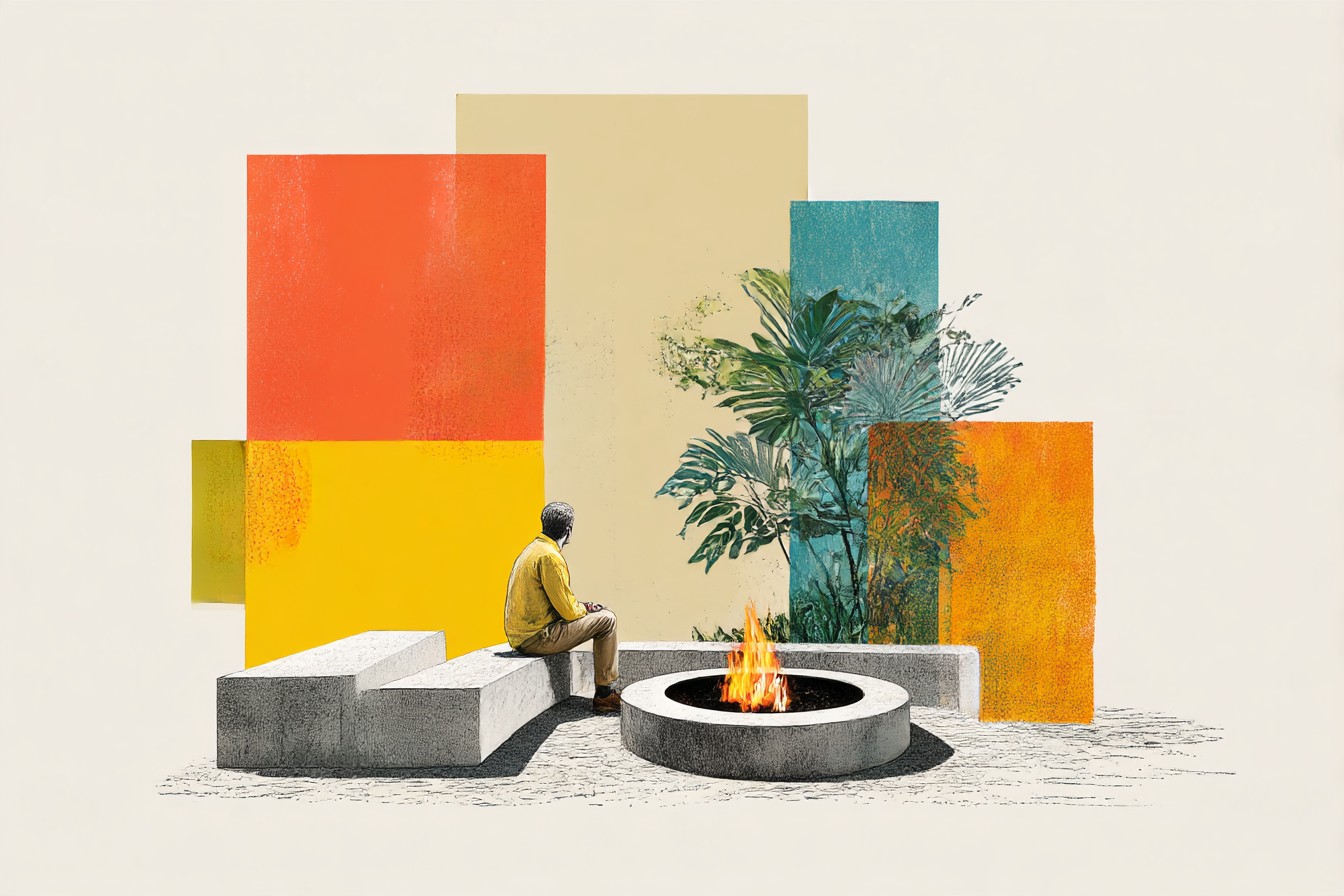
Chimineas, the clay or cast iron ones shaped almost like a little oven with a chimney, and fire bowls, which are exactly what they sound like, a bowl shaped pit usually sitting lower to the ground.
What I like about both, for a tight yard specifically, is that they’re directional in a way an open pit isn’t. A chimenea sends its smoke up and out through that narrow chimney opening rather than drifting sideways across the whole yard, which in a space boxed in on three sides makes an actual difference to how much smoke ends up literally in your face while you’re trying to sit near it. Fire bowls, being lower and often smaller, throw less heat outward too, so you can get away with sitting them closer to a fence than you could a full sized open pit, though I still wouldn’t push it right up against the wood.
I picked up a cast iron chiminea secondhand for thirty five dollars, missing its little chimney cap, which I replaced with a spare terracotta saucer that fits close enough nobody’s noticed. Used it maybe a dozen times, so under three dollars a use, and it’s become the thing I light on a random Tuesday when I just want fifteen minutes outside without turning it into an event.
The tradeoff is they hold less wood or fuel than a proper pit, so you’re feeding it more often if you want it going for hours, and they’re heavier and clumsier to move around than the portable propane option, which matters when your whole strategy in a small yard is being able to shift things to wherever gets you the most breathing room from the fence line that night.
[Chimineas and Fire Bowls]
Final Thoughts
If you’d told me a year ago I’d own four different fire adjacent objects for a backyard the size of a hallway, I’d have said that’s excessive, and it is, a little, but the ledger doesn’t lie and most of them landed on the good side. The honest answer to “can you have a fire pit in a tight city backyard” is yes, almost always yes, you just have to stop picturing the catalog photo version and start picturing the version that actually fits your fence line, your neighbor’s kitchen window, and whatever rules happen to apply where you live, which you should genuinely check locally rather than take from anyone on the internet, myself included.
Start small if you’re not sure, a tabletop one costs you almost nothing to try and tells you fast whether you even want the ritual of it. Go propane before wood if fences are close, because sparks don’t care how careful you are. And if your yard is doing double duty for everything else already, a fire pit table or a low fire bowl will fit into that logic a lot more comfortably than a big open pit ever will.
Mine’s the chiminea most nights now, if you’re wondering, with the tabletop one for lazy Tuesdays when even that feels like too much effort. Denise hasn’t complained in months, which I’m choosing to take as the review that actually matters.



[…] structural, it looks the part, and it is genuinely the brick I see most often stacked around a backyard fire pit that some poor soul built with total confidence and no research. The trouble is that common […]