I bought an entire coffee table’s worth of decor in one trip to a big box store once, and I mean the whole thing, tray, three “coordinating” candles, a stack of books I never opened that came shrink wrapped together by color, and a bowl of those wooden orb things that exist for no reason except to roll off onto the floor when the cat walks by. I got it home, arranged it exactly like the little display card had shown, and stood back feeling proud of myself for about four minutes. Then it just sat there looking like the lobby of a Hampton Inn. Nothing on that table had a story. Nothing had a chip or a mark or a reason to exist except that it matched. My husband walked past it, said “did we get robbed and the burglars replaced everything with fancier stuff,” and honestly, fair.
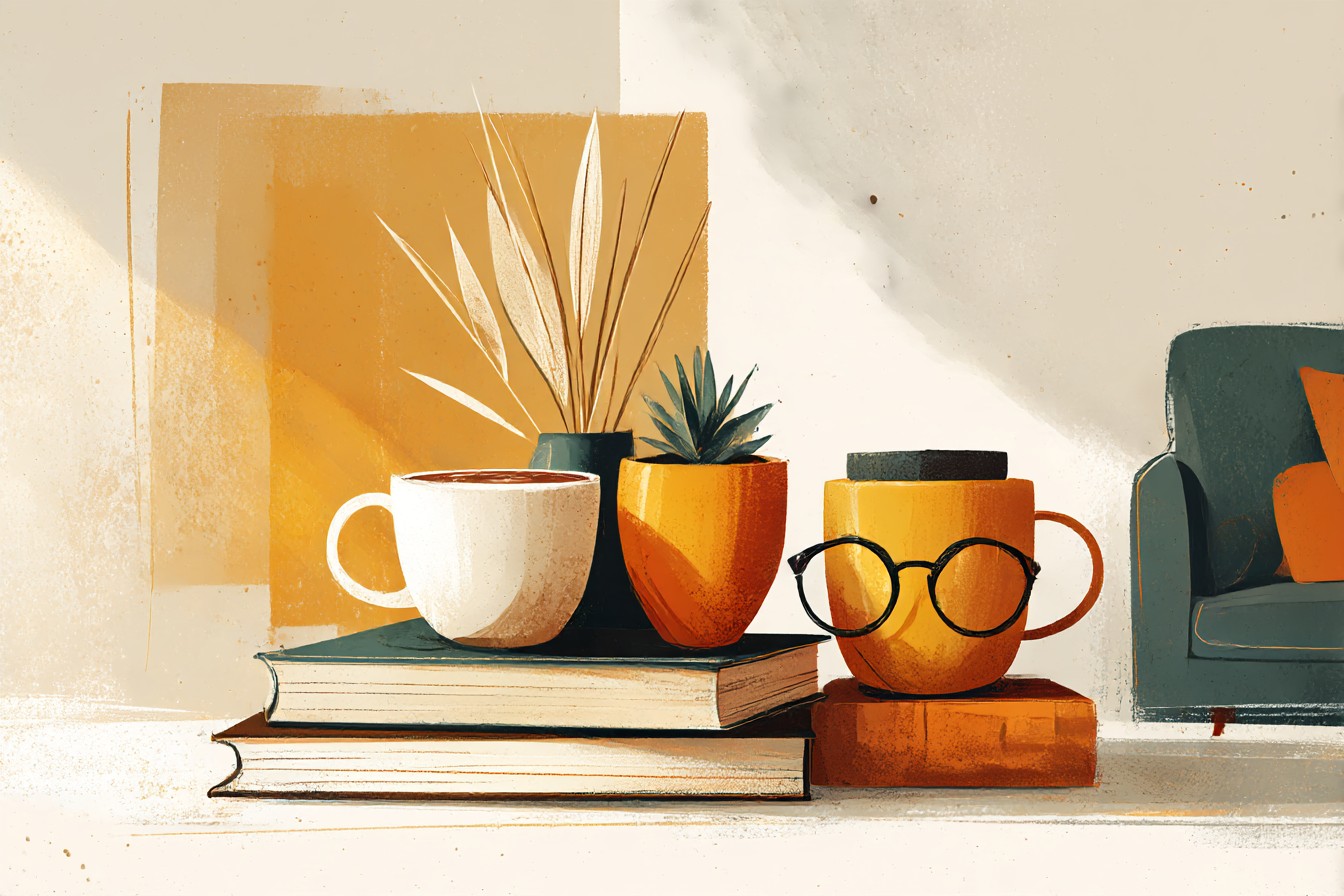
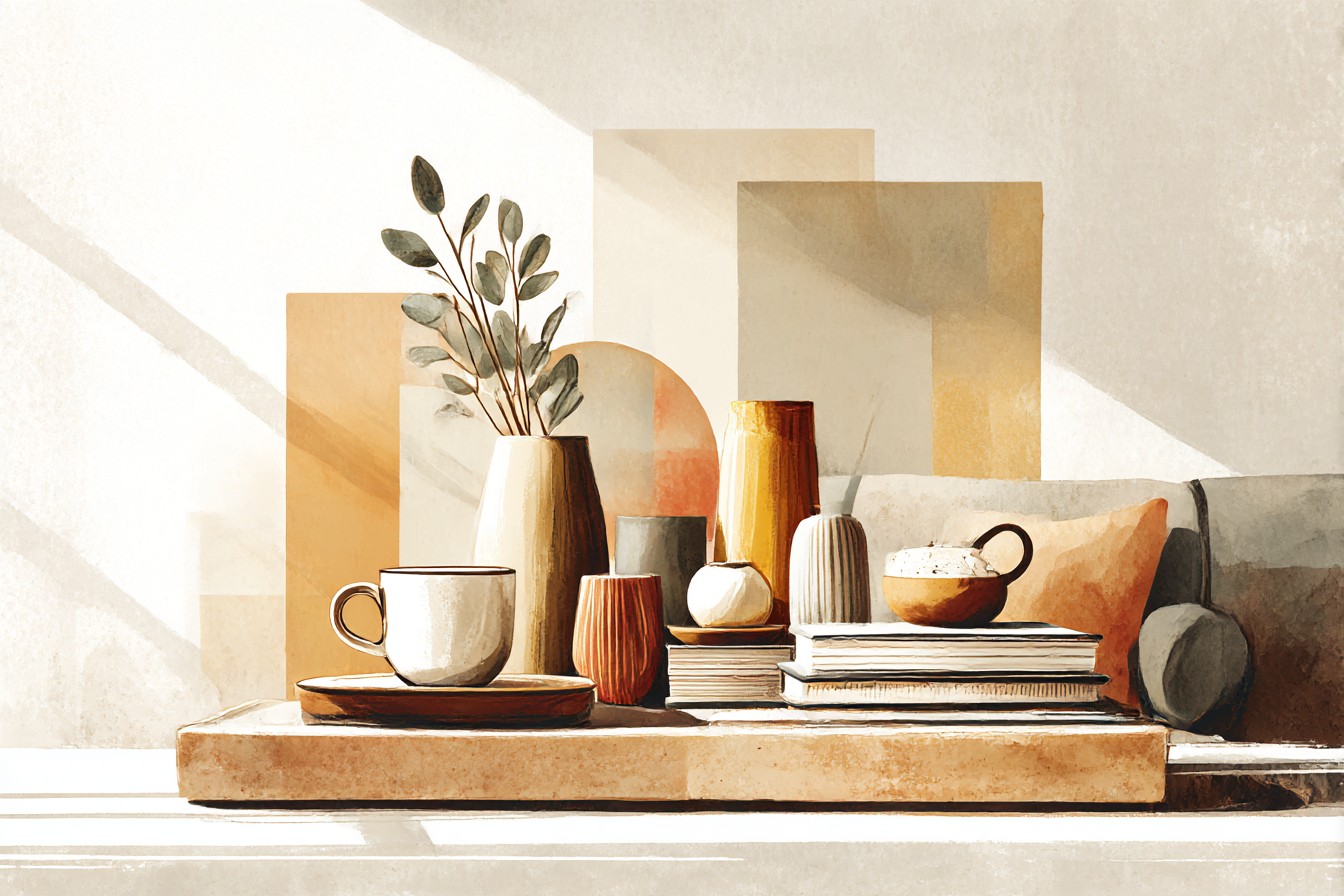
That was the moment I understood that a coffee table isn’t a display case you fill once and forget, it’s more like a little stage that’s supposed to hold evidence of an actual life, and evidence of an actual life doesn’t come shrink wrapped in threes from a shelf near the checkout. It took me years of hauling things back from yards and estate sales around Savannah to understand what that table actually wanted, which turned out to be a lot less than I’d crammed onto it, and a lot more particular. The question I get asked more than almost any other, usually by someone standing in my living room holding a mug and eyeing the low mahogany one I found for eleven dollars at a barn sale outside Pooler, is some version of “how much is too much,” and the honest answer is that it has almost nothing to do with taste and almost everything to do with the size of the table in front of you and whether every single thing sitting on it earns its spot. A table that’s forty inches across can carry a small conversation of objects. A table that’s twenty two inches across, the kind you find in front of a loveseat in a reading nook, can carry maybe two things before it starts looking like it’s under siege. So that’s what this is really about. Not a shopping list. A way of thinking through what actually belongs on the thing, and how much of it, before you end up like me, standing in front of a table that looks like nobody in the house has ever sat down at it. [Coffee Table Styling for a Living Room]
The Tray That Holds Everything Together (Or Doesn’t)
I resisted trays for a long time. Felt like a cheat, like putting a fence around clutter instead of dealing with it. Then I found a brass one at a Sunday yard outside Thunderbolt, dented on one side in a way that told me it had been dropped at some point in its life and nobody had cared enough to fix it, which I loved immediately. Got it home, put my usual scatter of stuff on top of it, and the whole table suddenly looked intentional instead of accidental. That’s the actual job of a tray. It’s not decoration, it’s a boundary, it tells your eye where the “styled” part stops and the “actual living happens here” part begins.
But here’s where size matters more than people think. On a big table, say anything over forty two inches long, a tray anchoring one end and leaving the rest open works fine, you’ve got room to breathe on either side of it. On a smaller table, the kind that barely clears a sofa arm, a tray can eat the whole surface and then you’ve got nowhere left to put your feet, which defeats the purpose of a coffee table entirely if you ask me. I learned this the hard way with a rectangular one I found that I was convinced was mid century, dovetail joints looked right, brass pulls looked right, got it home and realized the “vintage” tray I’d bought to go with it was actually about a third too big and turned the whole table into one flat surface with no personality left in it. Had to size back down to something with a lip, something that stopped feeling like a shelf and started feeling like a tray again.
If you’re wondering where to even start with what to put on a coffee table in a living room, start here, one tray, sized to leave at least a third of the table bare. Everything else gets built around it, not on top of it. [Trays]
Real Books, Stacked Like Someone Actually Reads Them
Not the glossy, color coordinated kind shrink wrapped in threes, bless them, I’ve been guilty of buying those and I’m not proud of it. I mean actual books, the ones with a cracked spine or a coffee ring on the cover or a name written in pencil on the inside flap from whoever owned it before you did. I’ve got a stack right now, four of them, that came out of a box lot at an estate sale on the west side, a house that belonged to a woman who’d clearly traveled a lot, judging by the atlases and the guidebooks to places that don’t quite exist under those names anymore. I didn’t know a thing about her, still don’t, but every time I stack those books I think about her a little, and that’s worth more to me than anything matching would be.
The number matters here too, more than people expect. A stack of two on a small table looks purposeful, like you picked exactly the two things worth having out. A stack of four or five works on a bigger table where they can sit slightly apart from everything else instead of crowding it. Go past six and you’ve built a nightstand pile, not a coffee table moment, and it starts looking like you’re mid move rather than mid decorating.
The trick I use now, and I nearly didn’t figure this out until a dealer at the Sunday yard pointed it out without me even asking, is to turn one book flat under the stack instead of upright, spine out. Breaks the uniform look, makes it feel like it landed there rather than got arranged there. Small thing. Changes everything about whether a stack reads as styled or as staged. [Books]
One Object Worth Bragging About
Every good coffee table needs exactly one thing on it that makes a guest pick it up and ask about it. Not admire it from across the room, actually pick it up. Mine right now is a heavy carved wooden bowl, deep grain, clearly hand tooled, that I almost walked straight past at a salvage yard out past Garden City because it was sitting behind three identical stacks of flat pack particleboard shelving units, the kind that get dumped there by the truckload after somebody’s dorm move. I nearly didn’t bother looking behind them at all. Then I did, and there it was, and I actually said something out loud, alone, in an aisle of a salvage yard, which is embarrassing to admit but there it is. Got it home, turned it over, found a maker’s mark stamped faint on the underside, and I still haven’t fully tracked down who made it, which somehow makes it better, not worse.
You Might Also Like

That’s the object I mean. The one with a little mystery still attached to it. On a large table it can sit alone in its own quarter with nothing crowding it, which is honestly the more dramatic choice, empty space around one good thing says more than clutter ever will. On a smaller table it might be the only “extra” object you have room for at all, everything else needs to be functional. Either way, one is the number. Two competing hero objects on the same table just cancel each other out, nobody knows which one they’re supposed to look at, and you end up with a table that feels indecisive instead of interesting. Pick the one thing you’d actually grab if the house was on fire. That’s the one that goes on the table. [Statement Objects]
Something Green, Something Alive
I killed so many plants in my twenties that I genuinely gave up and went silk for a solid five years, which I’m not proud of, but a fake fiddle leaf covered in a fine layer of dust is its own kind of tragic so eventually I came back around. What actually works on a coffee table isn’t the dramatic floor plant anyway, it’s something small, low, and a little bit tough to kill even by my standards. I keep a single stem of eucalyptus in a chipped ironstone pitcher I found at an antique mall in Pooler, priced as “genuine Victorian” which it absolutely was not, the mold seam was as obvious as anything once I actually looked, but I loved the shape too much to care and the dealer knocked ten dollars off when I called it out, which felt like a fair trade for both of us.
On a big table this can live comfortably next to the tray and the book stack without fighting either for space. On a small table it might need to BE the styling, one small vase, nothing else, because there just isn’t room for a green thing plus a stack plus a tray plus your feet up at the end of a long day, and your feet up at the end of a long day should always win that argument.
The mistake I made for years was going too big, a plant that dwarfed everything else on the table and made the whole arrangement look top heavy, like the table was about to tip. Small and a little wild beats tall and tidy every time on a surface this size. [Greenery]
The Stuff You Actually Use
Here’s the part nobody photographs, and it’s the part that actually matters most if you live in the room instead of just staging it for company twice a year. Coasters. A candle you’ll genuinely burn, not just display. Somewhere for the remote that isn’t wedged down the side of the sofa cushion, which is where mine lived for about two years before I got tired of losing it during every single episode of whatever we were watching.
I keep four coasters, cork ones, a little water stained now from actual use, stacked near the tray rather than hidden away in a drawer, because the whole point of a coffee table is that it gets used, and pretending otherwise is how you end up with a ring on good wood anyway. My candle is a plain glass one I refill the jar on rather than replace, which isn’t glamorous but it’s honest, and it’s usually lit by the time anyone’s over.
This layer is the one where table size actually matters least, oddly enough, because it’s not about display, it’s about function, and function scales to how many people actually sit in that room, not how big the surface is.
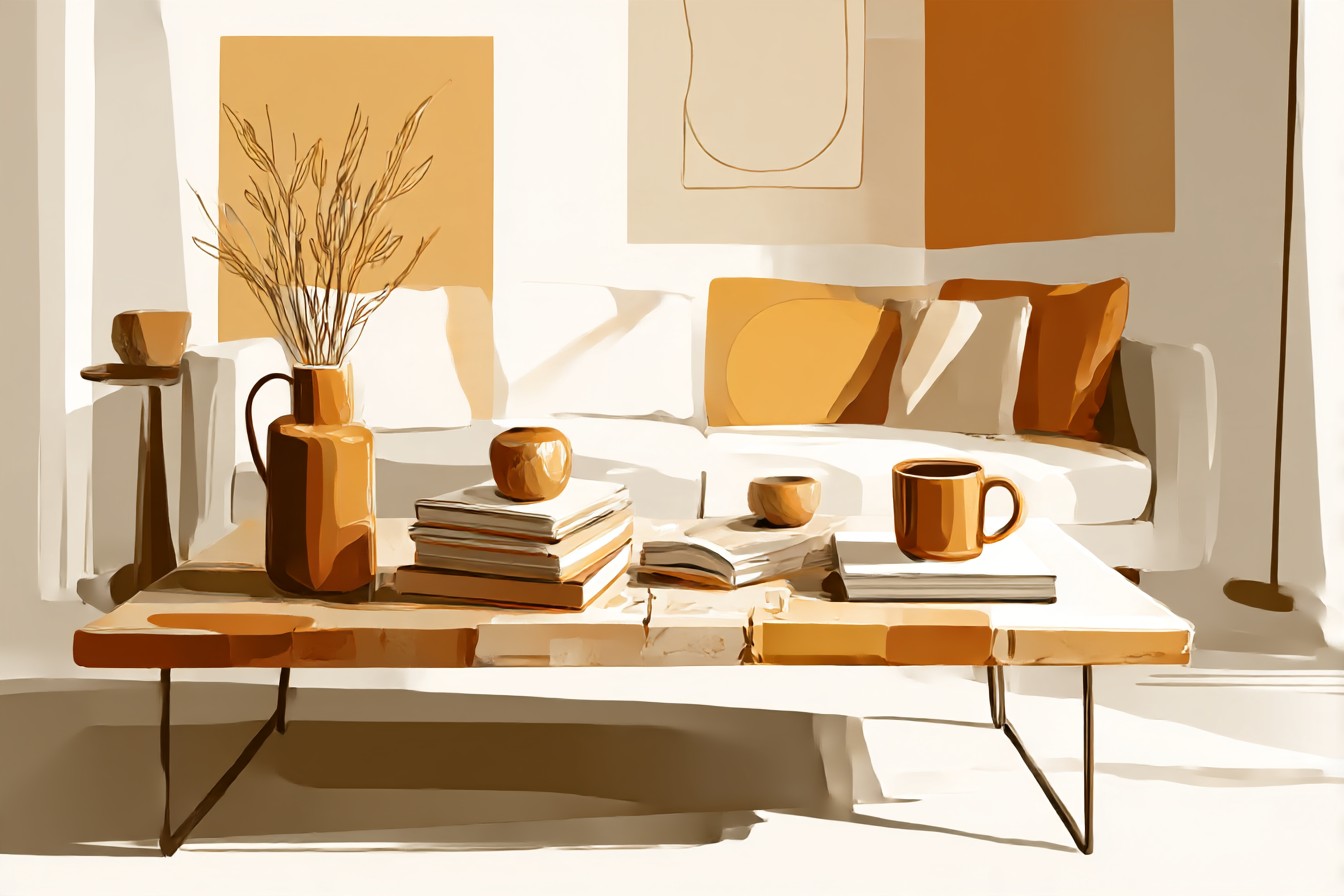
A household of one might need a single coaster and a candle. A house with three kids and a dog needs the coasters, a lidded box for stray hair ties and remote batteries, and probably a spot kept permanently clear for whoever’s currently doing homework at the coffee table instead of the actual desk upstairs, which happens in my house more nights than I’d like to admit. Build this layer around your actual life first, then fit the pretty stuff in around it, not the other way around. [Everyday Essentials]
Final Thoughts
If there’s one thing I’d want someone to take away from all this, it’s that “how much is too much” was never really the right question. The right question is whether every object on that table is either doing a job or telling you something, because the ones that are just filling space are the ones that make a room feel like a showroom instead of a home. My table these days holds a tray, three books with a fourth one loose, a wooden bowl I still haven’t fully identified, a small vase, and a stack of coasters that have earned every water ring on them. That’s it. Some nights it’s messier than that, homework spread across it, a mug that hasn’s made it to the sink yet, and I’ve stopped apologizing for that too, because a table that looks lived in beats a table that looks like a magazine spread nobody’s allowed near. Size the number of objects to the size of your table, sure, but size the feeling of the table to the size of your actual life, and you’ll rarely get it wrong twice.