I bought my first ceramic vase off a pottery marketplace site four years ago, before I knew anything, and the listing said fourteen inches tall. I remember because I measured the shelf twice, wrote the number on a sticky note, felt very organized about the whole thing. What arrived was twenty two inches of glazed stoneware that did not fit on the shelf, did not fit on the console table either, and ended up living on my bedroom floor for eight months doing absolutely nothing except catching dust and, once, an umbrella I couldn’t be bothered to put away properly. Fourteen inches. Measured on the listing from the base to somewhere around the rim’s inner curve, not the actual top, which is a trick I now check for on every single ceramic piece I buy because apparently sellers think height is optional information rather than the entire point of a vase.
That’s the thing nobody tells you about ceramic vases specifically, as opposed to glass ones or the plastic ones you get free with a grocery store bouquet. Ceramic is opaque, it’s heavy, it holds its shape no matter what you put in it, and it does not forgive a bad size decision the way a cheap glass vessel does, because you can’t just recycle a $60 stoneware piece when it turns out to be wrong for the room.

You live with the mistake. I lived with mine on a bedroom floor for the better part of a year, which is its own kind of lesson.
What I’ve since worked out, mostly through buying too many and correcting course each time, is that “ceramic vase” isn’t really one category, it’s about five different jobs wearing the same material. A bud vase is doing something completely different from a floor vase, which is doing something completely different from a wide bellied piece meant to hold dried pampas grass on a mantel. They get lumped together in searches and in shops because they’re all fired clay with a glaze on them, but the actual decisions, how tall, how wide at the neck, matte or glossy, what you’re supposed to put inside, are specific to the job. So that’s how I want to go through this. Not “here are some nice vases” but which one, for which shelf, holding what, and where I got the proportions wrong before I got them right.
[Ceramic Vase Ideas]
Bud Vases
Bud vases are the one category where I think most people are actually overbuying on height and underbuying on neck width, which is backwards from every other vase mistake on this list. A bud vase’s whole job is to hold one stem, maybe three, upright and unsupported, and if the neck opening is wider than about an inch and a half, a single tulip just flops sideways and leans against the rim looking defeated. I own six of these now, which is an absurd number for something that holds one flower at a time, but they cost between twelve and twenty dollars each and I have a shelf specifically for them, so I’ve stopped apologizing for it.
The one that taught me the neck rule was a squat little speckled piece, about five inches tall, listed as “perfect for a single stem,” and when I put a ranunculus in it the flower head immediately tipped over the side because the opening was closer to three inches across, basically a small bowl with delusions. Fine for a floating candle. Not fine for a stem that needs actual support. Now I check neck diameter before height on every bud vase, because height barely matters if the flower can’t stand up straight in the thing.
Where these earn their space is on a windowsill, three or four together, mismatched heights between four and eight inches, each holding one stem so the whole grouping reads as intentional rather than like you couldn’t commit to a bigger arrangement. A single ranunculus, one sprig of eucalyptus, a stem of spray rose, that’s the whole exercise. Cluster them close together and the individual ceramic finishes, matte cream next to a speckled brown next to something with a slightly rough unglazed base, start doing more visual work than any single large arrangement would.
[Bud Vases]
Statement Floor Vases
This is the category where my twenty two inch disaster lives, and it’s also the category where brands lie about scale most confidently, because “statement” has become code for “we didn’t measure this against a normal room.” I had a client last year whose entryway console was thirty two inches wide, and she’d been told by a home store associate that a specific floor vase would work as “the anchor piece” for that space. The vase, on its own, was twenty six inches tall with a base diameter of eleven inches. On a thirty two inch console. She sent me a photo before it went back and the vase looked like it was trying to escape the furniture on both sides.
The actual math that works, and I say this now to basically everyone who asks, is that a floor vase sitting on furniture needs at least four inches of clearance on either side of its base, more if the console has anything else on it. If it’s going directly on the floor, in a corner or beside a sofa, you’ve got more room to go tall, twenty four to thirty inches is genuinely fine, but check the base width against the actual footprint of floor you’re giving it, not the footprint you’re imagining.
Once you’ve got the size right, the payoff with a big ceramic floor vase is that it can go completely empty and still function as the piece of furniture it basically is. No flowers required. Mine sits by a bookshelf holding three dried pampas stems I bought eighteen months ago and haven’t changed once, which tells you something about how little maintenance this category demands once the scale problem is actually solved.
[Statement Floor Vases]
Matte and Textured Stoneware Finishes
I avoided matte ceramic finishes for years because the first matte vase I owned, a chalky off white thing from a big box store, marked if you so much as breathed near it with a wet hand. Water spots, finger oil, a ring where a damp stem touched the rim, all of it showed up permanently on that surface like it had been etched in. I decided matte finishes were high maintenance and moved on to glossy glazes for a solid two years out of pure spite.
You Might Also Like

What I hadn’t accounted for is that not all matte is the same matte. That first vase was a cheap sprayed on finish over low fire clay, and it behaved like chalk because structurally it basically was chalk with extra steps. A properly fired stoneware piece with a genuine matte glaze, the kind that’s been through a kiln at a real temperature rather than finished with a coating afterward, doesn’t do that. I’ve got a textured, almost sandy finished vase now, three years old, that’s been wiped down with a wet cloth more times than I can count and shows nothing.
The reason I keep coming back to matte and textured stoneware for actual daily use, rather than glossy pieces, is that texture hides the mess of everyday flowers better. Pollen dust, a bit of stem residue at the waterline, water spots from topping it up, all of it disappears into a rough surface in a way it never would on something glassy and reflective. If you’re the kind of person who forgets to change vase water for eleven days, which I am, get texture, not shine.
[Matte and Textured Finishes]
Speckled and Earthy Glazed Colors
For a solid chunk of my twenties I would not buy anything in terracotta orange because of one truly ugly planter my mother owned that I associated with the color permanently, guilt by association, completely irrational, and I stand by how long I held that grudge even though it cost me some genuinely good vases along the way. I’ve come back around, obviously, because terracotta and rust and speckled stoneware glazes are doing almost all the interesting work in ceramics right now, and pretending otherwise for a decade was my own problem, not the color’s.
The speckled glazes, the ones that look like they’ve got flecks of iron or sand fired into the surface, are the most forgiving color choice I’ve found for actually mixed, imperfect flower arrangements. A pure white glossy vase shows up every mismatched stem length and every slightly wilted leaf you forgot to strip off. A speckled glaze in a warm oat or rust tone absorbs that visual noise completely, which means you can be lazier with the arranging and it still reads as intentional.
Where I’d push back on myself, though, is that I’ve spent most of this piece annoyed at bad sizing and bad finishes, and speckled stoneware in an honest earthy tone, terracotta, sage, a deep clay brown, is one of the rare categories where the color does exactly what it promises without me needing to interrogate the listing photos first. It just works, sitting empty on a shelf or holding a single dried branch, and I should say that plainly instead of finding something to complain about.
[Glazed Color Finishes]
What to Actually Put in a Ceramic Vase
The question I get asked more than any other is what actually goes inside these things, because a beautiful empty vase photographs well and then sits on a table doing nothing for three weeks, which defeats the point. My honest answer depends entirely on the finish, and I didn’t understand this until I put fresh cut hydrangea, the kind that drinks water fast and drops petals within days, into a narrow necked matte vase and spent a week fishing soggy petals out of an opening too small for my fingers.
Wrong flower, wrong neck, my fault entirely.
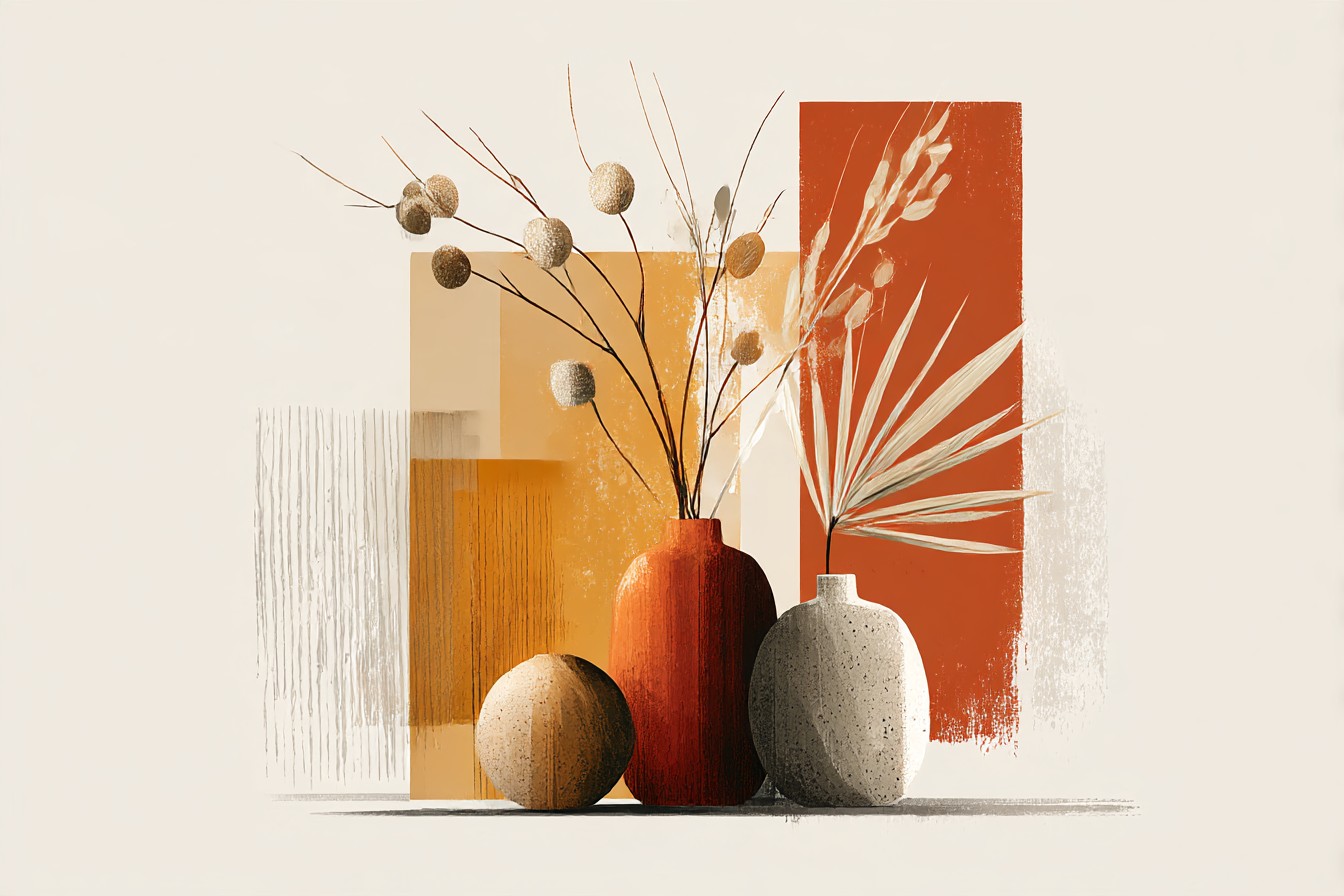
For matte and textured stoneware, dried stems are the easy answer, pampas grass, dried eucalyptus, bunny tail grass, lunaria with its little papery discs, none of it needs water so you’re not fighting the finish or the neck width at all. For wide mouthed speckled or glossy pieces, go fresh and go loose, ranunculus, garden roses, tulips when they’re cheap at the market, anything with a sturdy enough stem to stand up in an opening wider than two inches without leaning on the rim for support.
For bud vases specifically, single stems only, and branches work better than most flowers because they hold their shape without water for days, a single stem of flowering quince or forsythia if you can find it. And if you genuinely can’t be bothered with fresh anything most weeks, which is most of my weeks if I’m honest, a few dried branches picked up from a farmers market stall for four dollars will sit in a ceramic vase looking deliberate for months without a single drop of water involved.
[Vase Fillers]
Final Thoughts
If there’s one thing I’d want someone to take from all of this, it’s that ceramic vases fail or succeed almost entirely on measurements and matching, not on taste, which is honestly the more useful way to think about it because taste is hard to fix and a tape measure is not. Check the neck width before you check the height. Check the base footprint against the actual furniture, not the furniture in your head. Match the finish to how lazy you’re realistically going to be with maintenance, because a matte textured glaze will forgive you in ways a glossy one won’t.
My twenty two inch floor vase, for the record, eventually found its place in the corner of my living room, empty most of the time, holding those three pampas stems I mentioned earlier the rest of it. It just needed the right five square feet of floor, not a shelf that was never going to hold it. Every other vase I’ve bought since has been measured properly before it arrived, neck, base, height, all of it, and every one of them earns its spot for exactly that reason.