I own eleven vases. I counted them properly last week, standing in my kitchen with a tape measure, because that is apparently the sort of Tuesday night I have now. Six of the eleven have an opening under two inches across. Those six get used something like four times as often as the other five put together, and it took me embarrassingly long to work out why. It’s not that I love a narrow neck aesthetically, though I do, a little, it’s that a small opening does the arranging for you. You drop a stem in, it stays exactly where gravity and the glass decide it should stay, and you’re done.
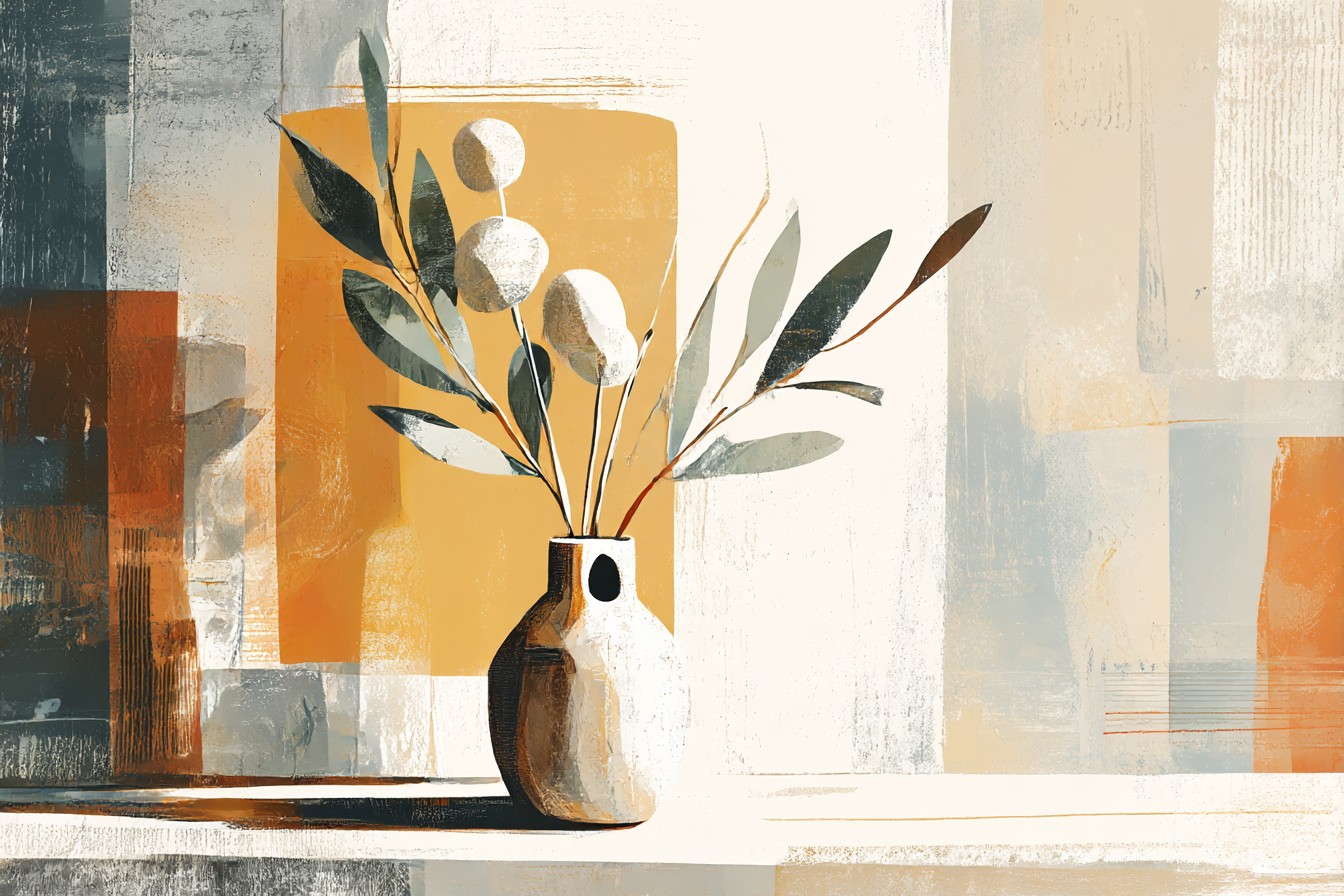
No chicken wire, no floral foam, no twenty minutes of fighting a hydrangea head that wants to lean into the butter dish.
My mom gave me one of the six for my birthday two years ago, a squat little ceramic thing from a shop she likes near her house, opening maybe an inch and a quarter across, and she said, completely confident, “put anything in it, it’ll look right.” She was wrong, and I found out how wrong the first time I tried to jam three stems of garden hydrangea in there and watched the whole thing tip sideways off my counter. It wasn’t the vase’s fault. It was mine, for assuming a small opening is forgiving. It is the opposite of forgiving. It has opinions about what belongs in it, and most of what I own does not qualify.
That’s really the thing nobody explains when you’re standing in a shop admiring a bud vase or a narrow ceramic bottle: the opening size isn’t a styling detail, it’s a filter. It decides your stem count, your stem type, whether something drapes or stands, whether you’re building a look or just propping up a single flower and calling it a day. Get the pairing right and a two inch opening looks more intentional than anything you could build in a wide bowl vase with three hours and a roll of tape. Get it wrong and you’re back to the hydrangea sliding off the counter.
So this is the actual, measured, occasionally irritated version of what goes into a small necked vase, and what I’ve stopped even trying to force into one, because life’s too short and I’ve broken enough stems finding out the hard way.
[Vase With A Small Opening]
The One Stem Rule, and Why Three Sometimes Beats One
The bud vase I use most has an opening of exactly seven eighths of an inch, I measured it with calipers because the listing just said “narrow neck” and I don’t trust that phrase anymore. That measurement matters because most single garden rose stems run somewhere between three eighths and half an inch thick depending on variety, which means there’s just enough clearance for the stem to sit snug without wedging, and just enough snugness that the flower stays upright instead of flopping to one side by hour four.
One stem, dead center, slightly too tall for the vase, is basically foolproof. A single ranunculus, a single garden rose, a single stem of scented geranium if you’ve got one growing, all of it works because there’s nothing to arrange. The narrow opening has already decided the composition for you.
Three stems is where people either get it right or badly overcrowd a vase that was never built for volume. The trick I use, and the thing I had to relearn after cramming five stems into a one inch opening and watching two of them snap at the base, is that three works when the stems are different heights, not different types. Same flower, staggered by an inch or two each, angled slightly by however the neck lets them lean. It reads as arranged. Five of the same thing at the same height just reads as a fist of flowers that got stuck.
[Vase With A Small Opening]
Branches and Woody Stems That Wedge Themselves In
Had a client last winter who wanted “something structural, nothing fussy” for a console table about fourteen inches wide, and I brought her a single stem of curly willow in a bottleneck vase with an opening under an inch, and she looked genuinely disappointed, like I’d under delivered. Three days later she texted me a photo of it against her white wall and admitted it was the first arrangement in her apartment she hadn’t had to fuss with once it was placed.
Woody stems are the cheat code for small openings because they don’t need the water tension or the support that soft stems do. Eucalyptus, olive branch, forsythia before it blooms, curly willow, dried or fresh pittosporum, all of it wedges itself against the glass at whatever angle it lands and just stays there. You’re not arranging so much as dropping and walking away.
The one measurement that actually matters here is the branch’s base diameter against the vase opening, and this is where I’ve watched people force it and split a stem clean in half trying to jam something twice as thick as the neck allows. If the branch doesn’t slide in with a bit of resistance, don’t push it further, trim the base at an angle instead, it’ll usually shave enough width to seat properly without cracking. Eucalyptus in particular sheds if you fight it, and you’ll spend the next week finding little oval leaves under your sofa.
[Vase With A Small Opening]
You Might Also Like

Soft Stemmed Flowers That Actually Need the Narrow Neck
Ranunculus and anemones have famously weak stems, they will flop over the lip of any vase with an opening wider than about two and a half inches within a day, no exceptions, I’ve tested this more times than I’d like to admit with flowers I bought specifically to prove myself wrong. In a wide mouthed vase they need the whole floral tape grid thing to stay upright, which defeats the point of buying flowers to relax, not to engineer.
Put the same ranunculus in a bottle with a one inch opening and the neck itself becomes the support structure. The stem can’t flop because there’s nowhere for it to flop to. This is genuinely the one case where I’d argue the narrow opening isn’t a limitation you’re working around, it’s doing a job a wide vase can’t do at all.
Tulips are the other one worth mentioning because they keep growing after they’re cut, bending toward whatever light source is nearest, and in a wide vase that means you’ll open your curtains one morning to find them all leaning dramatically to the left like they’re trying to escape through the window. A narrow neck restrains that lean. Not completely, tulips will always do a bit of their own thing, but enough that you’re not resetting the arrangement every other day. Garden roses behave similarly once they’re a day or two past fully fresh, so if you’ve got roses starting to soften, that’s actually the moment to move them into something narrower, not wider.
[Vase With A Small Opening]
Dried and Everlasting Stems, Where the Rules Loosen Slightly
Once water isn’t involved, the opening size argument changes shape a bit, though I’ll admit I spent a long time assuming dried stuff didn’t care about vase proportion at all, which is its own kind of wrong. Lunaria, bunny tail grass, strawflower, dried statice, the small headed dried hydrangea varieties rather than the giant mophead fresh ones, all of it can go into a narrow opening without the water tension concern, but density still matters.
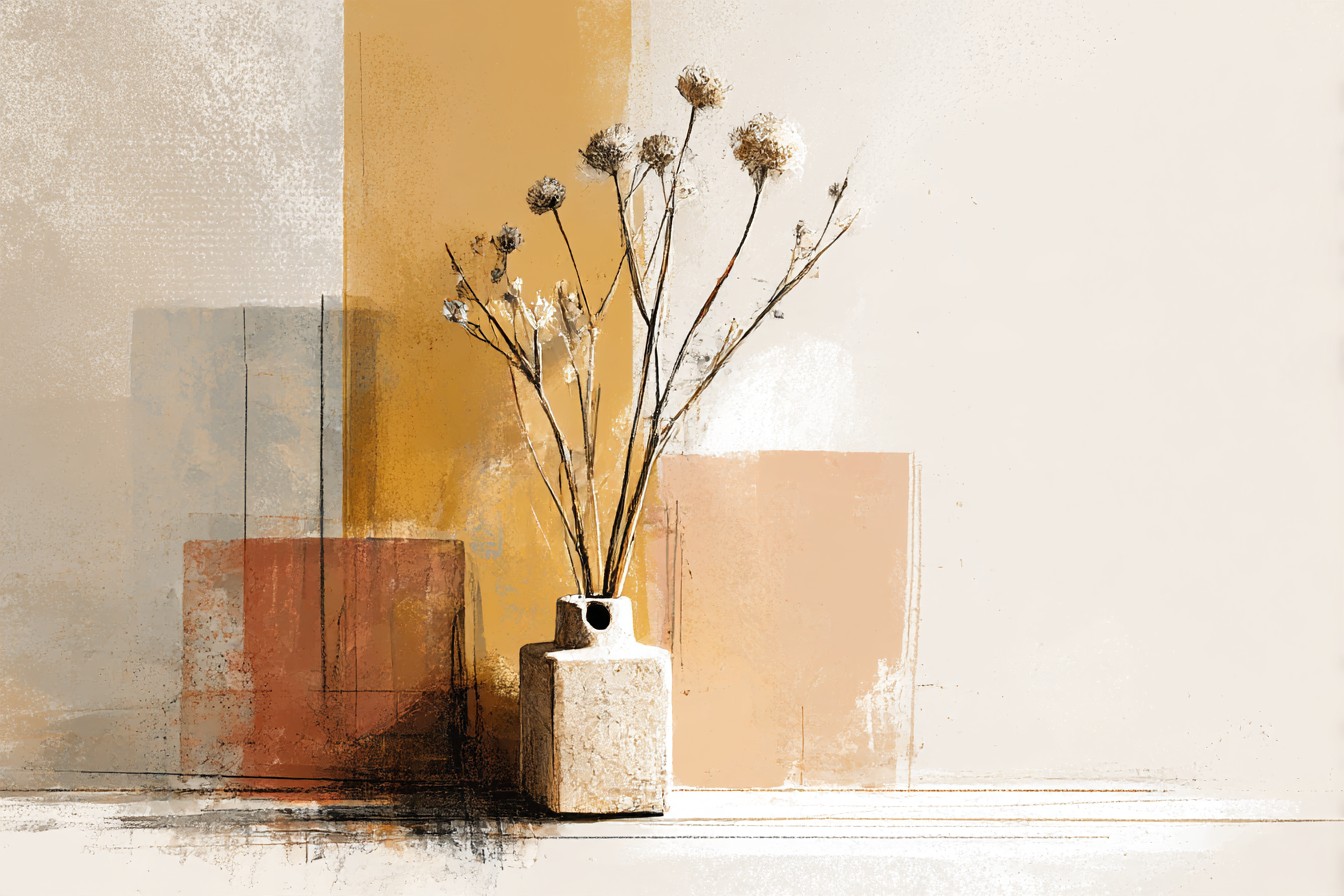
A bundle of dried grasses too thick for the neck will still snap or splay awkwardly at the base, same physics as the fresh branches, just without the mess of leaves everywhere. What’s genuinely nice about this category is that you can build real volume above a small opening because there’s no water level to worry about crowding, so the vase reads fuller than its actual capacity would suggest. I’ve got a stem count of about nine in one narrow ceramic vessel right now, mixed lunaria and dried statice, opening under an inch and a half, and it looks like a proper arrangement rather than the sparse single stem look, which is honestly the main advantage dried material has over fresh in this whole conversation.
[Vase With A Small Opening]
The Stuff That Will Never Fit, No Matter How Hard You Push
I’ll say the unflattering part plainly because I’ve spent this whole piece being fairly confident about what works, and I should be equally clear about what doesn’t. Peonies, full mophead hydrangea, and anything with a flower head wider than about four inches simply does not belong in a small necked vase, and I have personally tried to make this work more times than is reasonable for a grown adult who should know better by now.
The problem isn’t fitting the stem through the opening, that part’s usually fine. It’s that the head is heavier and wider than the neck can counterbalance, so the whole thing tips, or the stem cracks at the point where it meets the glass under the weight. I once propped a single peony in a one inch opening against my kitchen window, convinced the angle of the sill would hold it, and came back forty minutes later to find it face down on the counter, petals everywhere, water dripping onto a stack of mail I’d been meaning to deal with anyway.
If you genuinely love a peony and only own narrow necked vases, cut the stem short, very short, an inch or two below the head, so it sits nearly flush with the opening rather than balancing a long stem’s worth of leverage above it. It’s not elegant.
It’s a workaround, not a solution, and I’d rather just say that than pretend there’s a clever trick that makes a wide flower behave in a narrow space.
[Vase With A Small Opening]
Final Thoughts
If there’s one thing I’d want someone to take from all this, it’s that a small opening isn’t a design compromise you’re stuck accommodating, it’s doing actual work, and once you stop fighting it the whole category gets a lot more useful. Single stems get held upright without effort. Woody branches wedge themselves into position. Ranunculus and tulips get the structural support they were always going to need anyway. Dried material builds volume you wouldn’t expect from the vessel size. The only real failure mode is trying to force something built for a wide bowl into a neck it was never going to fit, and I’ve broken enough stems over that particular stubbornness to say it with confidence.
My mom’s little ceramic vase still sits on my counter, opening still exactly the same inch and a quarter it was two years ago, and these days I know exactly what goes in it, which is mostly ranunculus and the occasional sprig of eucalyptus when I remember to buy some. It took a broken hydrangea and a fair amount of measuring to get there, but that’s the whole point of actually using the thing rather than just admiring it on a shelf. Measure the opening, know your stem, and the rest mostly sorts itself out.