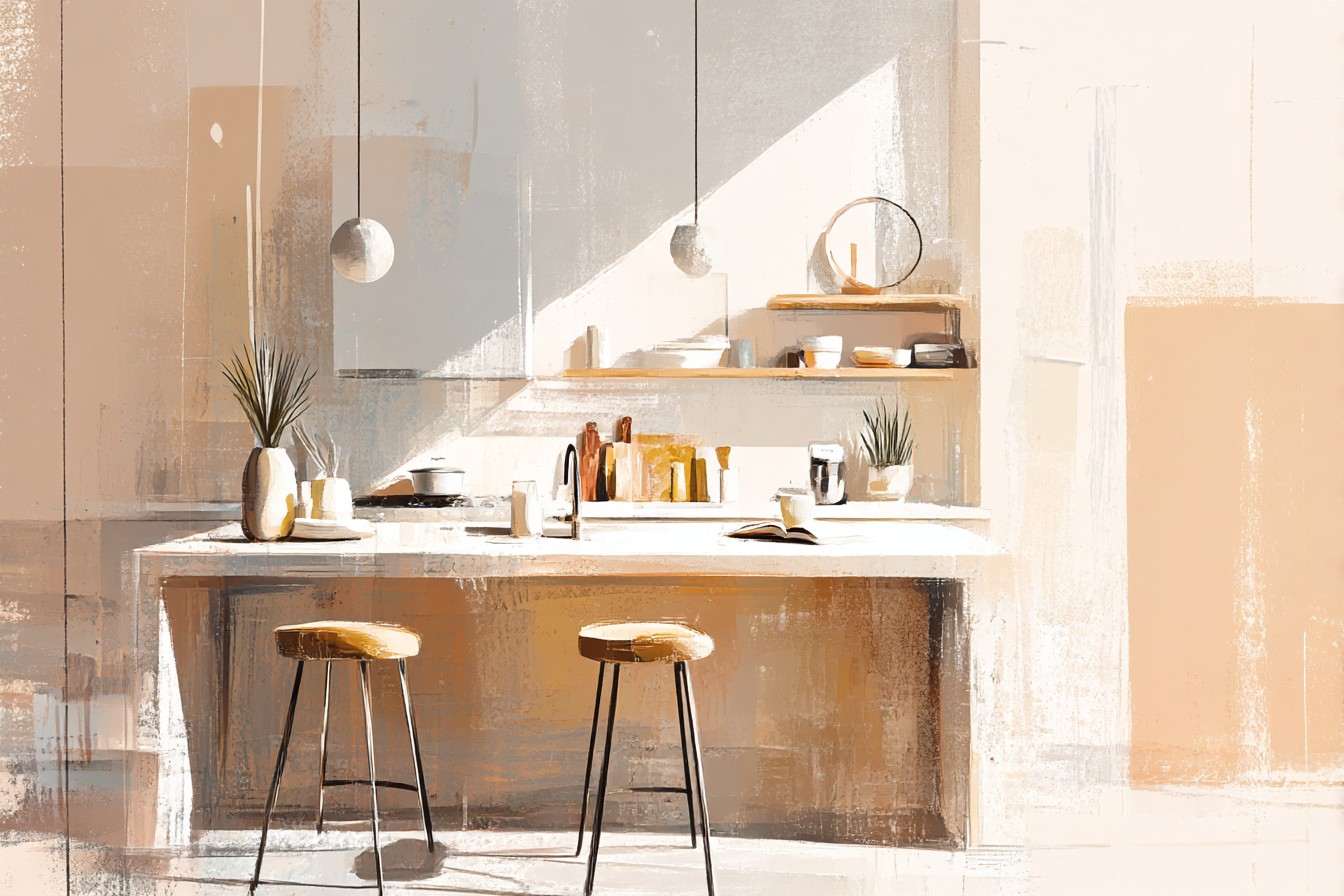
I’m standing on a step stool at 9pm on a Tuesday, counting mugs. Not drinking out of one, counting them, out loud, like an actual inventory audit, because I have fourteen and a cabinet built for maybe eight, and the eight that are visible through the glass door are doing a lot of heavy lifting for how the whole kitchen reads. My condo has one of those glass front upper cabinets that came with the place, and for the first year I treated it like storage, which was a mistake on the scale of filing something under the wrong cost center and not noticing for months. It had a rice cooker box in it. A RICE COOKER BOX. Behind glass.
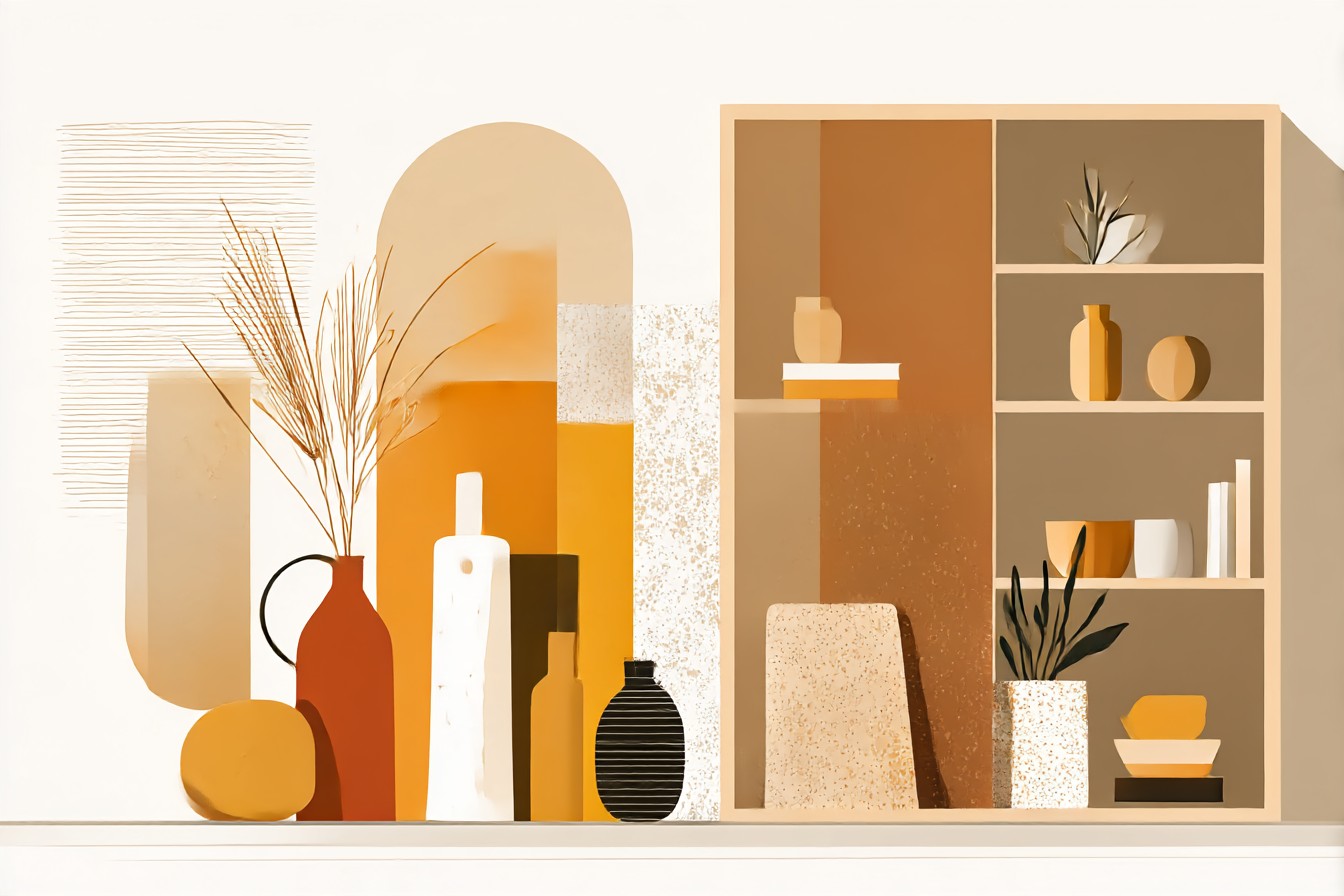
For anyone walking into my kitchen to see.
The thing nobody tells you about a display cabinet, the built in kind or the freestanding kind, is that it’s not really storage with a window. It’s a small, permanently lit line item that everyone who comes to your kitchen is going to look at, whether you’ve thought about it or not, and once I understood that, I started treating it the way I’d treat any other decision with a visible return: what’s the cost of doing this properly, what’s the cost of ignoring it, and which one actually pays off over time. A closed cabinet hides your mistakes. A display cabinet reports on you constantly, like a manager who reads every email you send even when you didn’t cc them.
I’ve now had four different setups across two moves, a starter condo and the townhouse I’m in now, and I’ve gotten it wrong in at least three specific, embarrassing ways I’ll admit to properly rather than glossing over. What follows isn’t a design philosophy, I’m not qualified for one of those, it’s more of a running audit of what’s actually worked, what’s collected dust, and what I’d tell the woman two desks over if she asked me, which she did, actually, right before she bought a hutch that’s now full of unopened wedding china nobody’s touched since 2019.
[Kitchen Display Cabinet Ideas]
Glass Front Cabinets, the Classic Version
The glass front upper is the default, the one most kitchens already have built in somewhere, and I spent a full year underusing mine before I ran the actual numbers on what it was costing me to ignore it. Cost of doing nothing: a rice cooker box on permanent display, zero return. Cost of doing it properly: maybe forty minutes and a trip to Home Goods. The math wasn’t close.
What actually works behind glass is dishware you’d be a little sad to chip, the everyday plates you like the look of but don’t necessarily use every single day, and glassware that catches light rather than sitting flat and dull. Mine has six of the same stemless wine glasses, a stack of the cream colored plates I got as a set of eight and immediately broke one of, and a single ceramic bowl that does nothing functional and earns its spot purely on shape. My mom came up from Rock Hill for a weekend and rearranged the whole thing in about four minutes flat, muttering the entire time about how I’d shelved my everyday plates “like museum pieces,” stacked by color instead of by what I’d actually reach for on a Tuesday. She was right, and I hate how often that’s true.
The failure mode here is obvious once you’ve lived it: glass front cabinets punish clutter instantly. A closed cabinet with a mess behind the door costs you nothing visually. A glass one reports the mess to anyone standing at your stove. I learned this the hard way with a stack of takeout containers I’d shoved in there “temporarily” for approximately four months.
[Glass Front Cabinets]
Open Shelving as a Display Alternative
Open shelving is the more aggressive version of the same bet, no door at all, glass or otherwise, which means there’s no cost benefit case to be made for hiding anything. You’re fully exposed. I removed the doors on one upper cabinet in my first apartment because I’d seen it done somewhere and thought it looked properly considered, and for about three weeks it did, right up until the dust started showing on the top shelf in a way glass fronts never reveal because you’re not running your finger along the actual surface.
Where open shelving earns its place is with things that are genuinely nice to look at from a slight distance and don’t need daily wiping down, a small stack of cookbooks you actually cook from, not the ones you own for aspiration, two or three plants that can handle kitchen humidity, a cutting board propped upright because it’s got a good grain to it. I keep my everyday coffee mugs on mine now, which sounds like a small decision but changed my morning completely; reaching for a mug shouldn’t require opening anything, and that one adjustment did more for how the kitchen actually functions than any of the prettier decisions I made around it.
The honest tradeoff, the one I didn’t want to admit for a while, is that open shelving needs more discipline than a closed cabinet and slightly less than a glass one, because there’s no pane doing any of the editing for you. You are the pane. If you’re not going to wipe it down weekly, don’t do it. I know this because I didn’t, for a while, and the woman two desks over noticed dust in a photo I sent her and said nothing kind about it.
[Open Shelving]
Freestanding Hutches and Dressers
Not everyone’s kitchen has a built in cabinet worth the effort, and renting, or buying a place with a kitchen that just doesn’t have one, doesn’t mean you skip this entirely. A freestanding hutch or an old dresser repurposed into a display piece is the version of this decision you make when the building won’t cooperate with you, and honestly it’s the version with the better long term math anyway, because it moves with you. A built in stays behind with the last owner. A hutch comes with you to the next place and probably the one after that.
You Might Also Like

I almost bought a factory new hutch for around six hundred dollars before I found a secondhand oak one at an estate sale for eighty, slightly water stained on one shelf, easily sanded down over a weekend I didn’t love losing. On paper the used one was the better decision by a wide margin, cost per year of expected use, no comparison really. In reality I bought it because it had a slightly warped left door that stuck a little when you closed it, and something about that felt more honest than anything I could’ve bought new, which is not a spreadsheet reason, I know, but it’s the real one.
The mistake I see most with hutches, the one the woman two desks over made with her wedding china, is filling every single shelf with the good stuff and never touching it again. A display cabinet that nobody opens isn’t a display, it’s a very tall, very expensive box. Mix in things you actually use, a stack of cloth napkins, a pitcher you fill with water most nights, alongside the pieces that are purely there to be looked at.
[Freestanding Hutches]
Dark and Colored Cabinets for Contrast
For a long time I avoided anything dark in the kitchen, on the entirely reasonable grounds that a bad landlord era navy accent wall had put me off deep color for close to three years. Every dark finish read as a mistake waiting to happen, something that would swallow light and make the room feel smaller than it already was.
Then I saw a friend’s kitchen with a single black display cabinet against otherwise white cabinetry, and the white plates inside it looked properly sharp against that background in a way they never would’ve against more white. That’s the actual case for a dark or colored display cabinet: contrast does work that a matching cabinet can’t. A navy or a deep sage or, if you’re brave, an actual black, gives whatever’s sitting on the shelves somewhere to stand out against, instead of blending into a kitchen that’s already mostly neutral.
I ended up doing this with paint, not a full cabinet swap, because I wasn’t about to commit real budget to a theory I’d only tested by looking at someone else’s kitchen for ten minutes. I painted the interior of my glass front cabinet a deep charcoal and left the outside as is. Cost was about eighteen dollars in paint and one Saturday afternoon. The dishware inside it, plain white, some cream, went from looking slightly washed out to looking properly intentional, which is a strange amount of return for eighteen dollars, and it’s the one decision in this whole piece I’d call an actual investment rather than an emotional purchase dressed up as one.
[Dark and Colored Cabinets]
Lit Display Cabinets
This is the one I was most skeptical of, on the grounds that interior cabinet lighting felt like the kind of upgrade that photographs well on delivery day and does nothing for you six months in once the novelty’s worn off. I was wrong, and I don’t say that often in this piece without a caveat attached.
I added a battery powered LED strip to the top shelf of my glass cabinet, the kind that sticks on with adhesive and runs on a remote, total cost under thirty dollars, and it changed how the whole kitchen reads at night in a way I didn’t expect from something so cheap. It also solved a problem I genuinely didn’t think I had until I noticed it: on video calls, when my kitchen is faintly visible behind me, that lit cabinet reads as warm and considered instead of just another dark shape in the background. I watched a recording of a call back once and the whole kitchen wall had gone a strange flat gray, except for that one lit shelf, which looked like the only part of the room anyone had thought about.
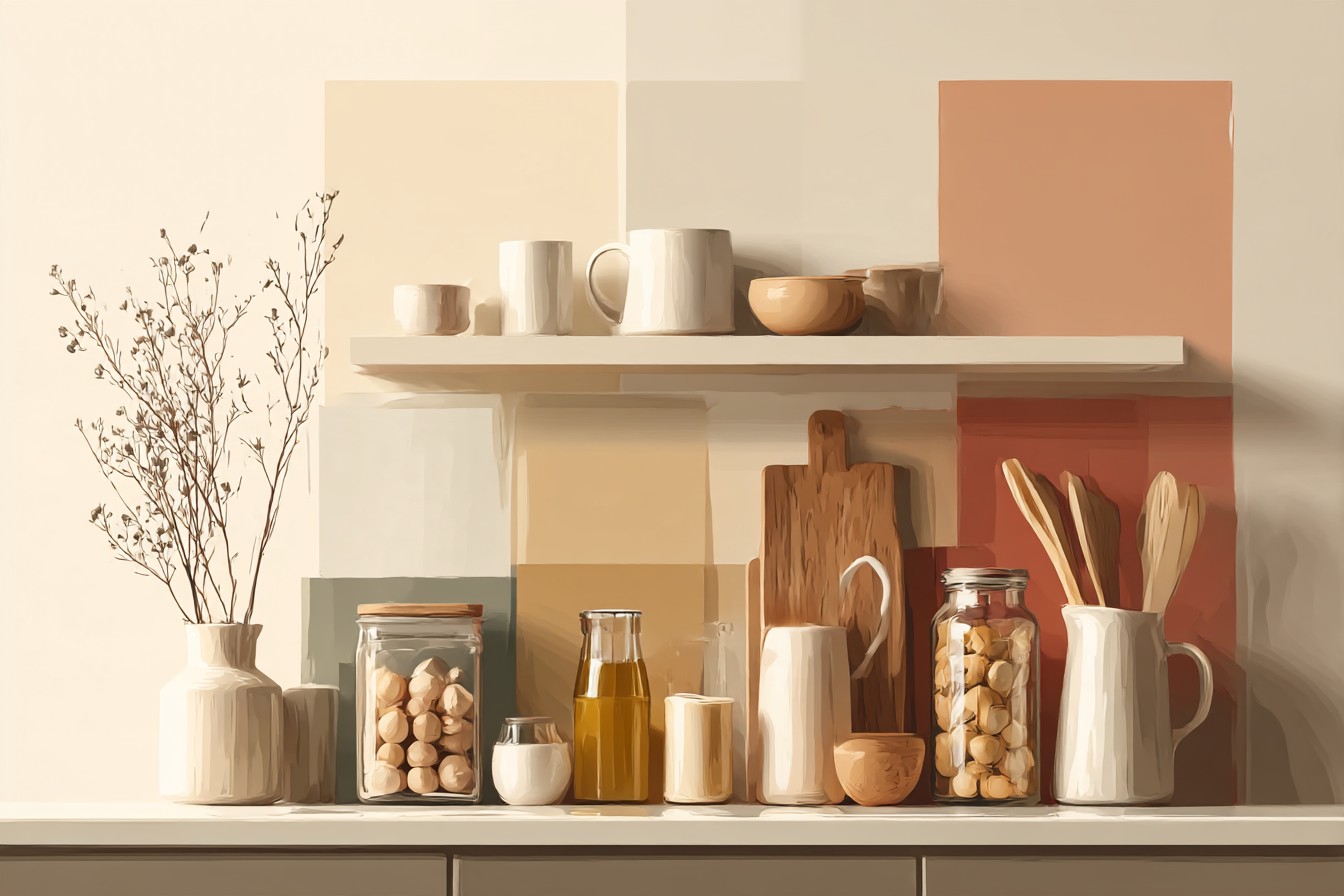
That’s not nothing, if you work from home the way I do.
The failure risk here is heat and glassware that can’t handle it, cheap adhesive strips left on too long, and, if I’m honest, forgetting to turn it off and running the batteries down within three weeks the first time. Small cost, small lesson, worth learning early rather than after you’ve committed to something hardwired.
[Lit Display Cabinets]
Final Thoughts
If there’s a case I’d actually stand behind here, the way I’d stand behind a real recommendation at work rather than a purchase I talked myself into on a bad Tuesday, it’s this: a display cabinet only earns its spot if you treat it as a small, ongoing decision rather than a one time styling job you finish and forget. Mine has changed four times in two years, not because I got bored, but because what I actually use in my kitchen changed, and the cabinet was honest about that in a way a closed one never would’ve been.
I still don’t fully know if any of this counts as an investment in the way I use that word everywhere else in my life. The oak hutch will outlast me, probably. The LED strip will die in eighteen months and I’ll replace it without thinking twice. Both of those things can be true at once, and I’ve stopped needing them to reconcile into one tidy answer. Some of this is strategy. Some of it is just wanting the kitchen to look like someone lives there on purpose, mugs and all.